Arm lift Before & After: What Realistic Results Look Like
An arm lift, also called brachioplasty, removes excess upper-arm skin and may remove a small amount of fat. Early postoperative swelling can hide the final contour; most people see a clearer result over several months.
Key Takeaways
- An arm lift, also called brachioplasty, removes excess upper-arm skin and may remove a small amount of fat.
- Early postoperative swelling can hide the final contour; most people see a clearer result over several months.
- An arm lift improves loose skin but does not replace weight management, exercise, or treatment for medical causes of swelling.
- Scars are expected, usually along the inner or back of the upper arm, and can mature for a year or longer.
- A stable weight, good general health, and realistic expectations support safer surgery and more predictable results.
Arm lift before and after results can include a smoother, firmer upper-arm contour and less loose skin, especially after significant weight loss or age-related skin laxity. Results develop gradually as swelling improves, while scars are permanent and should be part of an informed decision.
Arm Lift Before and After: What Changes Are Realistic?
Arm lift before and after changes are typically most noticeable in the shape of the upper arm: loose, hanging skin is reduced and the arm often looks smoother and more proportionate to the rest of the body. The result is not immediate. Swelling, bruising, and the early healing of the incision can make the arms look uneven or fuller than expected at first, while the contour becomes clearer gradually over the following months.
An arm lift is designed to address excess skin and tissue, not to create a perfectly narrow arm or eliminate every skin irregularity. Skin quality, remaining fat, muscle tone, age, past weight changes, and the extent of surgery all influence the outcome. The trade-off for meaningful skin removal is a scar, which is permanent even though it commonly softens and fades with time.
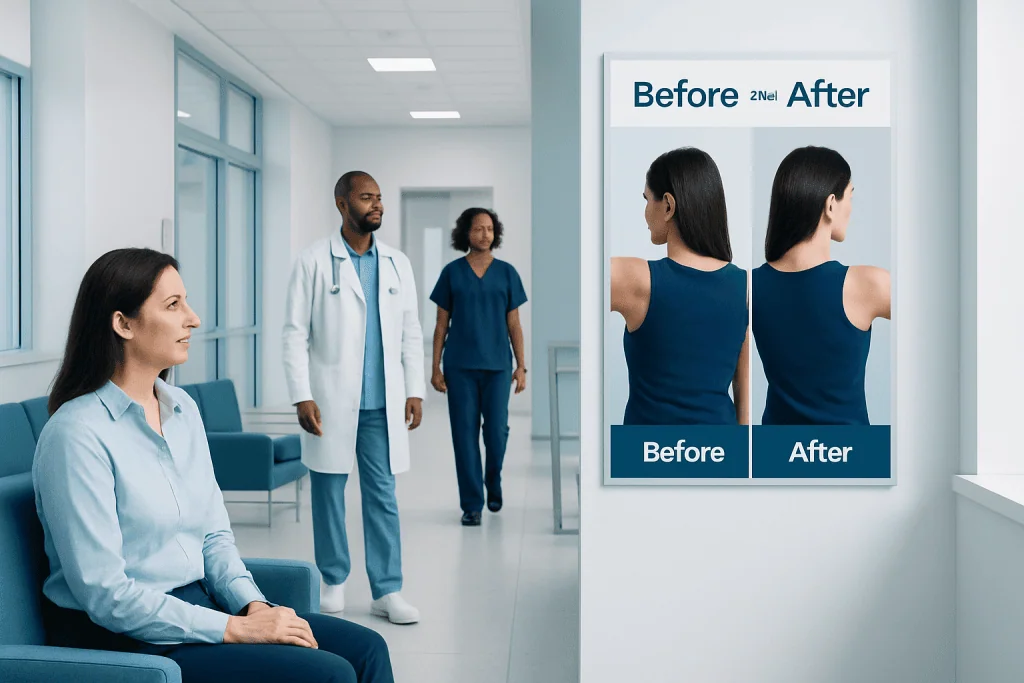
Photographs used in consultations should be viewed carefully. Before-and-after images reflect one person’s anatomy, procedure plan, lighting, posture, healing, and time since surgery. A qualified plastic surgeon can explain which changes are reasonably achievable for the individual rather than promising an exact match to another person’s result.
How an Arm Lift Works
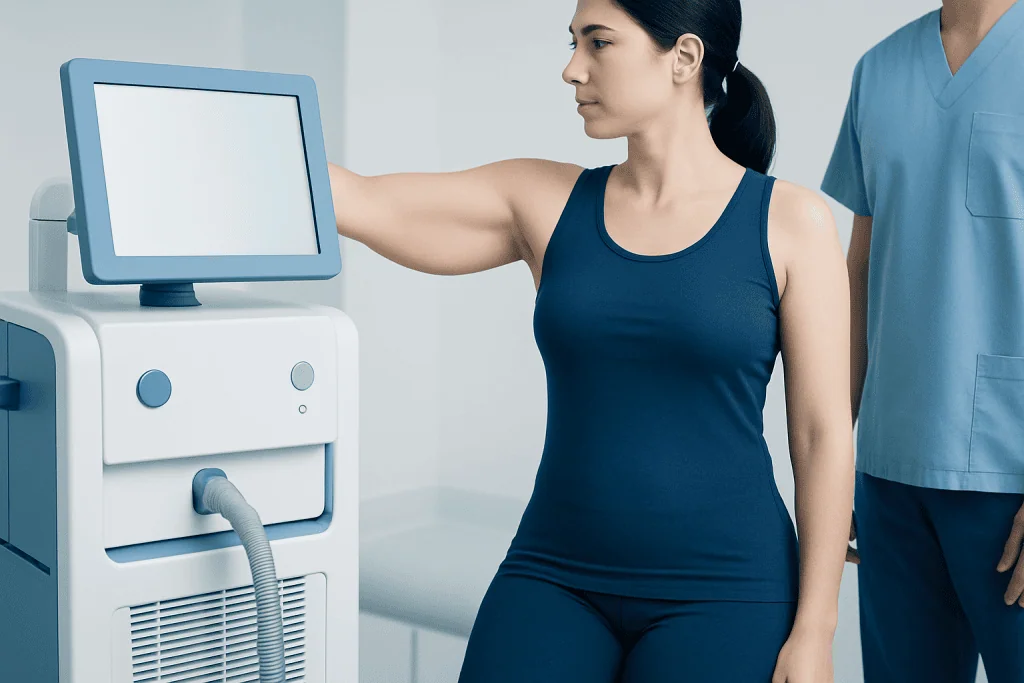
An arm lift, medically called brachioplasty, reshapes the underside and inner aspect of the upper arm. It is often considered when skin has lost elasticity after major weight loss, pregnancy, aging, or long-term weight fluctuation. Exercise can strengthen arm muscles, but it cannot reliably remove substantial loose skin.
During the operation, the surgeon removes a planned amount of excess skin and may also remove or reposition fatty tissue. In some cases, liposuction is used alongside surgery when localized fat contributes to the arm contour and the skin is suitable for tightening. The remaining skin is then redraped and closed with sutures.
The incision pattern depends on how much correction is needed. A limited procedure may use a shorter scar near the armpit, while a standard arm lift often requires an incision extending along the inner or back of the upper arm. More extensive skin laxity can require a longer incision that reaches toward the side of the chest. Patients can learn more about arm lift surgery during a personalized surgical consultation.
Who May Be a Suitable Candidate?
A suitable candidate commonly has persistent upper-arm skin laxity that causes discomfort, rubbing, clothing concerns, or dissatisfaction with arm shape. Candidates should be in generally good health, understand the recovery requirements, and be willing to accept a scar in exchange for an improved contour.
Weight stability is important. People who have recently lost a large amount of weight may be advised to wait until their weight has been stable for a period determined by their care team. Further major weight loss or weight gain after surgery can affect the skin and alter the result.
Smoking and nicotine products can impair blood flow and wound healing. A surgeon may require a person to stop smoking, vaping nicotine, and using other nicotine-containing products before and after surgery. Certain medicines, supplements, bleeding disorders, poorly controlled diabetes, and previous arm surgery also need careful review before an operation is planned.
- Good candidates seek improvement rather than perfection.
- They can arrange practical support during early recovery.
- They understand that scar care and follow-up visits are part of treatment.
- They discuss any history of blood clots, wound-healing problems, or body-image concerns openly with the surgical team.
What Happens During the Procedure?
Before surgery, the plastic surgeon reviews medical history, current medicines, allergies, smoking status, weight history, and goals. The arms are examined and measured, and surgical markings are usually made while the person is standing. Preoperative instructions may include changes to specific medicines, fasting guidance, and plans for transport and help at home.
Arm lift surgery is generally performed under anesthesia in an operating-room setting. Once anesthesia is in effect, the surgeon makes the planned incision, removes excess skin, and may address fatty tissue as appropriate. The skin is positioned to create a smoother contour, and the incision is closed. Some patients have temporary drainage tubes, although this depends on the surgical technique and extent of the procedure.
After surgery, dressings and a supportive compression garment may be used to limit swelling and support healing. The care team provides instructions on wound care, showering, arm positioning, activity restrictions, pain control, and follow-up. The exact duration of surgery and whether it is an outpatient procedure vary according to the individual treatment plan and any combined procedures.
Recovery Timeline and Seeing Results Develop
In the first several days, soreness, swelling, bruising, tightness, and reduced arm movement are common. Keeping the arms supported and avoiding strain can improve comfort. It is important to follow the surgeon’s guidance about lifting, reaching overhead, driving, work, and exercise, since excessive tension on the incision may affect healing.
Many people return to light daily activities within approximately one to two weeks, but recovery is individual. Desk-based work may be possible earlier than physically demanding work. Heavy lifting, strength training, swimming, and other activities that stress the arms are usually postponed until the surgical team confirms that healing is sufficient.
At first, the arms may appear swollen or feel firm, and the scar may look red, raised, or uneven. These features often improve over time. A more reliable sense of the new arm contour commonly develops over several months, while scar maturation can continue for 12 months or longer. Sun protection and any scar-care plan recommended by the surgeon can help protect healing skin.
Realistic examples include a person after stable major weight loss whose hanging upper-arm skin is reduced, or an older adult whose arm contour looks smoother in fitted sleeves. Results may be less dramatic when skin laxity is mild, when there is significant remaining fat, or when skin quality is poor. A consultation helps clarify the likely degree of improvement in each situation.
Benefits, Risks, and Important Limitations
The main potential benefit of arm lift surgery is a more streamlined upper-arm contour with less loose skin. Some people also find that chafing is reduced and clothing feels more comfortable. Results can be long-lasting when body weight remains stable and healthy lifestyle habits are maintained, although natural aging continues to affect the skin.
As with any operation, arm lift surgery has risks. These include bleeding, fluid collection, infection, delayed wound healing, changes in skin sensation, pain, asymmetry, contour irregularities, unfavorable scarring, and the possible need for revision surgery. Blood clots and anesthesia-related complications are uncommon but potentially serious risks that the care team considers before surgery.
Scarring is one of the most important limitations to discuss. Scar visibility varies widely according to incision length, skin type, healing, tension on the wound, sun exposure, and individual tendency to form raised scars. No scar treatment can guarantee an invisible scar. The surgeon can discuss scar placement, expected appearance, and appropriate aftercare.
An arm lift is not a treatment for sudden arm swelling, pain, weakness, or a new lump. Those symptoms may have a medical cause and need assessment rather than cosmetic surgery. It also does not replace treatment for conditions affecting lymphatic drainage, circulation, or the shoulder and arm joints.
Preparing Well and Protecting Your Result
Preparation begins with a complete and honest consultation. Patients should share all prescribed medicines, over-the-counter products, supplements, prior operations, and relevant medical conditions. Following instructions about nicotine cessation, nutrition, hydration, activity, and medication adjustments supports safer surgery and recovery.
After surgery, attend all follow-up appointments and contact the surgical team if there are concerns about the wound or recovery. Compression garments, scar products, and massage should only be used as directed, because recommendations differ by technique and stage of healing. Maintaining a stable weight, avoiding smoking, and gradually returning to regular activity can help preserve the contour.
Patients considering care abroad should allow enough time for in-person assessment and early follow-up before travel. Acibadem International’s multidisciplinary specialists and JCI-accredited hospitals diagnose and treat patients seeking arm lift surgery, including international patients, with individualized preoperative and postoperative planning.
When to Seek Medical Care
Contact the operating surgeon promptly for increasing redness, warmth, swelling, worsening pain, wound separation, pus-like drainage, persistent bleeding, fever, or a sudden change in one arm’s appearance. These symptoms do not always indicate a serious problem, but timely assessment can help identify complications early.
Seek urgent medical care for chest pain, shortness of breath, fainting, coughing blood, or sudden severe swelling or pain in an arm or leg. These symptoms require urgent evaluation and should not be managed at home or by waiting for a routine follow-up appointment.
Before considering an arm lift, a person should also seek medical evaluation for unexplained one-sided arm swelling, a new lump, persistent numbness or weakness, or skin changes that are not clearly related to loose skin. A clinician can determine whether another condition needs treatment first.
Frequently asked questions
How long does it take to see final arm lift results?
The arm contour begins to change immediately, but swelling and tissue healing make early results temporary. Many people see a clearer shape over several months, while scars can continue to mature for a year or longer. The surgeon can give a more individualized timeline based on the extent of surgery and healing progress.
Will an arm lift scar go away completely?
No. An arm lift leaves a permanent scar because excess skin is removed through an incision. Most scars become less red and less noticeable over time, but their final appearance varies from person to person.
Can exercise tighten loose upper-arm skin instead of surgery?
Exercise can improve muscle strength and support overall body composition, but it cannot reliably remove substantial excess skin. When skin has lost significant elasticity, an arm lift may be the only way to remove the loose skin. A surgeon can help distinguish skin laxity from excess fatty tissue.
Is liposuction enough for loose upper arms?
Liposuction may be suitable when there is excess fat and the skin has good elasticity. If loose skin is the primary concern, liposuction alone can sometimes make sagging more apparent. A physical examination is needed to determine whether liposuction, an arm lift, or a combination is appropriate.
How painful is arm lift recovery?
Discomfort, tightness, swelling, and soreness are expected in the early recovery period, and the care team provides a pain-management plan. Pain should generally improve rather than steadily worsen. New severe pain or pain with other concerning symptoms should be reported to the surgeon.
Can the loose skin return after an arm lift?
The removed skin does not grow back, but the remaining skin can change with aging, weight fluctuation, pregnancy, and changes in muscle or fat volume. Maintaining a stable weight and avoiding nicotine can support long-term results. No cosmetic procedure can stop normal aging.
References
- American Society of Plastic Surgeons
- American Society for Aesthetic Plastic Surgery
- National Health Service
- Mayo Clinic
This article is for general information only and is not a substitute for professional medical advice. Please consult a qualified doctor about your individual situation.
Arm Lift in Turkey — costs, top hospitals & a free quote
JCI-accredited · board-certified surgeons · reply within 24h
Add us as a Preferred Source to see more of our trusted health content across Google Search, AI Overviews and Discover.

Plastic, Reconstructive & Aesthetic Surgery
Reconstructive and aesthetic procedures for the face and body, performed by experienced surgeons.
35 specialists in this unit