Arteriovenous Fistula in the Brain: Symptoms, Diagnosis, and Treatment Options

A brain arteriovenous fistula is an abnormal direct connection between arteries and veins that disrupts normal blood flow. Symptoms vary widely and may include headache, pulsatile tinnitus, vision changes, seizures, or stroke-like symptoms.
Key Takeaways
- A brain arteriovenous fistula is an abnormal direct connection between arteries and veins that disrupts normal blood flow.
- Symptoms vary widely and may include headache, pulsatile tinnitus, vision changes, seizures, or stroke-like symptoms.
- Diagnosis usually relies on brain imaging, especially MRI, CT angiography, and cerebral angiography.
- Treatment depends on the fistula’s location, drainage pattern, and bleeding risk, and may include endovascular embolization, surgery, or radiosurgery.
- Prompt specialist assessment is important if symptoms are new, progressive, or associated with weakness, seizures, or sudden severe headache.
Arteriovenous fistula in the brain is an abnormal connection between arteries and veins in or around the brain. Some cause no symptoms, while others may lead to headache, pulsating sound in the ear, neurological symptoms, or bleeding, so timely evaluation is important.
Overview
An arteriovenous fistula in the brain is an abnormal direct connection between an artery and a vein. Normally, blood flows from arteries into tiny capillaries and then into veins. In a fistula, that capillary network is bypassed, which can change pressure and blood flow in nearby brain tissue or the coverings around the brain.
Some brain fistulas are located within the tissues of the brain, while others form in the dura, the tough membrane covering the brain. Dural arteriovenous fistulas are among the better-known types. These conditions are different from a typical brain aneurysm, although both can involve blood vessels and may require expert neurological evaluation.
Not every fistula is immediately dangerous. Some remain stable and cause only mild symptoms, while others have drainage patterns that increase the risk of bleeding or neurological complications. Because the condition can behave very differently from person to person, treatment planning is usually individualized.
Symptoms
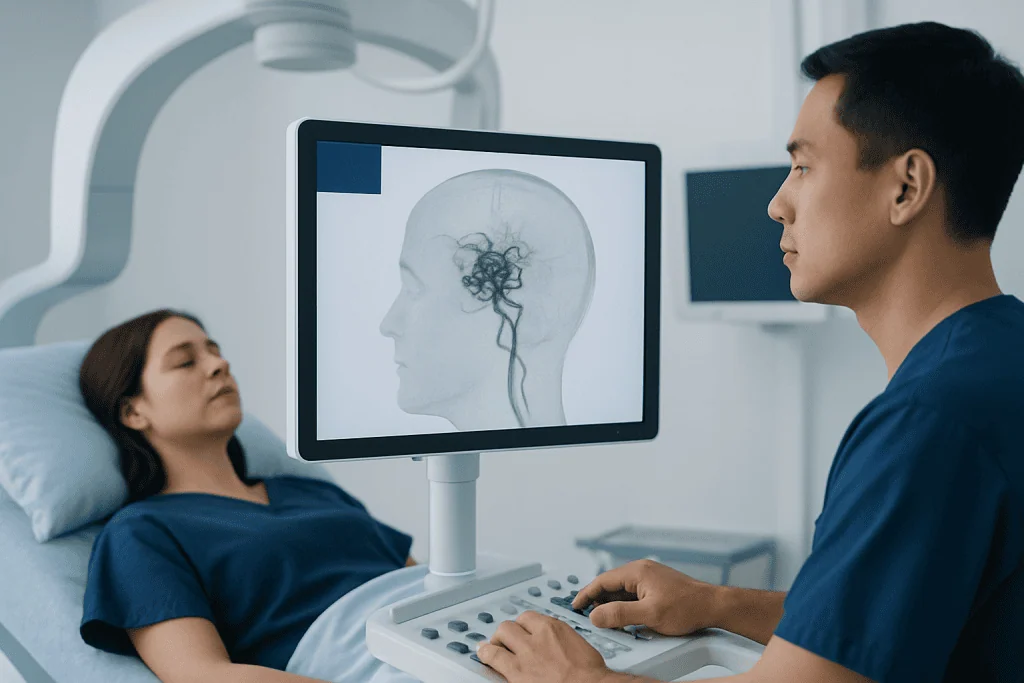
Symptoms depend on the fistula’s size, location, and the way blood drains from it. Some people have no symptoms at all, and the problem is found during imaging for another reason. Others develop symptoms gradually over time.
Common symptoms can include headache, a whooshing or pulsing sound in one ear known as pulsatile tinnitus, vision problems, dizziness, and difficulty with concentration. If the fistula affects nearby brain tissue or raises pressure in veins, a person may also experience weakness, numbness, imbalance, speech difficulty, or seizures.
In more serious cases, a brain arteriovenous fistula can cause bleeding in or around the brain. This may lead to a sudden severe headache, vomiting, drowsiness, confusion, or other emergency neurological symptoms. Symptoms can sometimes resemble those seen in stroke, which is why urgent assessment is important when symptoms start suddenly.
- Headache or pressure sensation
- Pulsatile tinnitus
- Blurred or double vision
- Seizures
- Weakness, numbness, or trouble speaking
- Sudden severe headache or loss of consciousness in rare emergency cases
Causes and Risk Factors

Some arteriovenous fistulas are thought to be congenital, meaning the abnormal connection may be present from birth, even if symptoms appear much later. Others are acquired over time. In dural arteriovenous fistulas, experts believe abnormal blood vessel changes can sometimes develop after a triggering event.
Potential associations include previous head injury, surgery, infection, inflammation, or clotting in a venous sinus, the channels that drain blood from the brain. However, in many people no clear cause is identified. Having a fistula does not necessarily mean someone did anything to cause it.
Risk factors vary by fistula type and are not always predictable. Age, prior vascular disease, and conditions that affect blood clotting or venous drainage may play a role in some cases. A specialist evaluates not just why the fistula formed, but also whether its blood flow pattern places the person at low or high risk for future complications.
How Diagnosis Is Made
Diagnosis begins with a medical history and neurological examination. A doctor will ask about headaches, ear noises, visual changes, seizures, weakness, or any sudden events. The pattern of symptoms can offer clues about whether a vascular problem may be present.
Imaging tests are central to diagnosis. CT or MRI of the brain may show signs of abnormal vessels, swelling, previous bleeding, or effects on nearby structures. CT angiography and MR angiography can provide more detailed views of blood vessels and may help identify the location of the fistula.
The most definitive test is often cerebral angiography, also called digital subtraction angiography. In this procedure, contrast dye is used to map blood flow in detail. It shows which arteries feed the fistula, how blood drains away, and whether dangerous venous reflux is present. This information is essential for deciding whether observation or treatment is safest.
Because diagnosis often involves advanced imaging and vascular expertise, patients may be referred to neuroradiology, neurology, or neurosurgery teams. In some cases, additional tests are used to evaluate related issues such as seizures or the effects of a possible brain hemorrhage.
Treatment Options
Treatment depends on symptoms, location, venous drainage pattern, bleeding history, and overall health. Some low-risk fistulas may be monitored with regular follow-up, especially if they are not causing significant symptoms. Others need treatment because they carry a meaningful risk of bleeding, progressive neurological problems, or worsening venous congestion.
A common treatment is endovascular therapy, in which a specialist reaches the abnormal blood vessels through a catheter placed in an artery or vein. Materials are then used to block the fistula or reduce its flow. This approach is often described as embolization treatment and may be used alone or as part of a staged plan.
In selected cases, surgery may be recommended to disconnect or remove the fistula, particularly when it is accessible and the anatomy makes an operation appropriate. For certain fistulas, focused radiation may also be considered; this is sometimes called Gamma Knife radiosurgery. Some patients benefit from a combination of methods, such as embolization followed by neurosurgical treatment.
When symptoms such as seizures or headache are present, supportive medical treatment may also be part of care. The goal is not only to close the abnormal connection when needed, but also to protect brain function and reduce the risk of future complications.
Recovery, Follow-Up, and Self-Care
Recovery depends on the type of treatment performed and whether the fistula caused bleeding or neurological injury beforehand. Some people recover quickly after minimally invasive treatment, while others need a longer period of observation, rehabilitation, or symptom management. Follow-up imaging is often necessary to confirm that the fistula has fully closed and has not recurred.
People who have had seizures, weakness, or coordination problems may need temporary restrictions on driving, work, or certain physical activities, based on their doctor’s advice and local regulations. If a neurological event has occurred, structured rehabilitation can help restore strength, balance, speech, or daily function.
General self-care supports recovery but does not replace treatment. Helpful measures may include taking prescribed medicines as directed, attending all follow-up visits, avoiding tobacco, controlling blood pressure, and seeking urgent care if new neurological symptoms develop. It is also sensible to ask the care team which symptoms should prompt immediate reassessment.
For international patients needing specialist evaluation, Acibadem International’s multidisciplinary teams in JCI-accredited hospitals diagnose and treat complex cerebrovascular conditions, including brain arteriovenous fistulas, with coordinated imaging, endovascular, and surgical care.
When to See a Doctor
A person should arrange medical evaluation if they develop persistent pulsatile tinnitus, unexplained headaches, new visual symptoms, seizures, or gradual neurological changes such as weakness or imbalance. These symptoms do not always mean there is a fistula, but they merit proper assessment.
Urgent medical care is needed for sudden severe headache, sudden weakness on one side, difficulty speaking, seizure without a known cause, confusion, fainting, or loss of consciousness. These can be signs of bleeding or another acute neurological emergency.
People who have already been diagnosed with a brain arteriovenous fistula should keep follow-up appointments even if they feel well. Risk can change over time, and imaging may be needed to monitor the condition or confirm treatment success.
Frequently asked questions
Is an arteriovenous fistula in the brain the same as an arteriovenous malformation?
No. Both are abnormal connections involving blood vessels, but they are not identical. A fistula is typically a direct artery-to-vein connection, while an arteriovenous malformation usually involves a tangled network of abnormal vessels between arteries and veins.
Can a brain arteriovenous fistula go away on its own?
Some low-risk fistulas may remain stable, but spontaneous closure is not something a person should assume. Because some fistulas can become dangerous over time, regular specialist follow-up is important. Treatment decisions are based on imaging and individual risk.
What does pulsatile tinnitus have to do with a brain fistula?
Pulsatile tinnitus is a rhythmic whooshing or thumping sound that often matches the heartbeat. It can happen when abnormal blood flow near the ear or skull base creates noise that the person can hear. While many causes are benign, a vascular cause should be evaluated.
Is treatment always surgery?
No. Many brain arteriovenous fistulas are treated through endovascular procedures using catheters rather than open surgery. Some cases are observed, while others are treated with radiosurgery or a combination of methods depending on anatomy and risk.
How serious is a brain arteriovenous fistula?
Severity varies widely. Some fistulas cause only mild symptoms, but others raise the risk of bleeding, seizures, or neurological deficits. The most important factors are where the fistula is located and how blood drains from it.
What tests are usually needed?
Doctors often begin with MRI, CT, or vessel imaging such as CT angiography or MR angiography. Cerebral angiography is commonly used to confirm the diagnosis and map the blood vessels in detail. This test helps guide treatment planning.
References
- National Institute of Neurological Disorders and Stroke
- American Stroke Association
- National Health Service
- Radiological Society of North America
- Society of NeuroInterventional Surgery
This article is for general information only and is not a substitute for professional medical advice. Please consult a qualified doctor about your individual situation.
Explore treatments in Turkey — costs, top hospitals & a free quote
JCI-accredited · board-certified surgeons · reply within 24h
Add us as a Preferred Source to see more of our trusted health content across Google Search, AI Overviews and Discover.