Arthrosis: Symptoms, Causes, and Treatment Options

Arthrosis is a chronic joint condition caused by gradual cartilage breakdown and changes in the whole joint. Common symptoms include pain with activity, stiffness after rest, reduced range of motion, and swelling in some joints.
Key Takeaways
- Arthrosis is a chronic joint condition caused by gradual cartilage breakdown and changes in the whole joint.
- Common symptoms include pain with activity, stiffness after rest, reduced range of motion, and swelling in some joints.
- Risk rises with age, prior joint injury, excess body weight, repetitive joint stress, and family history.
- Diagnosis is based on symptoms, physical examination, and imaging when needed.
- Many people improve with exercise, physical therapy, supportive lifestyle changes, and pain-relieving treatments.
- Medical advice is important if pain persists, limits daily activity, or is accompanied by sudden swelling, redness, or fever.
Arthrosis is a degenerative joint condition in which cartilage gradually wears down, leading to pain, stiffness, and reduced movement. Treatment usually focuses on easing symptoms, improving function, and slowing further joint strain through exercise, weight management, medication, and sometimes procedures or surgery.
What arthrosis is
Arthrosis is a long-term joint condition in which the smooth cartilage that cushions the ends of bones gradually becomes thinner and less resilient. Over time, the entire joint can be affected, including the underlying bone, the joint lining, ligaments, and surrounding muscles. This process can lead to pain, stiffness, a grating sensation, and difficulty with movement.
The term arthrosis is often used interchangeably with osteoarthritis, especially when referring to age-related or wear-related joint degeneration. It most often affects the knees, hips, hands, spine, and feet, but it can develop in almost any joint. Symptoms tend to appear gradually rather than suddenly, and they may vary from mild and occasional to more persistent and limiting.
Arthrosis is common, especially with increasing age, but it is not simply an unavoidable part of getting older. Joint injuries, excess mechanical stress, body weight, muscle weakness, and inherited factors can all play a role. Early recognition matters because tailored treatment can reduce pain, support daily function, and help protect joint health over time.
How arthrosis affects the joints
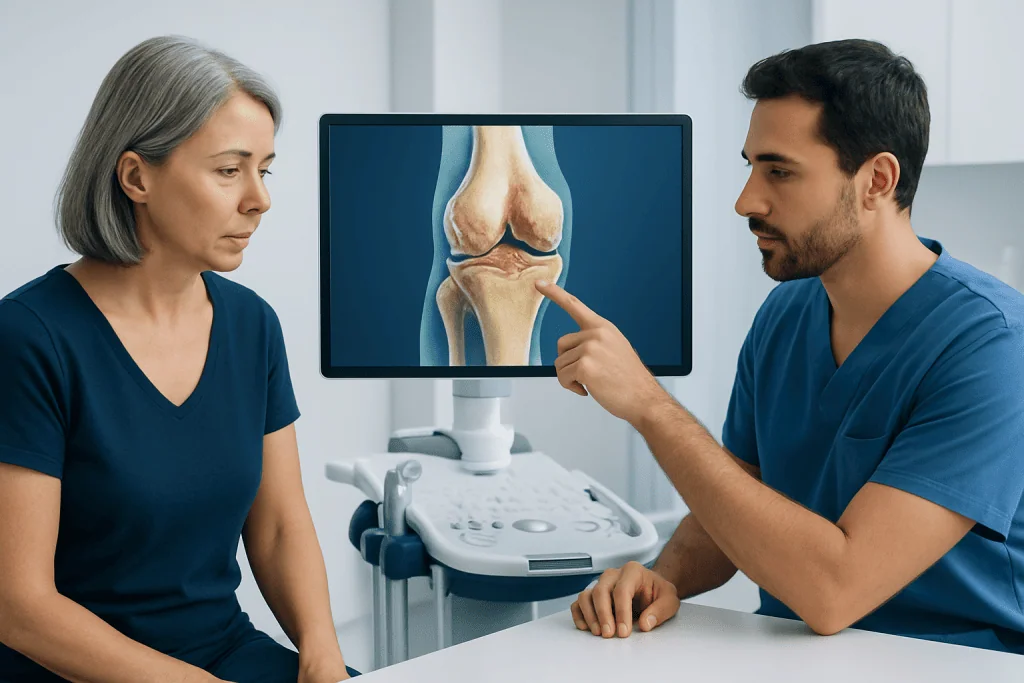
Healthy cartilage helps joints move smoothly and absorbs pressure during standing, walking, gripping, or bending. In arthrosis, this protective surface becomes rougher and thinner. As cushioning decreases, forces within the joint become less evenly distributed, which can contribute to irritation, bone changes, and inflammation in nearby tissues.
Although arthrosis is sometimes described as “wear and tear,” the process is more complex than simple aging. The joint attempts to repair itself, but the balance between breakdown and repair may shift over time. This can lead to small bony growths called osteophytes, reduced flexibility, and tenderness around the joint.
Different joints produce different symptoms. Knee arthrosis may cause pain when climbing stairs or getting up from a chair. Hip arthrosis may lead to groin pain and difficulty walking. Arthrosis in the hands can affect grip strength and fine movements, while spinal arthrosis may contribute to neck or back discomfort and stiffness.
Symptoms and day-to-day impact

The most common symptom of arthrosis is joint pain that is worse with use and often improves with rest. Many people notice morning stiffness or stiffness after sitting still, but it usually lasts less than 30 minutes. As the condition progresses, discomfort may become more frequent and start to affect walking, household tasks, exercise, or sleep.
Other symptoms can include reduced range of motion, a crackling or grinding feeling during movement, mild swelling, tenderness, and a sense that the joint is weaker or less stable. In hand arthrosis, the joints may look enlarged over time. Symptoms often fluctuate, with better and worse periods rather than a steady pattern every day.
Common signs include:
- Pain during or after movement
- Stiffness after rest
- Reduced flexibility
- Swelling around the joint
- Clicking, popping, or grinding sensations
- Difficulty with daily activities such as climbing stairs, dressing, or opening jars
Because several joint conditions can cause similar complaints, persistent symptoms should be assessed by a clinician. In some cases, what seems like arthrosis may overlap with another problem such as knee pain from injury, tendon problems, or inflammatory arthritis.
Causes and risk factors
Arthrosis develops when the joint is exposed to a combination of biological and mechanical stresses over time. Aging is an important factor because cartilage becomes less able to repair itself, but arthrosis can also occur in younger adults. A previous sports injury, fracture involving a joint, or ligament damage can increase the likelihood of later degeneration.
Excess body weight places additional load on weight-bearing joints such as the knees and hips. Repetitive motions from certain jobs or activities may also contribute, especially if combined with poor muscle support or alignment problems. Family history matters as well, particularly for arthrosis affecting the hands.
Other factors linked with higher risk include:
- Older age
- Previous joint injury or surgery
- Obesity or overweight
- Weak muscles around the joint
- Repetitive occupational or sports stress
- Joint malalignment or congenital joint shape differences
- Metabolic conditions that may affect joint tissues
Not everyone with these risk factors will develop arthrosis, and symptoms do not always match imaging findings. Some people have clear joint changes on X-rays with little pain, while others have significant symptoms with less obvious structural damage.
How arthrosis is diagnosed
Diagnosis begins with a medical history and physical examination. A doctor will ask where the pain is felt, when it happens, how long stiffness lasts, and whether symptoms interfere with work, sleep, or mobility. The examination may assess joint swelling, tenderness, range of motion, alignment, gait, and muscle strength.
X-rays are often used when the diagnosis is uncertain or when symptoms are more advanced. They can show joint space narrowing, osteophytes, and changes in the bone around the joint. However, X-rays do not always reflect how much pain a person feels. MRI is usually reserved for selected cases, such as when soft tissue injury or another diagnosis needs to be considered.
Blood tests are not used to confirm arthrosis itself, but they may help rule out inflammatory conditions such as rheumatoid arthritis or gout when symptoms suggest a different cause. If there is sudden swelling, redness, or warmth in a joint, the doctor may also investigate infection or crystal-related arthritis. Some patients may be evaluated through MRI scanning or orthopedic rehabilitation planning when symptoms affect movement and recovery goals.
Treatment options for arthrosis
There is no single cure that reverses established arthrosis, but many treatments can reduce symptoms and improve quality of life. Management is usually individualized based on the affected joint, symptom severity, age, activity level, and general health. The first-line approach often combines exercise, education, pain relief, and strategies to reduce joint strain.
Regular, guided exercise is one of the most effective treatments. Strengthening the muscles around the joint can improve support and reduce pain. Low-impact activities such as walking, swimming, cycling, and flexibility work may help maintain movement. Physical therapy can teach safer movement patterns and build confidence in daily activities.
Medicines may include topical pain relievers, acetaminophen in some cases, or nonsteroidal anti-inflammatory drugs when appropriate and recommended by a clinician. In selected patients, joint injections may be considered for temporary symptom relief. Assistive supports such as braces, canes, shock-absorbing footwear, or hand splints can also be useful depending on the joint involved.
When symptoms remain severe despite conservative treatment, surgery may be discussed. Options depend on the joint and extent of damage, but may include realignment procedures or joint replacement. For advanced knee or hip disease, evaluation by specialists in knee replacement or hip replacement can be appropriate when pain and disability significantly affect daily life.
Self-care, prevention, and living well
Although arthrosis cannot always be prevented, several habits may lower joint stress and help control symptoms. Maintaining a healthy body weight is especially important for the knees, hips, and spine. Even modest weight loss can reduce the load across weight-bearing joints and may improve comfort during everyday movement.
Staying active is usually better than prolonged rest. Gentle, regular activity helps preserve muscle strength, joint flexibility, and balance. People with arthrosis often do well with paced activity, meaning they alternate movement and rest rather than overdoing exercise on good days and becoming inactive on painful days. Heat or cold packs may also provide short-term relief for some individuals.
Helpful self-care measures include:
- Following a regular strengthening and stretching routine
- Choosing low-impact activities over high-impact repetitive loading
- Using supportive footwear
- Improving posture and body mechanics
- Taking breaks during repetitive tasks
- Working with a physical therapist if movement feels limited or painful
Long-term care often works best when it is realistic and sustainable. People do not need to avoid all activity; instead, the goal is to keep joints moving while reducing unnecessary strain. Near the end of the care pathway, some international patients may seek assessment at centers such as Acibadem International, where multidisciplinary specialists in JCI-accredited hospitals diagnose and treat arthrosis.
When to seek medical care
A person should seek medical advice if joint pain lasts more than a few weeks, keeps returning, or starts to interfere with walking, work, exercise, or sleep. Medical assessment is also important if stiffness becomes more pronounced, the joint seems unstable, or daily tasks are becoming harder to manage.
Prompt medical care is especially important if a joint becomes suddenly very swollen, red, hot, or extremely painful, or if symptoms are accompanied by fever or an inability to bear weight. These features are less typical of routine arthrosis and may suggest another problem that needs urgent evaluation.
Early review can help clarify the diagnosis, rule out other causes of joint pain, and create a personalized treatment plan. People with ongoing symptoms do not need to wait until pain becomes severe; earlier support often makes it easier to stay active and protect long-term joint function.
Frequently asked questions
Is arthrosis the same as arthritis?
Arthrosis usually refers to osteoarthritis, a degenerative joint condition caused by gradual cartilage breakdown and changes in the whole joint. Arthritis is a broader term that includes many joint disorders, including inflammatory diseases such as rheumatoid arthritis and gout.
Can arthrosis be cured?
Arthrosis cannot usually be reversed once structural joint changes are established. However, many people manage it successfully with exercise, weight management, pain relief, physical therapy, and, when needed, procedures or surgery.
What is the best exercise for arthrosis?
There is no single best exercise for everyone. In general, low-impact aerobic activity, muscle strengthening, and stretching are helpful, especially when tailored to the affected joint and guided by a clinician or physical therapist.
Does weather make arthrosis worse?
Some people report that cold, damp, or changing weather seems to worsen stiffness or pain. Research findings are mixed, so weather is not considered a direct cause, but symptom fluctuations are common and can be managed with routine self-care.
When is surgery considered for arthrosis?
Surgery is usually considered when pain is severe, function is clearly limited, and nonsurgical treatment no longer provides enough relief. The decision depends on symptoms, imaging findings, overall health, and how much the joint affects daily life.
Can younger adults get arthrosis?
Yes. Although arthrosis becomes more common with age, it can also affect younger adults, especially after joint injury, repetitive heavy loading, congenital joint problems, or obesity.
References
- World Health Organization
- National Institute of Arthritis and Musculoskeletal and Skin Diseases
- American Academy of Orthopaedic Surgeons
- Arthritis Foundation
- National Health Service
This article is for general information only and is not a substitute for professional medical advice. Please consult a qualified doctor about your individual situation.
Joint and spine care in Turkey — expert assessment & treatment
JCI-accredited · board-certified surgeons · reply within 24h
Add us as a Preferred Source to see more of our trusted health content across Google Search, AI Overviews and Discover.