Artificial Intelligence Colonoscopy: Preparation, Procedure and Results
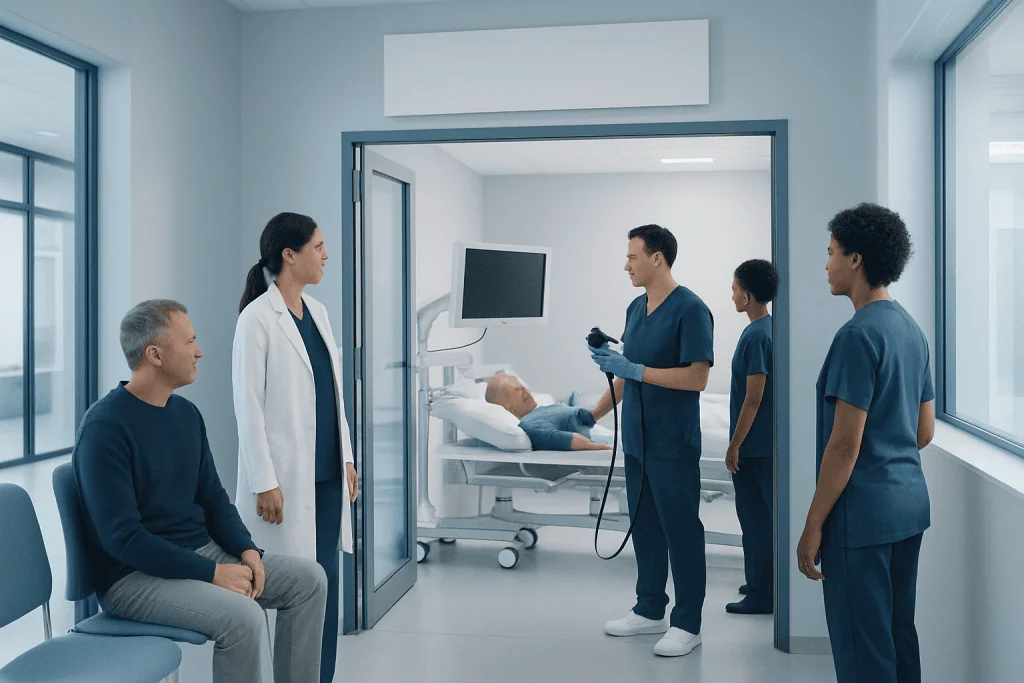
AI-assisted colonoscopy uses real-time image analysis to flag areas that may need closer inspection. The examination itself, bowel preparation, sedation options and recovery are similar to those of a conventional colonoscopy.
Key Takeaways
- AI-assisted colonoscopy uses real-time image analysis to flag areas that may need closer inspection.
- The examination itself, bowel preparation, sedation options and recovery are similar to those of a conventional colonoscopy.
- A clean bowel is essential because stool or liquid can obscure polyps, with or without AI support.
- AI can help detect possible abnormalities but cannot diagnose cancer on its own.
- Screening decisions after age 75 should be individualized according to health, prior screening and personal preferences.
Artificial intelligence colonoscopy is a standard colonoscopy supported by software that analyzes the live camera image and may highlight areas that could be polyps. It does not replace the gastroenterologist’s judgment, bowel preparation, sedation, or biopsy decisions, but can provide an additional visual aid during colorectal cancer screening.
Overview: what artificial intelligence colonoscopy means
Artificial intelligence colonoscopy is a conventional colonoscopy in which specially designed computer software reviews the live video from the colonoscope. The software may place a visual marker around an area with features that could represent a polyp or other abnormal tissue, prompting the doctor to inspect it carefully. The gastroenterologist remains responsible for performing the examination, interpreting findings and deciding whether tissue should be removed or biopsied.
Most AI systems used during colonoscopy are described as computer-aided detection tools. They are intended to support careful inspection and may improve recognition of some polyps, particularly small lesions that can be subtle. They do not make a diagnosis, replace pathology testing, or eliminate the possibility that a lesion could be missed.
Colonoscopy is used for colorectal cancer screening, investigation of symptoms such as rectal bleeding or persistent bowel changes, and follow-up after polyps or colorectal cancer. During the same procedure, many polyps can be removed, which helps prevent some cancers from developing. People may also wish to read about colorectal cancer when discussing screening or follow-up with a clinician.
How AI-assisted colonoscopy works and who may benefit
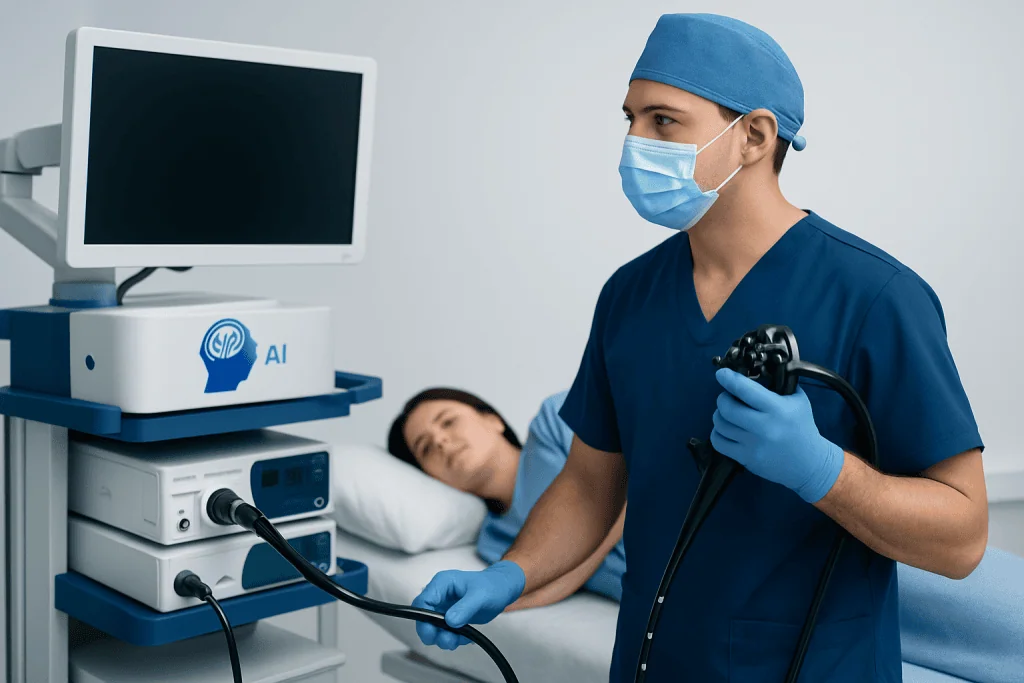
During withdrawal of the colonoscope, the camera sends images to a monitor. AI software analyzes these images rapidly and can alert the endoscopist to a possible lesion. The doctor then evaluates the area directly, using clinical experience and, when appropriate, enhanced imaging techniques. If a polyp is found, it may be removed and sent to a laboratory for histology.
AI assistance may be considered for adults having screening, surveillance or diagnostic colonoscopy when the endoscopy unit has this technology available. It may be particularly useful as an additional aid in examinations where finding small polyps matters. However, its availability and the specific system used vary between hospitals and countries.
People with average colorectal cancer risk usually begin screening according to local guidelines and their clinician’s advice. Earlier or more frequent testing may be appropriate for those with a family history of colorectal cancer, previous polyps, inflammatory bowel disease, inherited cancer syndromes, unexplained iron-deficiency anemia, or concerning bowel symptoms. AI use does not change the need for an individualized screening plan.
A clinician will also review whether colonoscopy is suitable for a person’s overall health, medications and ability to complete bowel preparation. Blood thinners, diabetes medicines, kidney disease, heart or lung conditions, pregnancy, and prior reactions to sedation should be discussed well before the appointment.
Preparing for an artificial intelligence colonoscopy
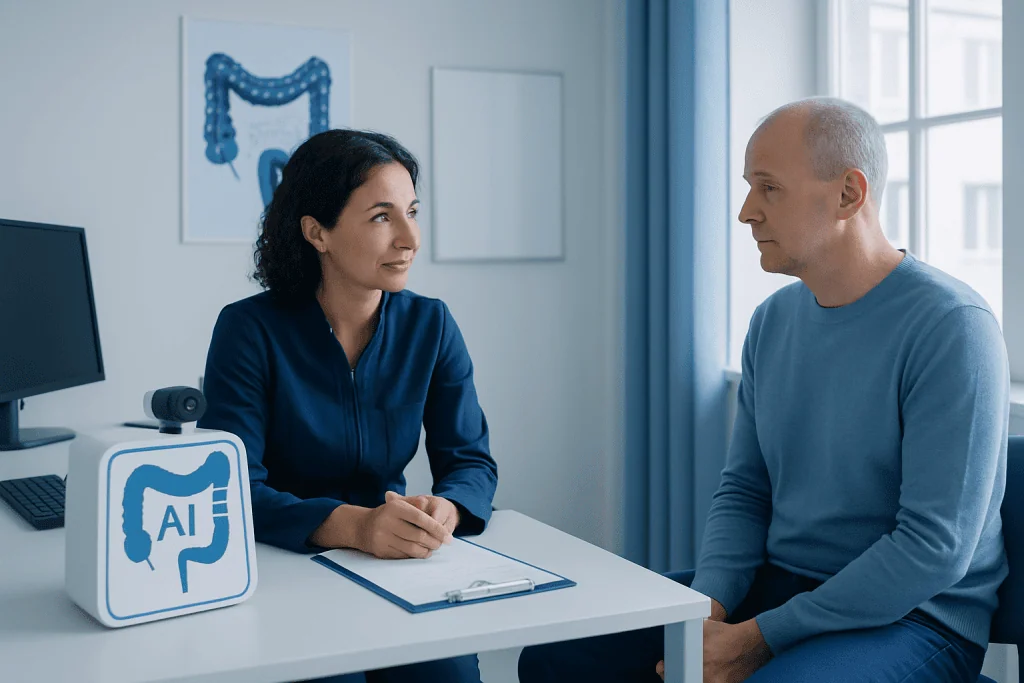
Preparation is one of the most important parts of colonoscopy. The bowel must be empty enough for the doctor and AI system to view the lining clearly. Instructions vary, but they usually involve a temporary low-fiber diet, clear liquids the day before, and a prescribed bowel-cleansing solution. The endoscopy team should provide individualized written instructions.
Clear liquids commonly include water, clear broth, tea or coffee without milk, clear juices without pulp, and gelatin in permitted colors. Red, purple or dark-colored liquids may be restricted because they can resemble blood in the bowel. Solid foods and dairy products are generally stopped at the time specified by the clinical team.
Will I be pooping all night after colonoscopy prep? Frequent, loose bowel movements are expected after starting the bowel preparation, and many people need to stay close to a toilet for several hours. With split-dose preparation, part of the solution is taken the evening before and part closer to the procedure, so bowel movements can continue into the morning. The goal is usually watery yellow or clear output without solid particles; the team should be contacted if vomiting prevents completion of the preparation or if there is uncertainty about the instructions.
Patients should arrange an adult escort if sedation is planned, as driving, operating machinery and making important decisions may not be safe until the following day. It is also important to tell the team about allergies, all medicines and supplements, especially iron, anticoagulants, antiplatelet medicines, insulin and weight-loss medicines, as changes may be needed before the procedure.
Step by step: what happens during the procedure
On arrival, a nurse checks medical history, medications, vital signs and preparation quality. An intravenous line may be placed for fluids or sedation. Sedation practices differ: some people receive light or moderate sedation, while others may receive deeper anesthesia support. The team will explain the planned approach and obtain informed consent.
During the examination, the patient usually lies on the left side. A flexible colonoscope is gently passed through the rectum and guided through the large intestine. Air or carbon dioxide is introduced to open the bowel temporarily and improve visibility. Carbon dioxide is absorbed more quickly than room air and may reduce post-procedure bloating in some people.
The AI software runs in the background while the doctor examines the bowel lining. Any highlighted area is assessed by the endoscopist; some alerts will not be polyps, and some polyps may not be highlighted. When appropriate, a polyp can be removed using specialized instruments passed through the colonoscope. This is part of colonoscopy and usually does not cause pain because the bowel lining has limited pain sensation.
The procedure commonly takes less than an hour, although it may take longer when polyps require removal or the anatomy is difficult to navigate. A biopsy or polyp removal can be performed during the same session, but laboratory results usually take several days. The doctor may share initial visual findings before discharge.
Results, benefits, limitations and recovery timeline
Results may describe a normal examination, one or more polyps, inflammation, diverticula, hemorrhoids, or another finding. Polyps are not automatically cancerous. Their size, number, appearance and pathology report help determine whether they were precancerous and when follow-up screening should occur. A normal colonoscopy does not always mean future screening is unnecessary; the recommended interval depends on risk and examination quality.
The potential benefit of AI assistance is that it offers an additional prompt during visual inspection and may help identify possible polyps. Its limitations are equally important: image quality depends on bowel cleansing, the camera view and proper technique, and AI cannot determine with certainty whether a finding is harmless, precancerous or cancerous. Pathology remains necessary when tissue is sampled or removed.
After sedation, most people rest in a recovery area for a short period. Mild gas, bloating or cramping can occur for several hours, especially because the bowel is expanded during the procedure. Eating can usually resume as directed, often starting with light foods, and normal activities may resume the next day if no complications occur and the clinical team agrees.
Risks are uncommon but include reactions to sedation, bleeding after polyp removal, perforation of the colon, infection and missed lesions. The risk can vary with the reason for colonoscopy, a person’s health conditions and whether a larger polyp is removed. New or worsening severe abdominal pain, fever, persistent vomiting, heavy rectal bleeding, dizziness or fainting after the procedure requires urgent medical assessment.
What is the newest non-invasive colonoscopy procedure?
There is no completely non-invasive test that performs all the functions of colonoscopy. CT colonography, sometimes called virtual colonoscopy, uses CT imaging to create images of the colon. It does not involve passing a scope through the entire bowel and usually does not require sedation, but bowel preparation and temporary inflation of the colon are still needed.
Other non-invasive or minimally invasive screening options include stool-based tests, such as fecal immunochemical testing and stool DNA testing, depending on local guidelines. These tests can be useful screening choices for some people, but an abnormal result generally needs follow-up with a standard colonoscopy. Unlike colonoscopy, they cannot remove a polyp during the same test.
Why was my CT colonography so painful? CT colonography can cause pressure, cramping or discomfort because air or carbon dioxide is introduced into the colon to expand it for clear images. Discomfort may be greater if the bowel is sensitive, there is constipation, the colon is difficult to distend, or a person has conditions that cause abdominal pain. Severe or persistent pain after the test is not expected and should be reported to the imaging or medical team promptly.
For people who need both detailed inspection and the ability to remove polyps, conventional colonoscopy remains an important option. The right test depends on symptoms, individual risk, prior results, medical conditions, preferences and local availability.
Why no more colonoscopies after 75?
Why no more colonoscopies after 75? This is not an automatic rule for every person. Many screening guidelines advise individualized decision-making between ages 76 and 85 because the balance of potential benefit and possible harm changes with age, overall health, life expectancy, previous screening results and personal values. Routine screening is often not recommended beyond age 85, but clinical evaluation of new symptoms remains important at any age.
Someone aged over 75 who has never been screened, has a history of high-risk polyps, has a strong family history, or is otherwise healthy may still benefit from screening or surveillance. In contrast, a person with serious health conditions, limited ability to undergo treatment, or consistently normal prior screening may be less likely to benefit from another routine examination.
Decisions should be made with a doctor who can review prior colonoscopy and pathology reports, medication risks, anesthesia considerations and the person’s goals of care. Age alone should not prevent assessment of symptoms such as bleeding, unexplained anemia, unintended weight loss or a sustained change in bowel habits.
When to seek medical care
Medical advice should be sought promptly for rectal bleeding, black or tarry stools, unexplained iron-deficiency anemia, ongoing changes in bowel habits, persistent abdominal pain, unexplained weight loss, or a new feeling that the bowel does not empty completely. These symptoms often have non-cancer causes, but they deserve assessment rather than self-diagnosis.
After colonoscopy, urgent care is appropriate for severe or increasing abdominal pain, a rigid or swollen abdomen, fever, repeated vomiting, fainting, shortness of breath, or more than a small amount of rectal bleeding. Patients should follow the discharge instructions from their own team, as advice may differ after a biopsy or polyp removal.
For international patients, Acibadem International’s multidisciplinary specialists and JCI-accredited hospitals can assess digestive symptoms, arrange appropriate testing and provide colonoscopy-based care when indicated. A gastroenterologist can help compare screening options and explain whether AI-assisted colonoscopy is available and appropriate for the individual.
Frequently asked questions
Is artificial intelligence colonoscopy different from a regular colonoscopy?
The procedure is performed in the same way as a regular colonoscopy, using a flexible camera to inspect the large intestine. The difference is that AI software analyzes the live video and may highlight areas that deserve closer review. The gastroenterologist makes all clinical decisions.
Does AI colonoscopy detect cancer?
AI may flag visual patterns that could represent a polyp or other abnormality, but it does not diagnose cancer. A doctor must examine the area, and a biopsy or removed polyp may need laboratory analysis to confirm the diagnosis. A normal AI-assisted examination also cannot eliminate all future cancer risk.
Is AI-assisted colonoscopy more painful?
No. AI software works with the endoscopy video and does not change how the scope is inserted or how sedation is given. Comfort depends more on bowel preparation, the procedure itself, anatomy, sedation and whether treatment such as polyp removal is needed.
How long does it take to recover after colonoscopy?
Most people go home the same day and may have temporary bloating or mild cramping for several hours. If sedation was used, an escort is needed and driving should be avoided until the next day or as instructed. Recovery may be different after removal of a large polyp or if a complication occurs.
Can a CT colonography replace colonoscopy?
CT colonography can be an appropriate screening alternative for some people, but it cannot remove a polyp or take a biopsy. If it identifies a significant abnormality, a conventional colonoscopy is generally needed. The best option depends on a person’s risk, symptoms, prior tests and clinical circumstances.
What happens if a polyp is found during an AI colonoscopy?
The doctor assesses the polyp and can often remove it during the same procedure. The tissue is then examined in a laboratory to determine its type and whether it has precancerous or cancerous changes. Follow-up timing is based on pathology and the number, size and features of any polyps.
References
- World Health Organization
- American Cancer Society
- U.S. Preventive Services Task Force
- American Society for Gastrointestinal Endoscopy
- National Institute of Diabetes and Digestive and Kidney Diseases
This article is for general information only and is not a substitute for professional medical advice. Please consult a qualified doctor about your individual situation.
Persistent digestive symptoms? Get evaluated in Turkey
JCI-accredited · board-certified surgeons · reply within 24h
Add us as a Preferred Source to see more of our trusted health content across Google Search, AI Overviews and Discover.