ASD Repair: Procedure, Recovery and Results

ASD repair may prevent strain on the right side of the heart and reduce the risk of longer-term complications. Many suitable secundum ASDs can be closed using a catheter procedure rather than open-heart surgery.
Key Takeaways
- ASD repair may prevent strain on the right side of the heart and reduce the risk of longer-term complications.
- Many suitable secundum ASDs can be closed using a catheter procedure rather than open-heart surgery.
- Recovery is generally faster after catheter closure than after surgical repair, although follow-up remains important after both.
- The best treatment approach depends on the type, size and location of the defect, as well as heart function and other conditions.
- Most people can return to active daily life after successful ASD closure and appropriate follow-up care.
ASD repair is a procedure that closes an atrial septal defect, a hole in the wall between the heart’s upper chambers. Depending on the defect’s size, location and anatomy, closure may be performed with a catheter-delivered device or through open-heart surgery.
ASD Repair Overview
ASD repair is used to close an atrial septal defect (ASD), an opening in the septum, the wall that separates the heart’s two upper chambers. When the opening allows too much blood to flow from the left atrium to the right atrium, the right side of the heart and the lungs may receive extra blood flow. Over time, this can enlarge the right side of the heart and, in some people, contribute to rhythm problems, reduced exercise tolerance or pressure changes in the lung blood vessels.
Not every ASD requires closure. Small defects may close during childhood or remain too small to affect heart function. A cardiologist may recommend repair when testing shows a significant left-to-right shunt, enlargement of the right heart chambers, symptoms, or particular risks linked to the defect. The decision is individualized and considers the person’s age, anatomy and overall health.
There are two main approaches: transcatheter device closure and surgical ASD repair. A catheter-based procedure is often possible for a common type called a secundum ASD. Surgery may be needed for other types of defects, very large openings, unsuitable tissue around the defect, or when another heart operation is required at the same time. More background on the condition is available in atrial septal defect information.
How ASD Repair Works and Who May Be a Candidate
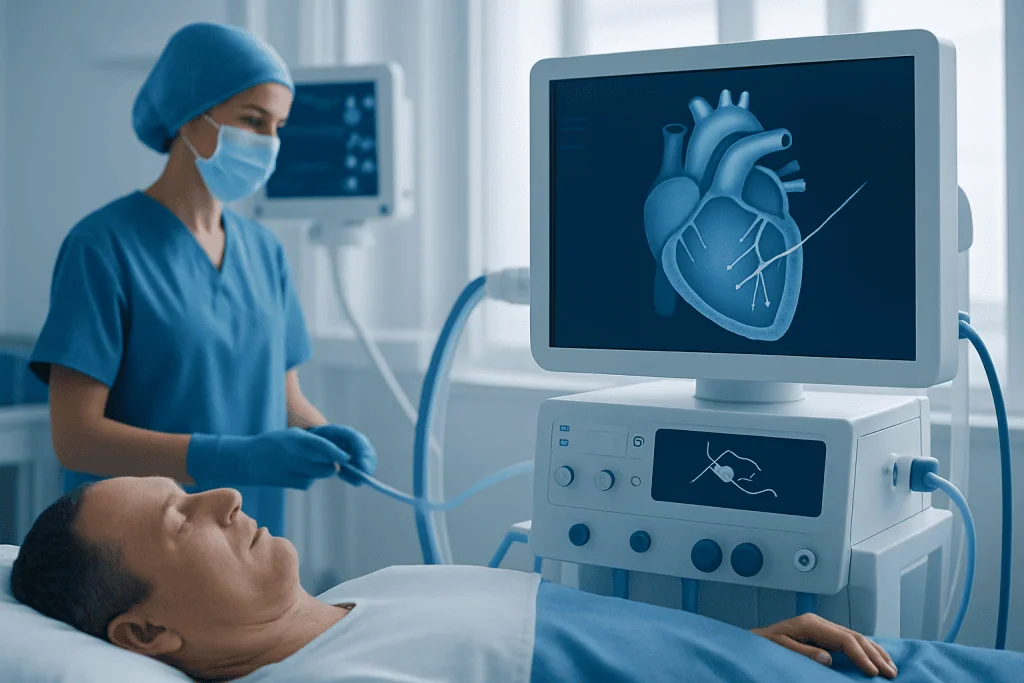
The goal of ASD repair is to stop the abnormal blood flow across the opening while preserving normal heart function. During transcatheter closure, a specialist guides a folded closure device through a blood vessel, usually from the groin, into the heart. The device opens on both sides of the defect and seals it. Heart tissue gradually grows over the device.
Surgical repair closes the opening directly. A surgeon may place stitches for a small defect or sew in a patch made from the patient’s own tissue or a medical material for a larger opening. Surgery is generally performed under general anaesthesia and requires a heart-lung machine while the repair is completed.
Before recommending treatment, the cardiac team assesses the ASD type, the direction and amount of blood flow, right-heart size, lung pressure and any associated heart conditions. Echocardiography is central to this assessment. A transoesophageal echocardiogram, cardiac MRI, CT scan or cardiac catheterisation may be used when more detail is needed. People with severe, irreversible pulmonary vascular disease may need highly specialized assessment because closure is not appropriate in every situation.
Children and adults can both undergo ASD repair. In adults diagnosed later in life, treatment may still be beneficial when evaluation shows that closure is safe and likely to reduce heart strain. Assessment by specialists experienced in congenital heart disease helps identify the most suitable option.
ASD Repair Steps: Catheter Closure and Surgery
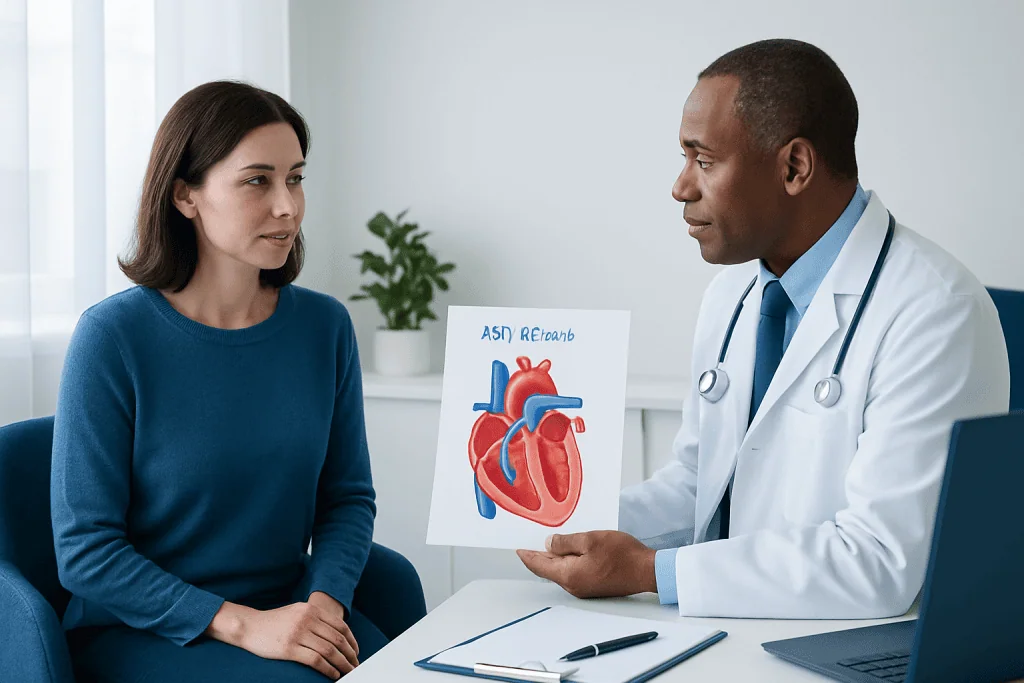
For catheter-based ASD repair, the person receives sedation or general anaesthesia, depending on age, clinical needs and local practice. The interventional cardiologist inserts a thin tube into a vein in the groin and advances it to the heart using X-ray and echocardiographic guidance. The defect is measured, and the closure device is positioned, carefully checked and released only when it is stable and does not interfere with nearby heart structures.
For surgical repair, the patient is given general anaesthesia. The surgeon reaches the heart through an incision in the chest, connects the patient to a heart-lung machine and closes the defect with sutures or a patch. Some surgical approaches may use smaller incisions in selected patients, but the appropriate technique depends on the anatomy and the surgical team’s assessment.
Both approaches include continuous monitoring of heart rhythm, blood pressure and oxygen levels. Before discharge, an echocardiogram is commonly performed to confirm that the repair is secure and to check heart function. The primary treatment pathway is described in atrial septal defect closure.
After device closure, clinicians may prescribe medicines that reduce the chance of a clot forming on the device for a limited period. The exact medication plan, activity restrictions and schedule for follow-up imaging vary by age, procedure type and individual medical history.
ASD Repair Recovery Timeline and Post-Operative Care
ASD repair recovery time differs considerably between catheter closure and surgery. After an uncomplicated catheter procedure, many people stay in hospital overnight or for a short observation period. Mild groin discomfort, bruising or tiredness can occur, and light daily activities are often resumed within several days. Strenuous exercise and heavy lifting are usually postponed until the cardiology team confirms it is safe.
After surgical repair, the hospital stay is commonly longer because the chest incision and surrounding tissues need time to heal. During the first weeks, fatigue, chest soreness and changes in sleep or appetite are common. Gradual walking and breathing exercises support recovery, while lifting, driving and more demanding activity may be restricted initially. Full ASD repair surgery recovery time can extend over several weeks, and some people need longer depending on age, fitness and whether other heart procedures were performed.
At ASD repair post-op appointments, the team checks the wound or groin site, reviews symptoms and medicines, and performs heart imaging when needed. Patients should keep follow-up visits even if they feel well. These reviews help confirm closure, monitor heart rhythm and guide a safe return to work, school, travel and exercise.
Seek urgent medical advice after discharge for worsening shortness of breath, fainting, chest pain, fever, a rapidly increasing swelling at the catheter site, persistent bleeding, or signs of infection around a surgical wound. These symptoms do not always indicate a serious problem, but prompt assessment is important.
How Long Does It Take to Recover From an ASD Repair?
Recovery after catheter ASD closure is often measured in days to a few weeks for ordinary daily activities, while recovery after open surgical repair commonly takes several weeks. The individual ASD repair recovery period depends on the method used, the person’s age, baseline health, heart function and whether there were additional procedures or complications.
Feeling tired for a short time is common after either approach. A cardiologist or surgeon will provide personalized guidance about returning to work or school, driving, swimming, sports and heavy lifting. Following those instructions is more reliable than using a fixed timeline, particularly for children, older adults and people with other heart or lung conditions.
Cardiac rehabilitation may be recommended for some adults after surgery or when reduced fitness has developed over time. A supervised program can help rebuild activity gradually and address healthy lifestyle habits. Cardiac rehabilitation may be part of a broader recovery plan when clinically appropriate.
What Is the Success Rate of Atrial Septal Defect Repair?
Atrial septal defect repair is an established treatment with very good outcomes when performed for appropriate indications by experienced congenital heart and interventional cardiology teams. Device closure is highly effective for carefully selected secundum ASDs, and surgical closure provides a reliable solution when catheter treatment is not suitable.
Success is assessed not only by whether the opening is closed, but also by improvements in abnormal blood flow, right-heart enlargement and symptoms over time. Some patients have a small residual leak initially; this may resolve, remain clinically insignificant or require further evaluation depending on its size and effects.
Even after a successful repair, regular follow-up is important. Some people, especially those repaired later in adulthood or those with prior rhythm disturbances, may continue to have or develop atrial arrhythmias. Long-term congenital cardiology care supports early recognition and management of these concerns.
Can You Live a Normal Life After ASD Surgery?
Many people live active, full lives after successful ASD surgery or device closure. As the heart adapts after repair, symptoms such as tiredness, breathlessness or reduced exercise capacity may improve, particularly when treatment occurs before permanent changes develop in the heart or lung circulation.
Long-term recommendations vary. Some people need only occasional cardiology review after an uncomplicated repair, while others require more regular monitoring because of the ASD type, age at repair, residual shunting, pulmonary pressure or rhythm history. The cardiologist can also advise about exercise, pregnancy planning, dental care and any need for preventive antibiotics in specific circumstances.
A heart-healthy lifestyle remains valuable after repair. Not smoking, maintaining a healthy weight, being physically active within medical advice, managing blood pressure and attending planned appointments all support cardiovascular wellbeing. If palpitations, fainting, new breathlessness or reduced exercise tolerance appear later, they should be discussed with a healthcare professional.
Is ASD a Major Surgery and When to Seek Medical Care?
ASD repair is considered major surgery when it is performed through an open chest operation with general anaesthesia and heart-lung bypass. However, many ASDs can be treated through a less invasive catheter procedure, which does not involve opening the chest and usually has a shorter recovery. Both options are carefully planned procedures that should be performed by a specialized cardiac team.
A person should arrange medical assessment if they have unexplained breathlessness during activity, reduced stamina, frequent palpitations, leg swelling, fainting or a known heart murmur. These symptoms have many possible causes, but a clinical examination and appropriate heart tests can clarify whether an ASD or another condition is contributing.
Urgent medical care is needed for severe chest pain, sudden severe breathlessness, fainting with ongoing symptoms, blue or grey discoloration of the lips, or symptoms of stroke such as facial drooping, arm weakness or speech difficulty. After an ASD repair, new or worsening symptoms should also be reported promptly to the treating team.
Acibadem International’s multidisciplinary specialists and JCI-accredited hospitals evaluate and treat congenital heart conditions, including ASD repair, for international patients. Related cardiac care may include heart valve surgery when a separate valve condition is present and requires treatment.
Frequently asked questions
What is ASD repair?
ASD repair closes an opening between the heart’s upper chambers. It may be done with a catheter-delivered closure device or with surgery, depending on the defect’s anatomy and the patient’s overall heart health.
Is ASD a major surgery?
Open surgical ASD repair is major heart surgery because it involves general anaesthesia, an incision in the chest and use of a heart-lung machine. Catheter-based device closure is less invasive and does not require open-chest surgery, but it is still a specialized cardiac procedure.
How long does it take to recover from an ASD repair?
Many people return to light activities within days after catheter closure, although full activity should follow the cardiologist’s advice. Recovery after surgical repair commonly takes several weeks, with the exact timeline depending on healing, age, general health and any additional heart treatment.
What is the success rate of atrial septal defect repair?
ASD closure generally has very good outcomes when the procedure is appropriate for the person’s defect and is performed by an experienced team. Follow-up imaging and cardiology visits are still needed to confirm closure and monitor heart rhythm and function over time.
Can you live a normal life after ASD surgery?
Many people can return to work, school, exercise and other usual activities after successful ASD repair and recovery. Ongoing follow-up may be recommended, particularly for people repaired in adulthood or those with rhythm problems, elevated lung pressures or other heart conditions.
Will I need medication after ASD repair?
Some people are prescribed medication for a limited period after device closure to reduce the risk of clot formation while the device becomes covered by heart tissue. Medication needs after surgery vary, so the treating cardiologist will provide an individualized plan.
References
- American Heart Association
- European Society of Cardiology
- Adult Congenital Heart Association
- Mayo Clinic
- National Heart, Lung, and Blood Institute
This article is for general information only and is not a substitute for professional medical advice. Please consult a qualified doctor about your individual situation.
Explore treatments in Turkey — costs, top hospitals & a free quote
JCI-accredited · board-certified surgeons · reply within 24h
Add us as a Preferred Source to see more of our trusted health content across Google Search, AI Overviews and Discover.
Check your numbers in seconds
BMI, calories, due date, blood pressure and 30+ more clinical calculators — free, instant, doctor-reviewed ranges.