Augmented Reality Surgery: What Patients Should Expect

Augmented reality surgery overlays digital information onto the surgical field to help guide the surgeon. It is used in selected procedures, not every operation, and suitability depends on the condition and surgical team.
Key Takeaways
- Augmented reality surgery overlays digital information onto the surgical field to help guide the surgeon.
- It is used in selected procedures, not every operation, and suitability depends on the condition and surgical team.
- Patients can expect the usual surgical process of consultation, imaging, anesthesia, recovery, and follow-up.
- Potential benefits include improved visualization, planning, and accuracy, but outcomes still depend on many factors.
- Questions about safety, alternatives, and the surgeon’s experience are important before any procedure.
Augmented reality surgery uses digital images layered onto the surgeon’s view to support planning, navigation, and precision during certain operations. For patients, it does not usually change the basic steps of surgery, but it can affect how the procedure is prepared and guided.
Overview of augmented reality surgery
Augmented reality surgery is a technology-assisted approach that helps surgeons view important digital information during an operation. In simple terms, it adds computer-generated images, markers, or anatomical guidance to the surgeon’s real-world view. This can help the surgical team understand the exact location of structures such as bones, blood vessels, tumors, or nerves while operating.
Unlike virtual reality, which places a person in a fully digital environment, augmented reality keeps the real operating field visible and adds useful layers of information to it. These layers are often created from preoperative scans such as CT or MRI images, or from live imaging used during the procedure. The goal is to support decision-making and improve orientation in complex anatomy.
For patients, augmented reality surgery is best thought of as a tool the surgeon may use rather than a completely different type of operation. The planned procedure, anesthesia, hospital stay, and recovery process are often similar to standard surgery. What changes is the way the surgeon plans and navigates the operation.
How augmented reality is used in the operating room
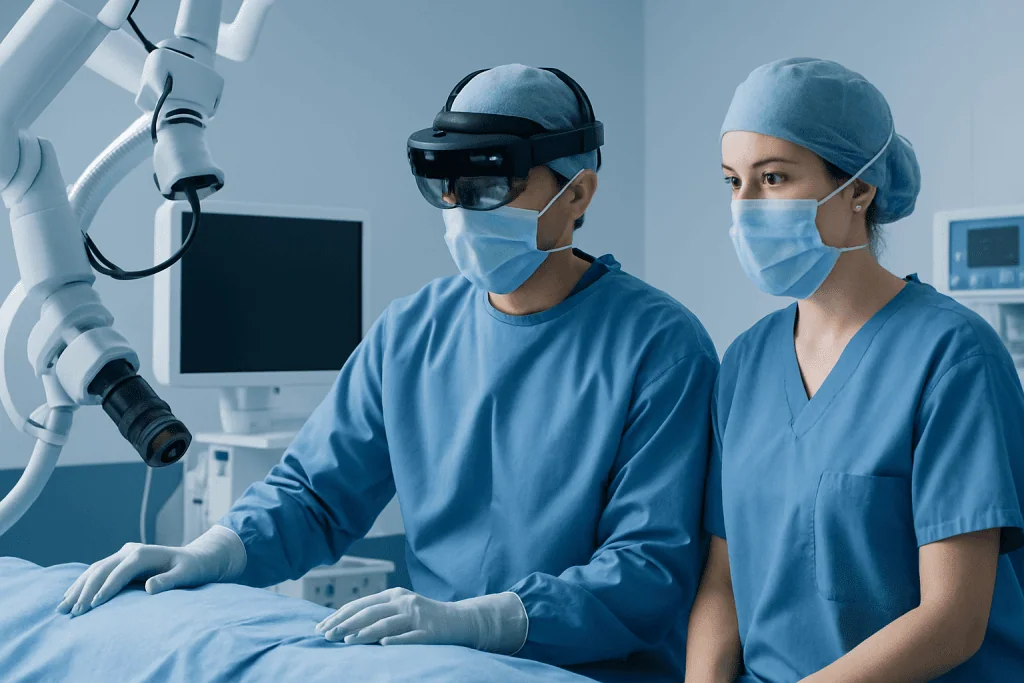
In the operating room, augmented reality may be displayed on a monitor, through a microscope, on a surgical navigation screen, or through specialized viewing devices. Before surgery, imaging scans are processed to create a detailed map of the patient’s anatomy. During the operation, the software aligns that map with the patient’s body so the surgeon can use it as a guide.
This technology can be especially helpful when anatomy is difficult to see directly or when the procedure requires very accurate positioning. Examples may include some neurosurgical, orthopedic, ENT, spinal, liver, and minimally invasive procedures. In these settings, augmented reality can work alongside other tools such as navigation systems, robotics, endoscopy, or intraoperative imaging.
Even with advanced technology, the surgeon remains in full control of every decision. Augmented reality does not replace surgical skill, judgment, or standard safety checks. Instead, it is one part of a broader system designed to improve visualization and support careful, individualized treatment.
- Preoperative imaging is used to build a 3D anatomical model.
- The model is matched to the patient during surgery.
- Digital guidance helps the surgeon identify targets and avoid critical structures.
- The team still follows routine surgical safety procedures throughout the operation.
What patients should expect before surgery
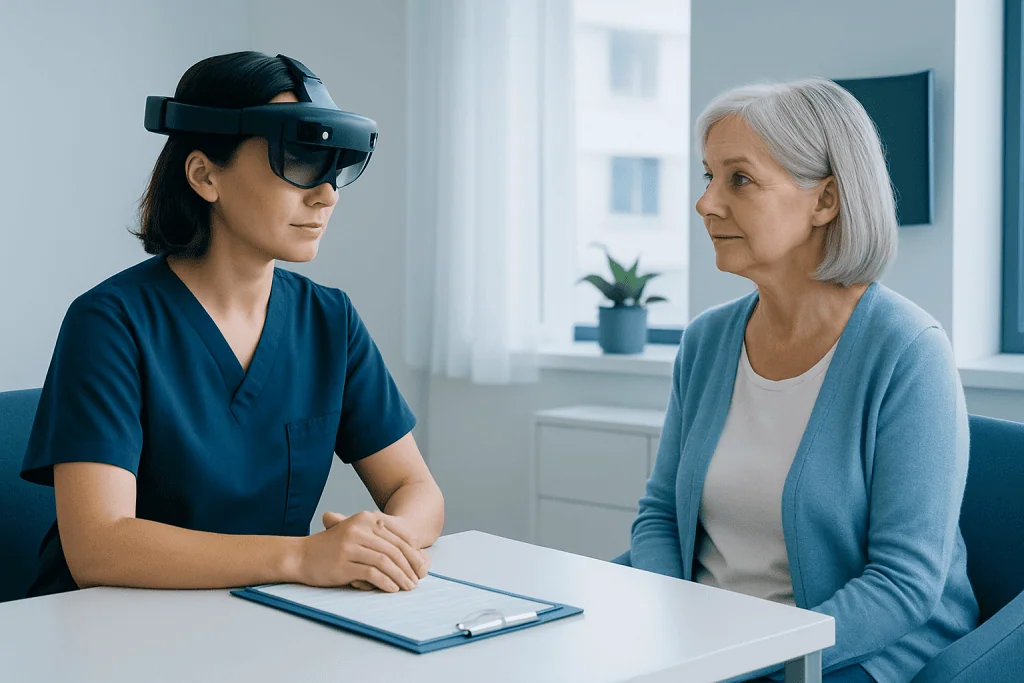
Before augmented reality surgery, the patient usually goes through the same important steps as with any planned operation. These include a surgical consultation, review of symptoms, physical examination, and discussions about the purpose of surgery, expected benefits, possible risks, and alternatives. The surgeon will explain whether augmented reality is appropriate for the specific condition and why it may be useful.
Imaging plays a key role in many augmented reality procedures. The patient may need CT, MRI, X-ray, ultrasound, or other scans so the surgical team can map the area being treated. Sometimes these scans are done days or weeks before surgery; in other cases, additional imaging may be needed closer to the procedure date. Good-quality imaging helps improve the accuracy of the digital overlay.
Patients should also expect routine preoperative planning such as blood tests, medication review, and anesthesia assessment. They may be asked to stop certain medicines for a period before surgery, especially drugs that can affect bleeding, but any medication change should only be made under medical guidance. Fasting instructions and arrival times are usually the same as for standard surgery.
It is reasonable for patients to ask practical questions before the procedure. Helpful topics include why augmented reality is being used, whether there are non-AR alternatives, how the team checks the accuracy of the system, and what the expected recovery will be. Clear communication can help patients feel informed and reassured.
Possible benefits and limitations
The main potential benefit of augmented reality surgery is improved visualization. By showing hidden or hard-to-judge structures in relation to the surgical field, it may help the surgeon work more precisely. This can be particularly valuable in delicate or complex operations where small differences in location matter.
Augmented reality may also support better surgical planning and orientation. It can help define the borders of a target area, guide the path of an instrument, or reduce the need to mentally translate 2D scans into 3D anatomy during the procedure. In some situations, this may contribute to a more efficient workflow and help preserve important nearby tissues.
At the same time, augmented reality has limitations. The digital overlay must match the patient’s anatomy accurately, and body position, tissue movement, breathing, or changes during surgery can affect alignment. The technology may not be suitable or necessary for every procedure. Its usefulness depends on the type of surgery, the imaging quality, the equipment available, and the experience of the surgical team.
Patients should also understand that no technology can guarantee a perfect outcome. Surgical results depend on many factors, including the underlying disease, overall health, anatomy, and how the body heals afterward. Augmented reality is a support tool, not a promise of a specific result.
Safety, risks, and how accuracy is checked
The general risks of augmented reality surgery are usually the risks of the underlying operation rather than the technology itself. These may include bleeding, infection, anesthesia-related complications, pain, blood clots, or injury to nearby structures, depending on the type of surgery being performed. The surgeon explains these risks based on the individual procedure.
Technology-specific concerns usually relate to accuracy and reliability. The surgical team must make sure the digital images are properly registered to the patient’s anatomy. If there is any doubt about alignment, the team can verify positioning using standard methods such as direct visualization, anatomical landmarks, fluoroscopy, ultrasound, endoscopy, or other intraoperative checks.
Hospitals using advanced surgical guidance systems follow protocols for equipment setup, calibration, sterilization, and workflow safety. Teams are trained to recognize when digital guidance is useful and when it should be confirmed or set aside. This is an important point for patients: the surgeon does not rely blindly on the overlay but uses it together with clinical judgment and established surgical methods.
Patients can ask how the team manages unexpected findings during the operation. A well-prepared team can adapt if anatomy differs from the preoperative images or if the surgical plan needs to change. Safety depends not only on the device, but also on the experience and coordination of the full operating team.
Recovery and follow-up after augmented reality surgery
Recovery after augmented reality surgery is usually determined by the operation itself, not by the fact that augmented reality was used. For example, recovery after spine surgery, brain surgery, orthopedic surgery, or minimally invasive abdominal surgery will differ because the procedures are different. The patient’s age, general health, and the extent of surgery also influence healing.
After the procedure, patients can expect the usual postoperative care: monitoring, pain control, wound care, movement guidance, and instructions about medicines, activity, bathing, eating, and follow-up visits. Some patients go home the same day, while others need a hospital stay. The surgeon will explain what is normal during recovery and which symptoms should prompt a call.
In some cases, follow-up imaging may be recommended to assess healing or confirm the result of the operation. Rehabilitation or physical therapy may also be part of recovery, especially after orthopedic, spinal, or neurologic procedures. Patients should follow the care plan carefully and avoid comparing their recovery too closely with someone else’s.
For international patients seeking advanced surgical care, Acibadem International’s multidisciplinary specialists and JCI-accredited hospitals diagnose and treat complex conditions using modern imaging and surgical guidance technologies when appropriate. The best approach is always individualized after a specialist assessment.
When to ask more questions or seek medical advice
Before surgery, patients should speak up if anything is unclear. It is especially important to ask for more explanation if they do not understand the goal of the operation, why augmented reality is being used, what the alternatives are, or what risks and recovery should be expected. Informed consent works best when the patient feels comfortable asking questions.
After surgery, medical advice should be sought promptly if there are signs of possible complications. These may include fever, increasing redness or swelling around the wound, heavy bleeding, worsening pain that is not controlled as advised, chest pain, shortness of breath, confusion, new weakness, or sudden changes related to the area that was operated on. The exact warning signs can vary by procedure, so the discharge instructions should be followed carefully.
Patients with ongoing concerns during recovery should contact their surgeon rather than trying to manage new symptoms alone. Timely review can help distinguish normal healing from a problem that needs treatment. In most cases, good communication and careful follow-up are the best way to support a safe recovery.
Frequently asked questions
Is augmented reality surgery the same as robotic surgery?
No. Augmented reality surgery refers to digital guidance layered onto the surgeon’s view, while robotic surgery uses robotic instruments controlled by the surgeon. Some procedures may use both technologies together, but they are not the same thing.
Does augmented reality surgery make an operation safer?
It may improve visualization and help guide precision in selected procedures, which can support safer decision-making. However, safety still depends on the type of surgery, the patient’s health, and the experience of the surgical team. No technology can remove all surgical risk.
Will the patient feel anything different because augmented reality is used?
Usually not. From the patient’s point of view, the experience is often similar to standard surgery, including anesthesia, preparation, and recovery. The main difference is in how the surgeon plans and navigates the operation.
Is augmented reality used for every kind of surgery?
No. It is most useful in selected procedures where detailed anatomical guidance can help, such as some brain, spine, orthopedic, ENT, or complex minimally invasive surgeries. Whether it is appropriate depends on the condition, imaging, equipment, and specialist expertise.
What should patients ask their surgeon before augmented reality surgery?
Helpful questions include why this technology is being recommended, what benefits are expected, what the alternatives are, and how the team checks accuracy during the procedure. Patients can also ask about the surgeon’s experience, expected recovery time, and possible complications.
Can augmented reality surgery shorten recovery time?
Not necessarily. Recovery is mainly related to the underlying operation and the patient’s overall health. In some situations, better surgical precision may support a smoother recovery, but this cannot be assumed for every case.
References
- World Health Organization
- U.S. Food and Drug Administration
- National Institutes of Health
- American College of Surgeons
- Radiological Society of North America
This article is for general information only and is not a substitute for professional medical advice. Please consult a qualified doctor about your individual situation.
Explore treatments in Turkey — costs, top hospitals & a free quote
JCI-accredited · board-certified surgeons · reply within 24h
Add us as a Preferred Source to see more of our trusted health content across Google Search, AI Overviews and Discover.

More from the Health Library



Related Specialists

Dr. Ercan Biçakci
Gastroenterology
Prof. Dr. Sevgi Bilgen
Anesthesiology
Prof. Dr. Deniz Konya (m)
Neurosurgery
Assoc. Prof. Dr. Mehmet Altiparmak
Aesthetic Plastic & Reconstructive Surgery