Avastin Injection — Explained by Medical Evidence, Not Myths

Avastin is a targeted anti-VEGF medicine, not traditional chemotherapy, although it is often given alongside chemotherapy. For cancer, Avastin is administered into a vein by trained healthcare professionals under a treatment plan tailored to the individual.
Key Takeaways
- Avastin is a targeted anti-VEGF medicine, not traditional chemotherapy, although it is often given alongside chemotherapy.
- For cancer, Avastin is administered into a vein by trained healthcare professionals under a treatment plan tailored to the individual.
- Eye injections of bevacizumab are commonly used off-label for some retinal diseases and differ from intravenous cancer treatment.
- Potential side effects include raised blood pressure, bleeding, delayed wound healing and protein in the urine, so regular monitoring is important.
- Patients should tell their care team about planned surgery, pregnancy, blood-thinning medicines and any new or concerning symptoms.
Avastin injection is the brand name for bevacizumab, a targeted medicine that blocks vascular endothelial growth factor (VEGF), a signal involved in forming blood vessels. It is used intravenously for several cancers and may also be used by eye specialists as an off-label injection for certain retinal conditions.
What Is Avastin Injection?
Avastin injection contains bevacizumab, a laboratory-made antibody medicine. It works by blocking vascular endothelial growth factor, usually called VEGF. VEGF encourages the body to grow new blood vessels; while this is a normal part of healing and development, some cancers use this process to establish and maintain their blood supply.
By reducing VEGF activity, bevacizumab can help slow the growth of blood vessels that support a tumor. It does not directly kill cancer cells in the same way as many chemotherapy medicines. Instead, it is a form of targeted treatment that may be used with chemotherapy, other anticancer medicines, or in selected situations, as part of a maintenance strategy.
The term “Avastin injection” can also cause confusion because bevacizumab is used in two very different clinical settings. In cancer care, it is given as an intravenous infusion into a vein. In ophthalmology, bevacizumab may be injected into the eye for retinal conditions; this use is generally considered off-label, meaning it is not included in the medicine’s original product authorization for cancer.
Evidence-Based Uses: Cancer and Eye Conditions
Depending on the country, regulatory approval and the person’s clinical circumstances, intravenous Avastin may be used for certain colorectal, lung, kidney, cervical, ovarian, fallopian tube, peritoneal, liver and brain cancers. It is not appropriate for every person with these cancers. Oncologists consider the cancer type, stage, molecular features where relevant, previous treatment, overall health, and the likely balance of benefit and risk.
For cancer, Avastin is commonly combined with other medicines because treatments can work through complementary mechanisms. The expected aim may be to shrink or control cancer, delay progression, reduce symptoms, or support a broader treatment plan. The medical team will explain the intended goal before treatment begins and review it during follow-up visits.
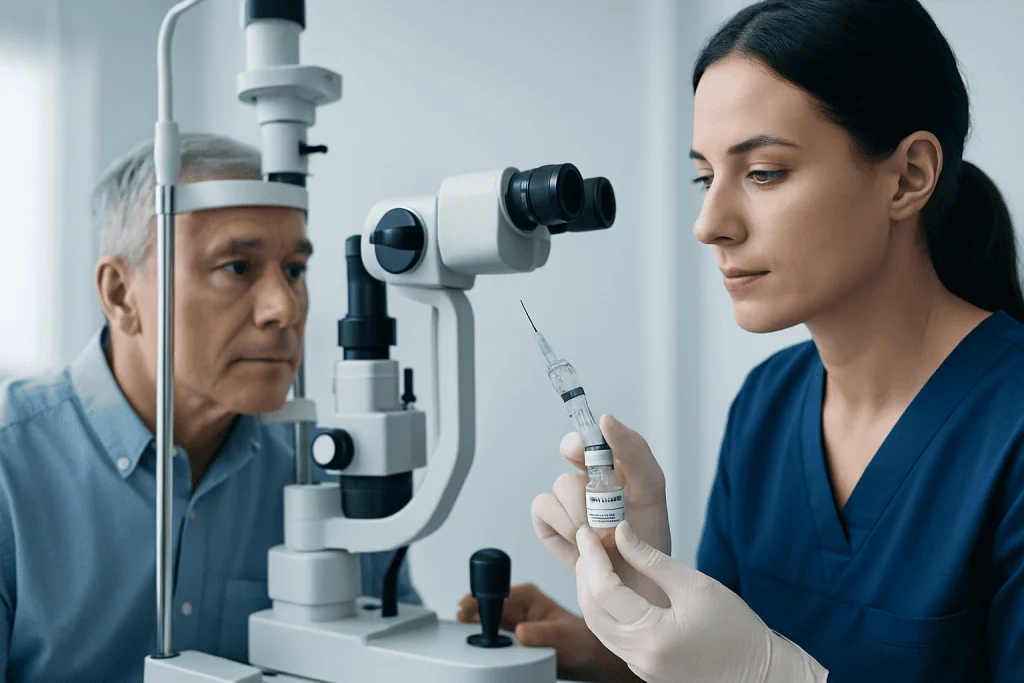
In eye care, ophthalmologists may use intravitreal bevacizumab for conditions driven by abnormal blood-vessel growth or leakage in the retina, including wet age-related macular degeneration, diabetic macular edema, and macular edema related to retinal vein occlusion. The medicine is prepared and administered using strict sterile procedures. It is important to understand that this is distinct from cancer infusion treatment and should only be performed by an appropriately trained eye specialist.
Off-label use does not mean that a treatment is unproven or unsafe by definition. It means clinicians rely on available research, professional guidance, experience and an individual assessment rather than an indication listed in the original product license. A patient should be given an opportunity to discuss the reasons for use, alternatives, expected benefits and possible risks.
How Avastin Is Given and Monitored

In oncology, Avastin is given through a vein in an infusion clinic or hospital setting. The first infusion is often delivered more slowly so the team can watch for an infusion reaction. If it is tolerated, later infusions may take less time. Treatment intervals and duration vary according to the cancer being treated and the medicines used alongside it.
Before and during therapy, the care team may check blood pressure, urine protein, blood counts, kidney and liver function, and symptoms. Imaging scans, physical examinations and laboratory tests help assess whether treatment is helping and whether it remains safe to continue. Monitoring is not a sign that a serious problem is expected; it is a routine part of using medicines that affect blood-vessel signaling.
For eye treatment, the ophthalmologist typically checks vision and examines or images the retina before deciding whether another injection is needed. The eye is numbed, cleaned and treated in a controlled clinical environment. Temporary irritation, a gritty sensation, mild redness on the white of the eye, or floaters can occur after the procedure, but significant pain or a rapid loss of vision needs urgent assessment.
Patients should not change, postpone or stop treatment on their own. If a concern arises between appointments, the oncology or ophthalmology team can advise whether an earlier review, additional test, or change in treatment is needed.
Possible Side Effects and Important Risks
All medicines can cause side effects, but not everyone experiences them. With intravenous Avastin, relatively common effects can include tiredness, high blood pressure, headache, nosebleeds, changes in taste, diarrhea, reduced appetite, skin changes, and protein in the urine. Some symptoms may also come from chemotherapy or the cancer itself, so the clinical team considers the full treatment context.
Less common but potentially serious complications include significant bleeding, blood clots, gastrointestinal perforation, fistula formation, impaired wound healing, severe high blood pressure, kidney problems, heart problems, and a rare neurological condition called posterior reversible encephalopathy syndrome. The individual risk depends on factors such as cancer location, recent surgery, prior radiation, blood pressure, other illnesses and concurrent medicines.
People receiving Avastin should report symptoms such as unusual bleeding or bruising, coughing or vomiting blood, black stools, severe or persistent abdominal pain, chest pain, shortness of breath, sudden weakness, confusion, seizures, severe headache, or a painful swollen leg. These symptoms do not always mean Avastin is the cause, but they require timely medical evaluation.
After an eye injection, urgent symptoms include increasing eye pain, worsening redness, marked light sensitivity, pus-like discharge, a curtain or shadow in vision, flashes, many new floaters, or sudden reduced vision. Although serious eye complications are uncommon, prompt review is essential because infections and retinal problems need early treatment.
Who Needs Extra Caution?
Before starting Avastin, patients should tell their clinician about high blood pressure, heart disease, prior stroke or blood clots, bleeding disorders, stomach or bowel conditions, kidney disease, diabetes, and any history of poor wound healing. These details help the team decide whether bevacizumab is suitable and what monitoring is needed.
Planned surgery and dental procedures are especially important to discuss. Because VEGF has a role in healing, clinicians may need to schedule Avastin around major operations and may delay treatment until wounds have healed appropriately. The exact timing is individualized; patients should follow their oncology team’s instructions rather than relying on a general timetable.
Bevacizumab can harm an unborn baby and may affect fertility. People who are pregnant, trying to become pregnant, or who could become pregnant should discuss contraception and reproductive planning before treatment. Breastfeeding should also be discussed with the prescribing clinician, as recommendations may depend on the treatment situation and local guidance.
Patients should provide a full list of prescription medicines, over-the-counter products, vitamins and supplements. In particular, anticoagulants, antiplatelet medicines and anti-inflammatory pain medicines may be relevant when clinicians assess bleeding risk. No medication should be stopped without advice from the clinician who prescribed it.
Common Myths About Avastin
Myth: Avastin is simply chemotherapy. Avastin is a targeted biologic medicine that affects blood-vessel signaling. It is often given with chemotherapy, which may be why the two are confused, but they work differently and have different patterns of side effects and monitoring.
Myth: An injection means the treatment is minor or risk-free. Whether given into a vein or into the eye, bevacizumab is a prescription treatment that requires clinical assessment and follow-up. Its benefits can be meaningful for selected patients, but it also has important risks that should be considered in the context of the individual condition.
Myth: Off-label eye use means the medicine is experimental. Ophthalmologists have used intravitreal bevacizumab extensively in clinical practice for retinal vascular diseases. Off-label prescribing is a recognized medical practice when supported by evidence and professional judgment, but patients should still receive clear information and give informed consent.
Myth: Side effects mean treatment must always stop. Some side effects can be monitored or treated while therapy continues, whereas others may require delaying, changing or ending treatment. The decision should be made with the treating team, based on symptom severity, test results and the expected benefit of ongoing therapy.
When to Seek Medical Care
People receiving intravenous Avastin should contact their oncology team promptly for new or worsening symptoms, especially persistent headaches, high home blood-pressure readings if monitoring has been advised, swelling, changes in urination, fever, unusual bleeding, or wounds that are not healing. The team can determine whether symptoms need same-day review, testing, or emergency assessment.
Emergency medical care is appropriate for severe chest pain, difficulty breathing, fainting, signs of stroke such as facial drooping or one-sided weakness, a seizure, severe abdominal pain, heavy bleeding, or vomiting blood. Patients should tell emergency clinicians that they are receiving or have recently received bevacizumab.
Following an eye injection, patients should contact their eye clinic urgently if vision becomes worse rather than gradually clearer, or if they develop severe pain, increasing redness, pronounced sensitivity to light, or discharge. Mild irritation can be expected in some people, but symptoms that are severe or progressing should not be watched at home.
For international patients, Acibadem International’s multidisciplinary specialists and JCI-accredited hospitals can assess cancer and retinal conditions and coordinate appropriate diagnostic, oncology and ophthalmology care. A qualified clinician can explain whether Avastin or an alternative treatment is appropriate for the individual situation.
Frequently asked questions
What is Avastin injection used for?
Avastin injection, or bevacizumab, is used intravenously for several types of cancer, usually in combination with other anticancer treatments. Eye specialists may also use bevacizumab as an off-label injection for retinal diseases involving abnormal blood-vessel growth or fluid leakage. The appropriate use depends on the diagnosis and an individual clinical assessment.
Is Avastin chemotherapy?
Avastin is not traditional chemotherapy. It is a targeted biologic medicine that blocks VEGF, a protein involved in blood-vessel formation. It is often used with chemotherapy, so patients may receive both types of treatment during the same care plan.
How is Avastin given for cancer?
For cancer, Avastin is given as an intravenous infusion by trained healthcare professionals. The timing, infusion duration and number of treatment cycles depend on the cancer type, other medicines in the regimen and how the person responds. Blood pressure, urine tests and other assessments may be performed during treatment.
Why is Avastin used as an eye injection if it is a cancer medicine?
Bevacizumab blocks VEGF, which also plays a role in several retinal diseases that cause leaky or abnormal blood vessels. Ophthalmologists may therefore use a small intravitreal dose as an off-label treatment. This is medically different from receiving Avastin by vein for cancer and is managed by an eye specialist.
What are the most important Avastin side effects to report?
Patients should report unusual bleeding, severe headache, chest pain, shortness of breath, severe abdominal pain, painful leg swelling, poor wound healing, or major changes in urination. After an eye injection, severe pain, increasing redness or sudden vision changes need urgent contact with the eye clinic. These symptoms need assessment even though they may have causes unrelated to Avastin.
Can Avastin be given before or after surgery?
It can affect wound healing, so the medical team usually plans treatment carefully around major surgery. The appropriate interval before or after an operation varies with the procedure, healing progress and the reason for treatment. Patients should inform their oncology team as soon as surgery or an invasive dental procedure is being considered.
References
- U.S. Food and Drug Administration
- European Medicines Agency
- National Cancer Institute
- American Society of Clinical Oncology
- American Academy of Ophthalmology
This article is for general information only and is not a substitute for professional medical advice. Please consult a qualified doctor about your individual situation.
Explore treatments in Turkey — costs, top hospitals & a free quote
JCI-accredited · board-certified surgeons · reply within 24h
Add us as a Preferred Source to see more of our trusted health content across Google Search, AI Overviews and Discover.
Check your numbers in seconds
BMI, calories, due date, blood pressure and 30+ more clinical calculators — free, instant, doctor-reviewed ranges.

More from the Health Library

Loss of Appetite: An Evidence-Based Guide for Patients

Hair Loss Post Birth: An Evidence-Based Guide for Patients

Extreme jealousy: A Complete Medical Guide for Patients

Booger: A Complete Medical Overview

Allegra D — Explained by Medical Evidence, Not Myths