Average Cost of a Veneer Repair Guest Author Guidelines: What Patients Really Pay

There is no single standard cost for repairing a veneer; an examination is needed for an individual estimate. A dentist may polish, repair, rebond, or replace a veneer depending on the damage and health of the tooth beneath it.
Key Takeaways
- There is no single standard cost for repairing a veneer; an examination is needed for an individual estimate.
- A dentist may polish, repair, rebond, or replace a veneer depending on the damage and health of the tooth beneath it.
- A loose or broken veneer should not be repaired with household glue.
- The 50-40-30 and 4-8-10 rules are not universal, evidence-based standards for veneer treatment.
- Pain, swelling, a loose veneer, or signs of infection should be assessed promptly by a dentist.
Veneer repair does not have one reliable average price because the right approach depends on the type of damage and whether the veneer can be repaired, rebonded, or replaced. This guide explains the clinical assessment, treatment pathway, recovery, and practical questions to ask before accepting an estimate.
Veneer Repair: What an Individual Estimate Covers
There is no single average cost for veneer repair that applies to every person or every dental practice. The estimate depends on whether the veneer can be polished, repaired with resin, rebonded, or replaced, as well as the veneer material, underlying tooth health, location, and professional fees. A dentist can provide a meaningful individual estimate only after examining the veneer and tooth.
Veneers are thin shells placed on the visible front surface of teeth to improve colour, shape, spacing, or minor surface irregularities. They may be made from porcelain or composite resin. A small rough edge on a veneer is managed very differently from a veneer that has fractured, fallen off, no longer fits correctly, or covers a tooth with decay.
For clear planning, patients can ask for an itemized treatment plan that explains the diagnosis, recommended repair approach, any imaging that is clinically indicated, and expected follow-up. Veneer treatment is commonly cosmetic, so insurance coverage may be limited or unavailable, although policies and individual circumstances vary.
How Dentists Decide Whether a Veneer Can Be Repaired
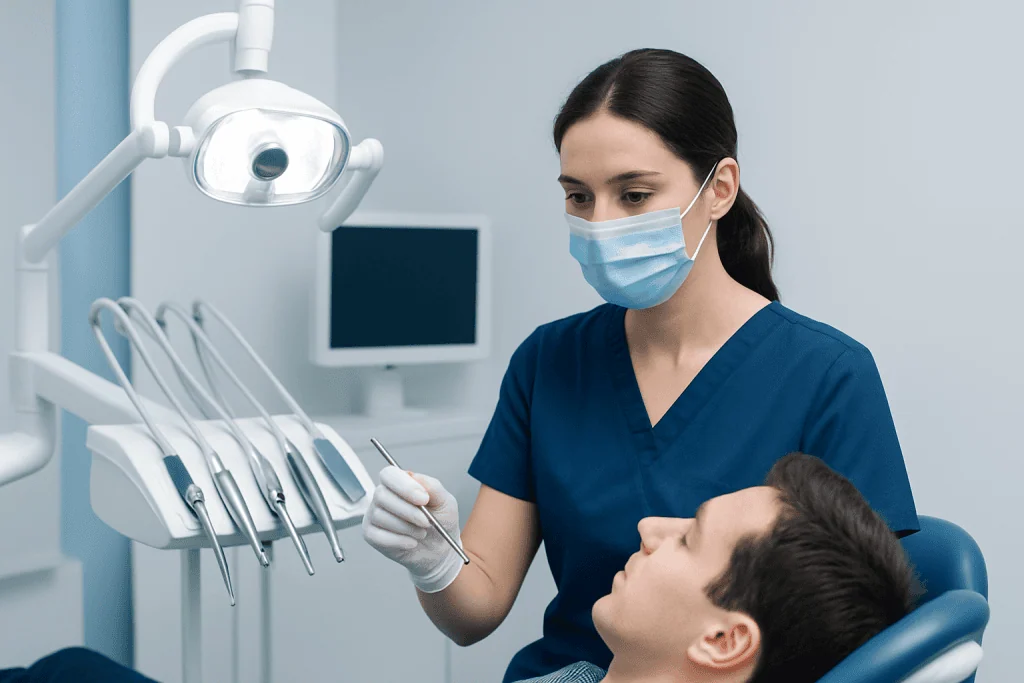
A dental examination begins with identifying where the problem is located. The concern may involve the veneer itself, the bonding material, the tooth underneath, the gumline, or the bite. The dentist checks the veneer’s edges, colour, fit, stability, and contact with the opposing teeth, and may use X-rays when there is a reason to assess the tooth root, decay, or surrounding structures.
A small chip or worn edge may sometimes be smoothed or restored with a tooth-coloured composite material. An intact veneer that has detached may occasionally be rebonded if both the veneer and tooth are undamaged and still fit accurately. A crack extending through porcelain, repeated debonding, poor fit, significant staining, or decay beneath the veneer may make replacement the more predictable option.
Suitable candidates for repair generally have healthy gums, manageable tooth decay risk, and enough sound tooth structure to support the restoration. Active gum disease, untreated cavities, severe tooth grinding, or an unstable bite should be addressed first. People who clench or grind their teeth may still be candidates for treatment, but may benefit from a custom night guard to protect the repair.
How a Veneer Repair Procedure Works

The procedure is tailored to the diagnosis and may be completed in one visit for a minor surface repair. More extensive care, especially a new porcelain veneer, can require additional appointments. Local anaesthetic may be used if the tooth is sensitive or if work is needed near the gumline.
- Assessment and shade matching: The dentist evaluates the veneer, tooth, gums, and bite, then selects a shade and material that blend with neighbouring teeth.
- Preparation: The damaged area is cleaned and isolated to keep it dry. A loose veneer is examined carefully before any attempt is made to rebond it.
- Repair or rebonding: For a minor chip, the surface may be refined and built up with a compatible resin. For a detached veneer, the dentist prepares the bonding surfaces and uses dental materials designed for the specific restoration.
- Finishing and bite check: The repaired area is shaped, polished, and checked while the patient closes and moves the jaw, helping prevent excessive pressure on the veneer.
If replacement is recommended, the old veneer is removed with care and the tooth is reassessed. The dentist may take a digital or physical impression for the laboratory-made veneer and provide a temporary restoration when appropriate. Replacement can involve more treatment than a simple repair because the new veneer must fit the tooth, gumline, adjacent teeth, and bite accurately.
Recovery Timeline, Benefits, and Possible Risks
After a minor repair, many people return to usual activities the same day. If local anaesthetic was used, it is sensible to wait until numbness has fully worn off before chewing to avoid accidentally biting the cheek, tongue, or lip. Mild sensitivity to temperature or pressure can occur for a short period, particularly if the underlying tooth was exposed or adjusted.
The main benefit of repair is that it may restore a smoother appearance, comfortable bite, and normal front-tooth function while preserving as much existing dental work as possible. A conservative repair can also be appropriate when the veneer and tooth are otherwise healthy. However, the result depends on the size and location of the damage, the material used, and daily forces on the teeth.
Possible concerns include colour or texture differences between a repaired area and porcelain, future chipping, loosening, gum irritation from a poorly fitting edge, or sensitivity. A repair may be a practical long-term solution in some cases and a temporary step before replacement in others. Patients should contact the dental team if the bite feels high, the veneer feels loose, or pain increases after treatment.
Common Questions About Veneer Cost and Cosmetic Dentistry Rules
How much does it cost to fix a broken veneer?
There is no one fixed amount because a broken veneer may need simple smoothing, composite repair, rebonding, or full replacement. The final estimate is influenced by the material, extent of damage, need to treat the tooth underneath, laboratory work where needed, and the dental practice’s location. An examination is the safest way to compare the appropriate options rather than choosing treatment based on a general online figure.
What is the 50-40-30 rule in dentistry?
The 50-40-30 rule is not a universally recognised, evidence-based dental standard for diagnosing veneer problems or choosing cosmetic treatment. Online uses of this phrase can differ and may refer to informal proportions, aesthetic concepts, or non-clinical advice. A patient should ask the dentist to explain any rule being used and how it applies to their own teeth, bite, gums, and goals.
What is the 4 8 10 rule for veneers?
There is no formal 4-8-10 rule that determines how many veneers a person needs. In some cosmetic dentistry discussions, these numbers are used informally to describe treating four, eight, or ten visible front teeth to create a balanced colour and shape. The appropriate number of teeth to treat depends on the smile line, natural tooth colour, existing restorations, bite, and a person’s preference for a conservative approach.
Does Donald Trump wear veneers?
Dental treatment information is private, and photographs alone cannot reliably show whether a person has veneers, crowns, whitening, natural tooth changes, or another form of dental care. It is not appropriate to present unverified speculation about a public figure’s health or dental treatment as fact. A person’s own treatment plan should be based on a clinical examination rather than celebrity images.
Preventing Further Veneer Damage
Good daily oral hygiene helps protect both veneers and the natural teeth beneath them. Brushing twice daily with a soft toothbrush and fluoride toothpaste, cleaning between teeth every day, and attending regular dental visits reduce the risk of decay and gum inflammation around veneer edges. Highly abrasive toothpastes should be discussed with a dentist, particularly when veneers have a polished ceramic surface.
Veneers are not designed to open packaging, bite fingernails, crack hard foods, or hold objects in the mouth. Cutting firm foods into smaller pieces and avoiding direct biting into very hard items can reduce stress on front teeth. People who play contact sports should ask about a properly fitted mouthguard.
Night-time grinding and daytime clenching can place repeated pressure on veneers, teeth, and jaw joints. A dentist can assess signs of wear and recommend a custom protective appliance if appropriate. If a veneer comes off, it should be kept safely in a clean container and taken to the dentist; household, craft, or over-the-counter glues should never be used in the mouth.
When to Seek Medical Care
A person should arrange a dental appointment promptly for a loose veneer, a new chip or crack, persistent sensitivity, a change in bite, or a veneer that has fallen out. Early assessment can help protect the exposed tooth and may make conservative treatment more feasible. A dentist can also check for decay, gum problems, or bite forces that contributed to the issue.
Urgent dental or medical assessment is appropriate if there is facial injury, severe or worsening pain, swelling of the face or gums, fever, pus, spreading redness, or difficulty swallowing or breathing. These symptoms may indicate a problem beyond the veneer itself and should not be managed at home.
For international patients needing coordinated assessment, Acibadem International’s multidisciplinary specialists and JCI-accredited hospitals diagnose and treat dental concerns, including veneer complications, within an individualized care plan.
Frequently asked questions
Can a chipped veneer be repaired?
Often, a small chip or rough edge can be polished or repaired with a tooth-coloured composite material. Larger fractures, poor fit, repeated breakage, or damage to the tooth beneath the veneer may require replacement instead.
How much does it cost to fix a broken veneer?
The cost varies because the treatment may range from minor finishing to repair, rebonding, or a new veneer. A dentist needs to examine the veneer, tooth, gums, and bite before providing an individual treatment estimate.
What is the 50-40-30 rule in dentistry?
It is not a universal clinical guideline for veneers or veneer repair. The phrase may be used differently in informal online discussions, so patients should ask a qualified dentist what it means in the context of a proposed treatment plan.
What is the 4 8 10 rule for veneers?
There is no formal rule requiring four, eight, or ten veneers. These numbers may be used informally when discussing how many front teeth might be treated for a balanced cosmetic result, but the decision should be individualized.
Does Donald Trump wear veneers?
There is no appropriate basis to confirm a person’s private dental treatment from photographs or public appearance. Veneers cannot be reliably identified without verified information from the individual or their treating dental professional.
What should someone do if a veneer falls off?
The veneer should be stored safely in a clean container and brought to a dentist as soon as practical. It should not be glued back on at home, because non-dental adhesives can harm oral tissues, affect the fit, and complicate professional rebonding.
This article is for general information only and is not a substitute for professional medical advice. Please consult a qualified doctor about your individual situation.
Explore treatments in Turkey — costs, top hospitals & a free quote
JCI-accredited · board-certified surgeons · reply within 24h
Add us as a Preferred Source to see more of our trusted health content across Google Search, AI Overviews and Discover.

More from the Health Library

Til Therapy: How It Works, Results and What to Expect

Understanding Gallstone Pancreatitis: A Complete Patient Guide

Throat Cancer Radiation Recovery: A Week-by-Week Timeline

Understanding Scrotal Dermatitis: A Complete Patient Guide

Gastric bypass Risks & Side Effects Explained by Surgeons