Baby Sunscreen: What Patients Need to Know

Babies older than 6 months can usually use broad-spectrum, water-resistant sunscreen with zinc oxide or titanium dioxide. For babies younger than 6 months, shade, clothing, and hats are the main forms of sun protection.
Key Takeaways
- Babies older than 6 months can usually use broad-spectrum, water-resistant sunscreen with zinc oxide or titanium dioxide.
- For babies younger than 6 months, shade, clothing, and hats are the main forms of sun protection.
- Sunscreen should be part of a wider sun-safety plan, not the only protection.
- Fragrance-free, mineral-based products are often better tolerated by sensitive baby skin.
- Medical care is important if a baby develops severe sunburn, dehydration, blistering, or unusual drowsiness.
Baby sunscreen is generally recommended for babies older than 6 months, along with shade, hats, and protective clothing. For younger infants, sun avoidance and physical barriers are preferred, with small amounts of sunscreen used only when shade and clothing are not enough.
Overview: what baby sunscreen is and when it is used
Baby sunscreen is a sun-protection product designed to help reduce the skin’s exposure to ultraviolet (UV) radiation. In practice, the safest approach for babies is not sunscreen alone, but a combination of shade, lightweight protective clothing, a wide-brimmed hat, and careful timing outdoors. Sunscreen becomes especially useful when these measures do not fully cover exposed skin.
For most babies older than 6 months, a broad-spectrum sunscreen is an appropriate part of routine sun protection. Broad-spectrum means the product protects against both UVA and UVB rays. Mineral formulas containing zinc oxide or titanium dioxide are often preferred for babies because they sit on the skin’s surface and are less likely to irritate sensitive skin.
For babies younger than 6 months, the first choice is usually to avoid direct sun exposure as much as possible. Their skin is thinner and more sensitive, and they may also be more vulnerable to overheating. If complete shade and clothing are not possible, a clinician may advise using a small amount of mineral sunscreen on limited exposed areas such as the face or backs of the hands.
Why babies need sun protection
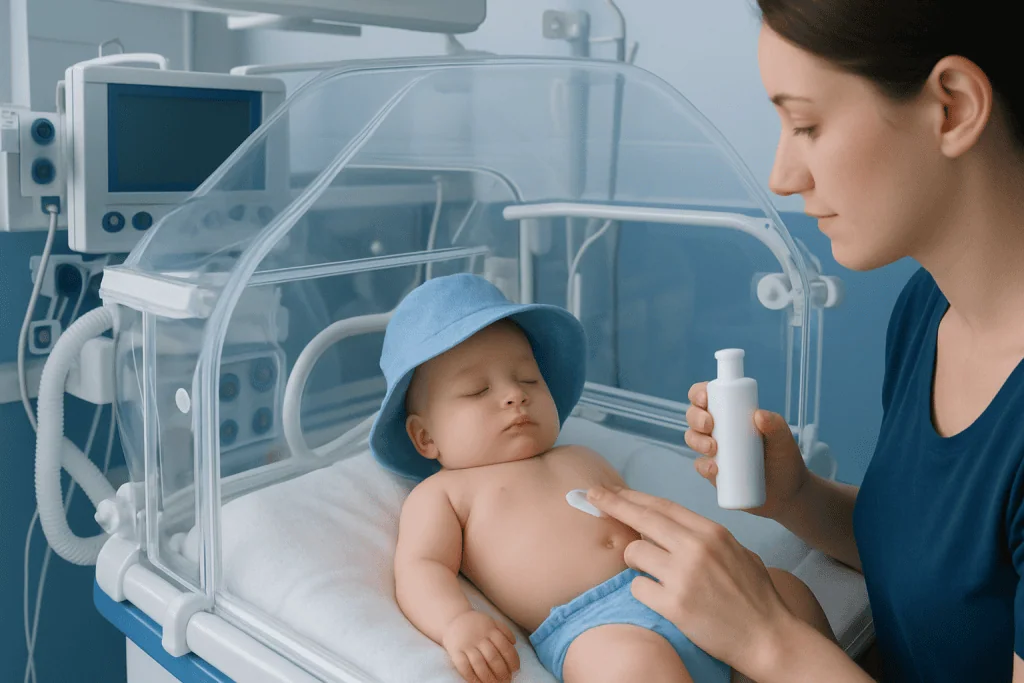
Baby skin is delicate and can burn more quickly than adult skin. UV exposure can damage the skin even on mild, cloudy, or breezy days, because UV rays still reach the skin when the sun does not feel very hot. Reflection from sand, water, snow, and concrete can also increase exposure.
Sun protection in infancy matters because sunburn is not just temporary redness. Too much sun can lead to pain, swelling, fluid loss, irritability, and heat-related illness. Repeated UV exposure over time also contributes to long-term skin damage and increases the risk of skin cancer later in life.
Parents and caregivers may assume a short walk or sitting under a stroller canopy is enough protection, but small gaps in coverage are common. Ears, cheeks, the back of the neck, feet, and hands are often missed. A careful, layered approach helps keep babies safer and more comfortable outdoors.
How to choose a baby sunscreen

When selecting baby sunscreen, the most practical features are broad-spectrum protection, water resistance, and a mineral active ingredient such as zinc oxide or titanium dioxide. These products are commonly recommended for babies and children because they are simple, effective, and often better tolerated by sensitive skin.
A fragrance-free product may be a good option for babies with easily irritated skin or a history of eczema. If a baby has ongoing dry, inflamed, or itchy skin, families may also benefit from medical guidance about eczema care, because inflamed skin can react more easily to products that are otherwise well tolerated.
Useful points to look for include:
- Broad-spectrum UVA and UVB protection
- Mineral ingredients such as zinc oxide or titanium dioxide
- Water-resistant labeling for outdoor play or swimming
- Fragrance-free and gentle formulas for sensitive skin
- Products appropriate for the child’s age group
Sprays can seem convenient, but lotions and creams are often easier to apply evenly to a baby’s skin. A thicker cream may also make it easier for caregivers to see where the product has been placed, reducing missed areas.
How to use baby sunscreen correctly
Sunscreen works best when it is applied generously and evenly to exposed skin before outdoor time. Commonly missed areas include the ears, cheeks, nose, scalp part line, tops of the feet, and back of the neck. It should be used together with protective clothing, hats, sunglasses made for children when appropriate, and shade from umbrellas or stroller covers that still allow airflow.
Reapplication matters. Sunscreen should usually be reapplied after swimming, sweating, towel drying, or spending extended time outdoors. Even water-resistant products do not last all day, and movement can rub them away from high-contact areas.
For babies younger than 6 months, sunscreen use should be limited and secondary to shade and clothing. If a small amount is needed, it is usually placed only on tiny exposed areas that cannot be covered. Caregivers should avoid getting sunscreen into the eyes or mouth and wash their hands after application.
If a baby has very sensitive skin, applying a small test amount to one area first may help identify irritation. Persistent rash, worsening redness, or discomfort after use should prompt a discussion with a pediatrician or dermatologist. In some cases, evaluation by specialists in dermatology may help when skin reactions are recurrent or difficult to manage.
Common mistakes and practical sun-safety tips
One common mistake is relying on sunscreen alone. Babies can still overheat or burn if they remain outside too long, especially around midday when UV radiation is strongest. Planning outdoor time earlier in the morning or later in the afternoon can reduce exposure.
Another mistake is assuming cloudy weather is safe enough to skip protection. UV rays pass through clouds, so babies can still burn on overcast days. Car rides and time near windows may also expose skin to sunlight, although the degree of UV transmission depends on the type of glass.
Helpful habits include:
- Use shade whenever possible, especially between peak sun hours
- Dress babies in lightweight long sleeves and long pants when practical
- Choose a wide-brimmed hat that shades the face, ears, and neck
- Offer regular fluids in an age-appropriate way to help avoid dehydration
- Check the skin often for early redness or overheating
If a baby has already developed significant redness or discomfort, treatment may focus on cooling the skin, maintaining hydration, and monitoring for worsening symptoms. Sunburn can occasionally require medical assessment, particularly if it is severe or occurs in a very young infant. Related skin concerns may overlap with general pediatric care and supportive treatment.
Possible reactions, sunburn, and what to watch for
Most babies tolerate appropriately chosen sunscreen well, but mild irritation can occur. This may appear as redness, itching, a bumpy rash, or fussiness when the product is applied. Reactions are more likely if the skin is already irritated, dry, or affected by another condition.
Sunburn in a baby may cause pink or red skin, warmth, tenderness, crying when touched, and later peeling. In more serious cases, swelling, blistering, sleepiness, reduced feeding, fever, or signs of dehydration may develop. Dehydration can show up as a dry mouth, fewer wet diapers, unusual drowsiness, or tearless crying.
It can also be difficult to separate a sunscreen reaction from heat rash or another skin problem. Heat rash tends to cause tiny red bumps in warm, sweaty areas, while allergic or irritant reactions may occur exactly where the product was placed. If symptoms are unclear or recurring, a clinician may recommend assessment through pediatric dermatology or a general pediatric visit.
When to seek medical care
Medical advice should be sought promptly if a baby younger than 6 months has any sunburn, because very young infants are more vulnerable to both skin injury and overheating. A doctor should also be contacted if sun exposure is followed by blistering, widespread redness, marked swelling, vomiting, fever, poor feeding, or unusual sleepiness.
Urgent care is important if the baby appears dehydrated, has trouble waking, is breathing unusually fast, or seems confused or limp. These symptoms may suggest significant heat illness or dehydration rather than a simple mild sunburn.
Persistent rash after sunscreen use also deserves attention, especially if the rash spreads, becomes painful, or is associated with facial swelling or breathing symptoms. Acibadem International’s multidisciplinary specialists in JCI-accredited hospitals diagnose and treat skin and pediatric concerns for international patients when further evaluation is needed.
Frequently asked questions
Can babies wear sunscreen before 6 months of age?
For babies younger than 6 months, shade, protective clothing, and hats are usually the preferred forms of sun protection. If those measures are not enough, a small amount of mineral sunscreen may be used on limited exposed areas after discussing it with a healthcare professional.
What type of baby sunscreen is usually recommended?
Broad-spectrum, water-resistant mineral sunscreen with zinc oxide or titanium dioxide is commonly recommended for babies older than 6 months. Fragrance-free products are often a good choice for sensitive skin.
Is a higher SPF always better for babies?
A suitable SPF is important, but proper application and reapplication are just as important as the number on the label. A broad-spectrum product used generously and combined with shade and clothing generally offers the best practical protection.
Can baby sunscreen cause a rash?
Yes, some babies may develop irritation or a mild rash from sunscreen, especially if their skin is already sensitive or inflamed. If this happens, stop using the product and speak with a doctor about alternatives or possible skin conditions.
How often should baby sunscreen be reapplied?
It should be reapplied after swimming, sweating, towel drying, or prolonged outdoor time. Following the product instructions is helpful, but caregivers should remember that no sunscreen lasts all day without reapplication.
What are the signs that a baby’s sun exposure needs medical attention?
Warning signs include blistering, swelling, fever, vomiting, poor feeding, unusual sleepiness, and signs of dehydration such as fewer wet diapers. Any sunburn in a baby younger than 6 months should also be discussed with a doctor.
This article is for general information only and is not a substitute for professional medical advice. Please consult a qualified doctor about your individual situation.
Explore treatments in Turkey — costs, top hospitals & a free quote
JCI-accredited · board-certified surgeons · reply within 24h
Add us as a Preferred Source to see more of our trusted health content across Google Search, AI Overviews and Discover.

More from the Health Library

Office Chair Butt: A Complete Medical Overview

Prolapsed Hemorrhoids: An Evidence-Based Guide for Patients

Choline — Explained by Medical Evidence, Not Myths

Brain Lesions: What Patients Need to Know

GERD Effect on Stool: An Evidence-Based Guide for Patients