

Bacne Benzoyl Peroxide: What Patients Need to Know

Benzoyl peroxide can improve bacne by lowering bacteria and helping prevent clogged pores. Body washes are often practical for back acne, but leave-on products may be used in some cases.
Key Takeaways
- Benzoyl peroxide can improve bacne by lowering bacteria and helping prevent clogged pores.
- Body washes are often practical for back acne, but leave-on products may be used in some cases.
- Dryness, irritation, and fabric bleaching are common and can often be managed with careful use.
- Persistent, painful, or scarring back acne may need assessment by a dermatologist.
- Other conditions can mimic acne, so a correct diagnosis matters if treatment is not helping.
Bacne benzoyl peroxide is a common first-line option for back acne because it helps reduce acne-causing bacteria and keeps pores from becoming blocked. It often works best when the right strength, cleanser or wash format, and gentle skin-care habits are matched to the patient’s skin type and acne severity.
Overview: Does benzoyl peroxide help bacne?
Yes. Bacne benzoyl peroxide is often an effective and widely recommended option for mild to moderate back acne. It helps by reducing the amount of acne-causing bacteria on the skin and by supporting the clearing of blocked pores, which are two important steps in acne control.
Back acne can be more stubborn than facial acne because the skin on the back is thicker, oil glands are active, sweat and friction are common, and treatment can be harder to apply evenly. For many patients, a benzoyl peroxide body wash is a practical starting point because it covers a larger area more easily than a cream or gel.
Even though benzoyl peroxide is useful, it is not the right answer for every bump on the back. Some rashes, folliculitis, heat-related eruptions, and other skin conditions can look similar to acne. If symptoms do not improve, a clinician may need to check whether the problem is truly acne or a different skin condition such as acne.
How benzoyl peroxide works on back acne
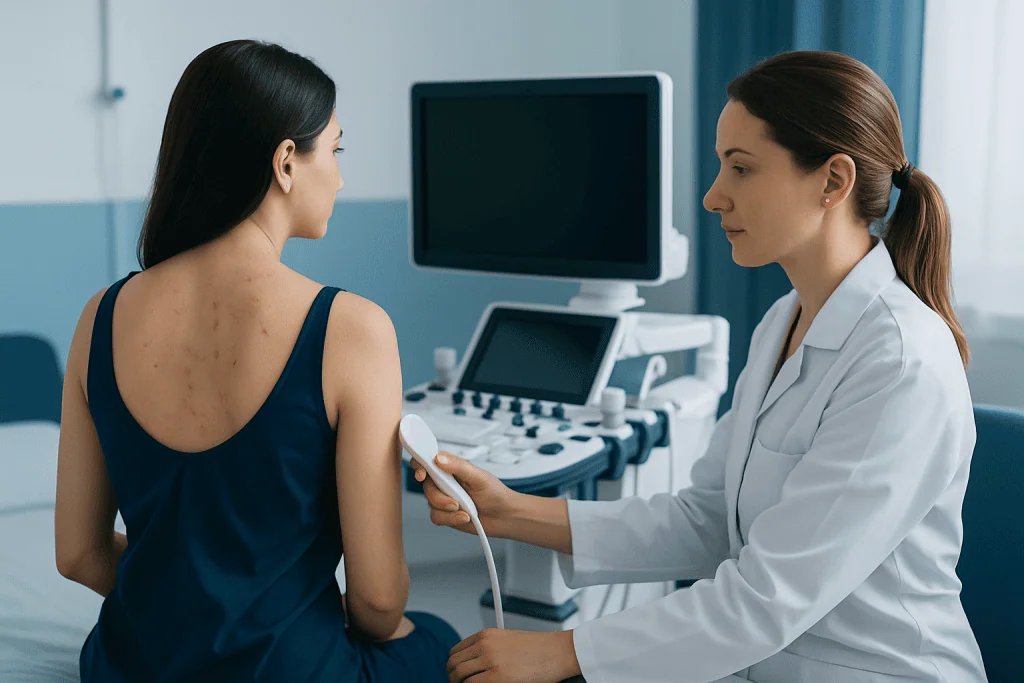
Benzoyl peroxide works in several ways. It releases oxygen into the pores, creating an environment that is less favorable for Cutibacterium acnes, the bacteria involved in acne development. It also has a mild peeling effect that helps remove dead skin cells and reduce pore blockage.
Because back acne often includes inflamed red bumps and pus-filled spots, benzoyl peroxide can be especially helpful when bacterial overgrowth and inflammation play a role. It is commonly used alone for milder cases or combined with other acne treatments when breakouts are more extensive or recurring.
One practical point patients should know is that benzoyl peroxide does not work overnight. Improvement usually takes consistent use over several weeks. New breakouts may still appear early on, but with regular use many patients notice fewer inflamed lesions and smoother skin over time.
Choosing the right product and strength
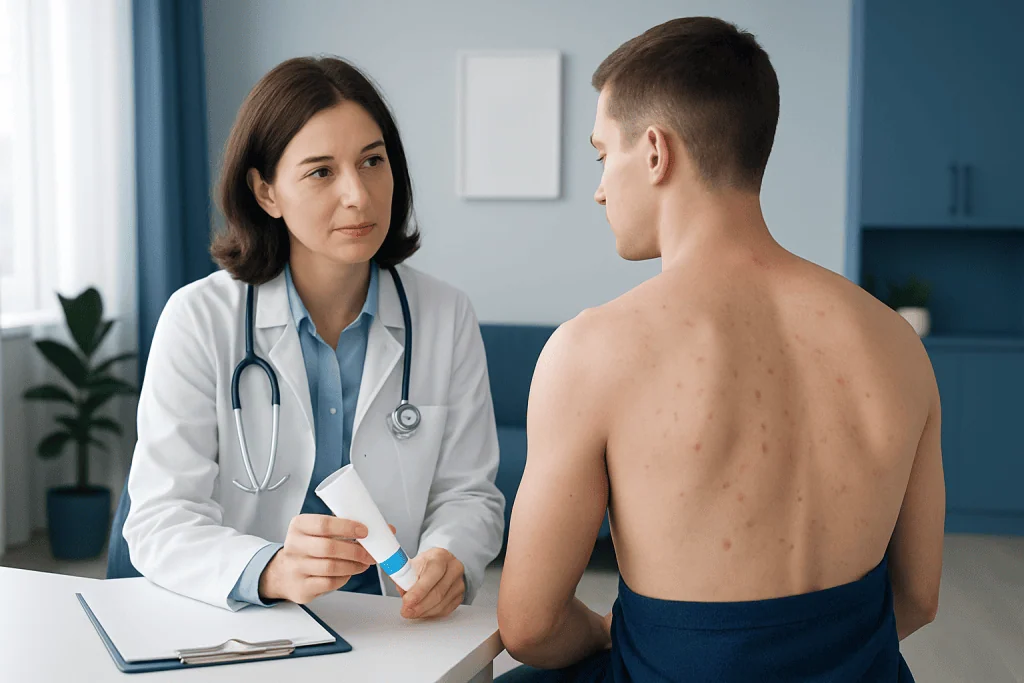
Benzoyl peroxide for bacne is available in several forms, including body washes, cleansers, gels, creams, and foams. For larger areas such as the back, a wash is often easier to use in the shower. A leave-on gel or cream may be added in selected cases, especially when specific areas have more active lesions.
Products come in different strengths, and stronger is not always better. Lower strengths may work well for some patients and are often easier to tolerate, while higher strengths can cause more dryness, redness, peeling, or stinging. Sensitive skin usually benefits from starting gently and adjusting only if needed.
It is also useful to consider the pattern of the acne. If the back has scattered small breakouts, a wash may be enough. If there are deeper, inflamed spots or acne on the chest and shoulders as well, a clinician may recommend a broader treatment plan that can include dermatology evaluation and care for a tailored routine.
Patients should read product labels carefully. Some formulations include other active ingredients, such as salicylic acid or moisturizers. These combinations can be helpful, but using several strong acne products at the same time may increase irritation.
How to use bacne benzoyl peroxide safely and effectively
For a benzoyl peroxide wash, patients generally apply it to wet skin in the shower, spread it across acne-prone areas, and leave it on briefly before rinsing, unless the product instructions say otherwise. Contact time matters, but leaving it on too long can raise the chance of irritation. Hands should be washed afterward.
For leave-on products, a thin layer is usually applied to clean, dry skin over the acne-prone area rather than only on individual spots. Starting a few times per week and increasing gradually can help the skin adapt. Applying too much does not make it work faster and may only worsen dryness.
Benzoyl peroxide can bleach towels, clothing, and bed linens. White fabrics are often the safest choice while using it. Patients should allow the skin to dry fully before getting dressed and may prefer older sleepwear if they use a leave-on product at night.
A simple, gentle routine supports better results. Helpful habits include:
- Showering after heavy sweating or exercise
- Using non-comedogenic moisturizers if the skin becomes dry
- Avoiding harsh scrubs, rough sponges, and aggressive picking
- Choosing loose, breathable clothing when possible
Side effects, precautions, and when it may not be enough
The most common side effects of bacne benzoyl peroxide are dryness, tightness, mild burning, redness, and peeling. These effects are often strongest in the first few weeks and may improve as the skin adjusts. Using the product less often at first and adding a fragrance-free moisturizer can make treatment easier to continue.
Some patients may develop significant irritation or an allergic reaction. Marked swelling, severe itching, blistering, or an extensive rash should prompt stopping the product and seeking medical advice. Anyone with very sensitive skin, eczema, or a history of reactions to topical products should use extra caution.
Benzoyl peroxide may not be enough when acne is deep, painful, widespread, or causing dark marks and scars. In those situations, a clinician may combine it with other treatments, such as topical retinoids, prescription antibacterial combinations, hormonal treatment in selected patients, or oral medicines. If scarring has already developed, further management may be considered through specialist dermatology treatment.
What else can cause back bumps?
Not every breakout on the back is classic acne. Folliculitis, including yeast-related folliculitis, can cause itchy or uniform small bumps that do not respond well to standard acne therapy. Heat, sweating, tight sportswear, oily products, and friction from backpacks can also trigger or worsen body eruptions.
Keratosis pilaris and some forms of eczema may also be confused with acne. This matters because the wrong treatment can irritate the skin without addressing the real cause. For example, a patient using repeated acne products on a non-acne rash may only end up with more redness and discomfort.
If the appearance is unusual, the rash is itchy rather than tender, or the condition persists despite regular treatment, a professional assessment is sensible. In some patients, clinicians may also review hormones, medications, family history, or related skin problems to determine whether this is simple body acne or part of a broader skin concern such as other skin diseases.
When to seek medical care
Medical assessment is a good idea if back acne is severe, painful, leaving scars, or not improving after a reasonable trial of over-the-counter treatment. This is especially important when large nodules, cyst-like lesions, or extensive inflammation are present, because these forms of acne often need prescription care to reduce long-term skin changes.
Patients should also seek care if they are unsure whether the bumps are acne, if irritation from treatment is difficult to control, or if breakouts are affecting sleep, exercise, clothing choices, or confidence. Back acne can have a real quality-of-life impact, and support is available.
A doctor may examine the skin, review current products, and suggest a structured plan. Depending on the findings, treatment may involve acne treatment options beyond benzoyl peroxide. Near the end of the care journey, some patients may also ask about treatment for lingering marks or scars through skin care and cosmetic dermatology. Acibadem International’s multidisciplinary specialists in JCI-accredited hospitals also evaluate and treat acne and related skin concerns for international patients.
Frequently asked questions
How long does bacne benzoyl peroxide take to work?
Many patients need several weeks of regular use before noticing clear improvement. Early irritation can happen before the skin settles, so consistency matters. If there is little or no benefit after a sustained trial, a clinician may recommend a different diagnosis or treatment plan.
Is a benzoyl peroxide wash better than a cream for back acne?
A wash is often easier for the back because it covers a large area quickly and can be used in the shower. A cream or gel may be useful for more targeted or persistent areas. The best choice depends on acne severity, skin sensitivity, and how practical the routine is for the patient.
Can benzoyl peroxide make bacne worse at first?
It can seem that way if the skin becomes dry, red, or irritated in the first days or weeks. This does not always mean the treatment is failing, but severe irritation should not be ignored. Reducing frequency or speaking to a clinician can help if symptoms are difficult to manage.
Should benzoyl peroxide be used every day for bacne?
Some patients tolerate daily use, while others do better by starting a few times a week and increasing gradually. The goal is steady use without significant irritation. Product instructions and a doctor’s advice should guide the routine.
Can benzoyl peroxide remove acne scars on the back?
Benzoyl peroxide helps active acne rather than established scars. By controlling breakouts, it may reduce the chance of new scars forming. Existing scars, dark marks, or texture changes often need different treatments and a professional assessment.
What should patients avoid while using bacne benzoyl peroxide?
Harsh scrubs, rough exfoliation, and using too many strong acne products at once can worsen irritation. Patients should also be aware that benzoyl peroxide can bleach fabric, towels, and bedding. Gentle skin care and patience usually make the treatment easier to continue.
References
- American Academy of Dermatology
- National Institute for Health and Care Excellence
- Mayo Clinic
- MedlinePlus
- British Association of Dermatologists
This article is for general information only and is not a substitute for professional medical advice. Please consult a qualified doctor about your individual situation.
Acne in Turkey — costs, top hospitals & a free quote
JCI-accredited · board-certified surgeons · reply within 24h
Add us as a Preferred Source to see more of our trusted health content across Google Search, AI Overviews and Discover.

More from the Health Library



Related Specialists

Dr. İlkay Kisa Özdemir
Intensive Care
Fzt. Serkan Başkurt
Physical Medicine & Rehabilitation
Dr. Asiye Nesrin Atay
Dermatology
Prof. Dr. Tunç Ovali
Ophthalmology