Bald People — Explained by Medical Evidence, Not Myths

Bald people may be bald by genetics, aging, autoimmune disease, medical conditions, treatments, or personal choice. Pattern hair loss is the most common cause of baldness, but sudden or patchy hair loss can point to another medical problem.
Key Takeaways
- Bald people may be bald by genetics, aging, autoimmune disease, medical conditions, treatments, or personal choice.
- Pattern hair loss is the most common cause of baldness, but sudden or patchy hair loss can point to another medical problem.
- Doctors diagnose hair loss by history, scalp examination, and sometimes blood tests or a scalp biopsy.
- Treatment depends on the cause and may include medication, treating an underlying illness, or hair restoration procedures.
- Hair myths about hygiene, hats, and frequent washing are not supported by medical evidence.
- Prompt medical review is important for rapid shedding, scalp inflammation, pain, or hair loss with other symptoms.
Bald people are not one single group medically: some have inherited pattern hair loss, while others lose hair because of autoimmune disease, illness, medications, stress, or scalp conditions. Understanding the reason for hair loss matters, because some forms are expected and permanent, while others can improve with treatment.
Overview: what “bald people” means medically
When people search for information about bald people, the most accurate medical answer is that baldness is a visible result, not a diagnosis by itself. A person may be bald because of inherited pattern hair loss, aging, an autoimmune condition, medical treatment, nutritional deficiency, hormonal change, scarring scalp disease, or simply because they choose to shave their head. The right explanation depends on how the hair loss started, where it occurs, and whether the scalp is healthy.
Hair normally follows a growth cycle with active growth, transition, and shedding phases. It is normal to shed some hair every day. Problems arise when the growth cycle shortens, more hairs enter the shedding phase than usual, or the hair follicle becomes damaged. In some conditions the follicle stays alive and can produce hair again; in others, especially scarring disorders, permanent loss may occur.
The most common reason adults become visibly bald is pattern hair loss. In men this often appears as a receding hairline or thinning at the crown. In women it more often causes widening of the part and reduced density over the top of the scalp. Other kinds of baldness include round patches of hair loss, diffuse shedding across the whole scalp, and loss linked to chemotherapy or other medicines.
Because causes vary, it is helpful not to rely on myths or assumptions. A careful medical assessment can often distinguish common inherited hair loss from treatable problems such as thyroid disease, iron deficiency, inflammatory scalp conditions, or alopecia areata.
Common patterns and symptoms of hair loss
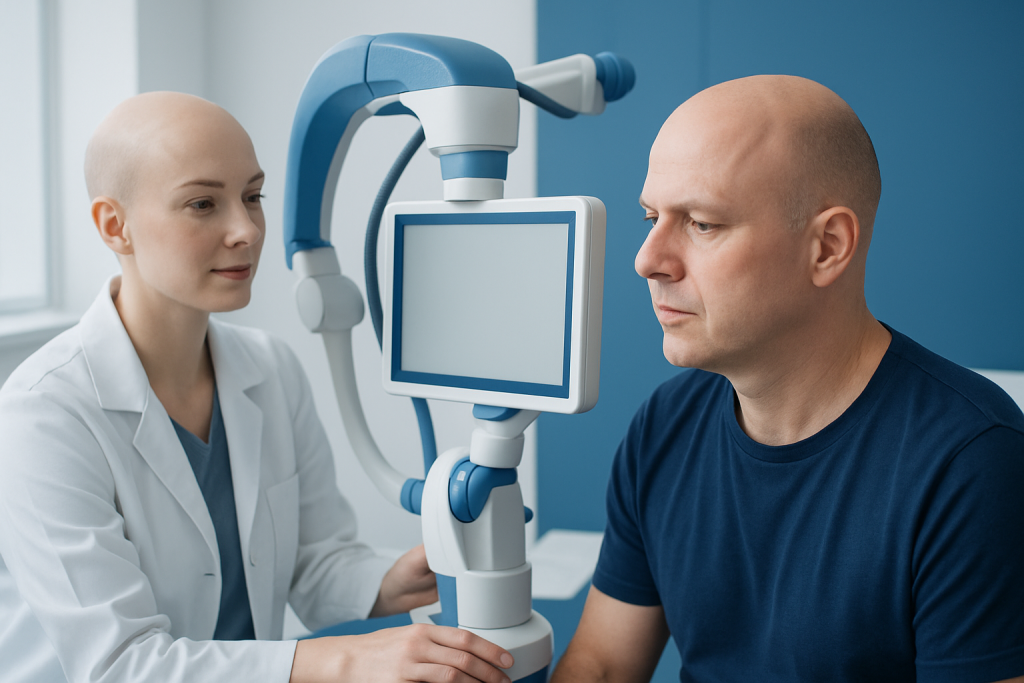
Doctors often classify hair loss by pattern. Pattern hair loss develops gradually over time. Men may notice a receding frontal hairline, thinning temples, or baldness at the crown. Women often report a thinner ponytail, more visible scalp at the part line, or overall reduced volume without a fully receding hairline. This form usually does not cause pain or major scalp symptoms.
Patchy hair loss suggests a different process. Smooth, round or oval bald patches can occur with autoimmune hair loss. Broken hairs, scaling, redness, itching, or tenderness can point toward fungal infection or inflammatory scalp disease. In children especially, patchy loss with scaling may need evaluation for ringworm of the scalp.
Diffuse shedding means hair seems to come out from all over the scalp rather than one area. This can happen after severe stress, fever, surgery, childbirth, major weight loss, or illness. People often notice more hair in the shower, on the pillow, or in the brush. The scalp may look normal even when shedding is significant.
Symptoms that deserve extra attention include:
- Sudden hair loss over days to weeks
- Hair loss with rash, pain, burning, or pus
- Loss of eyebrows, eyelashes, or body hair
- Hair thinning with menstrual changes, acne, or excess facial hair in women
- Hair loss with fatigue, weight change, or cold intolerance
- Scarring, shiny skin, or permanently smooth bald areas
What causes baldness? Evidence over myths

The leading cause of baldness in adults is androgenetic alopecia, also called male or female pattern hair loss. This condition is influenced by genetics and hormone sensitivity in the hair follicles. It does not mean a person has done anything wrong. It is not caused by poor hygiene, and ordinary shampooing does not make someone go bald.
Autoimmune conditions are another important cause. In alopecia areata, the immune system targets hair follicles, leading to patchy loss and sometimes more extensive scalp or body hair loss. Temporary shedding can also follow physical or emotional stress; this is often called telogen effluvium. Common triggers include childbirth, infections, major surgery, rapid dieting, and some chronic illnesses.
Medical conditions can contribute to hair loss as well. Thyroid disorders, iron deficiency, low protein intake, some vitamin deficiencies, hormonal shifts around menopause, and disorders with increased androgen effects may all play a role. Certain medicines, including some used for cancer, blood pressure, mood disorders, or autoimmune disease, can also affect the hair cycle.
Several widespread beliefs are myths. Wearing hats does not usually cause baldness, unless headwear causes unusual friction or traction over time. Hair washing does not create baldness; it may simply make normal shedding more visible. Stress can trigger shedding, but it is not the only explanation. Tight hairstyles, however, can cause traction alopecia, a preventable form of hair loss caused by repeated pulling on the follicles.
How doctors diagnose the reason for baldness
Diagnosis begins with the story of the hair loss. A clinician may ask when it began, whether it is sudden or gradual, if shedding is diffuse or localized, and whether there have been recent illnesses, childbirth, dieting, medication changes, or family history of baldness. For women, menstrual history and symptoms of hormonal imbalance may also be relevant.
The scalp examination is especially important. Doctors look at the pattern of thinning, the condition of the scalp skin, the hair shaft, and whether follicles are still visible. They may perform a gentle pull test to see whether many hairs are shedding. Dermoscopy, a close-up examination of the scalp, can reveal miniaturized hairs, broken hairs, inflammation, and other clues.
Blood tests are not needed for everyone, but they may be helpful if the pattern suggests an underlying medical issue. Depending on the person, tests may evaluate iron status, thyroid function, vitamin levels, inflammation, or hormone-related concerns. If a scarring disorder or uncertain diagnosis is suspected, a small scalp biopsy can provide more information.
Accurate diagnosis matters because treatment differs by cause. A person with inherited pattern hair loss may benefit from long-term follicle-targeted therapy, while someone with nutritional deficiency, infection, or autoimmune disease needs treatment directed at that specific problem. This is one reason self-diagnosis from photos alone can be misleading.
Treatment options for bald people
Treatment depends on the cause, severity, age, general health, and the person’s goals. Some people seek treatment to slow further loss, while others want to stimulate regrowth or explore cosmetic restoration. In pattern hair loss, commonly used medical approaches may help preserve existing hair and improve density over time, but they usually need continued use and regular follow-up.
If baldness is linked to a medical issue, the first step is to address that problem. Correcting iron deficiency, managing thyroid disease, adjusting an offending medicine when appropriate, or treating scalp inflammation may reduce ongoing loss. Autoimmune hair loss can require therapies that calm the immune response, while fungal infection needs antifungal treatment rather than general hair products.
Procedural options may be considered when hair loss is stable or when medical treatment alone is not enough. These can include scalp-directed therapies and, in selected patients, hair transplant treatment. Some people also ask about regenerative approaches such as PRP treatment, although suitability depends on the type of hair loss and the treating specialist’s assessment.
Cosmetic support can also improve quality of life. Hair fibers, camouflage products, wigs, and hairstyle changes may help people feel more comfortable while medical treatment takes effect or if regrowth is limited. For patients with extensive or long-standing loss, a consultation about hair loss treatment options may clarify what is realistically achievable.
Self-care, prevention, and what does not help
Not every type of baldness can be prevented, especially inherited pattern hair loss. Still, healthy scalp and hair practices may reduce avoidable damage. People can help protect their hair by limiting repeated tight hairstyles, minimizing harsh chemical processing, using heat styling carefully, and treating dandruff or scalp irritation early if it develops.
General health also supports hair growth. Adequate protein intake, balanced nutrition, and management of chronic conditions are important. Crash diets and rapid weight loss can trigger shedding several weeks or months later. People who suspect nutritional deficiency should not start many supplements blindly; too much of certain vitamins or minerals may also be harmful.
It is also useful to set realistic expectations. Hair grows slowly, so visible improvement often takes months rather than weeks. Products marketed with dramatic claims may not be evidence-based. A treatment that works for one cause of baldness may do little for another, which is why matching treatment to diagnosis matters.
Some individuals choose baldness intentionally by shaving their heads, and this does not damage the follicle. For those who want a smooth scalp, sun protection is important because exposed scalp skin can burn easily. Moisturizing dry scalp skin and using sunscreen or a hat outdoors can help maintain comfort and skin health.
When to seek medical care
Medical review is a good idea any time hair loss is new, bothersome, or unclear. It is especially important if the change is sudden, patchy, or associated with itching, pain, scaling, or redness. These features may suggest a condition other than routine pattern baldness and may need prompt treatment to protect the follicles.
People should also seek care if hair loss occurs with other symptoms such as fatigue, unexplained weight change, menstrual irregularity, or signs of hormonal imbalance. Children with hair loss should be assessed rather than treated only with cosmetic products, because infection or autoimmune causes may be involved. Scarring or shiny bald patches deserve particular attention because early treatment may help limit permanent loss.
Anyone receiving chemotherapy or other intensive medical treatment should discuss expected hair changes with their care team. Some treatment-related hair loss is temporary, while other medicines may require monitoring or dose review. When the diagnosis is uncertain, a dermatologist can guide testing and treatment.
For international patients seeking coordinated care, Acibadem International’s multidisciplinary specialists in JCI-accredited hospitals evaluate hair and scalp disorders, including common causes of hair loss, and advise on medical and procedural treatment choices when appropriate.
Frequently asked questions
Are bald people always losing hair because of genetics?
No. Genetics is the most common reason for long-term pattern baldness, but hair loss can also happen because of autoimmune disease, stress-related shedding, medications, infections, hormonal changes, or nutritional problems. A doctor can help distinguish among these causes.
Does wearing a hat make a person go bald?
Usually no. Normal hat use does not block the scalp enough to cause baldness. Hair loss from headwear would be unusual and more likely related to constant friction or traction rather than the hat itself.
Can hair grow back after baldness?
Sometimes it can, depending on the cause. Temporary shedding and some inflammatory or autoimmune causes may improve with treatment or time. Long-standing pattern baldness and scarring hair loss are less likely to fully reverse without specialized treatment.
Is washing hair often a cause of hair loss?
No, regular washing does not cause baldness. Shampooing may make normal shed hairs easier to notice, which can create the impression of increased loss. Gentle cleansing is part of healthy scalp care.
What is the difference between normal shedding and a hair loss disorder?
Normal shedding happens as part of the hair growth cycle and usually does not make the hair look visibly thinner. A hair loss disorder is more likely when thinning becomes noticeable, shedding increases sharply, or there are bald patches or scalp symptoms. The pattern and speed of change help doctors identify the cause.
Should women with thinning hair be medically evaluated?
Yes, especially if thinning is new, rapid, or accompanied by acne, irregular periods, or excess facial hair. Women can have pattern hair loss, but hormonal, thyroid, iron-related, and other medical causes may also contribute. Evaluation helps guide the right treatment.
This article is for general information only and is not a substitute for professional medical advice. Please consult a qualified doctor about your individual situation.
Hair transplant in Turkey — costs, graft counts & a free assessment
JCI-accredited · board-certified surgeons · reply within 24h
Add us as a Preferred Source to see more of our trusted health content across Google Search, AI Overviews and Discover.
Check your numbers in seconds
BMI, calories, due date, blood pressure and 30+ more clinical calculators — free, instant, doctor-reviewed ranges.

More from the Health Library

Sore Throat Sores: What Patients Need to Know

Low Sugar Yogurt — Explained by Medical Evidence, Not Myths

Oxalate: What Patients Need to Know

Humidifier for Lost Voice: An Evidence-Based Guide for Patients

Audizen reviews: Symptoms, Causes, and Treatment — Complete Patient Guide