Bariumenema: What Patients Need to Know

A bariumenema is an X-ray test that examines the colon and rectum after barium contrast is introduced through the rectum. Bowel preparation is essential because stool in the colon can make images difficult to interpret.
Key Takeaways
- A bariumenema is an X-ray test that examines the colon and rectum after barium contrast is introduced through the rectum.
- Bowel preparation is essential because stool in the colon can make images difficult to interpret.
- Patients may feel fullness, cramping, or an urge to pass stool during the test, but severe pain is not expected.
- Constipation and pale stools may occur briefly after the examination; drinking fluids is usually encouraged unless a clinician advises otherwise.
- People should contact a healthcare professional promptly for severe abdominal pain, fever, persistent vomiting, inability to pass stool or gas, or rectal bleeding after the test.
A bariumenema, also called a barium enema, is an imaging examination that uses a contrast material and X-rays to show the shape and lining of the large intestine. It is used less often than in the past because colonoscopy and CT-based tests are widely available, but it can still be useful in selected clinical situations.
Overview: What Is a Bariumenema?
A bariumenema, more commonly written as a barium enema, is a diagnostic X-ray examination of the large intestine, also called the colon, and the rectum. During the test, a white liquid called barium sulfate is gently introduced into the bowel through a small tube placed in the rectum. Barium coats the inner surface of the bowel and makes its outline visible on X-ray images.
The examination helps clinicians assess the size, shape, and general structure of the lower digestive tract. It may show narrowing, blockage, diverticula, twisting of the bowel, large polyps, or changes that require further assessment. A barium enema does not take tissue samples and cannot remove polyps, so an abnormal finding may need follow-up with colonoscopy or another test.
Today, colonoscopy, CT colonography, and other imaging methods are often preferred for many bowel concerns. However, a barium enema may still be considered when another examination cannot be completed, is not suitable for a person’s circumstances, or when a clinician needs specific structural information about the colon. The most appropriate test depends on the person’s symptoms, medical history, and the clinical question being investigated.
Why a Clinician May Recommend This Test
A clinician may request a barium enema to investigate symptoms that could arise from the large bowel. These can include an ongoing change in bowel habits, unexplained constipation, abdominal discomfort, bloating, or signs suggesting a narrowing or blockage. The test may also help clarify an inconclusive result from another imaging examination.
In some settings, it can be used to evaluate known or suspected diverticular disease, which involves small pouches in the bowel wall, or to look at the anatomy of the colon after surgery. In children, a related contrast enema may sometimes be used for specific urgent bowel conditions, although the contrast agent and approach may differ from those used in adults.
A barium enema is not generally a first-line screening test for colorectal cancer. Colonoscopy can directly inspect the bowel lining, collect biopsies, and remove many polyps during the same procedure. Still, if a barium enema identifies an area of concern, it can provide useful information to guide the next step in care.
- Assessment of suspected structural narrowing or obstruction
- Evaluation of the shape and position of the colon
- Further investigation when another bowel test is incomplete or unsuitable
- Follow-up of selected bowel conditions when advised by a specialist
Preparing for a Barium Enema
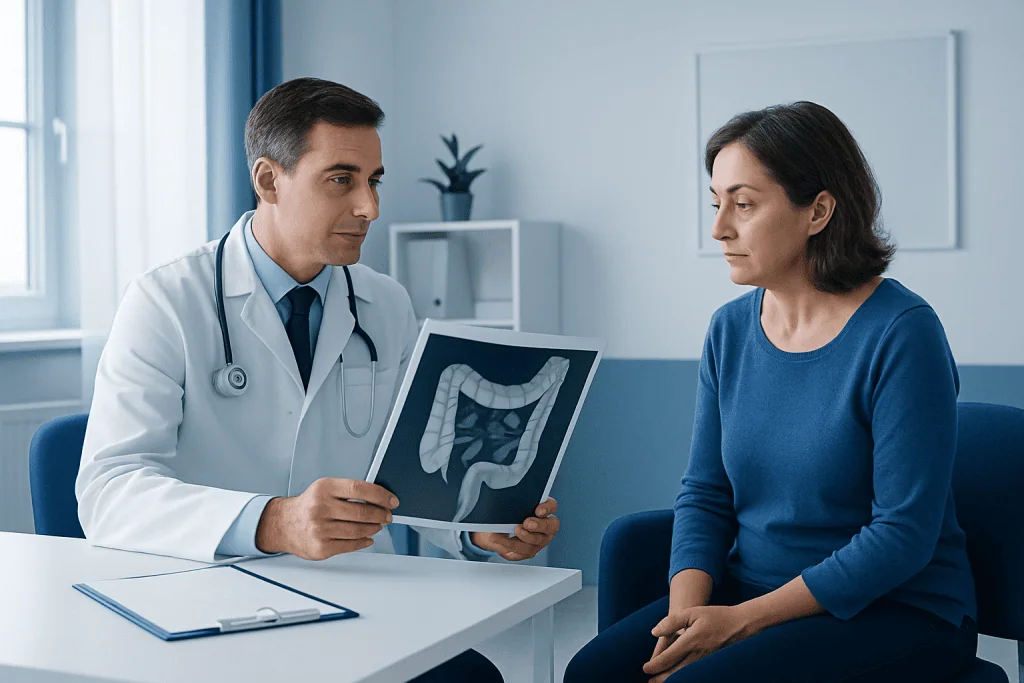
Clear images require the colon to be as empty as possible. For this reason, the preparation is often as important as the X-ray examination itself. The imaging department will provide instructions in advance, which may include following a low-fibre or clear-liquid diet for a short period and taking a prescribed bowel-cleansing medicine or laxative.
Preparation instructions vary between hospitals and individuals. Patients should follow the instructions they receive rather than relying on general advice from the internet. It is particularly important to ask the care team about regular medicines, including diabetes medicines, blood thinners, iron supplements, diuretics, and medicines that affect kidney function or bowel movements. A clinician may recommend temporary adjustments, but medicines should not be stopped without medical advice.
Before the appointment, patients should tell the radiology team if they are pregnant or might be pregnant, have had a recent bowel procedure or surgery, have inflammatory bowel disease, have severe constipation, or have symptoms of bowel obstruction. They should also mention previous reactions to contrast materials, although barium is different from iodinated contrast used in many CT scans. In certain situations, a water-soluble contrast study or another imaging test may be safer.
What Happens During the Procedure
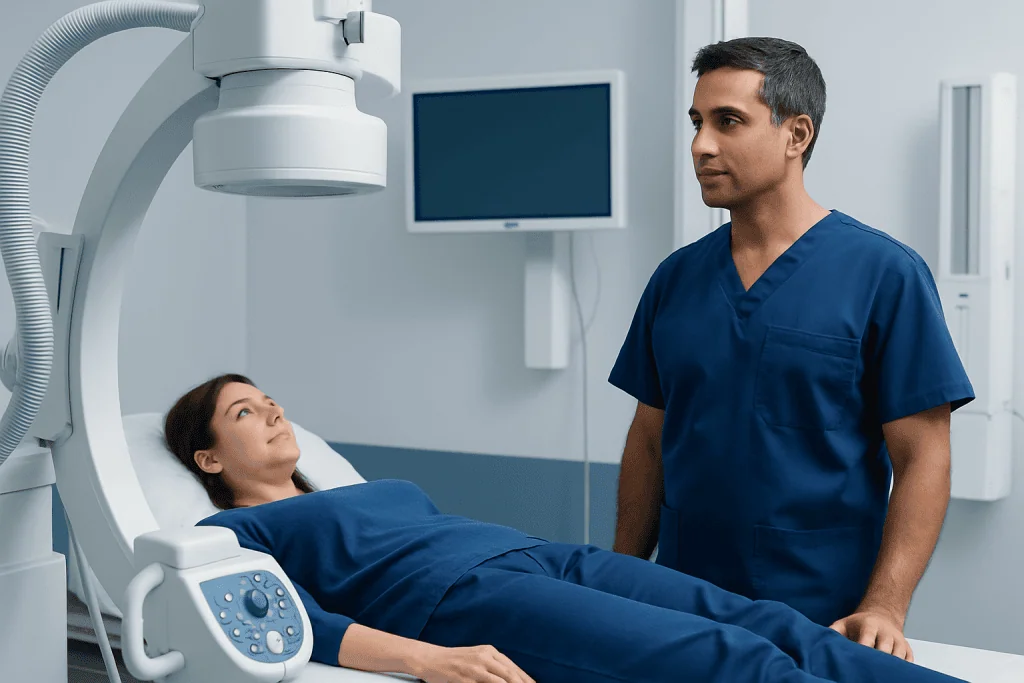
A barium enema is usually performed in a radiology department by a radiologist and radiology staff. The patient changes into a gown and lies on an X-ray table. A small, lubricated tube is carefully placed a short distance into the rectum. Barium liquid then flows through the tube to fill part or all of the large bowel while the team monitors the examination using X-ray imaging.
Some examinations are described as double-contrast barium enemas. In these, the bowel is coated with a thin layer of barium and then gently filled with air. This can give a more detailed view of the bowel lining. The patient may be asked to change position several times so that the contrast distributes throughout the colon and images can be taken from different angles.
It is common to feel pressure, fullness, mild cramping, or a strong urge to have a bowel movement while the bowel is filled. Slow, steady breathing can help. Patients should tell the team immediately if they have significant pain, dizziness, nausea, or feel unable to continue. The test often takes around 30 to 60 minutes, although timing can vary.
After the images are complete, most of the barium is allowed to drain through the tube. The patient can then use a toilet to pass the remaining contrast. A radiologist reviews the images and sends a report to the clinician who requested the test.
Results, Benefits, and Limitations
A radiology report may describe whether the colon appears normal or whether there are features such as diverticula, a narrowed section, an unusual outline, a filling defect, or delayed movement of contrast. Results should be discussed with the clinician who knows the person’s symptoms and medical history. An image finding alone does not always establish a diagnosis.
The principal benefit of a barium enema is that it can provide a broad view of the large bowel without sedation and without inserting a long scope through the colon. This may be helpful for people for whom colonoscopy is incomplete or not currently appropriate. It can also reveal some major structural abnormalities.
However, the test has important limits. Small polyps, subtle inflammation, and early cancers may not be seen as clearly as they can be during colonoscopy or certain modern imaging examinations. It also cannot provide a biopsy. If a suspicious area is found, further testing is commonly needed to identify the cause and plan treatment.
Clinicians interpret the result alongside symptoms, physical examination findings, blood or stool tests, and any previous colon imaging. If symptoms persist despite a reassuring study, additional evaluation may still be appropriate.
Aftercare and Possible Side Effects
Most people can return home shortly after a barium enema and resume usual activities unless the care team gives different advice. Barium can make stools look pale or chalky for one or two days. Temporary constipation, gas, or mild abdominal bloating can also occur as the remaining contrast passes from the bowel.
Drinking extra fluids after the test is commonly advised to help clear the barium and reduce constipation, provided the person does not have a medical reason to limit fluids. Some patients may be advised to take a mild laxative. The imaging department will provide specific aftercare instructions based on the examination and the person’s health needs.
Serious complications are uncommon, but no procedure is entirely risk-free. Rarely, barium may become impacted in the bowel, especially in people with severe constipation or reduced bowel movement. There is also a very small risk of bowel perforation, which is why the test is avoided or modified when perforation, severe colitis, or a complete obstruction is suspected. X-rays involve a small amount of radiation, and the team uses the lowest practical exposure needed for imaging.
When to Seek Medical Care
Patients should follow the post-test instructions from their own care team. They should contact a healthcare professional if they have not passed barium or had a bowel movement within the timeframe advised, particularly if they also feel increasingly bloated or uncomfortable. Ongoing constipation should not be ignored after a contrast examination.
Urgent medical assessment is needed for severe or worsening abdominal pain, a swollen abdomen, fever, repeated vomiting, fainting, substantial rectal bleeding, or an inability to pass stool or gas. These symptoms are uncommon after a barium enema, but they may indicate a problem that needs prompt evaluation.
Anyone with persistent bowel changes, unexplained weight loss, blood in the stool, ongoing abdominal pain, or new fatigue should speak with a qualified doctor, whether or not they have had a recent imaging test. Acibadem International’s multidisciplinary specialists and JCI-accredited hospitals assess digestive symptoms and coordinate appropriate diagnostic care for international patients.
Frequently asked questions
Is bariumenema the same as a barium enema?
Yes. “Bariumenema” is often used as a search term or informal spelling for a barium enema. The standard medical term is barium enema, also known as a lower gastrointestinal contrast examination.
Is a barium enema painful?
Most people experience pressure, fullness, cramping, and an urge to open their bowels rather than pain. The radiology team can help the patient change position and remain as comfortable as possible. Severe pain is not expected and should be reported immediately during the examination.
How long does it take to recover from a barium enema?
Most people recover quickly and can usually return to normal daily activities on the same day. Mild bloating, gas, constipation, and pale stools can occur briefly while the barium leaves the body. Following fluid and laxative advice from the imaging team can help reduce constipation.
Can a barium enema detect colon cancer?
A barium enema may show a large mass, narrowing, or other change that raises concern for colorectal cancer, but it cannot confirm cancer on its own. It may miss smaller abnormalities and cannot collect tissue. Colonoscopy is commonly needed when an abnormal area requires closer examination or biopsy.
Why might colonoscopy be preferred over a barium enema?
Colonoscopy allows a clinician to view the bowel lining directly, take biopsies, and remove many polyps during the same procedure. It is therefore often preferred when evaluating possible polyps, bleeding, inflammation, or cancer. A barium enema may still have a role when colonoscopy is incomplete, unavailable, or not appropriate for a particular patient.
What should a patient do if they are constipated after a barium enema?
They should follow the aftercare instructions provided by the radiology department, which may include drinking fluids and using a recommended laxative. If constipation persists, or if it is accompanied by worsening pain, vomiting, fever, abdominal swelling, or inability to pass gas, they should seek medical advice promptly.
This article is for general information only and is not a substitute for professional medical advice. Please consult a qualified doctor about your individual situation.
Persistent digestive symptoms? Get evaluated in Turkey
JCI-accredited · board-certified surgeons · reply within 24h
Add us as a Preferred Source to see more of our trusted health content across Google Search, AI Overviews and Discover.

More from the Health Library

Eczema Shampoo: What Patients Need to Know

Haemoglobin Hemoglobin: A Complete Medical Overview

Steglatro — Explained by Medical Evidence, Not Myths

Pinworms: An Evidence-Based Guide for Patients

Advantages Cold Showers — Explained by Medical Evidence, Not Myths