

Bcma Targeted Therapy: How It Works, Results and What to Expect
BCMA is a protein found at high levels on many multiple myeloma cells, making it a useful treatment target. BCMA-directed options include CAR T-cell therapy, bispecific antibodies and antibody-drug conjugates, depending on availability and individual suitability.
Key Takeaways
- BCMA is a protein found at high levels on many multiple myeloma cells, making it a useful treatment target.
- BCMA-directed options include CAR T-cell therapy, bispecific antibodies and antibody-drug conjugates, depending on availability and individual suitability.
- These treatments can produce deep responses in some people with relapsed or refractory multiple myeloma, but they do not guarantee a cure.
- Monitoring is essential because immune-related side effects, low blood counts and infections can occur.
- Care is usually coordinated by a hematology-oncology team with experience in cellular and immune-based cancer treatments.
BCMA targeted therapy is an advanced treatment approach for multiple myeloma that uses the immune system to recognize and attack cancer cells carrying B-cell maturation antigen (BCMA). It is most often considered when myeloma has returned or has not responded adequately to earlier treatments, and the best option depends on the person’s health, prior therapies and disease characteristics.
Overview: What Is BCMA Targeted Therapy?
BCMA targeted therapy is a group of treatments designed for multiple myeloma, a cancer of plasma cells in the bone marrow. These therapies focus on B-cell maturation antigen (BCMA), a protein commonly present on myeloma cells. By recognizing BCMA, treatment can direct immune activity or a cancer-killing drug toward the malignant cells more precisely than conventional chemotherapy alone.
BCMA-directed treatment is generally used for relapsed or refractory multiple myeloma. Relapsed disease has returned after a response to prior treatment, while refractory disease has not responded or has stopped responding. It is not one single procedure: the approach may involve collecting and modifying a person’s immune cells, receiving an antibody infusion or injection, or using another BCMA-directed medicine.
Although BCMA is an important target, it can also be found on normal plasma cells. For this reason, treatment may reduce normal antibody production and increase susceptibility to infection. A specialist team weighs the potential benefit against risks such as infection, low blood cell counts and immune-related reactions.
How BCMA-Directed Treatments Work
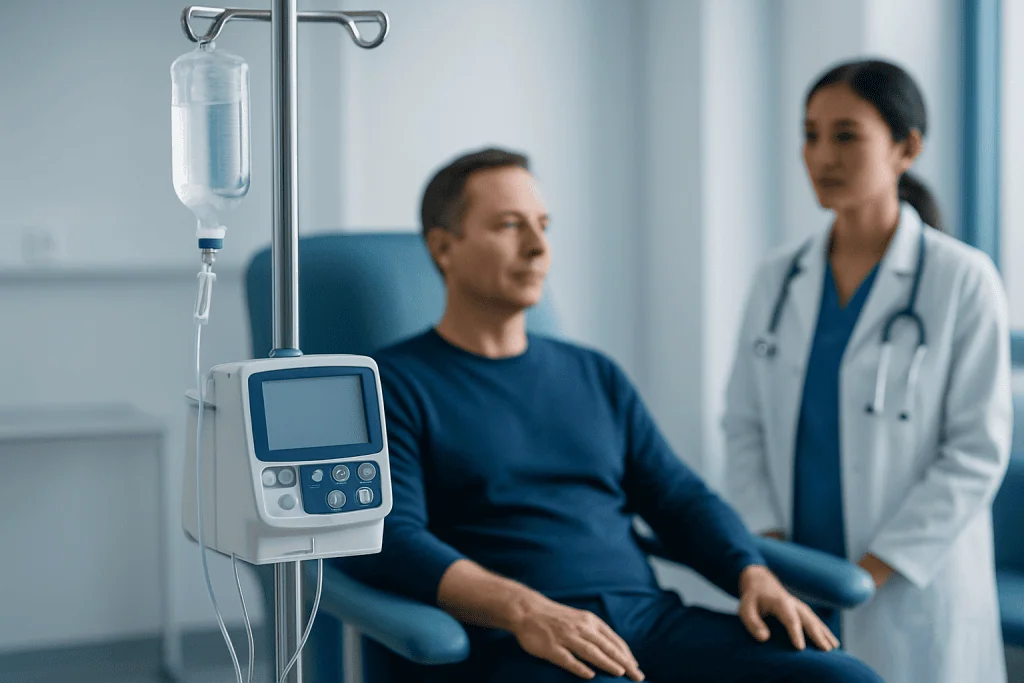
BCMA-directed therapies use different methods to help identify and destroy myeloma cells. In CAR T-cell therapy, T cells are collected from the person’s blood and genetically modified in a laboratory so they carry a chimeric antigen receptor (CAR) that recognizes BCMA. After preparation treatment, the modified cells are returned by infusion, where they can seek out BCMA-expressing myeloma cells.
Bispecific antibodies are ready-made immune medicines. One part binds to BCMA on the myeloma cell and another binds to CD3 on T cells. This brings T cells close to the cancer cell and activates them to attack it. These treatments are usually given repeatedly, according to the specific medicine and clinical plan.
Another approach is an antibody-drug conjugate. This type of medicine attaches to BCMA and carries a cell-damaging treatment into the myeloma cell. The most appropriate option depends on previous therapies, disease behavior, organ function, infection risk, access to treatment and the person’s preferences. BCMA therapy is part of the broader range of care available for multiple myeloma.
Who May Be a Candidate for BCMA Targeted Therapy?

BCMA-targeted treatment is usually considered for adults with multiple myeloma that has relapsed after several prior therapies or has not responded sufficiently to standard treatment. The precise eligibility criteria vary by country, treatment type, approval status and clinical setting. Some people may be offered a BCMA-directed therapy through a clinical trial or earlier in their treatment course when evidence and local guidance support it.
Before recommending treatment, the hematology-oncology team reviews the person’s treatment history, bone marrow findings, blood counts, kidney and liver function, heart and lung health, current symptoms and level of daily functioning. They also evaluate active or recent infections, because immune-based therapy can make infections more difficult to manage.
For CAR T-cell therapy, candidacy also involves practical timing. Cell collection, laboratory manufacturing and preparation for infusion can take time. During this period, some people need bridging treatment to keep the myeloma under control. A detailed assessment helps the team select CAR T-cell therapy or another BCMA-directed option that fits the individual situation.
What Happens During BCMA Therapy?
The treatment pathway differs by the BCMA therapy selected. For CAR T-cell therapy, the usual steps include evaluation, collection of T cells through a process called leukapheresis, laboratory engineering of the cells and treatment planning while the cells are prepared. Before the engineered cells are infused, the person commonly receives short-course lymphodepleting chemotherapy to create space for the CAR T cells to expand.
The CAR T-cell infusion itself is generally given through a vein and may take a relatively short time. However, close observation is needed afterward because immune reactions can occur days or weeks later. Depending on the treatment program and individual risk, monitoring may happen in hospital or through frequent outpatient reviews near a center experienced in cellular therapy.
Bispecific antibody treatment does not require cell collection or manufacturing. It is started carefully, often with step-up dosing intended to lower the likelihood or severity of early immune reactions. Initial doses may involve extended observation. Later doses may be given in an outpatient setting when clinically appropriate, with regular blood tests and infection surveillance.
- Assessment and treatment planning with a myeloma specialist
- Baseline blood tests, infection screening and supportive-care planning
- Administration of the selected BCMA-directed treatment
- Close monitoring for reactions, infections and changes in blood counts
- Ongoing response assessments using blood, urine, bone marrow or imaging tests as needed
Recovery Timeline, Benefits and Ongoing Follow-Up
Recovery is individual and depends on the treatment type, the person’s health before treatment and whether side effects develop. After CAR T-cell therapy, the first few weeks are typically the period of closest monitoring. Fatigue, low blood counts and vulnerability to infection may continue for weeks to months, and follow-up visits are important even when a person feels well.
With bispecific antibodies, treatment is often continued at scheduled intervals while it is working and tolerated. The early monitoring period is particularly important, but infection prevention and blood-count checks remain necessary throughout treatment. The care team may recommend vaccinations at an appropriate time, antiviral or antibacterial prevention in selected cases, antibody replacement for some people and other supportive measures.
A meaningful benefit of BCMA therapy is that it can lead to deep responses, including remission, in some people whose myeloma has progressed after other treatments. Response does not mean the same thing as cure, and the length of benefit varies. Regular assessment helps the team understand whether myeloma markers are falling, stable or rising and whether treatment needs to be adjusted.
What Are the Side Effects of BCMA Therapy?
Side effects vary by treatment type, but many are related to immune activation or suppression of normal bone marrow and immune function. Cytokine release syndrome (CRS) is an inflammatory reaction that can cause fever, low blood pressure, fast heartbeat, chills, low oxygen levels or fatigue. It is more common early in treatment and ranges from mild to severe; experienced teams monitor for it closely and can provide supportive treatment.
Some people receiving CAR T-cell therapy may develop neurologic effects, sometimes called immune effector cell-associated neurotoxicity syndrome. Symptoms can include confusion, difficulty speaking, excessive sleepiness, tremor, headache or seizures. These symptoms require urgent assessment because early recognition and treatment are important.
Other potential effects include low white blood cells, anemia, low platelets, tiredness, nausea, reduced appetite and infections. Because BCMA therapy may reduce normal antibody-producing cells, some people have low immunoglobulin levels and may need infection-prevention strategies. Certain BCMA-directed medicines have additional medicine-specific risks, so the treating team explains the expected monitoring plan before therapy begins.
What Is the Success Rate of Targeted Therapy?
There is no single success rate for targeted therapy, including BCMA-directed therapy. Results depend on the exact treatment, how heavily the myeloma has been pretreated, disease biology, previous response patterns, overall health and how response is measured. Clinical studies have shown that BCMA-directed therapies can produce responses in many carefully selected people with relapsed or refractory multiple myeloma, including some deep and durable responses.
However, results from a clinical study cannot predict an individual outcome. Some people respond strongly, some have a shorter response and some do not respond. Myeloma can also develop resistance or return after an initial response. The oncology team can discuss the evidence for a particular therapy in the context of the person’s own medical history.
Targeted therapy is best viewed as a personalized treatment strategy rather than a guaranteed result. Treatment decisions also consider quality of life, time needed for monitoring, possible side effects and whether other options such as bone marrow transplant or clinical trials may be suitable.
Can Targeted Therapy Cure Stage 4 Cancer?
Targeted therapy may control some advanced cancers for a long time, but it does not reliably cure stage 4 cancer. The term stage 4 generally means cancer has spread to distant parts of the body, although staging systems differ across cancer types. Multiple myeloma is usually described using risk and staging systems rather than the common stage 4 model used for many solid tumors.
For multiple myeloma, BCMA targeted therapy may achieve a remission, sometimes a deep remission, even after several previous treatments. A remission means there are no detectable signs of active disease or that disease markers have greatly decreased using available tests. It is encouraging, but it does not necessarily mean all myeloma cells have been eliminated permanently.
Care teams aim to extend disease control, relieve symptoms, protect organ function and support quality of life. Continuing research is examining how BCMA therapies can be used most effectively and safely, including in different stages of myeloma treatment.
Is Targeted Therapy Hard on the Body?
Targeted therapy is often described as more selective than traditional chemotherapy, but it can still be demanding on the body. The term “targeted” does not mean side-effect free. BCMA treatments intentionally activate or redirect the immune system, and this can lead to inflammatory reactions, infections and changes in blood counts.
The intensity varies considerably. CAR T-cell therapy involves cell collection, preparation chemotherapy, an infusion and a concentrated monitoring period. Bispecific antibody therapy may involve ongoing visits and repeated doses, as well as continuing infection precautions. Some people tolerate treatment well with manageable side effects, while others require hospital care or treatment delays.
Preparation can make the experience safer. Before treatment, the team addresses infections, reviews medicines, assesses organ function and discusses caregiver support. During recovery, adequate rest, nutrition, hand hygiene, prompt reporting of symptoms and adherence to blood-test appointments can help the team respond quickly to concerns.
When to Seek Medical Care
Anyone receiving BCMA therapy should follow the contact instructions provided by their treatment center. It is important to contact the oncology team promptly for fever, chills, new cough, shortness of breath, severe weakness, persistent vomiting or diarrhea, unusual bruising or bleeding, or symptoms of infection. These symptoms may need same-day assessment, particularly when blood counts are low.
Emergency medical care is needed for severe breathing difficulty, chest pain, fainting, confusion, difficulty speaking, new seizure activity, severe headache, sudden weakness or rapidly worsening symptoms. People should tell emergency clinicians that they are receiving or have recently received BCMA-directed immune therapy, as this helps guide appropriate evaluation.
Acibadem International’s multidisciplinary specialists and JCI-accredited hospitals support international patients who require evaluation and treatment planning for multiple myeloma. A hematology-oncology consultation can help clarify whether a BCMA-directed treatment or another approach is appropriate.
Frequently asked questions
What is BCMA in multiple myeloma?
BCMA stands for B-cell maturation antigen. It is a protein found on plasma cells and is often highly expressed on multiple myeloma cells, making it a useful target for immune-based treatments.
How long does BCMA targeted therapy take?
The timeline depends on the treatment. CAR T-cell therapy involves cell collection, laboratory manufacturing, preparation treatment and follow-up, while bispecific antibodies are given on an ongoing schedule. The treatment team can explain the expected timing for the specific therapy being considered.
What are the side effects of BCMA therapy?
Possible side effects include cytokine release syndrome, low blood counts, infections, fatigue and nausea. CAR T-cell therapy can also cause neurologic effects, while individual medicines may have additional specific risks that require monitoring.
What is the success rate of targeted therapy?
There is no single success rate because outcomes vary by cancer type, medicine, treatment history and individual health. In relapsed or refractory multiple myeloma, BCMA therapies can produce significant responses in many patients, but they cannot guarantee a response or a lasting remission.
Can targeted therapy cure stage 4 cancer?
Targeted therapy can sometimes control advanced cancer for a long period, but it does not reliably cure stage 4 cancer. In multiple myeloma, BCMA treatment may lead to remission, but continued follow-up is needed because the disease can return.
Is targeted therapy hard on the body?
It can be, even though it is designed to act more selectively than conventional chemotherapy. Immune-related reactions, infections and low blood counts can occur, so close monitoring and supportive care are important.
References
- National Cancer Institute
- U.S. Food and Drug Administration
- American Cancer Society
- International Myeloma Foundation
- European Society for Medical Oncology
This article is for general information only and is not a substitute for professional medical advice. Please consult a qualified doctor about your individual situation.
Targeted Therapy in Turkey — costs, top hospitals & a free quote
JCI-accredited · board-certified surgeons · reply within 24h
Add us as a Preferred Source to see more of our trusted health content across Google Search, AI Overviews and Discover.

More from the Health Library



Related Specialists

Dt. Gökhan Töre
Oral & Dental Health
Assoc. Prof. Dr. Özden Sıla Ulus Buturak
Breast Clinic Clinical Service
Assoc. Prof. Dr. Mustafa Kaplangöray
Cardiology
Dr. Harun Yaşar
Physical Medicine & Rehabilitation