Benign Prostate Treatments: Diagnosis, Outlook, and Modern Treatment Approaches

Benign prostate treatments are chosen based on symptoms, prostate size, exam findings, and patient preferences. Mild symptoms may be managed with monitoring and lifestyle steps, while moderate or bothersome symptoms often improve with medication.
Key Takeaways
- Benign prostate treatments are chosen based on symptoms, prostate size, exam findings, and patient preferences.
- Mild symptoms may be managed with monitoring and lifestyle steps, while moderate or bothersome symptoms often improve with medication.
- Minimally invasive procedures and surgery can help when medicines do not work well, cause side effects, or complications develop.
- Diagnosis focuses on confirming benign enlargement and ruling out other causes such as infection, stones, nerve problems, or prostate cancer.
- Sudden inability to urinate, fever with urinary symptoms, or blood in the urine should prompt timely medical assessment.
Benign prostate treatments are used for non-cancerous prostate enlargement, most often benign prostatic hyperplasia (BPH), when urinary symptoms affect comfort, sleep, or bladder health. Treatment depends on symptom severity, prostate size, overall health, and whether a person prefers monitoring, medication, or a procedure.
Overview: what benign prostate treatments are for
Benign prostate treatments are used to manage symptoms caused by a non-cancerous enlarged prostate, commonly called benign prostatic hyperplasia, or BPH. The goal is not simply to reduce prostate size, but to improve urine flow, reduce bladder strain, ease nighttime waking, and lower the risk of complications such as urinary retention.
The prostate normally grows with age in many men. As it enlarges, it can press on the urethra and affect how the bladder empties. This may lead to a weak urine stream, hesitancy, dribbling, urgency, or the feeling that the bladder is not fully empty. Some people have only mild symptoms, while others find that daily activities and sleep are affected.
There is no single best treatment for everyone. Some men do well with observation and simple self-care. Others benefit from medicines that relax the prostate or shrink it over time. When symptoms are more severe or complications appear, minimally invasive therapies or surgery may be considered. A doctor helps match treatment to the individual rather than treating all enlarged prostates the same way.
Symptoms and how benign enlargement affects daily life
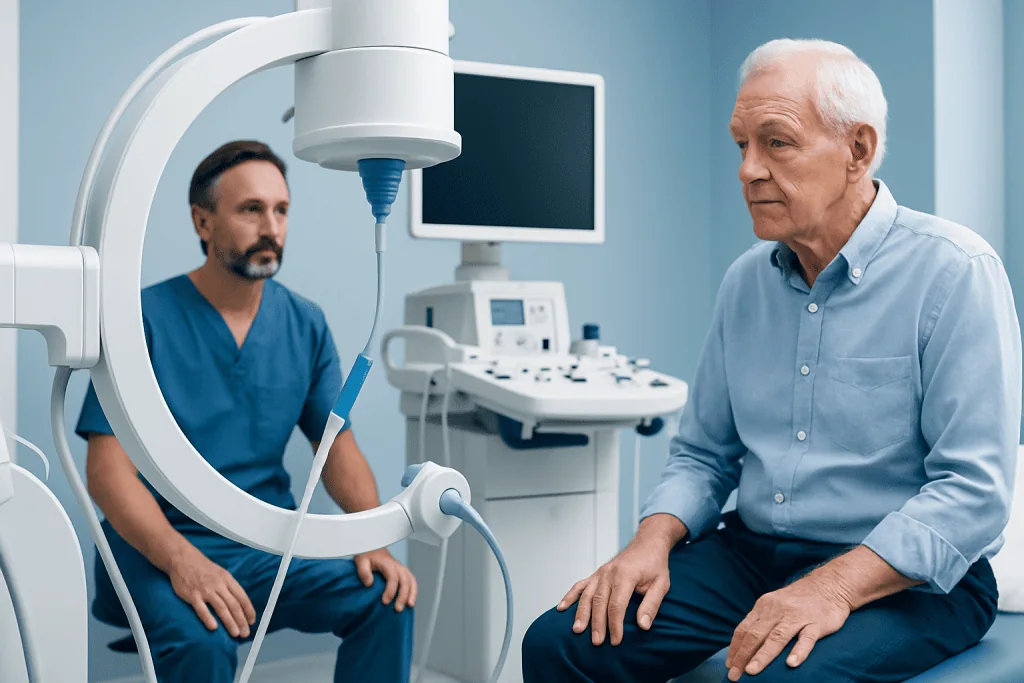
BPH symptoms usually develop gradually. A person may first notice that urination takes longer to start, the stream is weaker than before, or more effort is needed to empty the bladder. Waking at night to urinate is also common and can affect sleep quality and daytime energy.
Storage symptoms can be just as bothersome as a weak stream. These include urgency, frequent urination, and the sensation of needing to go again soon after finishing. Some people experience dribbling after urination or accidental leakage when they cannot reach a toilet in time. Symptoms can vary from day to day and may worsen with dehydration, alcohol, caffeine, or some medications.
Doctors often ask about urinary symptoms in a structured way because symptom burden is an important part of choosing benign prostate treatments. The impact on work, travel, exercise, intimacy, and sleep helps guide whether watchful waiting is reasonable or whether more active treatment is appropriate.
- Weak or interrupted urine stream
- Difficulty starting urination
- Frequent urination, especially at night
- Urgency or trouble postponing urination
- Feeling that the bladder does not empty fully
- Dribbling at the end of urination
Why the prostate enlarges and who is at risk
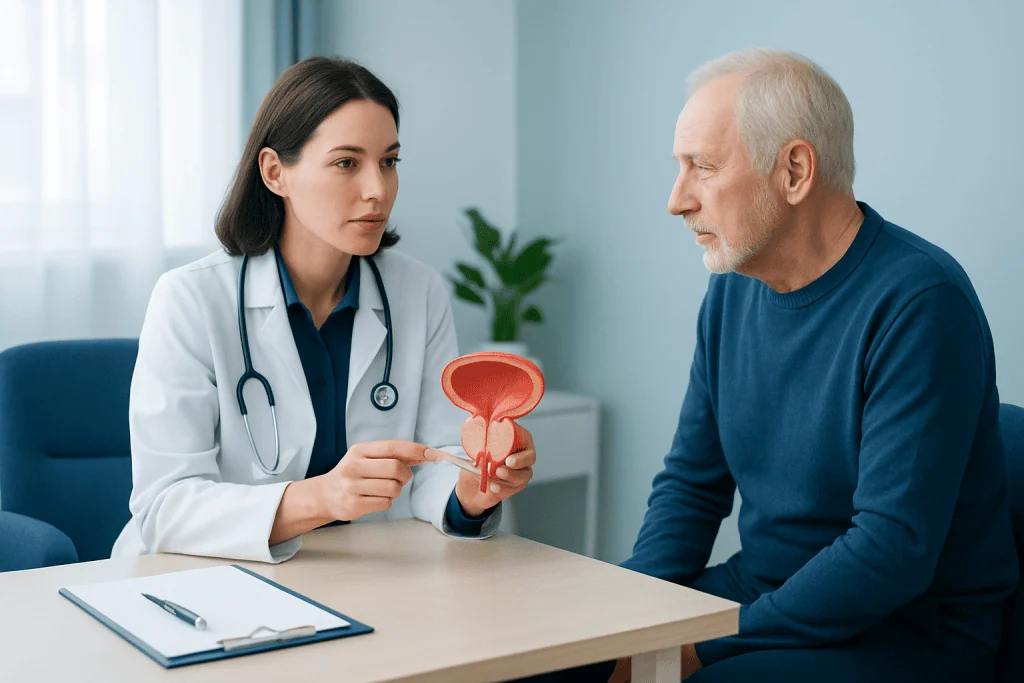
BPH is linked mainly to aging and normal changes in male hormones over time. The exact mechanism is complex, but the prostate gradually becomes larger and the tissue around the urethra may tighten. This is why symptoms can occur even when enlargement is not extreme: both prostate size and muscle tone can affect urine flow.
Risk increases with age and family history. Conditions such as obesity, metabolic syndrome, diabetes, and limited physical activity are also associated with urinary symptoms and prostate enlargement in some men. These factors do not mean symptoms will definitely occur, but they can contribute to overall risk.
It is important to remember that BPH is not prostate cancer. However, the two conditions can exist at the same time, and their symptoms can overlap. For that reason, a medical assessment is useful when urinary changes begin, especially if symptoms are new, progressive, or accompanied by blood in the urine, pain, or weight loss. A clinician may also discuss related issues such as prostate cancer when needed as part of a careful evaluation.
How doctors diagnose BPH and plan treatment
Diagnosis usually starts with a medical history and physical examination. The doctor asks about urinary patterns, fluid intake, nighttime symptoms, medications, and any warning signs such as fever, pain, or visible blood in the urine. A symptom questionnaire may be used to measure severity and track response to treatment over time.
Testing is often focused and practical. A urine test can help look for infection or blood. Blood tests may include kidney function and, in some cases, prostate-specific antigen, or PSA, depending on age, risk factors, and the need to clarify whether other prostate conditions should be considered. A digital rectal exam helps estimate prostate size and detect abnormalities that need further review.
Additional tests may be recommended if symptoms are significant or if the diagnosis is uncertain. These can include ultrasound to assess the bladder and prostate, measurement of urine flow rate, or checking the amount of urine left in the bladder after voiding. Some men may need cystoscopy or formal urodynamic testing, particularly if surgery is being considered or if other causes such as urethral narrowing, bladder problems, or nerve conditions are suspected.
The purpose of diagnosis is not only to confirm benign prostatic hyperplasia but also to understand how much it is affecting bladder function and quality of life. That information helps doctors recommend the most suitable benign prostate treatments in a stepwise and individualized way.
Modern benign prostate treatments: from monitoring to procedures
Treatment is usually based on symptom severity and whether complications are present. If symptoms are mild and not especially bothersome, watchful waiting may be appropriate. This means regular follow-up with a doctor, symptom tracking, and practical steps such as reducing evening fluids, limiting caffeine and alcohol, and reviewing medicines that can worsen urination, including some decongestants.
Medication is often the first active treatment. Alpha blockers can relax the muscle in the prostate and bladder neck to improve urine flow more quickly. Other medicines may help shrink the prostate over time in selected patients, especially when the gland is larger. In some cases, combination therapy is advised. If overactive bladder symptoms are prominent, additional medicines may be considered, but they need careful selection to avoid worsening bladder emptying.
When medicines are not enough, not tolerated, or complications arise, minimally invasive procedures may be discussed. These techniques aim to open the blocked urinary channel while reducing recovery time compared with traditional surgery. Depending on anatomy and local expertise, options may include office-based or short-stay approaches such as steam therapy, implants, laser treatment, or endoscopic removal of tissue. Broadly, these fall under BPH treatment strategies that are tailored to prostate size and patient priorities.
Surgery may be recommended for severe symptoms, repeated urinary retention, recurrent infections, bladder stones, kidney effects, or significant bleeding related to prostate enlargement. A common endoscopic option is transurethral resection of the prostate; some patients may instead benefit from holmium laser prostate surgery or other advanced techniques. The best procedure depends on prostate size, bleeding risk, overall health, and whether preserving ejaculation or minimizing catheter time is especially important to the patient.
Outlook, recovery, and life after treatment
The outlook for men with BPH is generally good. Many people get meaningful symptom relief with lifestyle changes and medication, and those who need procedures often experience better urine flow and less nighttime waking after recovery. Improvement can be immediate with some treatments or more gradual with others, especially medicines designed to reduce prostate size over months.
Recovery depends on the type of treatment used. Medicines may require follow-up to check benefit and side effects such as dizziness, sexual side effects, or changes in blood pressure. After a procedure, there may be temporary burning, urgency, mild bleeding, or the need for a catheter for a short time. These issues are usually discussed in advance so patients know what to expect.
Follow-up matters because symptoms can change over time. Some men need adjustments in medication, repeat assessment, or a different procedure if the prostate continues to enlarge or if bladder function has already been affected. Long-term management focuses on comfort, bladder health, and preserving quality of life rather than only on test results.
Prevention and self-care that may ease symptoms
BPH cannot always be prevented, because age-related prostate growth is common. Still, healthy routines may help reduce symptom burden and support bladder function. Weight management, regular physical activity, balanced eating habits, and attention to blood sugar and cardiovascular health can all be useful parts of long-term self-care.
Practical daily steps can make symptoms easier to manage. Limiting fluids in the evening may reduce nighttime urination. Caffeine and alcohol can irritate the bladder in some people, so reducing them may help. Taking time to urinate without rushing and trying to empty the bladder fully can also be useful. Constipation should be addressed, as it can worsen urinary pressure and urgency.
Patients should also review over-the-counter medicines with a clinician or pharmacist. Some cold and allergy products can tighten the muscles around the bladder outlet and make urination harder. Herbal remedies are sometimes promoted for prostate health, but product quality and effectiveness vary, so it is wise to discuss supplements with a qualified doctor before use.
When to seek medical care
A routine medical visit is appropriate if urinary symptoms are new, progressively bothersome, or affecting sleep and daily life. Early assessment can confirm whether the cause is likely benign enlargement and can identify other conditions that may need different treatment.
Urgent medical care is important if a person cannot urinate at all, has fever or chills with urinary symptoms, severe pain, heavy bleeding in the urine, or signs of dehydration. These situations may point to infection, acute urinary retention, or another problem that needs prompt attention.
If symptoms continue despite treatment, a urologist may recommend more detailed testing or a different approach. Near the end of the care pathway, some patients also seek evaluation at centers with broad urology experience. Acibadem International’s multidisciplinary specialists in JCI-accredited hospitals diagnose and treat prostate conditions for international patients when advanced assessment or procedural care is needed.
Frequently asked questions
What is the best treatment for an enlarged benign prostate?
The best treatment depends on how severe the symptoms are, how large the prostate is, and whether there are complications such as urinary retention or bladder stones. Mild symptoms may only need monitoring, while more troublesome symptoms may respond to medication or a minimally invasive procedure.
Can benign prostate enlargement go away on its own?
Benign prostate enlargement usually does not fully reverse on its own, but symptoms can stay stable for some time or improve with lifestyle changes. A doctor can help decide whether observation is reasonable or whether active treatment would be more helpful.
Are benign prostate treatments the same as prostate cancer treatment?
No. Benign prostate treatments are used for non-cancerous enlargement, most often BPH, and focus on improving urine flow and bladder emptying. Prostate cancer treatment depends on cancer stage and may involve very different tests and therapies.
When is surgery needed for BPH?
Surgery is usually considered when symptoms are severe, medicines do not help enough, side effects are limiting, or complications develop. Examples include repeated urinary retention, recurrent infections, bladder stones, kidney effects, or ongoing bleeding related to the prostate.
Do prostate medicines work quickly?
Some do. Medicines that relax the prostate and bladder outlet may improve symptoms relatively quickly, while medicines that shrink the prostate often take longer to show full benefit. Follow-up helps check whether the chosen treatment is working well enough.
Is an enlarged prostate a normal part of aging?
Prostate enlargement becomes more common with age, but that does not mean symptoms should simply be ignored. Persistent urinary changes deserve assessment because they can affect bladder health and may also overlap with other urinary conditions.
References
- National Institute of Diabetes and Digestive and Kidney Diseases
- American Urological Association
- European Association of Urology
- National Health Service
- Mayo Clinic
This article is for general information only and is not a substitute for professional medical advice. Please consult a qualified doctor about your individual situation.
Explore treatments in Turkey — costs, top hospitals & a free quote
JCI-accredited · board-certified surgeons · reply within 24h
Add us as a Preferred Source to see more of our trusted health content across Google Search, AI Overviews and Discover.