Best Hair Implant in Turkey: How to Choose Safely

Hair transplantation redistributes permanent donor follicles; it does not stop future hair thinning in untreated areas. A safe choice starts with a diagnosis of the cause and pattern of hair loss, not with photographs alone.
Key Takeaways
- Hair transplantation redistributes permanent donor follicles; it does not stop future hair thinning in untreated areas.
- A safe choice starts with a diagnosis of the cause and pattern of hair loss, not with photographs alone.
- Patients should confirm who performs each part of the procedure, including hairline design, graft extraction, and recipient-site creation.
- FUE and FUT are surgical techniques with different benefits, limitations, and scar patterns; neither is automatically best for everyone.
- Results develop gradually, with early shedding expected and visible growth usually beginning several months after surgery.
- Ongoing medical management may be recommended to protect existing hair and support a natural-looking long-term result.
The best hair implant in Turkey is not defined by a package or a promised graft number. It is a medically appropriate hair restoration plan delivered by qualified clinicians after a careful assessment of hair loss, donor supply, health history, and realistic goals.
What Makes the Best Hair Implant in Turkey?
The best hair implant in Turkey is one that is safe, clinically suitable, and planned for a natural result over time. Hair transplantation is a surgical method of moving healthy hair follicles—usually from the back and sides of the scalp—to areas affected by thinning or baldness. The right option depends on the person’s type of hair loss, donor-hair availability, scalp condition, age, medical history, and expectations.
The phrase “hair implant” is commonly used to describe hair transplantation. In modern practice, follicles are usually transplanted as naturally occurring follicular units containing one to several hairs. A responsible clinic should explain the diagnosis, discuss alternatives, and provide a personalized plan rather than promising a fixed density or a particular cosmetic result.
Turkey is a destination for people seeking hair restoration, but travel should not replace medical due diligence. The safest decision is based on the qualifications of the medical team, clear professional accountability, appropriate facility standards, transparent aftercare arrangements, and the quality of the clinical consultation. Patients should be able to understand exactly what is being recommended and why.
How Hair Transplantation Works
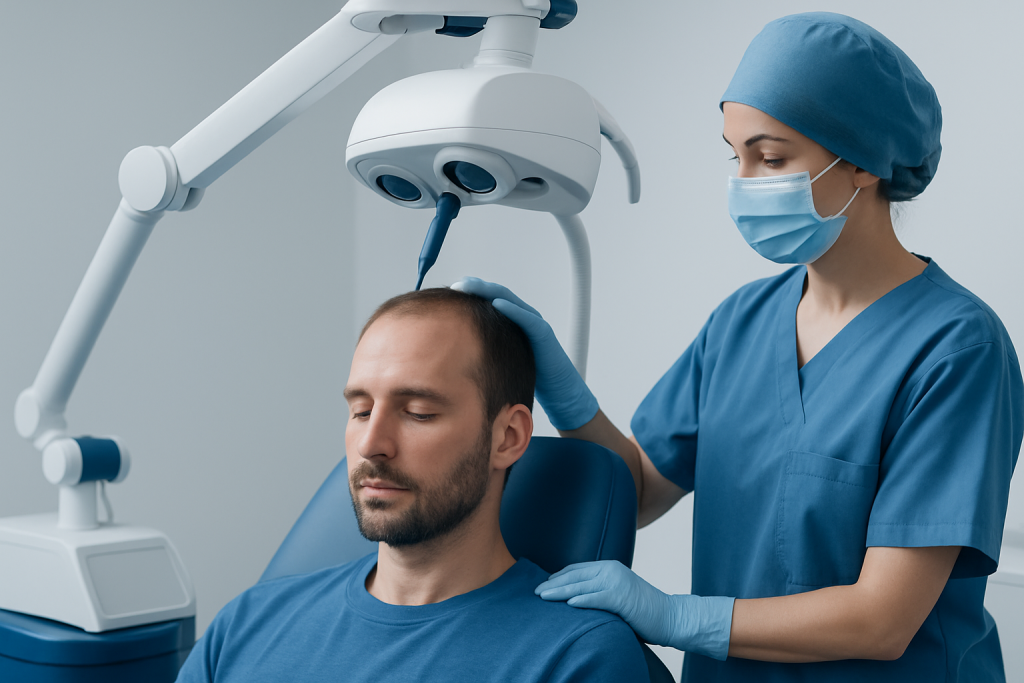
Most hair transplants use the patient’s own hair follicles. These follicles are typically taken from the donor zone at the back or sides of the head, where hair may be more resistant to the hormonal effects involved in common pattern hair loss. Once relocated, transplanted follicles usually continue producing hair in their new position, although the overall outcome can vary.
Follicular unit extraction (FUE) removes individual follicular units using a small punch tool. Follicular unit transplantation (FUT), sometimes called strip surgery, removes a narrow strip of scalp from the donor area and then separates it into follicular units. FUE leaves many small circular scars, while FUT leaves a linear scar. The most appropriate method depends on hairstyle preferences, scalp flexibility, donor characteristics, the number of grafts needed, and the surgeon’s assessment.
Some clinics describe additional approaches, such as direct hair implantation techniques. These terms may refer to variations in how grafts are placed, but they should not be viewed as a substitute for sound surgical planning. The key clinical questions are whether follicles can be harvested safely, how recipient sites will be designed, and whether donor hair will be preserved for future needs. Patients considering surgery can learn more about hair transplant treatment and the factors involved in individualized planning.
Who May Be a Candidate?

Hair transplantation is most often considered for people with stable or gradually progressive pattern hair loss, including androgenetic alopecia. It may also help selected patients with hair loss from injury, burns, some surgical scars, or certain stable forms of scarring alopecia. A dermatologist or hair-restoration clinician should first determine the underlying diagnosis, because not every type of hair loss responds to transplantation.
Good candidates generally have sufficient donor density, healthy scalp skin, realistic expectations, and a willingness to follow aftercare guidance. A person with rapidly changing hair loss, widespread diffuse thinning, active scalp inflammation, or poor donor supply may need evaluation and medical treatment before surgery. Younger adults may need particular care because the future pattern of hair loss can be difficult to predict.
A detailed assessment may include a scalp examination, review of family history and medications, and discussion of prior procedures or treatments. Blood tests may sometimes be considered when symptoms or clinical findings suggest nutritional deficiency, thyroid disease, anemia, or another medical contributor. Common pattern thinning can be explored further through androgenetic alopecia information, while sudden or patchy hair loss should always be assessed before making cosmetic treatment plans.
- Hair loss pattern and likely future progression
- Donor-area density, hair texture, color contrast, and curl
- Scalp health and any active skin condition
- Medical conditions, smoking status, medicines, and allergies
- Desired hairline, expected coverage, and the need to conserve grafts
What Happens Before, During, and After the Procedure?
Before surgery, the clinician should take a medical history, examine the scalp, establish a realistic hairline, and discuss the anticipated coverage. Patients should receive instructions about medicines, smoking, alcohol, scalp products, and travel planning. It is important to disclose all prescription medicines, supplements, allergies, bleeding problems, and prior reactions to anesthesia or local anesthetic.
On the day of the procedure, the treatment area is usually trimmed and local anesthesia is used to numb the scalp. In FUE, grafts are extracted individually from the donor area. In FUT, the donor strip is removed and the wound is closed before graft preparation. The clinician then creates tiny recipient sites in the thinning area, considering angle, direction, and distribution so that new hair can blend with existing hair. Prepared grafts are placed into these sites.
The procedure may take several hours, depending on the technique and amount of work planned. Patients are generally awake, and the care team monitors comfort throughout. Afterward, written instructions should cover washing, sleeping position, activity restrictions, medicines if prescribed, and how to contact the clinic with concerns. International patients should also have a clear plan for follow-up once they have returned home.
At Acibadem International, multidisciplinary specialists and JCI-accredited hospitals can assess and treat hair-loss concerns for international patients, with care planning based on individual clinical needs.
Recovery Timeline and Expected Results
In the first days after transplantation, mild swelling, tenderness, redness, tightness, or scabbing can occur. The recipient and donor areas need gentle care. Patients are usually advised to avoid rubbing, scratching, intense exercise, swimming, direct sun exposure, and headwear that could disturb grafts during the early healing period. The treating team’s specific instructions should take priority.
Transplanted hairs commonly shed within the first several weeks. This is a normal phase called shock shedding and does not necessarily mean that the follicles have failed. New growth often begins gradually after several months, while the appearance of density and texture continues to improve over time. Final maturation may take around a year or longer, particularly in the crown area.
Hair transplantation improves coverage where grafts are placed, but it does not prevent ongoing thinning of non-transplanted hair. Depending on the diagnosis, a clinician may recommend medical treatments to help preserve existing hair. This can be especially important for people with progressive androgenetic alopecia and for those who may need to reserve donor follicles for the future.
Benefits, Risks, and Questions to Ask a Clinic
A well-planned transplant can create a more natural-looking hairline, improve visible coverage, and provide long-lasting growth from transplanted follicles. Results are influenced by the amount and quality of donor hair, the area being treated, hair characteristics, surgical technique, healing, and future hair loss. No ethical clinician can guarantee a specific density or predict every individual outcome.
As with any surgical procedure, risks include bleeding, infection, swelling, discomfort, delayed healing, numbness, visible scarring, folliculitis, poor graft growth, and an unnatural-looking hairline or distribution. Temporary shedding of surrounding native hair may occur. Overharvesting the donor area can make it look thin, so donor conservation and careful surgical judgment are essential.
Before choosing a clinic, patients should ask who will conduct the consultation and perform key surgical steps; what diagnosis has been made; which technique is recommended and why; what the expected limitations are; and how complications or follow-up will be managed. They should also request clear information about licensing, infection-control standards, consent, written aftercare, and communication in a language they understand.
- Is the procedure planned and supervised by a qualified physician?
- Who performs extraction, recipient-site creation, and graft placement?
- How will the team protect the donor area for possible future treatment?
- What is the plan if hair loss continues after surgery?
- How can the patient access follow-up care after traveling home?
When to Seek Medical Care
Medical assessment is important before considering a hair transplant if hair loss is sudden, patchy, painful, itchy, associated with scaling, or accompanied by scalp redness or sores. A clinician should also evaluate hair loss that follows childbirth, significant illness, major weight change, new medication, or emotional or physical stress, since these patterns may have treatable causes other than permanent pattern baldness.
After a transplant, patients should contact their treating clinic promptly for increasing pain, spreading redness, fever, pus-like drainage, marked swelling, persistent bleeding, or any concern that the scalp is not healing as expected. Early advice can help determine whether reassurance, an adjustment in aftercare, or an in-person examination is needed.
People with diabetes, autoimmune disease, bleeding disorders, a history of poor wound healing, or use of medicines that affect bleeding should discuss these factors with a qualified doctor before surgery. A careful consultation helps ensure that hair restoration is considered at the right time and in the safest way for the individual.
Frequently asked questions
Is Turkey a safe place for a hair implant?
Safety depends on the specific clinic and medical team rather than the country alone. Patients should verify clinician credentials, confirm who performs surgical steps, understand the facility’s standards, and ensure there is a written plan for aftercare and follow-up.
Which is better, FUE or FUT for hair transplantation?
Neither technique is best for every person. FUE may suit people who prefer to avoid a linear donor scar, while FUT can be appropriate in selected cases where graft yield and donor characteristics favor strip harvesting. A qualified clinician should explain the trade-offs based on the individual scalp and goals.
How long does it take to see results after a hair transplant?
The transplanted hairs often shed during the first weeks, which is expected. New growth usually starts gradually over the following months, and the result continues to mature for approximately a year or sometimes longer.
Can a hair transplant stop future hair loss?
A transplant redistributes follicles into thinning areas but does not stop loss of the person’s existing, non-transplanted hair. Depending on the cause of hair loss, a doctor may discuss medical treatment and long-term monitoring to protect remaining hair.
How many grafts will be needed?
The required number depends on the size of the thinning area, donor density, hair thickness, hair color contrast, desired hairline, and the need to preserve grafts for the future. A responsible clinician should avoid deciding graft numbers solely from photographs or promotional packages.
What should patients avoid after hair transplantation?
Patients should follow their surgical team’s individualized instructions, especially during the early healing period. Common guidance includes avoiding rubbing or scratching the grafts, strenuous exercise, swimming, significant sun exposure, and products not approved by the clinical team.
References
- American Academy of Dermatology
- International Society of Hair Restoration Surgery
- National Health Service
- Mayo Clinic
This article is for general information only and is not a substitute for professional medical advice. Please consult a qualified doctor about your individual situation.
Hair transplant in Turkey — costs, graft counts & a free assessment
JCI-accredited · board-certified surgeons · reply within 24h
Add us as a Preferred Source to see more of our trusted health content across Google Search, AI Overviews and Discover.