Hair Transplant Operation Cost: What Patients Really Pay

There is no single standard cost for a hair transplant or for a specific number of grafts. A graft is a follicular unit that may contain one or several hairs, so graft counts do not directly equal hair counts.
Key Takeaways
- There is no single standard cost for a hair transplant or for a specific number of grafts.
- A graft is a follicular unit that may contain one or several hairs, so graft counts do not directly equal hair counts.
- FUE and FUT are established techniques, but the most suitable option depends on the scalp, donor area, and hair-loss pattern.
- Hair transplantation redistributes existing hair; it does not stop future thinning of non-transplanted hair.
- A written, individualized treatment plan helps patients understand what is included in an estimate and make informed decisions.
Hair transplant operation cost is not determined by graft count alone. A reliable estimate reflects the person’s diagnosis, donor-hair availability, surgical method, clinical team, and the care included before and after surgery.
Understanding Hair Transplant Operation Cost
Hair transplant operation cost has no single standard price because surgery is planned around an individual’s hair-loss pattern, donor-hair supply, and long-term goals. A useful estimate should explain the planned care in full, rather than treating a graft number as a complete answer.
Factors that can affect an estimate include the diagnosis, the size and location of the area being restored, the planned number of follicular-unit grafts, the extraction technique, surgical staffing, anaesthesia, facility standards, and follow-up care. Geographic location and whether treatment is performed in one session or staged over time may also matter.
Patients can compare plans more fairly by asking what the estimate includes. This may cover the consultation, hairline design, procedure, medications or dressings used around surgery, postoperative checks, and the clinic’s approach to additional treatment if hair loss progresses.
How Hair Transplant Surgery Works and Who May Be a Candidate
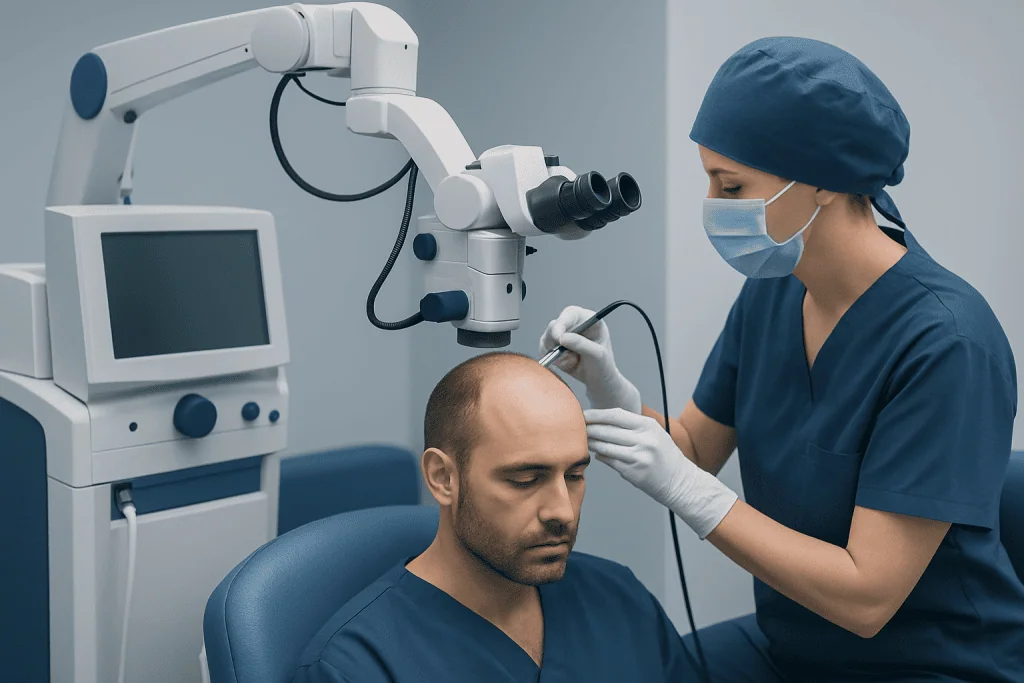
A hair transplant moves follicular units from a donor area, usually the back or sides of the scalp, to areas with thinning or hair loss. It redistributes a person’s own hair rather than creating new follicles. Transplanted follicles often retain some of the characteristics of the donor area, which is why donor quality is central to planning.
Many candidates have hereditary pattern hair loss, also called androgenetic alopecia. A suitable candidate usually has adequate donor density, a realistic view of achievable coverage, and hair loss that can be planned for safely. People with patchy, sudden, inflamed, or scarring hair loss need a medical assessment first, because surgery may not be appropriate until the underlying cause is identified and controlled.
During consultation, a qualified clinician reviews the scalp, medical history, medicines, family history, and expectations. They may assess hair calibre, donor density, the likelihood of future hair loss, and whether medical treatment could help preserve existing hair before or alongside surgery.
What Happens During a Hair Transplant Procedure

Hair transplantation is commonly performed as an outpatient procedure under local anaesthetic. The exact plan varies, but careful hairline design and protection of the donor area are important because both affect the natural appearance of the result and future treatment options.
- Planning: The clinician examines the scalp, confirms the proposed coverage area, and discusses expected density and limitations.
- Donor harvesting: In follicular unit extraction, or FUE, individual follicular units are removed. In follicular unit transplantation, or FUT, a narrow strip of donor scalp is removed and divided into grafts.
- Recipient-site preparation: Tiny sites are created in the thinning area, with attention to angle, direction, and distribution of hair.
- Graft placement: The harvested grafts are placed into the recipient sites and postoperative instructions are provided.
A graft is not the same as a single hair. It is usually a naturally occurring follicular unit that may contain one or several hairs. This distinction is important when discussing plans described as 3,000 or 5,000 grafts.
Large restoration plans may take many hours or be divided into more than one session. The safest approach protects the donor supply and aims for a result that remains appropriate if natural hair continues to thin.
Recovery, Results, and Long-Term Planning
After surgery, mild tenderness, swelling, redness, and small scabs can occur. The clinical team provides instructions on washing, sleeping position, activity, sun protection, and avoiding rubbing or scratching the grafts. Most people can resume light daily activities relatively soon, but the timing should follow their clinician’s advice.
Transplanted hairs commonly shed in the early recovery period before new growth begins. Visible growth often develops gradually over several months, and the final appearance can continue to mature for around a year or longer. Results vary with the quality of the donor hair, the procedure, healing, and the progression of existing hair loss.
What happens 10 years after a hair transplant?
Ten years later, transplanted hair may still grow, but the surrounding non-transplanted hair can continue to thin due to ageing and hereditary hair loss. This may change the overall appearance and, for some people, lead to consideration of medical treatment, hairstyle adjustments, or another carefully planned procedure if donor supply permits.
Common Questions About Graft Costs
How much do 3,000 hair grafts cost in the USA?
There is no medically reliable single figure for 3,000 grafts in the USA. The planned technique, clinician’s role, location, donor-hair complexity, facility care, and included follow-up can differ substantially between providers. A patient should request an individualized written plan that states what the estimate includes and whether the graft count is clinically appropriate.
How much does 5000 hair grafts cost?
A 5,000-graft plan also cannot be accurately priced without an in-person assessment. This is a large graft number and may not be suitable or safe for every person, since donor-hair availability is limited. In some cases, a clinician may recommend a staged approach or a more conservative design to preserve donor hair for the future.
How much do hair transplants genuinely cost?
The genuine overall expense is the documented treatment plan, not only a headline figure or a quoted graft number. Patients should clarify whether consultations, surgeon involvement, anaesthesia, postoperative care, prescribed items, potential travel costs, and follow-up are included. Transparent information and appropriate medical oversight are more meaningful than choosing solely on the lowest advertised offer.
Benefits, Risks, and Self-Care
For an appropriate candidate, hair transplantation can improve the appearance of coverage in selected areas and may offer a long-lasting use of their own donor hair. However, it cannot restore unlimited density, replace an inadequate donor area, or prevent future loss of native hair. A natural-looking result depends on thoughtful design, graft handling, and realistic goals.
Possible risks include bleeding, swelling, discomfort, infection, scarring, temporary numbness, uneven growth, or reduced growth of some grafts. Temporary shedding of existing nearby hair, sometimes called shock loss, may also occur. Proper assessment and an experienced, appropriately qualified surgical team can help reduce risks, but no procedure is risk-free.
Aftercare supports healing. Patients should follow their clinician’s washing and activity guidance, avoid disturbing grafts, attend follow-up appointments, and discuss any recommended treatment for ongoing hair loss. Smoking, uncontrolled health conditions, and medicines that affect bleeding or healing should be discussed before surgery rather than managed without medical advice.
When to Seek Medical Care
Medical assessment is advisable before considering a transplant when hair loss is sudden, patchy, associated with itching, scaling, pain, scalp inflammation, or changes elsewhere on the body. A clinician should also review hair loss following illness, major stress, childbirth, weight change, new medicines, or nutritional concerns, as some causes may respond to non-surgical care.
After a procedure, patients should contact their surgical team promptly for increasing pain, spreading redness, fever, pus-like drainage, persistent bleeding, or swelling that is worsening rather than settling. For international patients, Acibadem International’s multidisciplinary specialists and JCI-accredited hospitals assess hair-loss concerns and provide hair-transplant care when clinically appropriate.
Frequently asked questions
What is the difference between a graft and a hair?
A graft is usually a follicular unit removed from the donor area. It may contain one hair or several hairs, so a graft count does not equal the exact number of hairs transplanted.
Is 3,000 grafts the right amount for everyone?
No. The appropriate graft number depends on the area to be restored, hair characteristics, donor density, and likely future hair loss. A larger number is not automatically a better plan if it places too much demand on the donor area.
Is FUE better than FUT?
Neither technique is universally better. FUE removes individual grafts and leaves many small scars, while FUT removes a strip and leaves a linear scar; the suitable choice depends on the person’s scalp, hairstyle preferences, donor area, and surgical goals.
Can a hair transplant stop future hair loss?
No. A transplant redistributes donor hair but does not stop hereditary thinning in non-transplanted areas. A clinician may discuss medical management or long-term planning to help protect existing hair where appropriate.
Does health insurance cover hair transplantation?
Hair transplantation for hereditary hair loss is commonly considered an elective cosmetic procedure and may not be covered. Coverage rules differ by insurer and country, so patients should confirm directly with their provider.
Can women have a hair transplant?
Some women may be suitable candidates, particularly when they have stable, localized thinning and adequate donor hair. Because diffuse hair loss has several possible causes, diagnosis and scalp assessment are especially important before surgery.
References
- American Academy of Dermatology Association
- International Society of Hair Restoration Surgery
- American Society of Plastic Surgeons
- National Health Service
This article is for general information only and is not a substitute for professional medical advice. Please consult a qualified doctor about your individual situation.
Hair transplant in Turkey — costs, graft counts & a free assessment
JCI-accredited · board-certified surgeons · reply within 24h
Add us as a Preferred Source to see more of our trusted health content across Google Search, AI Overviews and Discover.