Biofeedback Therapy Pelvic Floor Dysfunction: How It Works, Results and What to Expect

Pelvic floor biofeedback teaches awareness and coordination of muscles that may be too tight, weak, or working at the wrong time. It is particularly well supported for defecatory disorders caused by poor pelvic floor relaxation or coordination.
Key Takeaways
- Pelvic floor biofeedback teaches awareness and coordination of muscles that may be too tight, weak, or working at the wrong time.
- It is particularly well supported for defecatory disorders caused by poor pelvic floor relaxation or coordination.
- Sessions are non-surgical, individualized, and usually combined with home exercises, bowel or bladder habits, and other pelvic floor therapy approaches.
- Improvement is gradual; some people notice changes within several sessions, while others need a longer treatment plan.
- Internal examinations or sensors are never automatic: the clinician should explain options, obtain consent, and respect a patient’s choice to decline.
- New severe pelvic pain, rectal bleeding, fever, unexplained weight loss, or an inability to pass urine or stool needs prompt medical assessment.
Biofeedback therapy for pelvic floor dysfunction is a guided rehabilitation treatment that uses sensors and real-time feedback to help a person recognize, relax, strengthen, or better coordinate pelvic floor muscles. It is commonly used for bowel-emptying problems, urinary symptoms, and some pelvic pain conditions after an individualized clinical assessment.
Overview: what pelvic floor biofeedback does
Biofeedback therapy pelvic floor dysfunction is a non-surgical rehabilitation approach that helps a person see or hear how their pelvic floor muscles are working in real time. With guidance from a trained clinician, this information can make it easier to learn whether to relax, gently contract, or coordinate the muscles during activities such as passing stool, emptying the bladder, coughing, or moving.
The pelvic floor is a group of muscles and connective tissues at the base of the pelvis. It supports the bladder and bowel and, in many people, the uterus or prostate area. These muscles must respond flexibly: they need to tighten for support and continence, but relax and lengthen for urination, bowel movements, and some sexual activity. Dysfunction can occur when that coordination is disrupted.
Biofeedback is not simply a strengthening program. For people whose pelvic floor is overactive or does not relax at the right time, repeated squeezing may worsen symptoms. The purpose is to identify the person’s pattern and practice the specific skill that is needed. A clinician may recommend it as part of pelvic floor rehabilitation alongside education, movement strategies, and a home program.
Who may be a candidate for pelvic floor biofeedback?
Biofeedback may be considered when symptoms and examination suggest that pelvic floor muscle coordination contributes to a person’s concerns. A common indication is dyssynergic defecation, also called a defecatory disorder, where the muscles around the anus and pelvic floor tighten or fail to relax during an attempted bowel movement. This can lead to straining, a sense of incomplete emptying, or the need for manual assistance.
It may also be used within a broader care plan for selected urinary symptoms, fecal incontinence, constipation, pelvic organ support symptoms, or pelvic pain. The exact role differs between conditions. For example, someone with leakage may benefit from learning well-timed contractions, while someone with constipation related to poor relaxation may focus mainly on releasing tension and coordinating breathing with abdominal pressure.
Before treatment, clinicians consider other explanations for symptoms, such as infection, inflammatory bowel disease, medication effects, nerve conditions, structural problems, prolapse, or colorectal disease. People with persistent constipation may need assessment for chronic constipation and its possible causes rather than beginning exercises independently. Pregnancy, recent delivery, prior pelvic surgery, trauma history, and mobility needs are also considered when tailoring care.
How does the procedure work step by step?
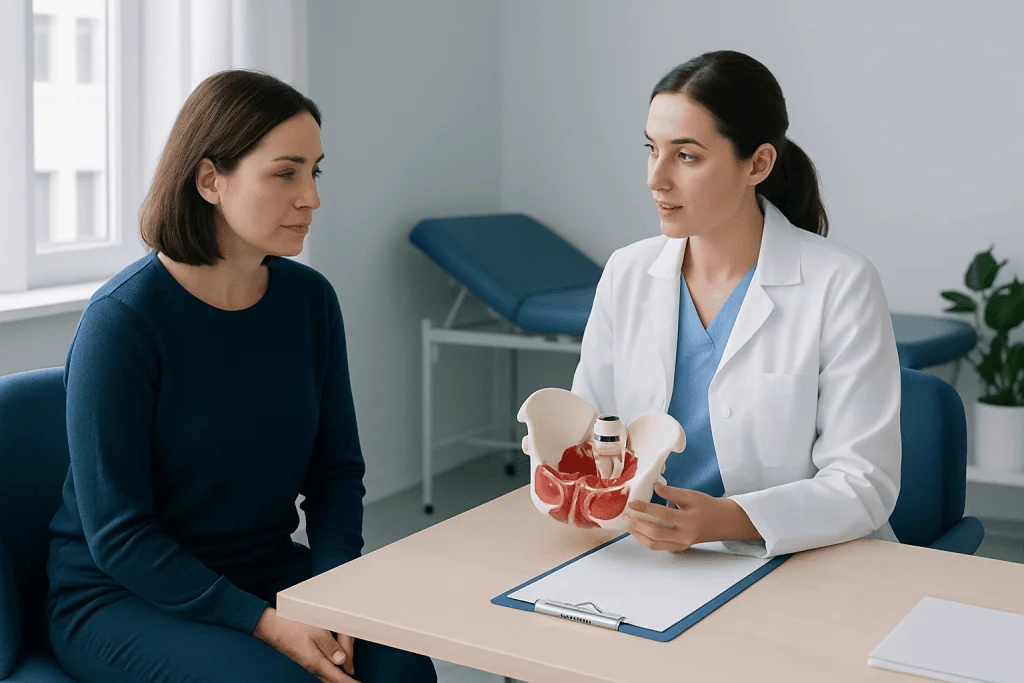
The first appointment generally begins with a detailed discussion of symptoms, medical history, bowel and bladder habits, pain, goals, and daily activities. Depending on the concern, assessment may include posture, breathing, abdominal muscle function, and an external or internal pelvic examination. The clinician should explain why each part is proposed and obtain informed consent before proceeding.
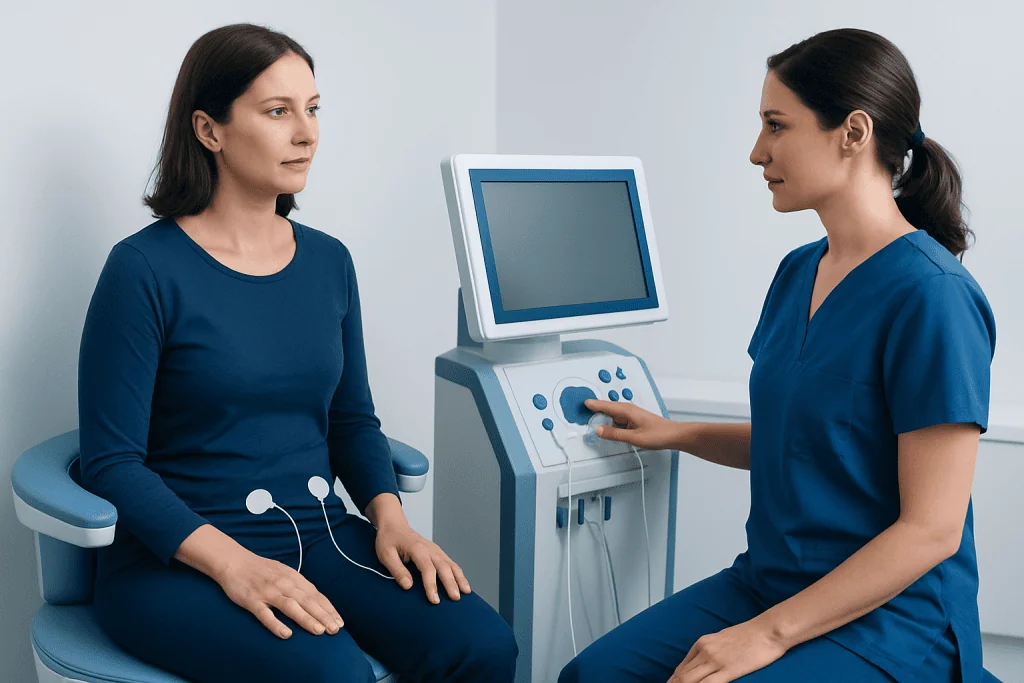
During a biofeedback session, small sensors measure muscle activity or pressure. They may be placed on the skin near the pelvic area, or, when appropriate and agreed to, a small sensor may be placed in the vagina or rectum. The information appears as a visual display, graph, or sound. The person then practices targeted movements, such as relaxing during simulated bowel emptying or gently contracting and releasing the muscles without holding the breath.
The therapist gives coaching on body position, diaphragmatic breathing, timing, and avoiding unnecessary muscle tension in the abdomen, buttocks, thighs, or jaw. For bowel symptoms, training may include toilet posture and methods that reduce straining. Appointments are usually repeated over several weeks, with a personalized home program between sessions. The plan is adjusted according to symptoms and what the feedback shows.
Some evaluations for difficult bowel-emptying symptoms include anorectal manometry, balloon expulsion testing, or imaging tests. These are diagnostic procedures rather than biofeedback itself, but they can help clarify whether coordination training is likely to be useful.
Benefits, limits and possible risks
The principal benefit of pelvic floor biofeedback is that it turns an internal muscle pattern into information a person can understand and practice changing. It may improve confidence, reduce harmful straining, support more complete bowel emptying, improve continence strategies, or reduce symptoms linked to unhelpful muscle guarding. For confirmed dyssynergic defecation, clinical guidelines support biofeedback as a first-line treatment approach.
Results vary because pelvic floor symptoms can have more than one cause. Biofeedback cannot correct every structural problem, replace treatment for infection or inflammatory disease, or address all causes of pain. A person may need dietary support, medication review, bowel management, urology or gynecology assessment, pain management, psychological support, or surgery depending on the diagnosis.
The treatment is generally low risk. Some people experience temporary embarrassment, mild discomfort, emotional vulnerability, or short-lived soreness after an examination or internal sensor use. Internal techniques should not be used without clear consent, and a patient can ask to pause, stop, use an external approach, have a chaperone, or discuss alternatives at any time. Open communication is especially important for anyone with a history of trauma or pain during pelvic examinations.
How long does it take to see results with biofeedback?
Some people notice an early change in awareness or muscle control after one or two sessions, but meaningful symptom improvement usually takes consistent practice over several weeks. The timing depends on the underlying problem, how long symptoms have been present, the presence of pain or constipation, and whether home strategies can be followed comfortably.
For bowel-emptying disorders caused by poor pelvic floor coordination, treatment often involves a series of sessions rather than a single visit. Progress may be measured by less straining, easier stool passage, fewer episodes of leakage, reduced urgency, improved comfort, or a clearer sense of how to use the muscles correctly. A clinician can review goals regularly and modify the plan if progress is limited.
It is helpful to avoid judging treatment only by day-to-day changes. Bowel and bladder symptoms naturally fluctuate with hydration, diet, stress, illness, activity, medications, and hormonal changes. Tracking symptoms between visits can help identify gradual, meaningful improvement.
Does pelvic floor biofeedback work?
Pelvic floor biofeedback can work well when it is matched to the right diagnosis and delivered by an appropriately trained clinician. The strongest evidence is for people with dyssynergic defecation, where biofeedback teaches the pelvic floor and anal muscles to relax and coordinate during bowel movements. It may be more effective than relying on laxatives alone when this specific coordination problem is present.
For urinary leakage, urgency, pelvic pain, or other pelvic floor concerns, biofeedback may be helpful as one component of care, but it is not always necessary for every patient. Skilled pelvic floor therapy can also use education, palpation when consented to, functional movement training, bladder or bowel retraining, and home exercise. The best approach is based on symptoms, examination findings, preferences, and medical history.
Success does not mean that every symptom disappears immediately. A realistic goal may be better function, less discomfort, fewer accidents, less reliance on straining or compensatory habits, and greater confidence in daily life. If a planned course does not help, the care team should reassess the diagnosis and consider other treatment options.
How long does it take to see results from pelvic floor therapy?
Pelvic floor therapy commonly requires several appointments and regular practice between visits. People with a straightforward, recent problem may progress sooner, while those with long-standing symptoms, significant pain, previous surgery, neurological conditions, or multiple contributing factors may need a longer course. The therapist should discuss expected milestones without promising a fixed timetable.
Home practice is usually brief and specific rather than intense. It may include breathing exercises, relaxation, carefully prescribed muscle contractions, bowel or bladder scheduling, posture changes, or strategies for daily activities. Doing more than recommended is not necessarily better, particularly when the pelvic floor is tight or painful.
Follow-up is also important after symptoms improve. The aim is to use the learned skills naturally during daily activities rather than depend on equipment. People who experience a recurrence can often benefit from reviewing their technique, identifying triggers, and revisiting their individualized plan.
Do they finger you in pelvic floor therapy?
Not always. Pelvic floor therapy can include an internal vaginal or rectal examination or treatment technique, but this is only one possible part of care. Internal assessment may provide useful information about muscle tone, tenderness, strength, and coordination, and certain biofeedback sensors are designed for internal use. However, it is not required at every appointment and is never appropriate without informed consent.
The clinician should explain what they recommend, why it may help, what it involves, and what alternatives are available before any internal technique. A patient may decline, request an external-only assessment, ask questions, stop at any point, or request a chaperone according to local practice. Care should be respectful, private, and adapted to the person’s comfort and cultural needs.
For many goals, external sensors, observation of breathing and movement, education, and home-based strategies can still be valuable. Discussing boundaries early helps the therapist create a plan that feels safe and practical.
Self-care and when to seek medical care
Self-care should support, not replace, assessment and treatment. Helpful habits may include avoiding repeated straining, allowing adequate time for bowel movements, using a stable footstool if it improves toilet posture, drinking fluids appropriate for individual health needs, and following dietary advice given by a clinician. People should not start intensive pelvic floor strengthening exercises if they have pain, difficulty relaxing, or obstructed bowel emptying without professional guidance.
Medical advice is appropriate for pelvic symptoms that persist, interfere with daily life, or do not improve with basic measures. A doctor should assess new bowel or bladder changes, recurrent urinary infections, ongoing pelvic pain, constipation that requires frequent remedies, fecal leakage, or symptoms after childbirth, surgery, or pelvic injury. Referral may involve gastroenterology, urology, gynecology, colorectal surgery, rehabilitation, or pain specialists.
Prompt medical care is important for rectal bleeding, black stools, fever, severe or rapidly worsening abdominal or pelvic pain, vomiting, unexplained weight loss, new leg weakness or numbness, loss of bowel or bladder control, or inability to pass urine or stool. Acibadem International’s multidisciplinary specialists and JCI-accredited hospitals can assess pelvic floor conditions and coordinate care for international patients.
Frequently asked questions
What is biofeedback therapy for pelvic floor dysfunction?
Biofeedback therapy uses sensors to provide real-time information about pelvic floor muscle activity or pressure. A trained clinician uses that information to teach the person how to relax, contract, or coordinate the muscles more effectively for their particular symptoms.
How long does it take to see results with biofeedback?
Some people notice better awareness or control within the first few appointments, but symptom improvement often develops over several weeks of guided practice. The timeline depends on the diagnosis, symptom duration, home practice, and other factors such as constipation, pain, or prior surgery.
Does pelvic floor biofeedback work?
It can be effective when it is used for an appropriate diagnosis. It has particularly strong support for dyssynergic defecation, a condition in which pelvic muscles do not relax or coordinate properly during bowel movements; its role in other pelvic symptoms is individualized.
How long does it take to see results from pelvic floor therapy?
Pelvic floor therapy usually takes more than one session because the goal is to learn and apply new movement patterns in daily life. A therapist can review progress over time and adjust the plan if symptoms are not improving as expected.
Do they finger you in pelvic floor therapy?
An internal examination or technique may be offered in some situations, but it is not automatic and should only occur with clear informed consent. A person can decline, ask for alternatives, request a chaperone where available, or stop the examination at any time.
Is pelvic floor biofeedback painful?
Biofeedback itself is usually not painful. Some people may feel mild discomfort if an internal sensor or examination is used, especially if muscles are tender or tense, but the clinician should work within the person’s comfort level and stop if requested.
References
- American Gastroenterological Association
- American Society of Colon and Rectal Surgeons
- National Institute of Diabetes and Digestive and Kidney Diseases
- International Continence Society
- National Institute for Health and Care Excellence
This article is for general information only and is not a substitute for professional medical advice. Please consult a qualified doctor about your individual situation.
Persistent digestive symptoms? Get evaluated in Turkey
JCI-accredited · board-certified surgeons · reply within 24h
Add us as a Preferred Source to see more of our trusted health content across Google Search, AI Overviews and Discover.

More from the Health Library



Related Specialists

Dr. Sema Selim Kechagia
Emergency Service
Prof. Dr. Kenan Hizel
Infectious Diseases & Clinical Microbiology
Hamdi Kandemir
Physical Medicine & Rehabilitation
Dr. Yalda Kargar
Inpatient Clinic Physicians Clinical Service