Biting of Cheek: An Evidence-Based Guide for Patients

Accidental cheek biting commonly causes temporary pain, swelling or a small ulcer inside the mouth. Repeated cheek chewing can be linked to sharp teeth, poorly fitting dental work, bite alignment, stress, sleep-related teeth grinding or a body-focused repetitive behavior.
Key Takeaways
- Accidental cheek biting commonly causes temporary pain, swelling or a small ulcer inside the mouth.
- Repeated cheek chewing can be linked to sharp teeth, poorly fitting dental work, bite alignment, stress, sleep-related teeth grinding or a body-focused repetitive behavior.
- Gentle oral care, avoiding irritation and allowing the tissue to heal are usually appropriate for minor injuries.
- A mouth sore that lasts longer than two weeks, recurs in the same area or has concerning changes needs professional assessment.
- Dentists and doctors can address underlying dental causes and help distinguish a simple injury from other oral conditions.
Biting of cheek is common and often happens accidentally while eating, talking or sleeping. Most minor injuries heal within one to two weeks, but repeated cheek chewing or a sore that does not heal should be evaluated to identify dental, behavioral or medical causes.
Overview: what biting of cheek means
Biting of cheek describes an injury to the soft lining inside the mouth caused by the teeth. It may occur suddenly while chewing food, speaking, coughing or during a fall. It can also happen repeatedly when the cheek is caught between the upper and lower teeth, including during sleep.
A single bite usually causes a tender area, mild swelling, a small cut or a shallow ulcer. The mouth lining generally heals quickly because it has a good blood supply. However, the injured spot may be bitten again before it has healed, particularly if swelling makes the cheek more prominent.
Some people develop a habit of chewing or nibbling the inner cheeks. This is sometimes called chronic cheek biting or morsicatio buccarum. It can leave rough, white or shredded-looking patches along the bite line. Although it is often harmless, repeated trauma can be uncomfortable and deserves attention when it is difficult to stop or causes persistent sores.
How cheek biting can feel and look
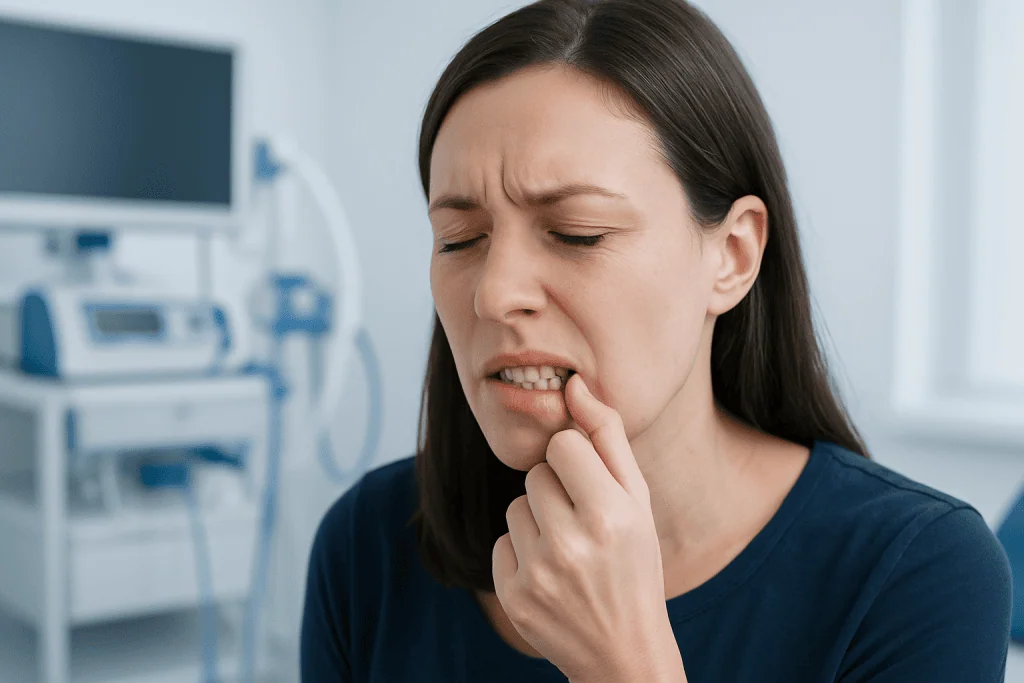
Symptoms depend on how deeply the cheek was bitten and whether the injury is new or recurring. A fresh injury may sting, bleed briefly or feel swollen. Eating acidic, spicy, salty or very hot foods can make the area more painful while it heals.
After a day or two, a small white, yellowish or pale center with a red border may develop. This is often part of the normal healing appearance of a minor oral ulcer and does not necessarily indicate infection. The surrounding tissue may feel tender when touched by the tongue or stretched while speaking.
Repeated chewing may cause a different pattern: a thickened, ragged or whitish line on one or both inner cheeks. People may notice an urge to chew when concentrating, feeling tense or bored, but some do it without realizing it. Sleep-related biting may be noticed on waking as soreness, jaw tightness or marks inside the cheeks.
- Localized pain or sensitivity
- Minor swelling, redness or bruising
- A small cut, ulcer or healing patch
- A rough or whitish area from repeated friction
- Occasional bleeding immediately after a bite
Why people bite the inside of the cheek

Many episodes are accidental. Cheek biting is more likely when eating quickly, talking while eating, chewing gum, or eating foods that require forceful chewing. Temporary numbness after dental anesthesia can also make it easier to bite the cheek because normal sensation and coordination are reduced.
Dental factors can create a repeated contact point. A sharp or broken tooth edge, an uneven filling, a crown with a rough edge, an orthodontic appliance, missing teeth or changes in bite alignment may rub or catch the cheek. Swelling after a previous bite can itself contribute to a cycle of reinjury.
Jaw clenching and teeth grinding, especially during sleep, may increase the chance of biting the cheeks or tongue. Stress, anxiety and fatigue can make clenching or unconscious chewing more frequent. In some people, repetitive cheek chewing is a body-focused repetitive behavior, similar to lip biting or skin picking, and may be difficult to control through willpower alone.
Less commonly, a persistent cheek lesion may not be caused by biting at all. Infections, inflammatory mouth conditions, medication effects, nutritional deficiencies and other oral disorders can lead to ulcers or changes in the mouth lining. This is why an area that does not heal as expected should be checked rather than repeatedly assumed to be a bite injury.
What to do after an accidental cheek bite
For a minor injury, gentle care is usually enough. If there is light bleeding, clean gauze or a soft cloth can be held against the area with gentle, steady pressure. Rinsing the mouth carefully with cool water may remove food particles and soothe discomfort. It is best not to poke, scratch or repeatedly inspect the injury with fingers.
During healing, softer foods may be more comfortable. Avoiding sharp, crunchy foods and foods that sting, such as citrus fruits, vinegar, alcohol and spicy dishes, can reduce irritation. Good daily oral hygiene remains important, but the person should brush gently and avoid directly traumatizing the sore.
A pharmacist, dentist or doctor can advise on suitable over-the-counter options for mouth discomfort, including protective oral products or pain relief when appropriate for the individual. People should follow product instructions and seek professional advice if they have medical conditions, are pregnant, take regular medicines or are considering treatment for a child.
Most uncomplicated injuries improve steadily and heal within one to two weeks. A bite that is becoming more painful, more swollen or repeatedly reopening may need assessment, particularly when a tooth or dental restoration appears to be catching the cheek.
Finding and treating the underlying cause
A dentist is often the most appropriate clinician to assess recurrent biting of cheek. They can examine the teeth, gums, bite and cheek lining, and ask about timing, sleep symptoms, dental work and habits. If a specific sharp edge or poorly fitting restoration is responsible, dental adjustment or repair may help prevent repeated injury.
When teeth grinding or clenching is suspected, the clinician may discuss approaches to protect the teeth and soft tissues. These can include managing contributing factors, treating dental issues and, for selected people, using a professionally fitted oral appliance. An appliance should be selected and monitored by a dental professional, since an unsuitable device can affect the bite or fail to address the cause.
For habitual cheek chewing, identifying triggers is useful. A person may be encouraged to notice whether chewing occurs during work, driving, screen use, stress or before sleep. Stress-management approaches, behavioral strategies and mental health support can be helpful when the behavior is persistent, distressing or difficult to interrupt.
If the appearance of a lesion is unusual or the diagnosis is uncertain, a dentist, oral medicine specialist or doctor may recommend further examination. This can include checking for local irritation, infection or inflammatory conditions. A biopsy is not needed for every mouth sore, but may be considered when a persistent lesion requires clarification.
Prevention and practical self-care
Preventing cheek biting begins with reducing opportunities for accidental trauma. Taking smaller bites, chewing slowly and avoiding talking with food in the mouth can help. Choosing care with very hard or chewy foods may also be useful when the cheek is already sore or when someone knows they tend to bite while eating.
Regular dental checkups can identify chipped teeth, rough restorations, orthodontic irritation and bite changes before they lead to repeated injury. A person who notices biting after new dental work should contact their dentist rather than trying to smooth a tooth or restoration at home.
For unconscious cheek chewing, brief pauses can help build awareness. Some people find it useful to keep the mouth relaxed, place the tongue gently behind the upper front teeth when not eating, or use a reminder during trigger activities. These measures are not a substitute for professional care, but they may support behavior change.
Healthy sleep routines and stress-reduction practices may reduce clenching for some people. If there is morning jaw pain, headaches, tooth wear, cracking sounds from the jaw or frequent waking, professional assessment is sensible. These symptoms may suggest nighttime grinding or another jaw-related issue that can be addressed safely.
When to seek medical care
Medical or dental care is recommended for a cheek injury that does not clearly improve or has not healed within two weeks. A clinician should also assess a sore that repeatedly returns in the same location, particularly if there is no obvious accidental bite or dental explanation.
Prompt assessment is important if there is a lump, persistent thickened patch, unexplained white or red area, numbness, worsening pain, difficulty opening the mouth, trouble swallowing, fever or swelling that spreads. Heavy bleeding that does not stop with firm gentle pressure also requires urgent medical attention.
People who use tobacco, drink alcohol heavily, have a weakened immune system, have previously had oral cancer or have unexplained weight loss should not delay assessment of a persistent mouth change. These features do not mean that a serious condition is present, but they make a thorough examination particularly important.
Acibadem International’s multidisciplinary specialists and JCI-accredited hospitals can assess persistent oral symptoms and coordinate dental, oral medicine and other relevant care for international patients. For most people, however, timely review by a qualified local dentist or doctor is the key first step when cheek biting becomes recurrent or a mouth sore does not heal.
Frequently asked questions
Is biting of cheek dangerous?
An occasional cheek bite is usually not dangerous and commonly heals on its own. The main concern is repeated trauma or a sore that does not heal, because these situations may need a dental or medical examination to identify the cause.
How long does a bitten cheek take to heal?
Minor injuries inside the cheek often improve over several days and generally heal within one to two weeks. Healing may take longer if the same spot is repeatedly bitten, irritated by food or rubbed by a sharp tooth.
Why do I keep biting my cheek while eating?
Repeated bites while eating may occur because of fast chewing, temporary swelling, a change in bite alignment or a sharp tooth or restoration. A dentist can check for a mechanical cause, especially when the biting happens in the same area.
Can stress cause cheek chewing?
Stress and anxiety can contribute to jaw clenching or unconscious cheek chewing in some people. When the behavior is frequent or hard to stop, behavioral support and discussion with a dentist, doctor or mental health professional can be helpful.
Should a white patch after cheek biting be a concern?
A whitish or ragged patch can develop from repeated friction and chewing of the cheek lining. It should still be examined if it persists beyond two weeks, changes in appearance, becomes painful or occurs without a clear history of biting.
Can I use salt water for a bitten cheek?
A gentle salt-water rinse may be soothing for some people and can help keep the mouth clean, but it should not be excessively concentrated or used in a way that causes burning. Cool water rinses and gentle oral hygiene are also reasonable for a minor injury.
References
- American Dental Association
- National Institute of Dental and Craniofacial Research
- Mayo Clinic
- Merck Manual Consumer Version
This article is for general information only and is not a substitute for professional medical advice. Please consult a qualified doctor about your individual situation.
Persistent digestive symptoms? Get evaluated in Turkey
JCI-accredited · board-certified surgeons · reply within 24h
Add us as a Preferred Source to see more of our trusted health content across Google Search, AI Overviews and Discover.