

Blood Alcohol Level: What Patients Need to Know

Blood alcohol level reflects the concentration of alcohol in the blood and is often called BAC. Even lower levels can impair judgment, attention, and driving ability.
Key Takeaways
- Blood alcohol level reflects the concentration of alcohol in the blood and is often called BAC.
- Even lower levels can impair judgment, attention, and driving ability.
- Effects vary from person to person depending on body size, sex, food intake, medications, and drinking pattern.
- A blood alcohol test can help assess intoxication, but clinical symptoms are also important.
- Confusion, repeated vomiting, seizures, slowed breathing, or unresponsiveness need urgent medical care.
Blood alcohol level is the amount of alcohol circulating in the bloodstream, usually reported as a percentage or concentration. It helps explain why judgment, coordination, reaction time, and breathing can change after drinking, but a person’s symptoms do not always match one exact number.
Overview: What blood alcohol level means
Blood alcohol level describes how much alcohol is present in the bloodstream after drinking. It is commonly called blood alcohol concentration, or BAC, and may be measured from blood, breath, or other body fluids depending on the setting. In practical terms, it helps estimate how strongly alcohol may be affecting the brain and body at a given time.
Alcohol is absorbed through the stomach and small intestine, then carried through the blood to organs including the brain, liver, and heart. As the level rises, a person may notice reduced inhibition, slower reaction time, poorer balance, and changes in speech or behavior. At higher levels, alcohol can suppress vital functions such as breathing and consciousness.
Blood alcohol level is helpful, but it is not the whole story. Two people with the same measured level may look very different because of differences in body composition, alcohol tolerance, whether they recently ate, age, overall health, and use of sedating medicines. For that reason, doctors consider both the number and the patient’s symptoms.
How alcohol affects the body at different levels
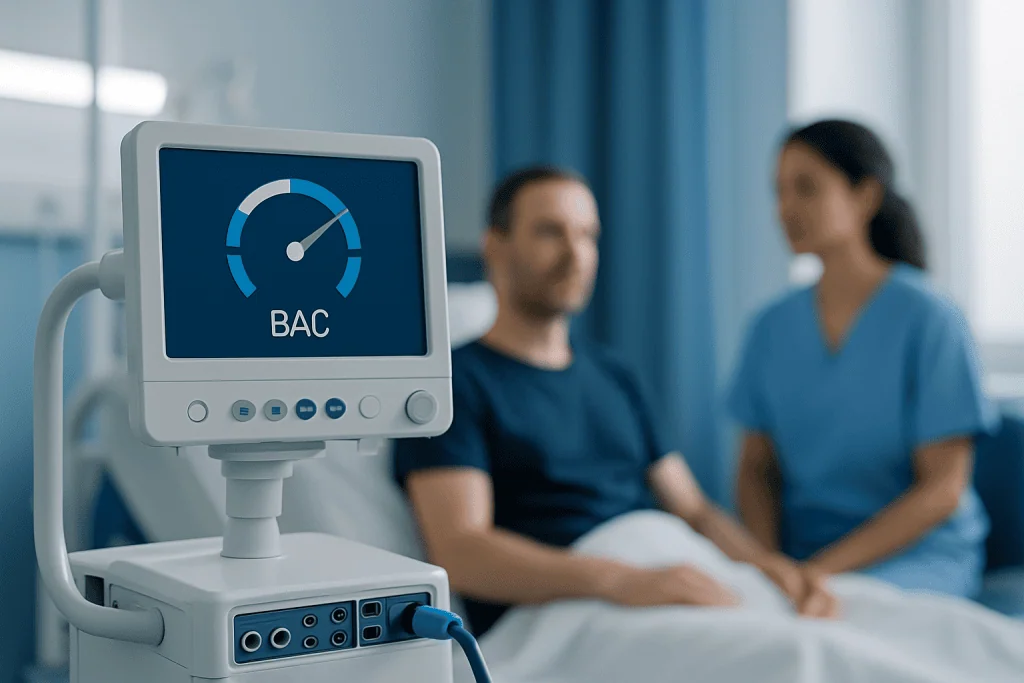
As alcohol enters the bloodstream, it slows communication between nerve cells and affects parts of the brain involved in judgment, movement, attention, and self-control. Early effects may include relaxation, warmth, or a feeling of confidence, but these can be accompanied by subtle impairment long before a person realizes it. Driving, operating machinery, and making important decisions can become unsafe even with mild intoxication.
With increasing blood alcohol level, more noticeable symptoms can appear. These may include slurred speech, poor coordination, blurred vision, delayed reactions, mood changes, and difficulty concentrating. If the level continues to rise, vomiting, confusion, memory blackouts, severe drowsiness, and trouble staying awake may occur.
Very high levels can lead to alcohol poisoning, a medical emergency. Warning signs include slow or irregular breathing, blue-tinged or pale skin, seizures, inability to wake the person, or loss of consciousness. A person can become dangerously ill even if they seemed relatively well a short time earlier, especially if alcohol was consumed quickly.
- Mild effects: lowered inhibition, reduced concentration, slower reactions
- Moderate effects: poor balance, slurred speech, impaired judgment
- Severe effects: vomiting, confusion, blackouts, extreme sleepiness
- Emergency effects: slowed breathing, seizures, unresponsiveness
What changes a person’s blood alcohol level

Blood alcohol level does not depend only on the number of drinks. It is influenced by how quickly alcohol is consumed, the alcohol content of the beverage, and whether drinking happens over a short or long period. Drinking rapidly gives the body less time to metabolize alcohol, so the level rises faster.
Body size and composition also matter. In general, people with lower body weight may reach a higher level after the same amount of alcohol. Biological sex can affect alcohol handling as well, partly because of differences in body water and alcohol-metabolizing enzymes. Food in the stomach slows absorption, so drinking on an empty stomach often causes a faster rise.
Other factors include medications, especially sedatives, sleep medicines, some pain medicines, and anti-anxiety drugs. Mixing alcohol with these substances can worsen drowsiness and suppress breathing. Liver disease, dehydration, older age, and certain health conditions may also change how strongly alcohol affects the body. People who drink regularly may appear less outwardly impaired at a given level, but they are not protected from internal effects or injury.
Symptoms patients may notice
Symptoms of rising blood alcohol level often begin with changes that can be easy to underestimate. A person may feel more talkative, impulsive, or relaxed, while friends or family notice slower responses, difficulty focusing, or unusual behavior. This mismatch is common because alcohol can reduce self-awareness.
Physical symptoms may include flushed skin, unsteady walking, nausea, dizziness, and slurred speech. Memory may become patchy, and the person may misjudge distances or risks. Sleepiness can deepen quickly, especially after binge drinking or when alcohol is mixed with other substances.
More serious symptoms should not be ignored. Repeated vomiting, inability to sit or stand safely, severe agitation followed by marked drowsiness, chest pain, trouble breathing, or fainting can signal a dangerous level of intoxication or another medical problem. Some symptoms may overlap with conditions such as head injury, low blood sugar, or stroke, so professional assessment is important when there is doubt.
How blood alcohol level is tested and assessed
A blood alcohol test directly measures the amount of alcohol in the blood. In hospitals and emergency departments, it may be used alongside a physical examination, vital signs, and other laboratory tests to understand how alcohol is affecting the patient. Breath testing can estimate alcohol concentration as well, though blood testing is generally more precise for medical evaluation.
Doctors do not rely on the number alone. They also look at alertness, breathing rate, oxygen levels, heart rate, temperature, and whether the patient may have injuries, dehydration, or another illness. If symptoms seem more severe than expected, clinicians may investigate for other causes such as infection, low blood sugar, drug exposure, or stroke.
Additional tests are sometimes needed, especially if a patient has fallen, lost consciousness, or has ongoing confusion. Depending on the situation, care may involve observation, blood sugar testing, heart monitoring, or imaging such as MRI scan or CT scan to check for injuries or other urgent conditions.
Treatment and immediate care
There is no fast home remedy that can rapidly lower blood alcohol level. Coffee, cold showers, exercise, and fresh air may make a person feel more awake, but they do not remove alcohol from the bloodstream. The liver needs time to metabolize alcohol, so the safest approach is monitoring, rest, and avoiding further drinking.
Medical treatment depends on the severity of symptoms. Mild intoxication may only require supervision in a safe environment, fluids if appropriate, and time. More serious cases may need hospital care for airway protection, oxygen, intravenous fluids, treatment of low blood sugar, and close observation until the patient is stable.
If alcohol misuse is recurring, clinicians may also address longer-term health and safety. This can include support for reducing alcohol intake, screening for injuries or liver problems, and referral for mental health or addiction care when needed. In some cases, a multidisciplinary evaluation may include check-up services to assess overall health effects related to alcohol use.
Prevention and self-care
The most reliable way to prevent a high blood alcohol level is to limit or avoid alcohol. If a person chooses to drink, it helps to do so slowly, eat beforehand or while drinking, and alternate alcoholic drinks with water or other nonalcoholic beverages. Avoiding drinking games and shots can reduce the risk of a sudden spike in blood alcohol level.
People should never drive or operate machinery after drinking, even if they feel capable. Subjective confidence is not a safe guide because alcohol often impairs judgment early. Planning transportation in advance, staying with trusted friends, and looking out for others are practical ways to reduce harm.
It is also important to avoid mixing alcohol with sedating drugs unless a doctor has clearly reviewed the risks. Individuals with liver disease, a history of substance use disorder, pregnancy, seizure disorders, or other ongoing medical conditions should speak with a clinician about whether alcohol is safe for them at all. For patients who need further evaluation, Acibadem International’s multidisciplinary specialists in JCI-accredited hospitals diagnose and treat alcohol-related medical issues for international patients.
When to seek medical care
Medical care is needed right away if a person is hard to wake, stops responding normally, has slow or irregular breathing, has a seizure, vomits repeatedly, or appears blue, gray, or very pale. Emergency help is also important if the person may have taken other drugs, had a head injury, or has chest pain, severe confusion, or collapse.
It is safer to seek help early than to wait for symptoms to pass. Alcohol levels can continue to rise for some time after the last drink, especially if alcohol was consumed quickly. Someone who is sleeping heavily after drinking may still be at risk if breathing becomes shallow or vomiting occurs.
Non-emergency medical advice is also worthwhile when drinking is causing blackouts, injuries, mood changes, relationship problems, or repeated episodes of heavy intoxication. A doctor can help identify contributing factors, assess overall health, and discuss safer next steps, including support for alcohol reduction if needed.
Frequently asked questions
What is a blood alcohol level?
Blood alcohol level is the amount of alcohol present in the bloodstream after drinking. It is often called BAC and helps estimate how alcohol may be affecting thinking, coordination, behavior, and vital functions.
Can someone seem fine but still have an unsafe blood alcohol level?
Yes. Some people show fewer outward signs because of body differences or alcohol tolerance, but their judgment and reaction time may still be impaired. A person can also become more unwell as alcohol continues to absorb after the last drink.
How long does it take for blood alcohol level to go down?
It falls gradually as the liver metabolizes alcohol over time. There is no reliable way to speed this up at home, so rest, supervision, and avoiding more alcohol are the safest steps.
Does eating before drinking make a difference?
Yes. Food in the stomach can slow alcohol absorption, which may reduce how quickly blood alcohol level rises. Even so, eating does not prevent intoxication if a person drinks enough alcohol.
Is a breath test the same as a blood test?
A breath test estimates alcohol concentration and is often used for screening or legal purposes. A blood test measures alcohol directly and may be used in medical settings when more precise evaluation is needed.
What are the warning signs of alcohol poisoning?
Serious warning signs include very slow or irregular breathing, repeated vomiting, seizures, severe confusion, inability to wake up, or loss of consciousness. These symptoms need urgent medical attention because alcohol poisoning can become life-threatening.
References
- World Health Organization
- Centers for Disease Control and Prevention
- National Institute on Alcohol Abuse and Alcoholism
- MedlinePlus
- Mayo Clinic
This article is for general information only and is not a substitute for professional medical advice. Please consult a qualified doctor about your individual situation.
Persistent digestive symptoms? Get evaluated in Turkey
JCI-accredited · board-certified surgeons · reply within 24h
Add us as a Preferred Source to see more of our trusted health content across Google Search, AI Overviews and Discover.

More from the Health Library



Related Specialists

Prof. Dr. Meltem Serin
Radiation Oncology
Dr. Alen Palancıoğlu
Oral Dental & Maxillofacial Surgery
Dr. Akil Tepecik
Clinical Laboratory
Dr. Işıl Avcı
Physical Medicine & Rehabilitation