Blue hands: A Complete Medical Guide for Patients

Blue hands can happen when blood vessels narrow in the cold or when blood is not carrying enough oxygen. Temporary color changes that improve with warming are common, but persistent or repeated episodes need medical attention.
Key Takeaways
- Blue hands can happen when blood vessels narrow in the cold or when blood is not carrying enough oxygen.
- Temporary color changes that improve with warming are common, but persistent or repeated episodes need medical attention.
- Warning signs include pain, numbness, swelling, shortness of breath, chest pain, or color change in only one hand.
- Doctors diagnose the cause by reviewing symptoms, examining circulation, and using tests such as pulse oximetry, blood tests, and imaging when needed.
- Treatment depends on the cause and may include warming measures, avoiding triggers, medicines, or care for heart, lung, or vascular disease.
Blue hands are most often caused by cold exposure or temporary narrowing of blood vessels, but they can also signal reduced oxygen levels or circulation problems. The color change is not a diagnosis itself, so proper evaluation focuses on when it happens, what symptoms come with it, and whether an underlying heart, lung, blood vessel, or skin condition is present.
Overview: what blue hands can mean
Blue hands usually happen because the skin is receiving less warm, oxygen-rich blood than usual. In many people, this occurs briefly after exposure to cold weather or emotional stress, when small blood vessels tighten and blood flow to the fingers decreases. Once the hands are warmed, the normal color often returns.
Sometimes, however, blue discoloration can point to a medical issue that needs attention. Doctors may describe this as cyanosis, a bluish color caused by reduced oxygen in the blood or by circulation changes. Blue hands are a sign rather than a disease, so the key question is what is causing the color change.
The timing and pattern matter. Hands that turn blue only in cold conditions are different from hands that stay blue at rest, become painful, or are joined by shortness of breath, chest discomfort, swelling, or weakness. Looking at these details helps guide evaluation and treatment.
Common symptoms and color changes to notice
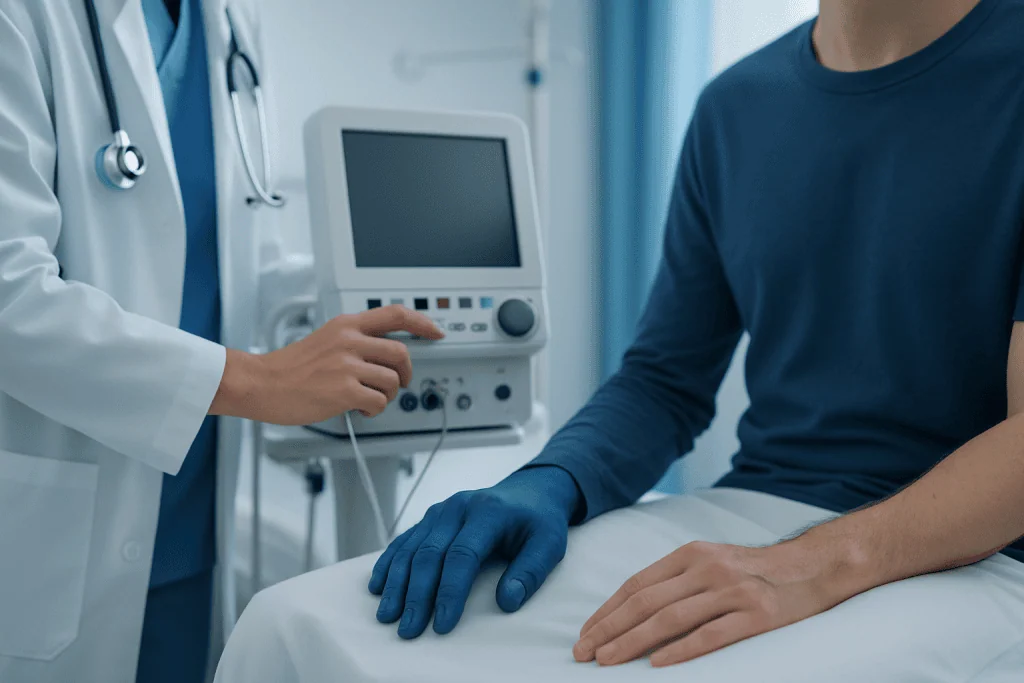
Blue hands may appear as a light bluish tint, deep blue patches, or purple discoloration of the fingers, palms, or nail beds. Some people notice that their skin changes through several colors, such as white, then blue, then red, especially after cold exposure. Others mainly feel their hands becoming cold, stiff, numb, or tingling.
Color changes can affect both hands equally or involve one hand more than the other. Symmetrical changes in both hands are more often linked to cold-related vessel spasm or general circulation changes. A color change in only one hand may suggest a local circulation problem and usually deserves prompt medical assessment.
Other symptoms can offer clues about the cause. Important associated features include:
- Cold sensitivity
- Numbness or tingling
- Pain, throbbing, or burning as the hands warm up
- Swelling of the fingers or hand
- Ulcers or sores at the fingertips
- Shortness of breath, cough, or chest pain
- Dizziness, fatigue, or fainting
When blue hands are frequent, keeping note of triggers, duration, and accompanying symptoms can help a doctor identify patterns and decide whether blood vessel, heart, lung, or blood-related conditions need to be ruled out.
Why hands turn blue: causes and risk factors
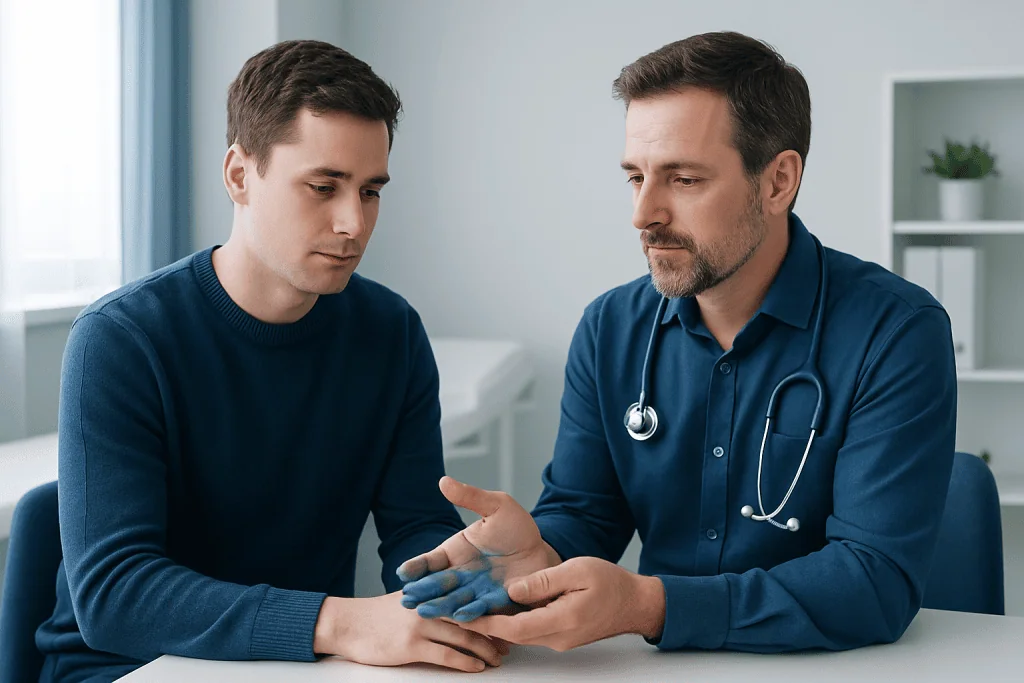
The most common reason for blue hands is reduced blood flow in the small vessels of the fingers. Cold temperatures, wind, wet conditions, and stress can all cause these vessels to narrow. In some people this narrowing is more pronounced, as in Raynaud syndrome, where fingers may turn white or blue and then become red as circulation returns.
Blue hands can also result from low oxygen levels in the blood. Problems affecting the lungs, heart, or circulation may reduce how much oxygen reaches the skin. These causes are less common than simple cold exposure, but they are more medically important, especially when discoloration appears together with breathlessness or chest symptoms.
Less often, blue or bluish-purple hands are linked to blood vessel inflammation, blood clots, certain medications, smoking, or disorders that increase blood thickness. Skin and circulation findings may also appear with connective tissue diseases, acrocyanosis, or peripheral artery problems. Doctors sometimes consider broader vascular evaluation when symptoms suggest peripheral artery disease.
Risk factors depend on the cause but commonly include:
- Cold climate or repeated cold exposure
- Smoking or nicotine use
- Stress and anxiety triggers
- Autoimmune or connective tissue disease
- Heart or lung disease
- Use of medicines that affect blood vessels
- Family history of circulation problems
How doctors diagnose blue hands
Evaluation starts with a careful history and physical examination. A doctor will ask when the discoloration began, whether it happens in the cold, if both hands are affected, and whether symptoms such as pain, numbness, ulcers, or breathlessness are present. The examination usually includes checking skin temperature, pulses, nail beds, and signs of swelling or injury.
A simple and useful first test is pulse oximetry, which measures oxygen levels through a sensor placed on the finger. If oxygen levels are low, the doctor may look for heart or lung causes. Blood tests may be recommended to assess anemia, inflammation, autoimmune disease, clotting issues, or other contributing problems.
When circulation problems are suspected, further testing may include vascular ultrasound, blood pressure comparison between limbs, or imaging of the blood vessels. If a structural blockage or severe narrowing is a concern, specialists may use advanced studies and, in selected cases, procedures linked to angiography to better define blood flow.
Not every patient needs extensive testing. If the color change is mild, brief, clearly triggered by cold, and resolves completely with warming, the doctor may focus on monitoring and trigger avoidance. Persistent, painful, or unexplained blue hands are more likely to need a fuller workup.
Treatment options and what helps
Treatment for blue hands depends entirely on the underlying cause. If cold-induced vessel narrowing is responsible, warming the hands and avoiding triggers are the main steps. For recurring attacks, doctors may recommend lifestyle adjustments and sometimes medicines that relax blood vessels.
When an underlying disease is identified, treatment focuses on that condition. This may include improving circulation, managing autoimmune disease, treating a heart or lung disorder, or evaluating a blocked artery. If symptoms relate to a vascular problem, a specialist may consider tests or therapies used in vascular surgery planning, depending on the location and severity of the issue.
People with episodes suggestive of Raynaud syndrome may benefit from keeping the whole body warm, stopping smoking, and reducing exposure to sudden temperature changes. In more persistent cases, a doctor may evaluate whether medicines, hand protection strategies, or follow-up for associated conditions are needed.
If blue hands occur alongside broader circulation concerns, doctors may also assess overall heart and vessel health. In some situations, treatment planning overlaps with care used for cardiovascular conditions when the cause involves blood flow or oxygen delivery rather than the hands themselves.
Prevention and self-care at home
Many people can reduce episodes of blue hands by protecting their circulation. Wearing insulated gloves, keeping the core body warm, and drying the hands promptly after washing or outdoor activity can help prevent cold-triggered vessel spasm. It is often useful to warm the whole body rather than placing very cold or very stiff hands directly under hot water.
Smoking cessation is one of the most important self-care steps because nicotine narrows blood vessels and can worsen color changes. Limiting caffeine may help some people, particularly if symptoms are stress-related or frequent. Gentle movement of the fingers and hands can also encourage blood flow during an episode.
Stress management may be helpful when emotional triggers seem to bring on attacks. Breathing exercises, regular physical activity, and attention to sleep can support overall vascular health. People who notice repeated episodes should avoid starting over-the-counter supplements or medicines for circulation without medical advice, since some products can interact with existing conditions or treatment.
For international patients seeking coordinated assessment, Acibadem International’s multidisciplinary specialists and JCI-accredited hospitals diagnose and treat circulation, rheumatologic, and cardiopulmonary conditions that may contribute to blue hands.
When to seek medical care
Blue hands should be assessed urgently if the color change starts suddenly, affects only one hand, follows an injury, or occurs with severe pain, swelling, weakness, chest pain, or shortness of breath. These features may point to a more serious circulation or oxygen problem and should not be ignored.
Medical advice is also important when blue hands do not improve after warming, keep happening without clear triggers, or are accompanied by sores, skin breakdown, or increasing numbness. Repeated episodes may be benign, but they can also be the first sign of a blood vessel or autoimmune disorder.
If a child, older adult, or person with known heart, lung, or vascular disease develops persistent blue discoloration, prompt evaluation is sensible. Early assessment can help identify whether the issue is temporary and harmless or whether treatment is needed to protect circulation and tissue health.
Frequently asked questions
Are blue hands always a sign of poor circulation?
Not always. Blue hands can happen temporarily when cold causes the blood vessels to narrow, even in otherwise healthy people. However, persistent or repeated episodes may reflect circulation, oxygen, blood vessel, or autoimmune problems.
Can cold weather alone cause blue hands?
Yes, cold exposure is one of the most common causes. In cold conditions, the body reduces blood flow to the hands to preserve heat, which can make the skin look blue or purple. If the color returns after warming and there are no other symptoms, the cause is often temporary.
What is the difference between blue hands and Raynaud syndrome?
Blue hands describe a visible symptom, while Raynaud syndrome is one possible cause of that symptom. In Raynaud syndrome, small blood vessels overreact to cold or stress, often causing fingers to turn white, then blue, and later red. A doctor can help determine whether this pattern is present.
When are blue hands an emergency?
Blue hands need urgent care if they appear suddenly, affect only one hand, or occur with severe pain, shortness of breath, chest pain, weakness, or swelling. These warning signs may suggest an acute circulation or oxygen problem. Prompt assessment is especially important if the color does not improve with warming.
How do doctors test the cause of blue hands?
Doctors usually begin with a physical examination and questions about triggers, timing, and related symptoms. They may check oxygen levels with pulse oximetry and order blood tests, ultrasound, or other imaging if they suspect vascular, heart, lung, or autoimmune disease. The specific tests depend on the pattern of symptoms.
Can blue hands be prevented?
Often, yes. Keeping the body and hands warm, avoiding sudden cold exposure, and not smoking can reduce many episodes. Prevention is most effective when it is tailored to the cause, so people with frequent or unexplained symptoms should speak with a qualified doctor.
References
- American Heart Association
- National Heart, Lung, and Blood Institute
- Mayo Clinic
- Cleveland Clinic
- National Institute of Arthritis and Musculoskeletal and Skin Diseases
This article is for general information only and is not a substitute for professional medical advice. Please consult a qualified doctor about your individual situation.
Explore treatments in Turkey — costs, top hospitals & a free quote
JCI-accredited · board-certified surgeons · reply within 24h
Add us as a Preferred Source to see more of our trusted health content across Google Search, AI Overviews and Discover.

More from the Health Library

Scratch of Skin: An Evidence-Based Guide for Patients

Brown Spot on Eye: A Complete Medical Overview

A Spot — Explained by Medical Evidence, Not Myths

Non Stick Cookware — Explained by Medical Evidence, Not Myths

Sweetness Taste in Mouth: An Evidence-Based Guide for Patients