Bodyweight Glute Exercises: An Evidence-Based Guide for Patients
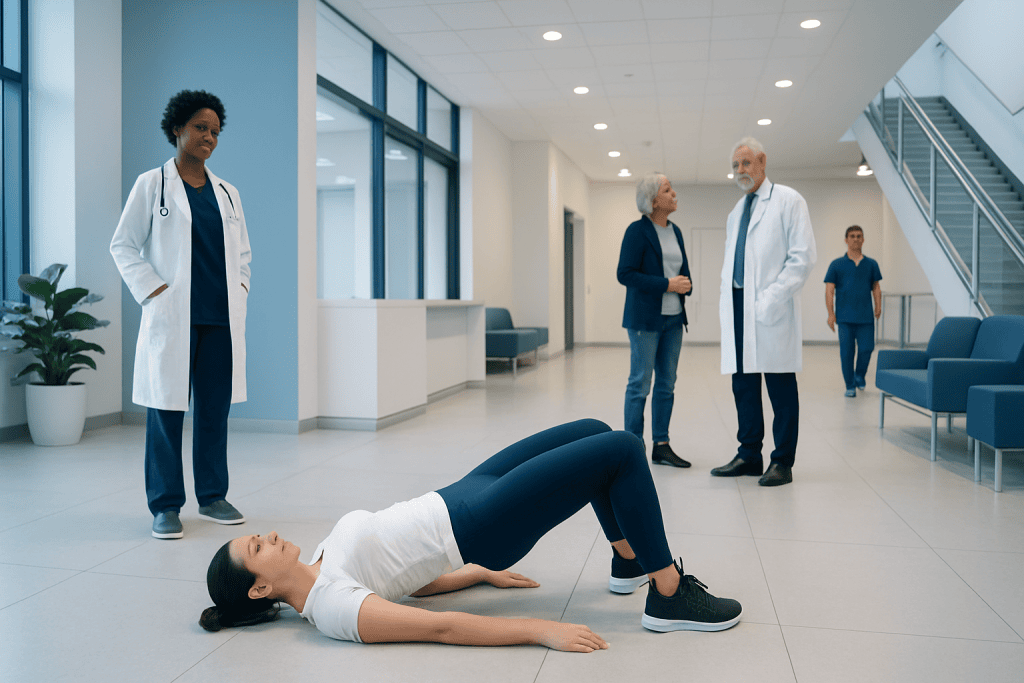
The gluteal muscles help control hip movement and support walking, climbing stairs, standing, and balance. Effective bodyweight options include glute bridges, squats, sit-to-stands, step-ups, and controlled hip-extension movements.
Key Takeaways
- The gluteal muscles help control hip movement and support walking, climbing stairs, standing, and balance.
- Effective bodyweight options include glute bridges, squats, sit-to-stands, step-ups, and controlled hip-extension movements.
- Movement quality, comfort, and gradual progression are more important than doing a high number of repetitions.
- Pain in the joint, new weakness, or symptoms after an injury should be assessed by a qualified clinician.
- People with back, hip, knee, or pelvic conditions may benefit from an individualized exercise plan.
Bodyweight glute exercises can help strengthen the muscles of the buttocks and hips without gym equipment. When performed with good technique and progressed gradually, they may support everyday movement, balance, and lower-limb function.
Overview: What Are Bodyweight Glute Exercises?
Bodyweight glute exercises are movements that use a person’s own body mass to work the gluteal muscles rather than relying on weights or machines. The most commonly targeted muscles are the gluteus maximus, which helps extend the hip, and the gluteus medius and minimus, which help stabilize the pelvis and guide hip movement.
These exercises can be performed at home, in rehabilitation settings, or as part of a wider fitness routine. Useful choices often include glute bridges, sit-to-stands, squats, step-ups, and standing hip movements. The best exercise is not necessarily the most difficult one; it is the one that can be completed with steady control, comfortable breathing, and appropriate alignment.
For many people, strengthening the glutes is about function rather than appearance. Strong, coordinated hip muscles contribute to everyday tasks such as rising from a chair, walking uphill, climbing stairs, carrying groceries, and maintaining balance while standing on one leg.
Why Glute Strength Matters for Daily Movement
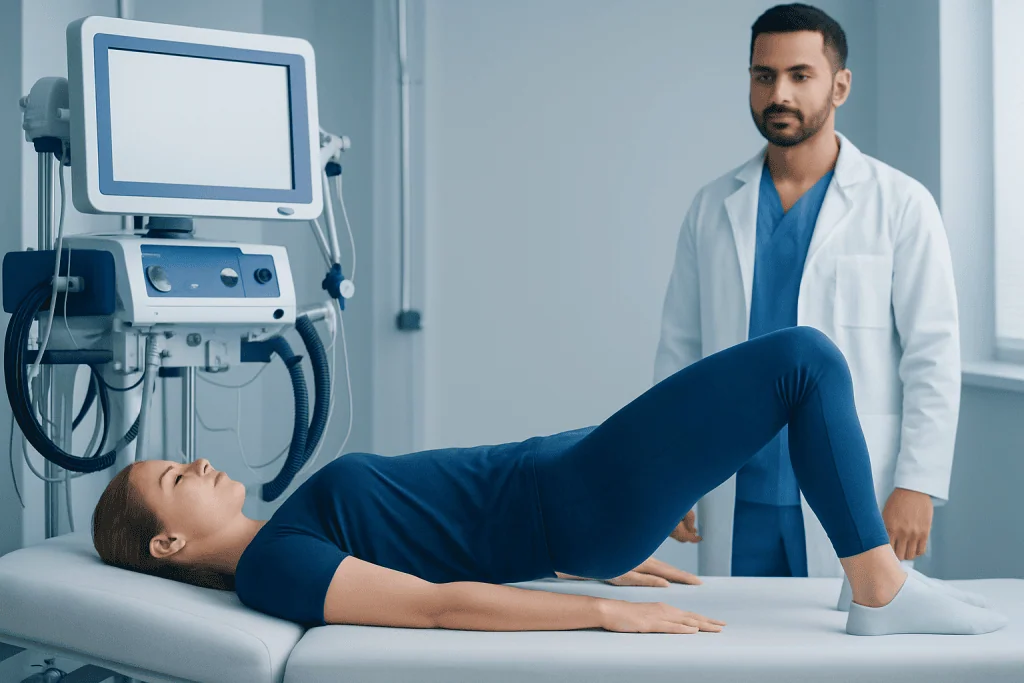
The gluteal muscles work with the abdominal, back, thigh, and lower-leg muscles to control movement through the pelvis, hips, and legs. During walking, the glutes help move the leg behind the body and help keep the pelvis level when weight is transferred from one leg to the other.
Reduced hip strength or poor muscle coordination can occur after inactivity, pain, surgery, injury, or prolonged sitting. It does not always cause symptoms, and it is not correct to assume that glute weakness is the cause of every episode of back, hip, or knee pain. However, targeted exercise may form part of a clinician-guided rehabilitation plan for some musculoskeletal concerns.
Bodyweight training can be particularly useful for people returning to activity because it allows the intensity to be adjusted without equipment. Range of motion, tempo, support from a chair or wall, and the number of sets can all be modified to suit current ability.
Core Bodyweight Glute Exercises
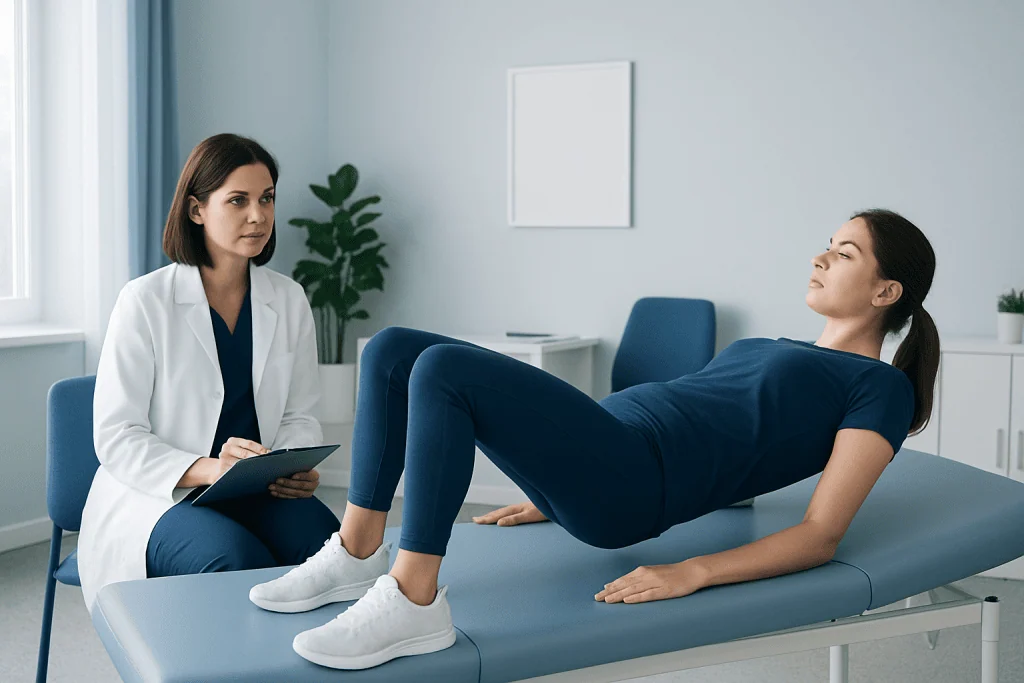
A simple routine can begin with two or three exercises that feel comfortable. Each movement should be slow enough that the person can notice where the effort is coming from. Mild muscle fatigue is expected with strengthening exercise, but sharp, catching, or worsening pain is a reason to stop and seek advice.
- Glute bridge: Lying on the back with knees bent and feet on the floor, the person gently tightens the buttock muscles and lifts the hips until the trunk and thighs are broadly aligned. The ribs should not flare upward and the movement should not be forced through the lower back.
- Sit-to-stand: From a stable chair, the person stands up using the legs, then sits down with control. Feet can be placed beneath or slightly in front of the knees according to comfort. A higher chair makes the movement easier.
- Bodyweight squat: With feet placed comfortably apart, the hips and knees bend together as if sitting back toward a chair. The depth should remain comfortable, and the knees should generally track in the same direction as the toes.
- Step-up: Using a low, stable step, the person places one full foot on the step and rises with control before stepping down. Holding a railing or wall may improve confidence and safety.
- Standing hip extension: While holding a stable support, the person moves one straight leg gently backward without leaning the trunk forward or arching the lower back. The movement is usually small but controlled.
People who are new to exercise may start with a small number of repetitions and increase gradually as control improves. Alternating sides evenly, resting between sets, and allowing recovery days are practical ways to reduce excessive soreness.
Technique and Progression: How to Exercise Safely
Good technique helps direct effort toward the hips and buttocks while reducing unnecessary strain elsewhere. During bridges and standing movements, it can help to keep the abdomen gently engaged, breathe normally, and avoid holding the breath. In squats and step-ups, the trunk may lean slightly forward naturally, but the movement should remain controlled rather than collapsing toward the floor.
Progression should be gradual. A person might first improve movement quality, then add repetitions, complete an additional set, slow the lowering phase, or use a slightly deeper range of motion if it remains comfortable. Single-leg versions, such as a single-leg bridge or supported single-leg sit-to-stand, are more demanding and are best introduced only when basic exercises are well controlled.
Muscle soreness that develops after an unfamiliar workout can occur and commonly settles with rest and gentle activity. Persistent pain, pain that increases during the movement, swelling, or a feeling that the hip or knee is giving way is not a signal to push through. A physiotherapist or physician can help identify appropriate modifications.
Adapting Exercises for Hip, Knee, or Back Symptoms
Exercise should be tailored when a person has an existing musculoskeletal condition, recent injury, surgery, osteoporosis, neurological symptoms, or significant balance concerns. For example, reducing squat depth, using a chair for support, choosing a bridge instead of a step-up, or performing fewer repetitions may make a program more tolerable.
Hip discomfort may be related to many causes, including joint conditions, tendon problems, referred pain from the spine, or soft-tissue irritation. A diagnosis should not be made from symptoms alone. People with ongoing hip symptoms may need clinical assessment for conditions such as hip arthritis before deciding which exercises are suitable.
Back symptoms also deserve an individualized approach. A bridge can be useful for some people but uncomfortable for others if it causes excessive lumbar extension. Keeping the lift small, placing the feet farther from or closer to the body, or selecting another exercise may help. Structured physical therapy can provide personalized assessment, movement education, and a progressive plan when pain or function is limiting activity.
Building a Sustainable Routine
Consistency usually matters more than intensity. Many adults can begin by including glute-strengthening movements on nonconsecutive days, alongside regular walking and other appropriate physical activity. The right frequency depends on health status, current activity level, recovery, and the difficulty of the exercises.
A balanced routine should not focus only on the glutes. The quadriceps, hamstrings, calves, trunk muscles, and upper body also contribute to comfortable and efficient movement. General physical activity, adequate sleep, sufficient nutrition, and pacing after periods of inactivity all support exercise recovery.
It may be helpful to record which movements were performed, whether symptoms appeared during or after activity, and how long recovery took. This can reveal a manageable starting point and can be useful information for a healthcare professional if symptoms persist.
For people recovering from injury or managing a diagnosed condition, rehabilitation may include more than strengthening alone. Depending on the cause, a clinician may recommend mobility work, balance training, gait retraining, or orthopedic rehabilitation alongside a home exercise program.
When to Seek Medical Care
Medical assessment is advisable for hip, groin, buttock, knee, or low-back pain that is severe, persistent, recurrent, or getting worse. A person should also seek care after a significant fall or injury, especially if they cannot comfortably bear weight, walk normally, or move the leg.
Urgent evaluation is important for new numbness around the groin or saddle area, new loss of bladder or bowel control, rapidly worsening leg weakness, fever with severe back or hip pain, or a painful, swollen, red joint. These symptoms are uncommon but should not be managed with exercise alone.
Those with a recent operation, joint replacement, fracture, pregnancy-related pelvic pain, or a chronic health condition should ask their treating clinician before beginning a new program. Acibadem International’s multidisciplinary specialists and JCI-accredited hospitals can assess musculoskeletal symptoms and support international patients with diagnosis and treatment planning when needed.
Frequently asked questions
Can bodyweight glute exercises build strength?
Yes. Bodyweight exercises can improve glute strength, coordination, and endurance, especially for people who are new to training or returning after inactivity. Progress comes from practicing consistently and gradually making the exercise more challenging while maintaining good form.
Which bodyweight glute exercise is best for beginners?
A glute bridge or sit-to-stand is often a practical starting point because both can be easily modified. The most suitable exercise depends on a person’s comfort, balance, mobility, and any existing hip, knee, or back symptoms.
How often should a person do bodyweight glute exercises?
Many people begin with strengthening sessions on nonconsecutive days to allow recovery. The appropriate frequency and volume vary, so someone with pain, illness, recent surgery, or an injury should follow individualized clinical advice.
Should glute exercises cause lower back pain?
No exercise should cause sharp or increasing lower back pain. Some people may feel temporary muscle effort around the hips or trunk, but pain may indicate that the movement, range, or technique needs to be adjusted or assessed by a healthcare professional.
Can squats work the glutes without weights?
Yes. Squats involve the glutes along with the thigh and trunk muscles, particularly when the hips move backward and the descent is controlled. The range should be comfortable and should not aggravate joint pain.
Are glute bridges safe for people with hip pain?
They may be comfortable for some people, but hip pain has many possible causes and should not be self-diagnosed. If the bridge causes groin pain, sharp pain, worsening symptoms, or pain that continues afterward, the person should stop and seek professional guidance.
This article is for general information only and is not a substitute for professional medical advice. Please consult a qualified doctor about your individual situation.
Explore treatments in Turkey — costs, top hospitals & a free quote
JCI-accredited · board-certified surgeons · reply within 24h
Add us as a Preferred Source to see more of our trusted health content across Google Search, AI Overviews and Discover.

More from the Health Library
Feces Softener: An Evidence-Based Guide for Patients

Mycobacterium Avium Complex — Explained by Medical Evidence, Not Myths

Dry Nose: A Complete Medical Overview

Zit clear liquid: Symptoms, Causes, and Treatment — Complete Patient Guide
Wrap Ankle Sprain Ace Bandage: A Complete Medical Overview