Boil on Face — Explained by Medical Evidence, Not Myths

A boil is deeper and usually more painful than a typical pimple, and it may develop a visible pocket of pus. Warm, clean compresses can ease discomfort and encourage natural drainage; squeezing or piercing a facial boil can worsen infection.
Key Takeaways
- A boil is deeper and usually more painful than a typical pimple, and it may develop a visible pocket of pus.
- Warm, clean compresses can ease discomfort and encourage natural drainage; squeezing or piercing a facial boil can worsen infection.
- A clinician may drain a larger boil and may prescribe antibiotics when infection is spreading, severe, recurrent, or linked with certain health risks.
- Urgent assessment is important for swelling around the eyes, fever, rapidly spreading redness, severe pain, or changes in vision.
- Repeated boils can sometimes be associated with bacterial carriage, skin conditions, diabetes, smoking, or immune-system problems.
A boil on face is usually a localized bacterial infection of a hair follicle that becomes a tender, red, pus-filled lump. Most improve with appropriate care, but facial boils should not be squeezed because the face is sensitive and some infections require prompt medical assessment.
What Is a Boil on the Face?
A boil on face, medically called a furuncle, is a deep infection centered on a hair follicle and the nearby skin. It commonly begins as a painful red bump and may grow over several days into a firm lump with a yellow or white center containing pus. Boils are usually caused by bacteria entering through a tiny break in the skin, an irritated follicle, or an area affected by shaving, friction, or ingrown hairs.
Although a facial boil can resemble acne, it is generally more tender, deeper, and more inflamed than an ordinary pimple. A cluster of connected boils is called a carbuncle and can cause a larger area of inflammation. The term “abscess” describes a collection of pus under the skin; some boils develop into small abscesses.
Most boils are treatable and do not lead to serious problems. However, the face contains delicate tissues around the nose, mouth, and eyes, so it is sensible to take new or worsening facial swelling seriously and seek clinical advice sooner than for a small boil elsewhere on the body.
How a Facial Boil May Look and Feel
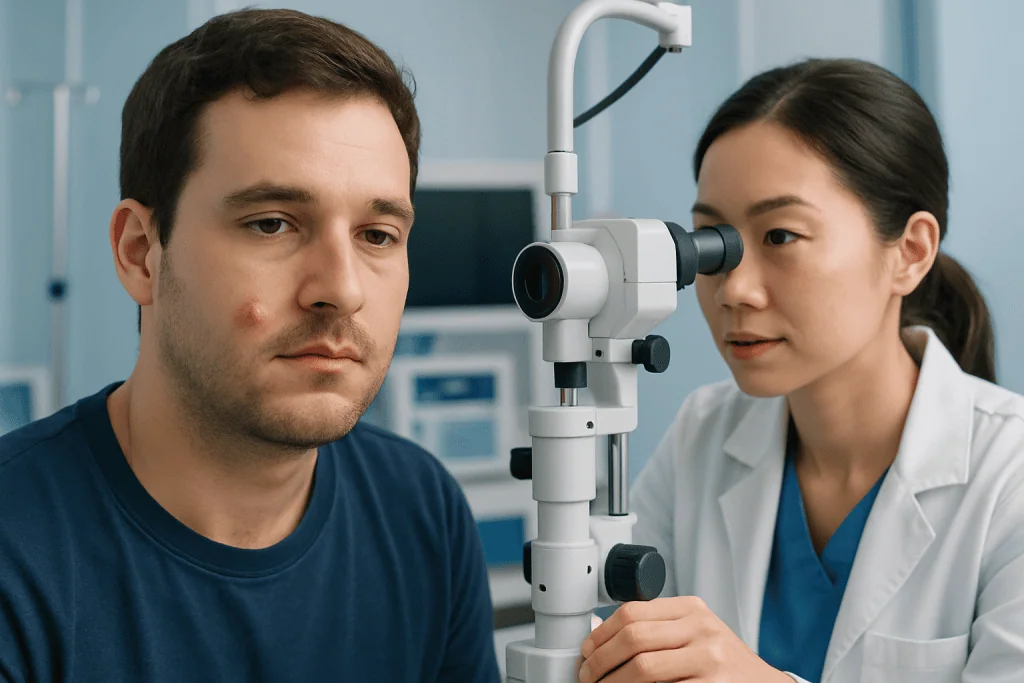
In its early stage, a boil may feel like a sore, warm, red nodule under the skin. As pressure builds inside it, pain can become throbbing or noticeable with facial movement, chewing, shaving, or washing. The center may soften and form a small white, yellow, or dark point before it drains.
After spontaneous drainage, discomfort often starts to improve. The area can still remain red and firm for a while as it heals. It is important to keep the site clean and covered with a clean dressing if it is leaking, because drainage can contain bacteria that may spread to nearby skin or to other people through direct contact.
Not every red facial bump is a boil. Acne cysts, inflamed ingrown hairs, epidermoid cysts, insect bites, cold sores, and some dental or sinus infections can cause facial swelling. Blisters grouped around the lips, for example, are more suggestive of a viral cold sore than a bacterial boil. A clinician can help clarify the cause when the appearance is uncertain.
Why Boils Develop and Who Is More Likely to Get Them

Many boils are caused by Staphylococcus aureus, a bacterium that can live harmlessly on the skin or in the nose of healthy people. Infection can occur when bacteria enter a hair follicle through microscopic skin damage. This does not mean poor hygiene caused the problem; boils can occur despite regular washing and good personal care.
Risk may be higher when skin is repeatedly rubbed, shaved, or irritated, or when there are cuts, eczema, acne, or other breaks in the skin barrier. Close contact with someone who has an active draining skin infection, sharing razors or towels, and participation in contact sports can also increase exposure to bacteria.
Some people have recurrent boils. Factors that may contribute include diabetes that is not well controlled, smoking, obesity, chronic skin disease, reduced immune function, and nasal or skin carriage of staphylococcal bacteria. Repeated infections are worth discussing with a doctor because treatment may include looking for contributing conditions, not simply treating each new boil.
- Shaving-related irritation and ingrown hairs can create an entry point for bacteria.
- Sharing personal items such as towels, cosmetics, razors, or washcloths can spread bacteria.
- Skin-to-skin contact may spread bacteria when a boil is open or draining.
Safe Home Care and Common Myths
For a small boil without warning signs, gentle home care may support healing. A clean warm, moist compress applied for about 10 to 15 minutes several times a day can relieve pain and may help the boil drain on its own. Hands should be washed before and after touching the area, and the face should be cleansed gently with mild soap and water.
The most important thing to avoid is squeezing, popping, cutting, or piercing a boil. These actions can push infection deeper, injure facial skin, increase scarring, and spread bacteria. Applying harsh chemicals, undiluted essential oils, toothpaste, or abrasive scrubs is also not recommended; these may irritate already inflamed skin without treating the infection.
If a boil drains, it should be covered loosely with a clean gauze dressing and the dressing changed when wet or soiled. Towels, pillowcases, washcloths, razors, and makeup applicators should not be shared, and washable items should be cleaned regularly. Over-the-counter pain relievers may help some people, but they should be used only as directed and after checking with a pharmacist or clinician if there are medical conditions, allergies, pregnancy, or interacting medicines.
It is a myth that every boil needs antibiotics. When there is a closed pocket of pus, drainage by a trained clinician is often the key treatment. Antibiotics may be useful in selected circumstances, but unnecessary use can cause side effects and contribute to antibiotic resistance.
How Doctors Diagnose and Treat Facial Boils
Clinicians usually diagnose a boil by examining the skin and asking about symptoms, recent shaving or skin injury, past boils, household contacts, and medical conditions. If pus is present, a sample may sometimes be sent for culture to identify the bacteria and guide antibiotic selection, especially for recurrent, severe, or treatment-resistant infections.
Small uncomplicated boils may be managed with warm compresses and follow-up advice. If there is a significant collection of pus, a doctor may recommend incision and drainage, a minor procedure performed using appropriate sterile technique and pain control. Attempting this procedure at home is unsafe, particularly on the face.
Antibiotics may be prescribed when there is fever, spreading skin infection, a large or difficult-to-drain lesion, multiple boils, a weakened immune system, or a location where complications are of greater concern. The choice depends on the likely bacteria, local resistance patterns, allergy history, and culture results when available. Symptoms should be monitored even after treatment begins, because a clinician may need to reassess if they worsen or fail to improve.
For recurring boils, a doctor may consider testing for diabetes or other contributing conditions. In selected cases, they may recommend a plan to reduce bacterial carriage for the affected person and, occasionally, household contacts. This approach should be individualized rather than started without medical guidance.
When to Seek Medical Care
Because the infection is on the face, medical advice is appropriate if a boil is large, very painful, repeatedly returns, does not begin improving after several days of careful home care, or is close to the nose, lips, or eyes. A clinician should also assess boils in people with diabetes, a weakened immune system, active cancer treatment, or medicines that suppress immunity.
Same-day or urgent care is needed for fever, chills, rapidly spreading redness or swelling, red streaks on the skin, severe headache, confusion, worsening pain, or feeling generally unwell. Swelling around an eye, eye pain, trouble moving the eye, vision changes, or difficulty opening the eye requires urgent assessment.
Emergency care is appropriate if facial swelling affects breathing or swallowing, if there is marked drowsiness or confusion, or if symptoms are rapidly becoming severe. These outcomes are uncommon, but prompt evaluation helps clinicians treat a spreading infection early and safely.
Reducing the Chance of Another Facial Boil
Preventive care focuses on protecting the skin barrier and limiting bacterial spread. Regular handwashing, gentle facial cleansing, and prompt cleaning of small cuts can help. Disposable or regularly cleaned shaving equipment may reduce irritation; shaving should be stopped temporarily over inflamed or broken skin.
A person should avoid sharing towels, razors, cosmetics, face cloths, and bedding while a boil is draining. Covering a draining lesion, laundering towels and pillowcases, and cleaning frequently touched surfaces are practical measures. Cosmetics should not be applied over an open or draining area, both to avoid irritation and to prevent contaminating products.
People with repeated boils should arrange a medical review rather than relying only on home remedies. Managing underlying eczema, acne, blood sugar concerns, or other health factors may reduce future episodes. Acibadem International’s multidisciplinary specialists and JCI-accredited hospitals can assess recurrent or complex skin infections for international patients.
Frequently asked questions
Is a boil on the face the same as a pimple?
No. A pimple usually develops from a blocked pore, while a boil is a deeper infection of a hair follicle and surrounding skin. Boils tend to be more painful, warm, swollen, and likely to contain a larger amount of pus. A doctor can assess any bump that is unusually painful, enlarging, or recurrent.
Can a facial boil go away without antibiotics?
Yes, some small uncomplicated boils improve with warm compresses, hygiene, and time. However, a boil that contains a substantial pocket of pus may need drainage, and some facial infections require antibiotics. A clinician should decide whether antibiotics are appropriate based on the examination and a person’s overall health.
Should a boil on the face be popped?
No. Squeezing, puncturing, or cutting a facial boil can spread infection, worsen inflammation, and increase the chance of scarring. Warm compresses and medical evaluation are safer options, especially if the boil is near the nose or eyes.
How long does a facial boil usually last?
A small boil may begin to improve within several days and heal over one to three weeks, particularly after it drains. The timeline varies with its size, depth, and whether drainage or antibiotics are needed. It should be assessed if it is enlarging, not improving, or causing systemic symptoms such as fever.
Is a boil on the face contagious?
The boil itself is not spread through the air, but bacteria in its drainage can transfer through direct contact or shared personal items. Covering drainage, washing hands, and not sharing towels, razors, makeup, or pillowcases can reduce the risk. Close contacts should seek advice if they develop painful skin lumps.
Why do I keep getting boils on my face?
Recurrent facial boils may be related to repeated skin irritation, shaving, bacterial carriage on the skin or in the nose, or close exposure to someone with a draining infection. Conditions such as eczema, diabetes, smoking, and reduced immunity can also play a role. A healthcare professional can look for contributing factors and recommend a prevention plan.
This article is for general information only and is not a substitute for professional medical advice. Please consult a qualified doctor about your individual situation.
Hair transplant in Turkey — costs, graft counts & a free assessment
JCI-accredited · board-certified surgeons · reply within 24h
Add us as a Preferred Source to see more of our trusted health content across Google Search, AI Overviews and Discover.

More from the Health Library

Hair Types: A Complete Medical Overview

Anti Fungal Medicine for Oral Thrush: What Patients Need to Know

Guanfacine: What Patients Need to Know

Finger Condoms: A Complete Medical Overview

Daily Fiber: An Evidence-Based Guide for Patients