Anti Fungal Medicine for Oral Thrush: What Patients Need to Know

Oral thrush is usually treated with prescription antifungal medicine such as mouth drops, gel, lozenges, or tablets. Treatment works best when the cause is addressed too, including denture hygiene, inhaler technique, dry mouth, or uncontrolled blood sugar.
Key Takeaways
- Oral thrush is usually treated with prescription antifungal medicine such as mouth drops, gel, lozenges, or tablets.
- Treatment works best when the cause is addressed too, including denture hygiene, inhaler technique, dry mouth, or uncontrolled blood sugar.
- Symptoms can include white patches, redness, burning, altered taste, and discomfort with eating or swallowing.
- Babies, older adults, denture wearers, people using antibiotics or steroid inhalers, and those with weakened immunity are more likely to develop oral thrush.
- Medical review is important if symptoms are severe, keep coming back, or spread to the throat or esophagus.
Anti fungal medicine for oral thrush is the standard treatment when a yeast infection in the mouth causes white patches, soreness, or trouble eating. The best option depends on age, overall health, severity, and whether there is an underlying cause such as inhaled steroids, dentures, diabetes, or a weakened immune system.
Overview: what anti fungal medicine for oral thrush does
Anti fungal medicine for oral thrush treats an overgrowth of Candida, a yeast that normally lives in the mouth in small amounts. When conditions in the mouth change, the yeast can multiply and cause creamy white patches, soreness, redness, and an unpleasant taste. In most cases, a clinician prescribes a local treatment that coats the mouth, such as drops, gel, or a lozenge. For more extensive or recurrent infection, tablets may be needed.
The key point for patients is that treatment is not only about removing visible patches. The medicine helps reduce the yeast burden, relieve discomfort, and allow the mouth lining to heal. At the same time, long-term control often depends on identifying what allowed the infection to develop in the first place, such as recent antibiotics, inhaled corticosteroids, poorly fitting dentures, dry mouth, smoking, diabetes, or immune suppression.
Oral thrush is also called oral candidiasis. It is usually manageable, but self-diagnosis is not always reliable because mouth ulcers, leukoplakia, lichen planus, and other conditions can look similar. A doctor or dentist can confirm whether the problem is truly fungal and advise the most appropriate medicine and follow-up.
Symptoms and how oral thrush may feel
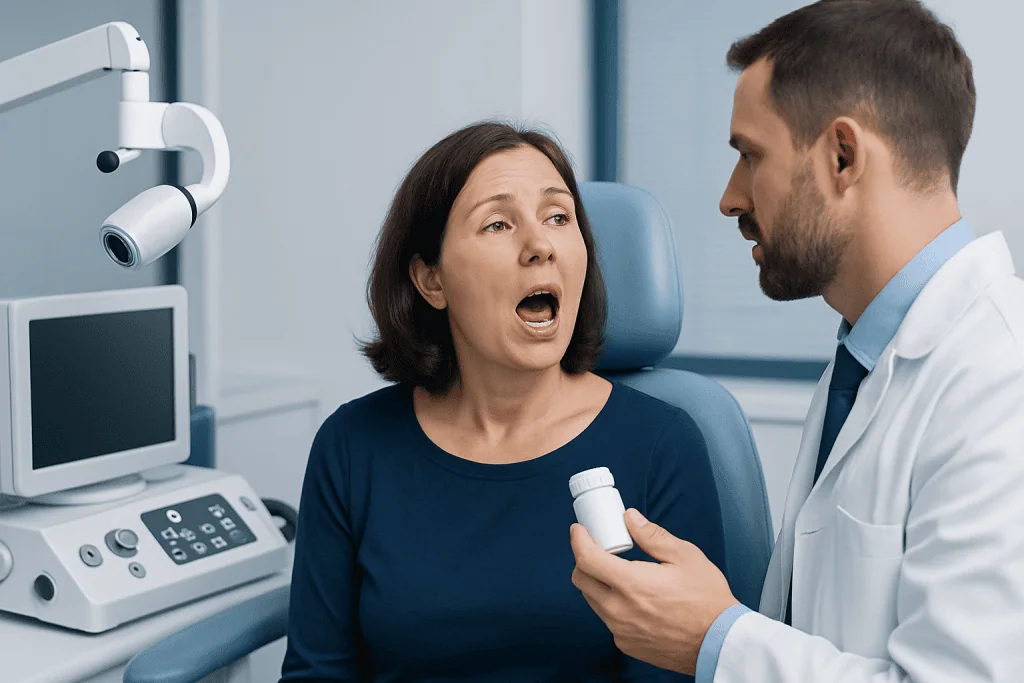
Symptoms vary from mild irritation to more noticeable pain. Some people first notice soft white or yellow-white patches on the tongue, inner cheeks, roof of the mouth, gums, or throat. When gently scraped, these areas may leave behind a red, tender surface. Others mainly experience a burning feeling, mouth soreness, or a cotton-like sensation.
Oral thrush can also affect taste and eating. Some patients describe a metallic taste, reduced taste, or discomfort with spicy and acidic foods. If the infection extends deeper into the throat, swallowing may become painful. In babies, thrush may cause fussiness during feeding, while breastfeeding parents may also develop nipple soreness or redness if yeast is shared between infant and parent.
Common symptoms include:
- White, creamy patches in the mouth
- Redness or tenderness under the patches
- Cracking at the corners of the mouth
- Burning or soreness
- Altered taste or bad taste
- Pain with eating or swallowing in more severe cases
Because mouth symptoms can overlap with other conditions, persistent patches, repeated episodes, or swallowing difficulty deserve medical assessment rather than repeated self-treatment.
Which antifungal medicines are used

The choice of anti fungal medicine for oral thrush depends on the patient and the infection pattern. Many cases are treated with topical antifungal medicine that stays in contact with the mouth lining. Examples include medicated oral suspensions, gels, and lozenges. These are often preferred when the infection is limited to the mouth because they act directly where the yeast is growing.
If thrush is more severe, keeps returning, or affects the esophagus, a clinician may prescribe an oral antifungal tablet. Systemic treatment may also be considered for people with significant immune suppression or when topical treatments have not worked well. The exact medicine is chosen based on age, other medications, liver health, pregnancy considerations, and the likely species of Candida.
Patients usually do best when they use the medicine exactly as prescribed and continue for the full course, even if symptoms improve early. Topical products often work better when they are kept in the mouth for as long as instructed before swallowing. A doctor or pharmacist can explain how to use each medicine safely, including whether it should be taken after meals, whether dentures should be removed first, and whether interactions with other medicines need review.
When oral thrush is part of a broader medical picture, the care plan may involve other specialties. For example, swallowing symptoms sometimes overlap with esophagitis or other upper digestive conditions, and persistent oral findings may need assessment by dental or ENT teams.
Why oral thrush happens: causes and risk factors
Oral thrush develops when the balance of microbes in the mouth is disrupted or when local defenses are reduced. Antibiotics can lower the normal bacteria that help keep yeast under control. Inhaled corticosteroids for asthma or chronic lung disease may leave steroid residue in the mouth, making thrush more likely, especially if the mouth is not rinsed after use.
Other risk factors are common. Dentures, particularly if worn overnight or not cleaned well, can trap moisture and yeast against the gums. Dry mouth reduces the protective effects of saliva. Smoking, poor oral hygiene, recent illness, and high-sugar diets may also contribute. In babies, the immune system is still developing, which is why thrush is relatively common in infancy.
Certain medical conditions increase the risk further. These include diabetes, cancer treatment, HIV infection, and other causes of lowered immunity. In adults with repeated episodes, clinicians may look for an underlying condition that has not yet been diagnosed. If oral thrush appears alongside frequent infections, significant fatigue, weight loss, or swallowing pain, the underlying cause matters as much as the antifungal treatment itself.
Patients with recurrent oral yeast infections sometimes also have skin or genital yeast problems, or inflammation linked to conditions such as reflux if throat irritation is part of the symptom picture. A full history helps the clinician decide whether oral thrush is an isolated problem or a sign that broader evaluation is needed.
How doctors diagnose oral thrush
Diagnosis often starts with a careful examination of the mouth and a review of symptoms, medications, and recent illnesses. In many straightforward cases, an experienced doctor or dentist can identify oral thrush by appearance and history. They may ask about dentures, inhaler use, dry mouth, antibiotics, chemotherapy, blood sugar control, and whether swallowing is painful.
If the diagnosis is uncertain, if symptoms keep returning, or if the infection is severe, further tests may be useful. A clinician may gently collect a sample from the mouth to confirm yeast under the microscope or through culture. Blood tests may be considered if there is concern about diabetes, nutritional deficiency, or immune problems. When symptoms suggest the infection may extend into the esophagus, additional evaluation may be recommended.
Assessment is also important because some conditions mimic thrush. White lesions from irritation, oral lichen planus, leukoplakia, or other inflammatory disorders can look similar. A proper diagnosis helps avoid unnecessary medicine and makes sure more serious or non-fungal causes are not missed.
Treatment beyond medicine: oral care and cause control
Antifungal medicine works better when mouth care and risk factors are addressed at the same time. Gentle tooth brushing, cleaning the tongue if advised, and rinsing the mouth after meals can help reduce irritation and improve comfort. If a steroid inhaler is being used, rinsing and spitting after each dose is an important prevention step. Dentures should be cleaned carefully every day and removed at night unless a clinician has advised otherwise.
People with dry mouth may benefit from frequent sips of water, avoiding tobacco, and discussing saliva-reducing medicines with their doctor. Those with diabetes may need support to improve blood sugar management, because high glucose levels can encourage yeast growth. If recent antibiotics appear to be the trigger, the doctor may review whether they are still needed or whether a different approach is appropriate.
When symptoms involve the throat or swallowing, broader evaluation may be needed, especially if reflux, chronic cough, or irritation from the upper digestive tract is also present. Depending on the findings, doctors may recommend further digestive assessment or treatments such as endoscopy to look at the esophagus in selected cases. If swallowing is painful or nutrition is affected, specialist review should not be delayed.
For patients who need coordinated care, Acibadem International’s multidisciplinary specialists and JCI-accredited hospitals diagnose and treat oral thrush and related conditions for international patients. In more complex cases, related evaluations may include gastroscopy or ENT care and procedures when clinically appropriate.
Prevention and self-care
Preventing oral thrush usually means reducing the conditions that let yeast overgrow. Good oral hygiene is the foundation. Brushing teeth twice daily, cleaning dentures properly, and having regular dental review can make a meaningful difference. Denture wearers should ensure a good fit, since rubbing and trapped moisture can irritate the lining of the mouth.
After using an inhaled corticosteroid, rinsing the mouth and spitting out the water can lower the chance of thrush. Patients who smoke may find that reducing or stopping tobacco helps both healing and recurrence prevention. Staying well hydrated is helpful, especially for people who experience dry mouth from medicines or medical conditions.
It is also sensible to avoid prolonged use of mouthwashes or remedies that cause burning or dryness unless a clinician recommends them. A balanced diet and good blood sugar control can support recovery. If oral thrush keeps returning despite careful self-care, that is a sign to seek medical advice rather than repeatedly trying over-the-counter products that may not address the real cause.
When to seek medical care
Medical care is recommended if white patches do not improve within a short time, if the mouth is very sore, or if eating and drinking become difficult. Pain with swallowing, a feeling that food is sticking, fever, or repeated episodes should also prompt review. Infants, older adults, and people with diabetes, cancer treatment, transplant history, or weakened immunity should be assessed promptly if oral thrush is suspected.
Patients should also seek care if symptoms return soon after treatment ends, as this can suggest an untreated trigger or a need for a different antifungal medicine. A doctor or dentist can confirm the diagnosis, review interacting medicines, and check for other mouth conditions that may look similar.
Urgent assessment is especially important if there are signs of dehydration, inability to swallow medicines, worsening weakness, or unexpected weight loss. While oral thrush is often straightforward to treat, persistent or severe symptoms should not be ignored.
Frequently asked questions
What is the best anti fungal medicine for oral thrush?
There is no single best medicine for everyone. Doctors choose among antifungal drops, gel, lozenges, or tablets based on the patient’s age, symptoms, medical history, and whether the infection is mild, severe, or recurrent. The best treatment is the one that matches the cause and is used correctly for the full course.
Can oral thrush go away without treatment?
Mild cases may sometimes improve if the trigger is removed, such as finishing an antibiotic course or improving denture hygiene. However, many cases need prescription antifungal treatment to clear fully and to prevent symptoms from getting worse. A proper diagnosis is important because not all white mouth patches are thrush.
How long does antifungal treatment for oral thrush take?
Many people improve within several days, but the full treatment course often lasts one to two weeks, sometimes longer in persistent cases. Symptoms may settle before the infection has completely cleared, so finishing the prescribed treatment is important. If there is no improvement, the doctor may reconsider the diagnosis or change the medicine.
Why does oral thrush keep coming back?
Recurrent thrush often means an underlying trigger has not been addressed. Common reasons include dentures worn overnight, dry mouth, smoking, inhaled steroid use without rinsing, recent antibiotics, diabetes, or reduced immunity. Repeated episodes should be medically reviewed rather than self-treated over and over.
Is oral thrush contagious?
Candida is commonly present in the mouth, so oral thrush is not usually considered highly contagious in the same way as a cold. Even so, yeast can sometimes pass between a breastfeeding parent and infant, which is why both may need treatment. Good oral hygiene and cleaning shared items can help reduce re-exposure.
Can I use over-the-counter products for oral thrush?
Some mouth care products may soothe symptoms, but true oral thrush often needs a prescription antifungal medicine. Over-the-counter remedies can delay proper diagnosis if the problem is not fungal. A pharmacist, dentist, or doctor can advise whether medical review is needed.
References
- Centers for Disease Control and Prevention
- National Institute of Dental and Craniofacial Research
- Mayo Clinic
- Merck Manual Consumer Version
- World Health Organization
This article is for general information only and is not a substitute for professional medical advice. Please consult a qualified doctor about your individual situation.
Explore treatments in Turkey — costs, top hospitals & a free quote
JCI-accredited · board-certified surgeons · reply within 24h
Add us as a Preferred Source to see more of our trusted health content across Google Search, AI Overviews and Discover.