Botox Treatment for Forehead Lines: How It Works, Results and What to Expect

Forehead Botox works by temporarily reducing muscle activity that creates expression-related horizontal lines. Most people begin to notice a change within a few days, with the full effect usually visible by about two weeks.
Key Takeaways
- Forehead Botox works by temporarily reducing muscle activity that creates expression-related horizontal lines.
- Most people begin to notice a change within a few days, with the full effect usually visible by about two weeks.
- Results are temporary and commonly last several months, although timing varies between individuals.
- Careful assessment is important because treatment of forehead muscles can affect eyebrow position and expression.
- Botox is not suitable for everyone, including people with certain neuromuscular conditions, active skin infection or specific pregnancy-related considerations.
Botox treatment for forehead lines is a minimally invasive procedure that relaxes selected facial muscles so dynamic lines appear softer. Results develop gradually over several days, and a qualified clinician can tailor treatment to facial movement, skin quality and natural expression goals.
Overview: Botox Treatment for Forehead Lines
Botox treatment for forehead lines uses carefully placed injections of botulinum toxin to temporarily relax muscles that repeatedly lift the eyebrows and crease the forehead. When these muscles move less strongly, horizontal expression lines usually look smoother at rest and are less noticeable during facial movement. It is most effective for dynamic lines, meaning lines caused mainly by repeated expressions.
Botulinum toxin is a prescription medicine and should be administered by a properly trained, licensed healthcare professional. Treatment does not remove skin or fill deep folds; rather, it reduces the muscular pull contributing to the lines. Some established lines may soften rather than disappear completely, particularly when they remain visible without facial expression.
A consultation should consider the whole upper face, including forehead movement, eyebrow position, eyelid shape and any previous cosmetic procedures. This individual assessment helps the clinician plan a conservative approach that aims to preserve a natural range of expression.
How It Works and What Results to Expect
The forehead muscle, called the frontalis, raises the eyebrows and creates horizontal forehead creases. Botox blocks nerve signals that tell selected parts of this muscle to contract. The effect is local and temporary: the treated muscle gradually regains activity as the medicine wears off.
Early changes may be noticed within 3 to 5 days, but the effect commonly continues to develop over 10 to 14 days. For many people, the result lasts around 3 to 4 months, although duration can differ depending on muscle strength, metabolism, treatment history and the technique used.
The goal is usually softening rather than a completely motionless forehead. A clinician may also assess the muscles between the eyebrows because their activity and the forehead muscle work together to influence brow position. The appropriate plan depends on the individual anatomy and desired appearance.
Botox does not prevent all skin ageing. Sun exposure, smoking, genetic factors, skin hydration and collagen changes can all contribute to wrinkles. Daily broad-spectrum sun protection and an appropriate skincare routine can support overall skin health alongside procedural treatment.
Who May Be a Candidate?

Adults who are concerned about horizontal expression lines on the forehead may be candidates if they are in good general health, have realistic expectations and understand that results are temporary. A clinician will examine whether lines occur mainly during movement or are already deeply set into the skin, as this affects the expected degree of improvement.
Before treatment, it is important to share a full medical history, including previous botulinum toxin treatments, allergies, medications and supplements, bleeding problems, neurological or muscle disorders, and any history of eyelid or eyebrow drooping. The clinician should also know about planned dental, facial or cosmetic procedures.
Treatment is generally postponed if there is an active infection, rash or inflammation at the planned injection sites. People who are pregnant, breastfeeding or trying to conceive should discuss their circumstances with their doctor, as cosmetic treatment is commonly deferred during these periods because safety data are limited.
People with a naturally low brow, excess upper-eyelid skin or eyelid drooping need especially careful assessment. Relaxing the forehead muscle can lower the brow in some cases, so an experienced clinician may recommend a modified plan or advise against treatment.
The Procedure: Step by Step
The appointment begins with a consultation and facial assessment. The clinician may ask the person to raise their eyebrows, frown and relax their face to identify muscle movement and asymmetry. Treatment goals, expected results, alternatives and possible side effects should be discussed before consent is given.
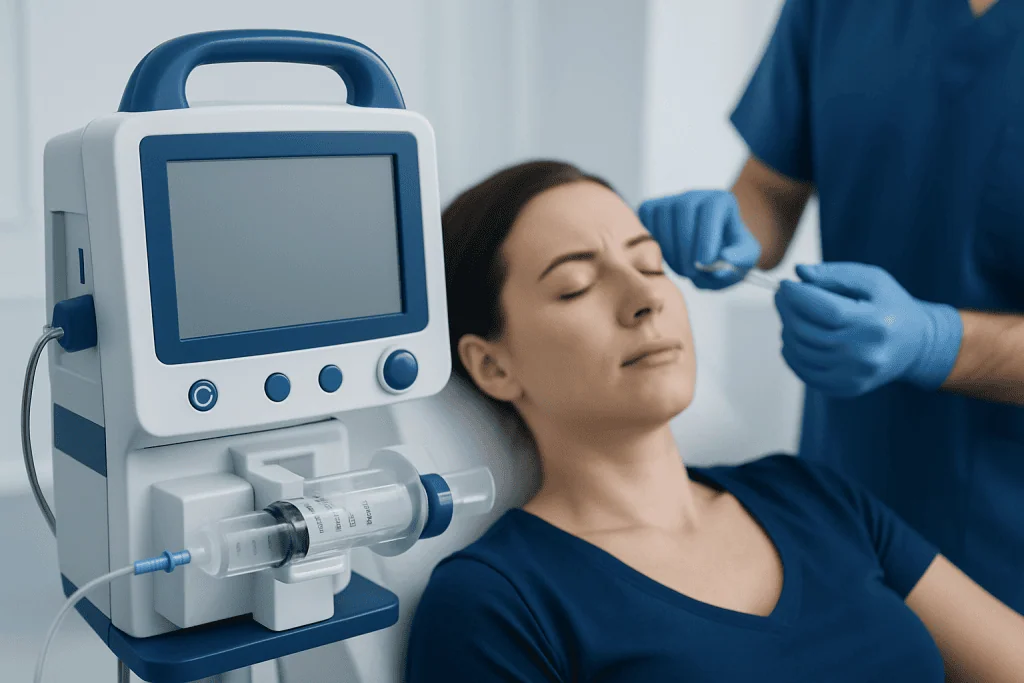
The skin is cleaned, and small amounts of botulinum toxin are injected into selected points using a very fine needle. The number and position of injections vary; no single injection pattern is appropriate for every face. The injection portion is usually brief, and most people do not need anaesthesia, although topical numbing options may sometimes be discussed.
Afterward, the person can generally return to routine daily activities. The clinician may advise avoiding rubbing or massaging the treated area and postponing strenuous exercise, lying flat for an extended period, or heat-intensive activities for the rest of the day. Specific aftercare instructions should always take priority.
A follow-up assessment may be arranged after the result has developed, particularly for first-time treatment. Additional injections should not be rushed before the treatment has had adequate time to take full effect.
Recovery Timeline, Benefits and Possible Risks
There is usually little downtime after forehead Botox. Small red marks, swelling, tenderness, a mild headache or pinpoint bruising can occur and commonly settle within hours to a few days. Makeup may be used according to the treating clinician’s advice, usually once the injection sites have settled.
The main potential benefit is a softer appearance of dynamic forehead lines without surgery. When treatment is appropriately planned, it can maintain natural facial expression while reducing excessive creasing. Because results wear off, the approach can be adjusted at future appointments as facial needs and preferences change.
Possible side effects include temporary bruising, headache, uneven results, asymmetry, eyebrow heaviness or drooping of an eyelid or eyebrow. These effects are uncommon when treatment is performed by an experienced professional but remain possible. They usually improve as the medicine’s effect decreases.
Rarely, effects may extend beyond the intended area and cause more significant muscle weakness, difficulty swallowing, speaking or breathing, or visual symptoms. These symptoms require urgent medical attention. People should contact the treating clinician promptly if they have concerning or unexpected symptoms after injections.
- Do not seek treatment from unlicensed providers or use products from uncertain sources.
- Tell the clinician about all medicines and supplements, especially those that may affect bleeding or muscle function.
- Keep the scheduled review if one is recommended, rather than attempting early correction elsewhere.
Common Questions About Forehead Botox
Is Botox worth it for forehead lines? Whether Botox is worthwhile depends on the person’s goals, the type of lines present, tolerance for repeat treatment and preference for a temporary, nonsurgical option. It often provides noticeable softening of expression-related forehead lines, but it cannot guarantee complete removal of deep static wrinkles. A consultation can help clarify whether Botox alone, skincare, resurfacing procedures or a combined approach is most suitable.
What I wish I knew before getting Botox? It is helpful to know that results are not immediate, they are temporary, and the safest outcome depends greatly on individual facial assessment and injector expertise. Forehead treatment can influence eyebrow position, so requesting a natural result and discussing past brow or eyelid concerns is important. It is also wise to schedule treatment well ahead of a major event in case bruising occurs or a review is needed.
What’s the average cost of forehead Botox? Costs vary considerably by country, clinic, clinician expertise, product used, local regulations and the treatment plan. A responsible provider should explain the anticipated fees during consultation, but decisions should not be based on price alone. Product authenticity, clinical training, safety standards and appropriate follow-up are important considerations.
How long does it take for forehead lines to go away with Botox? Some improvement may appear within several days, while the full effect is usually assessed after 10 to 14 days. Fine dynamic lines may soften substantially; deeper lines that remain visible at rest may improve more gradually or may not disappear completely. Treatment should be evaluated only after the recommended waiting period.
When to Seek Medical Care
Before treatment, people should seek medical advice if they have a history of neuromuscular disease, difficulty swallowing or breathing, significant facial weakness, bleeding disorders, previous adverse reactions to botulinum toxin, or an active skin problem on the forehead. A qualified clinician can determine whether treatment is appropriate and discuss safer alternatives when needed.
After injections, prompt medical advice is appropriate for marked or worsening swelling, signs of infection, a severe or persistent headache, new visual changes, pronounced eyelid drooping, or any unexpected weakness. Urgent emergency care is needed for difficulty breathing, speaking or swallowing, or symptoms of a serious allergic reaction.
For international patients seeking aesthetic care, Acibadem International’s multidisciplinary specialists and JCI-accredited hospitals can assess facial aesthetic concerns and discuss suitable treatment options. The most important first step is an in-person assessment with a qualified medical professional who can provide individualized advice.
Frequently asked questions
Does forehead Botox look natural?
It can look natural when the treatment plan is individualized and uses an appropriate amount of product in carefully selected muscles. The aim can be to soften lines while retaining some forehead movement. Results depend on anatomy, muscle strength and the skill of the treating clinician.
Can Botox remove deep forehead wrinkles?
Botox is most effective for wrinkles caused by facial movement. Deep lines visible when the face is relaxed may improve but may not disappear completely. A clinician may discuss skin-focused treatments or other approaches if static lines are the main concern.
How often is Botox needed for forehead lines?
Many people repeat treatment about every 3 to 4 months, but individual duration varies. Re-treatment should be based on the return of movement and the clinician's assessment rather than a fixed schedule. Frequent or unnecessary treatment should be avoided.
Is forehead Botox painful?
Most people describe the injections as brief pinches or small stings. A fine needle is used, and the procedure is usually completed quickly. Mild tenderness or small bumps at the injection sites may occur temporarily afterward.
Can forehead Botox cause droopy eyelids?
Temporary eyelid or eyebrow drooping is a possible side effect, though it is uncommon with appropriate assessment and technique. Risk may be higher in people with pre-existing eyelid or brow drooping. Choosing a qualified clinician and sharing relevant medical history can help reduce risk.
What should be avoided after forehead Botox?
The treating clinician may advise avoiding rubbing or massaging the area, strenuous exercise, prolonged lying down and significant heat exposure on the day of treatment. Recommendations can vary, so the individual's aftercare instructions should be followed. Contact the clinic if unusual symptoms develop.
References
- American Academy of Dermatology Association
- U.S. Food and Drug Administration
- American Society of Plastic Surgeons
- Mayo Clinic
This article is for general information only and is not a substitute for professional medical advice. Please consult a qualified doctor about your individual situation.
Explore treatments in Turkey — costs, top hospitals & a free quote
JCI-accredited · board-certified surgeons · reply within 24h
Add us as a Preferred Source to see more of our trusted health content across Google Search, AI Overviews and Discover.