Botox vs Fillers: Key Differences and How Doctors Tell Them Apart

Botox reduces muscle-driven wrinkles, while fillers restore volume and contour. A clinician can often tell them apart by facial movement, touch, injection pattern, and timing of the cosmetic change.
Key Takeaways
- Botox reduces muscle-driven wrinkles, while fillers restore volume and contour.
- A clinician can often tell them apart by facial movement, touch, injection pattern, and timing of the cosmetic change.
- Botox effects usually appear gradually over days, while many fillers create volume immediately.
- Both treatments should be assessed by a qualified medical professional, especially if there is asymmetry, pain, discoloration, or a new lump.
- Urgent medical assessment is needed after any injectable treatment if there is severe pain, skin color change, vision symptoms, or signs of infection.
Botox and dermal fillers are not the same treatment: Botox temporarily relaxes muscles that create expression lines, while fillers add or restore volume under the skin. Doctors tell them apart by where the product was placed, how the area moves, how it feels on examination, and how quickly the result appeared.
Overview: Botox vs fillers at a glance
In simple terms, the difference in Botox vs fillers is function. Botox is a purified botulinum toxin product that temporarily reduces the activity of selected muscles. Dermal fillers are gel-like materials, commonly based on hyaluronic acid, that are placed under the skin to add volume, support contours, or soften folds.
Because they are used for different goals, they also look and behave differently after treatment. Botox is most often used for dynamic lines caused by repeated facial movement, such as frown lines or forehead lines. Fillers are more often used for static volume loss or shaping, such as the cheeks, lips, jawline, or deep folds around the nose and mouth.
The table below gives a quick side-by-side comparison that patients often find helpful:
- Main action: Botox relaxes targeted muscles; fillers add volume or structure.
- Best for: Botox helps expression-related wrinkles; fillers help hollowness, contour loss, or deeper folds.
- Common areas: Botox is often used on the forehead, between the eyebrows, and around the eyes; fillers are often used in the lips, cheeks, under-eyes, chin, and nasolabial folds.
- How fast it works: Botox usually develops over several days; fillers often show an immediate volume effect.
- How it feels: Botox usually does not create a palpable lump; fillers may sometimes be felt as soft or firmer material under the skin.
- How doctors identify it: Botox is suggested by reduced movement; filler is suggested by added fullness, contour change, or a product that can be felt under the skin.
Although people often group these treatments together, they are medically distinct procedures with different risks, aftercare, and ways of correcting a problem. That is why proper assessment by a trained clinician matters if the result seems unusual or if a patient is not sure which product was used.
How a clinician tells Botox from fillers
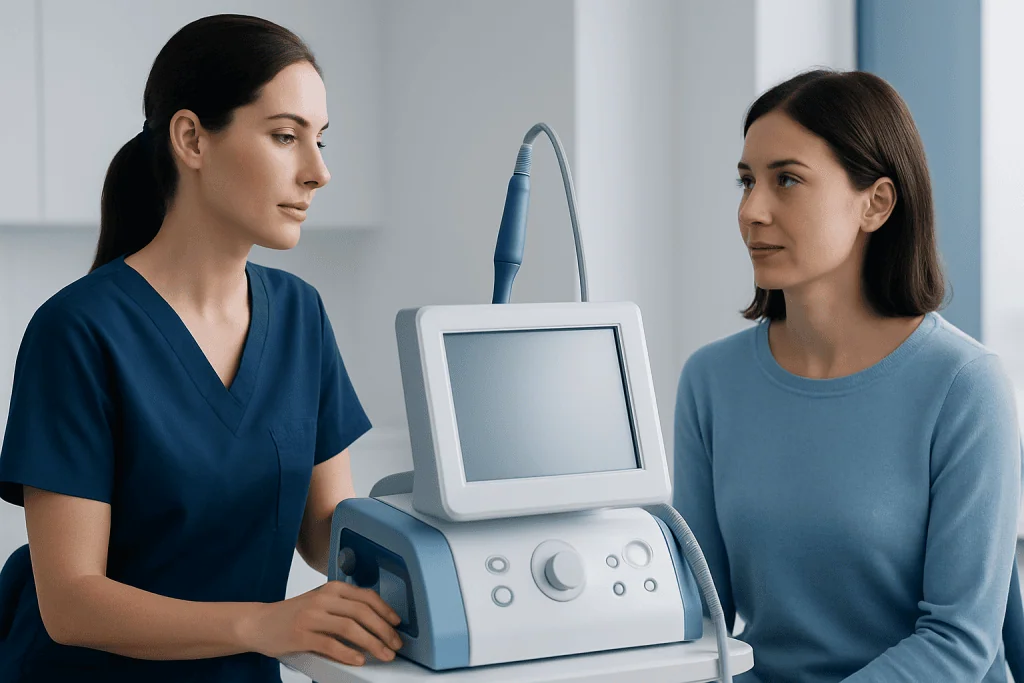
Doctors do not rely on appearance alone. They usually start with the history: what was injected, where, when it was done, and how the area changed afterward. Timing can be very informative. Botox does not normally erase a line immediately after injection; its effect builds gradually. Fillers, by contrast, often create a visible change in volume right away, even though some swelling can temporarily exaggerate the result.
Next comes movement. If a wrinkle softens because the underlying muscle no longer contracts strongly, that points toward Botox. For example, the forehead may look smoother when a person raises the eyebrows less. If the face still moves normally but an area looks fuller, lifted, or more defined, that points more toward filler.
Examination by touch is also important. Botox works at the neuromuscular junction and is not meant to create a mass under the skin. Fillers are physical materials placed into tissue planes, so a clinician may sometimes feel soft fullness, firmness, or a small nodule, depending on the product, depth, and time since treatment. Skilled injectors also recognize typical placement patterns in different facial areas.
Finally, clinicians consider the pattern of concerns. Drooping related to Botox often follows the anatomy of muscle action and may affect movement or brow position. Filler-related concerns more often involve asymmetry, overfilling, visible contour irregularity, or a lump. In uncertain situations, assessment by a dermatologist, plastic surgeon, or other trained physician may be needed, especially if there are symptoms rather than cosmetic concerns alone.
What Botox does and what it is used for

Botox is the brand name many people use for botulinum toxin injections in general, though several approved products exist. These injections temporarily block nerve signals to selected muscles, reducing their ability to contract. In aesthetic care, this can soften lines caused by repeated facial expression, such as glabellar lines between the brows, forehead lines, and crow’s feet.
Because Botox works on muscle activity, it is most useful for dynamic wrinkles. A dynamic wrinkle is one that becomes more noticeable with movement, such as frowning or squinting. It may be less effective on lines that are deeply etched at rest, where skin quality changes or volume loss also play a role.
Doctors also use botulinum toxin for several medical conditions, including excessive sweating and some movement-related problems. In selected settings, treatment may be part of care for concerns such as excessive sweating or to support symptom control in certain muscle-related conditions. The exact product, dose, and injection plan depend on the purpose and the anatomy being treated.
Results are temporary, so repeat treatment is usually needed to maintain the effect. Because Botox changes movement rather than adding substance under the skin, it is generally not the right tool for restoring cheek volume, enlarging lips, or filling hollows. Those goals are usually addressed with fillers instead.
What fillers do and what they are used for
Dermal fillers are injectable materials placed beneath the skin to restore volume, shape facial contours, or soften folds. Many commonly used fillers are made from hyaluronic acid, a substance naturally found in the body. Other filler types exist, but the product chosen depends on the treatment area, desired effect, and the clinician’s judgment.
Fillers are commonly used where tissue support has been lost or where more definition is desired. Examples include the lips, cheeks, chin, jawline, temples, and under-eye region. They may also be used to soften nasolabial folds or marionette lines. In some patients, doctors combine Botox and fillers because muscle movement and volume loss can both contribute to an aged appearance.
The visible effect of filler is often immediate, although swelling and bruising can temporarily alter the early appearance. As swelling settles, the final look becomes easier to judge. If there is a concern about contour, puffiness, or a persistent lump, the treating clinician may reassess the product choice, placement depth, and whether the tissue is reacting normally.
For patients considering structural facial rejuvenation, doctors may discuss options within broader plastic surgery or non-surgical care. The best plan depends on skin quality, anatomy, facial balance, and personal goals rather than on age alone.
What to do if the result looks unusual
What to do next depends on which injectable was used and what the concern is. If the issue appears related to Botox, such as uneven brow position, asymmetry with movement, or a heavy feeling in part of the forehead, the first step is usually review by the injector or another qualified doctor. Because Botox gradually wears off, some problems improve with time, while others may be managed with small adjustment injections in expert hands.
If the issue seems related to filler, such as unexpected fullness, visible bumps, asymmetry, or a product that feels lumpy under the skin, medical review is also important. Some minor irregularities settle as swelling goes down. In other cases, treatment may involve massage guidance, observation, or if a hyaluronic acid filler was used, an enzyme called hyaluronidase to dissolve the product when medically appropriate.
Patients should avoid trying to self-correct the area with pressure, at-home devices, or new injections from an unqualified source. Keeping a record of the product name, treatment date, and injection areas can help a new clinician assess the problem safely. Good follow-up matters because the correct response for Botox is different from the correct response for filler.
For people seeking specialist evaluation of facial anatomy, skin quality, or correction of prior cosmetic treatment, care may involve dermatology or aesthetic and plastic surgery teams depending on the concern.
Safety, side effects, and how risks differ
Both Botox and fillers can cause temporary redness, swelling, tenderness, and bruising at the injection site. These are common procedure-related effects and often settle within days. The specific risk profile differs because the products behave differently in the body.
With Botox, side effects are more often related to unintended spread of the medication or over-relaxation of a nearby muscle. This can lead to temporary drooping, asymmetry, or an unnatural look if the injection pattern does not match the patient’s anatomy. These effects are usually not permanent, but they can be frustrating and should be reviewed by a trained clinician.
With fillers, concerns may include lumpiness, asymmetry, migration, persistent swelling, or a bluish appearance if the product sits too superficially. More serious filler complications, although uncommon, can happen if blood flow is affected. Severe pain, skin blanching or dusky discoloration, coldness of the skin, or visual symptoms after filler require urgent medical assessment.
Some cosmetic concerns may overlap with underlying skin conditions such as rosacea or inflammatory disorders that affect redness and swelling. A clinician can help determine whether the issue is from the injectable itself, normal healing, or a separate skin problem that needs treatment.
How to reduce problems and choose the right treatment
The best way to reduce complications is to start with a proper medical consultation. A qualified doctor will ask about health conditions, medications, allergies, previous cosmetic treatments, and what result the patient is hoping to achieve. Careful facial assessment helps identify whether the main issue is muscle activity, volume loss, skin quality, or a combination of these factors.
Patients should know exactly what product is being used and why. Asking whether a line is dynamic or static can clarify whether Botox, filler, or a different approach is likely to work best. If the treatment plan includes more than one injectable, each product should have a clear purpose.
After treatment, following aftercare instructions is important. Patients should also return for review if they notice persistent asymmetry, a firm or painful lump, increasing redness, or a result that does not match what was discussed. Trying to compare outcomes only to photos on social media can be misleading because lighting, swelling, and individual anatomy vary widely.
Near the end of the care pathway, some patients benefit from multidisciplinary review, especially if they have had prior procedures or are considering combined treatment. Acibadem International’s multidisciplinary specialists in JCI-accredited hospitals diagnose and treat aesthetic and skin-related concerns for international patients when expert assessment is needed.
When to seek medical care
Routine follow-up is reasonable for mild bruising, temporary swelling, or small cosmetic asymmetries that appear soon after treatment. However, a medical review should be arranged if a patient is unsure whether they received Botox or filler, if the result looks clearly uneven after the expected settling period, or if a new lump persists.
More prompt assessment is needed for increasing redness, warmth, tenderness, or drainage, which can suggest infection or significant inflammation. Eye-area treatments deserve particular caution because swelling, pressure, or changes in appearance may need specialist review.
Urgent medical care is important after injectable treatment if there is severe or worsening pain, white or dusky skin discoloration, blistering, sudden vision changes, double vision, or severe headache with eye symptoms. These are not routine post-procedure effects and should be assessed immediately by a qualified medical professional.
When in doubt, patients should contact the treating clinic or seek urgent evaluation rather than waiting for symptoms to pass. Early assessment is especially important for suspected filler-related blood flow problems because time matters.
Frequently asked questions
Is Botox a filler?
No. Botox and dermal fillers are different injectable treatments. Botox relaxes selected muscles, while fillers add volume or support beneath the skin.
How can doctors tell whether someone had Botox or filler?
Doctors look at timing, movement, touch, and treatment location. Reduced muscle movement suggests Botox, while visible fullness, contour change, or a palpable product under the skin suggests filler.
Which lasts longer, Botox or fillers?
They often last for different lengths of time, but duration varies by product, treatment area, metabolism, and technique. In general, Botox is temporary and wears off over months, while some fillers may last longer depending on the formulation and placement.
Can Botox and fillers be used together?
Yes, they are often combined when a person has both expression lines and volume loss. For example, one treatment may soften frown lines while the other restores cheek or lip volume.
What should someone do if a lump appears after filler?
They should contact the treating clinician or another qualified doctor for assessment. Some lumps are due to swelling and settle, but persistent, painful, red, or changing lumps need medical review.
When is a problem after Botox or filler an emergency?
Urgent care is needed for severe pain, skin turning pale or dusky, vision changes, or signs of a serious infection. These symptoms are not considered routine and should be assessed immediately.
This article is for general information only and is not a substitute for professional medical advice. Please consult a qualified doctor about your individual situation.
Explore treatments in Turkey — costs, top hospitals & a free quote
JCI-accredited · board-certified surgeons · reply within 24h
Add us as a Preferred Source to see more of our trusted health content across Google Search, AI Overviews and Discover.

Aesthetic Plastic & Reconstructive Surgery Specialists at Acibadem

Dr. Uğur Öner
Aesthetic Plastic & Reconstructive Surgery
Dr. Umut Özbebit (m)
Aesthetic Plastic & Reconstructive Surgery
Dr. Abdullah Etöz
Aesthetic Plastic & Reconstructive Surgery
Assoc. Prof. Dr. Ahmet Küçükçelebi
Aesthetic Plastic & Reconstructive Surgery
Dr. Ayşe İrem İskenderoğlu
Aesthetic Plastic & Reconstructive SurgeryMore from the Health Library

HIV Rash Explained: Common Triggers and Red Flags

What Does Dm Mean on Cough Medicine? Causes, Explanations, and Next Steps

When Should Swelling During Pregnancy Be a Concern? Causes, Explanations, and Next Steps

How to Reheat Rice? Causes, Explanations, and Next Steps

Do Moths Bite? A Doctor-Reviewed Answer