Bouchard’s Nodes: What Patients Need to Know

Bouchard's nodes affect the proximal interphalangeal joints, the middle joints of the fingers. They are most commonly associated with osteoarthritis, though other joint conditions can also affect the fingers.
Key Takeaways
- Bouchard's nodes affect the proximal interphalangeal joints, the middle joints of the fingers.
- They are most commonly associated with osteoarthritis, though other joint conditions can also affect the fingers.
- Symptoms may include hard swelling, stiffness, pain, reduced grip, and changes in finger movement.
- Diagnosis usually relies on medical history, hand examination, and sometimes X-rays or blood tests.
- Treatment focuses on symptom relief, preserving hand function, and addressing the underlying joint condition.
Bouchard's nodes are firm, bony enlargements that form at the middle joints of the fingers, most often as a sign of osteoarthritis. They can cause swelling, stiffness, and reduced hand function, but many people improve with a combination of joint protection, exercises, and medical care when needed.
Overview: What Bouchard's Nodes Are
Bouchard’s nodes are hard, bony swellings that develop at the middle joints of the fingers, called the proximal interphalangeal joints. They are most often related to wear-and-tear changes in the joint, especially osteoarthritis. These nodes are different from soft swelling caused by fluid or infection because they usually reflect structural changes in bone and cartilage over time.
Many patients first notice a finger that looks enlarged, knobby, or slightly bent. The joint may feel stiff in the morning or after periods of inactivity, and tasks such as writing, buttoning clothes, opening jars, or typing may become less comfortable. Some people have little pain, while others have more noticeable soreness during hand use.
Bouchard’s nodes are related to Heberden’s nodes, which affect the finger joints closest to the nails. A person may have one type, or both together, depending on how arthritis affects the hand. Although these changes can be frustrating, they do not always mean severe disability, and treatment is often aimed at improving comfort and preserving hand function.
Symptoms and How They May Feel Day to Day
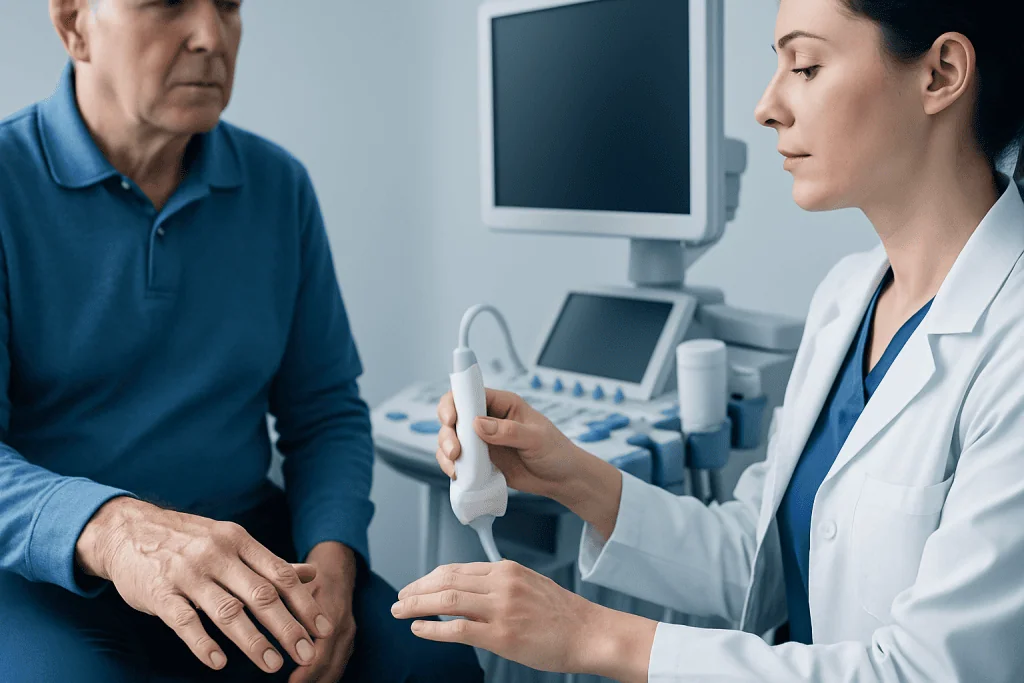
The most visible sign of Bouchard’s nodes is a firm enlargement at the middle finger joint. This may begin as mild swelling and gradually become more fixed and bony. The joint can look wider than usual, and the finger may start to angle slightly or lose some of its normal range of motion.
Symptoms vary from person to person. Some patients mainly notice stiffness, especially in the morning or after resting the hands. Others report aching pain, tenderness when pressing on the joint, or discomfort during activities that require grip or pinching. In some cases, flare-ups occur, with temporary increases in pain, warmth, or swelling.
Common day-to-day effects can include:
- Difficulty making a full fist
- Reduced grip strength
- Pain when carrying bags or twisting lids
- Finger stiffness after repetitive hand use
- Changes in handwriting or dexterity
If swelling is soft, very red, or suddenly severe, another cause may be present, such as an inflammatory arthritis or an acute joint problem. This is one reason a proper medical evaluation matters, especially when symptoms do not fit the usual pattern of osteoarthritis.
Why Bouchard's Nodes Develop

The most common cause of Bouchard’s nodes is osteoarthritis, a condition in which the cartilage that cushions the joint gradually wears down. As the joint changes, the body may form extra bone around the edges, creating the characteristic knobby enlargement. Over time, this can alter how the joint moves and how the finger looks.
Age is an important factor, because osteoarthritis becomes more common over the years. Family history may also play a role, and some people seem more likely to develop finger joint changes than others. Repetitive hand use, previous finger injuries, and long-term mechanical stress on the joints may contribute in certain cases, although they are not the sole cause.
Not every enlarged finger joint is a Bouchard’s node. Other conditions that can affect the same joints include rheumatoid arthritis, psoriatic arthritis, gout, and less commonly, past trauma or joint infection. Because treatment differs depending on the cause, a clinician may consider the broader picture rather than assuming all finger nodules are due to simple aging.
How Doctors Diagnose Bouchard's Nodes
Diagnosis usually starts with a detailed medical history and physical examination of the hands. A doctor may ask when the swelling began, whether pain comes and goes, whether both hands are involved, and how the joints affect daily activities. The appearance, firmness, tenderness, and movement of each joint can offer important clues.
In many cases, imaging helps confirm the diagnosis and assess joint damage. Plain X-rays are often used to look for narrowing of joint space, bone spurs, and changes typical of osteoarthritis. When symptoms are unusual or another condition is suspected, further evaluation may be needed through MRI scan or CT scan in selected cases.
Blood tests are not always necessary for typical osteoarthritis, but they may be ordered if inflammatory arthritis is possible. Tests can help look for signs of autoimmune disease, inflammation, or crystal-related arthritis. The goal is not only to identify Bouchard’s nodes, but also to rule out conditions that may require different long-term treatment.
Treatment Options and Symptom Relief
Treatment for Bouchard’s nodes focuses on reducing pain, maintaining movement, and supporting hand function. The bony enlargement itself usually does not simply disappear, because it reflects structural joint change. However, many people can manage symptoms successfully and continue normal activities with the right care plan.
Conservative treatment often includes activity modification, joint protection techniques, hand exercises, and pain-relieving measures recommended by a doctor. Heat may help morning stiffness, while cold can sometimes reduce soreness after overuse. Some patients benefit from splints or supportive devices during specific tasks. Rehabilitation approaches such as physical therapy and rehabilitation may be useful for improving strength, flexibility, and function of the hands.
When symptoms are more troublesome, a clinician may discuss medications such as topical or oral pain relievers, depending on the person’s overall health and other medical conditions. If diagnosis is uncertain, or if symptoms suggest a more complex joint disorder, referral to specialists in orthopedics and traumatology or rheumatology may be appropriate. Surgery is not common for most patients, but in selected cases with severe pain, deformity, or loss of function, surgical options may be considered.
Self-Care, Hand Protection, and Living With the Condition
Daily habits can make a meaningful difference in comfort and hand function. Gentle range-of-motion exercises may help keep the joints moving, while avoiding repeated strain can reduce symptom flare-ups. It is often helpful to spread hand-intensive tasks throughout the day rather than doing them all at once.
Simple joint protection strategies can include using larger-handled tools, choosing kitchen devices that reduce grip effort, and using both hands to lift heavier items. During painful periods, short rest breaks may help, but complete inactivity is usually not ideal because stiffness can worsen when joints are not moved.
General health also matters. Maintaining a healthy body weight, staying physically active, and managing other musculoskeletal problems can support overall joint function. Patients should avoid starting supplements, braces, or long-term medications solely based on online advice, since the best approach depends on the exact cause of the finger joint changes and the person’s medical history.
When to Seek Medical Care
Medical care is recommended when finger joint swelling is new, persistent, painful, or beginning to interfere with daily tasks. An evaluation is especially important if more than one joint is affected, symptoms are progressing quickly, or there is uncertainty about whether the cause is osteoarthritis or another form of arthritis.
Prompt assessment is also wise if the joint becomes very red, hot, or suddenly swollen, or if there is fever, significant weakness, numbness, or recent injury. These features can suggest a problem other than a typical Bouchard’s node and may need earlier treatment.
For patients seeking coordinated assessment, Acibadem International’s multidisciplinary specialists in JCI-accredited hospitals diagnose and treat hand and joint conditions for international patients. A clear diagnosis can guide realistic symptom control, hand therapy, and longer-term joint care.
Frequently asked questions
Are Bouchard's nodes the same as arthritis?
Bouchard's nodes are not a separate disease by themselves. They are usually a physical sign of arthritis in the middle finger joints, most commonly osteoarthritis.
Do Bouchard's nodes always cause pain?
No. Some people mainly notice the appearance of a hard, enlarged joint and have little discomfort. Others have pain, stiffness, or reduced hand function, especially during flare-ups or repetitive hand use.
Can Bouchard's nodes go away on their own?
The bony enlargement usually does not fully go away because it reflects structural joint change. Symptoms such as pain and stiffness, however, can often improve with self-care, exercises, and medical treatment.
How are Bouchard's nodes different from Heberden's nodes?
Bouchard's nodes affect the middle joints of the fingers. Heberden's nodes affect the joints closest to the fingernails, although both are commonly linked to osteoarthritis.
Can younger adults develop Bouchard's nodes?
They are more common with increasing age, but younger adults can develop similar joint changes, especially after injury or with certain forms of arthritis. A medical review is helpful if symptoms appear early or progress quickly.
When should a patient worry about a swollen finger joint?
A doctor should assess a swollen finger joint if it is very painful, hot, red, rapidly enlarging, or associated with fever or injury. These signs may point to inflammation, infection, crystal arthritis, or another condition that needs prompt care.
This article is for general information only and is not a substitute for professional medical advice. Please consult a qualified doctor about your individual situation.
Joint and spine care in Turkey — expert assessment & treatment
JCI-accredited · board-certified surgeons · reply within 24h
Add us as a Preferred Source to see more of our trusted health content across Google Search, AI Overviews and Discover.

More from the Health Library

Hives on Lips: A Complete Medical Overview

Munchausen by Proxy — Explained by Medical Evidence, Not Myths

Punctate: Symptoms, Causes, and Treatment — Complete Patient Guide

Aerophobia: A Complete Medical Overview

Medusa Piercing — Explained by Medical Evidence, Not Myths