Box Breathing: A Complete Medical Overview

Box breathing follows four equal phases: inhale, hold, exhale, and hold again. It may help some people feel calmer, more focused, and more aware of their breathing pattern.
Key Takeaways
- Box breathing follows four equal phases: inhale, hold, exhale, and hold again.
- It may help some people feel calmer, more focused, and more aware of their breathing pattern.
- The exercise is generally safe when done gently, but breath-holding may not suit everyone.
- Persistent shortness of breath, chest pain, panic symptoms, or fainting need medical evaluation.
- People with asthma, COPD, cardiovascular disease, or anxiety disorders may benefit from individualized guidance.
Box breathing is a structured breathing exercise that uses equal counts for inhaling, holding the breath, exhaling, and pausing. It is commonly used to support relaxation, attention, and emotional regulation, but it is not a replacement for medical care when symptoms suggest an underlying health problem.
Overview
Box breathing is a breathing exercise in which a person inhales for a set count, holds the breath for the same count, exhales for the same count, and then pauses again for the same count before repeating. The four equal parts form a mental “box,” which is why the technique is often given this name. It is one type of paced breathing, a broader group of methods used to slow breathing and make it more regular.
Many people use box breathing to manage everyday stress, prepare for demanding tasks, or recover a sense of calm during moments of tension. It is also used in some mindfulness and behavioral health settings because the exercise encourages attention to the body and the rhythm of breathing. Unlike advice that treats it only as a wellness trend, a medical overview also considers when this technique may be helpful, when it may feel uncomfortable, and when symptoms should prompt assessment for a breathing, heart, or mental health condition.
Box breathing does not cure anxiety, lung disease, or sleep problems on its own. Still, it can be a practical self-regulation tool when used alongside healthy routines and professional care when needed. For people with persistent breathing symptoms or medically significant anxiety, doctors may also assess related conditions such as panic attacks or respiratory disorders rather than assuming stress is the only cause.
How Box Breathing Works
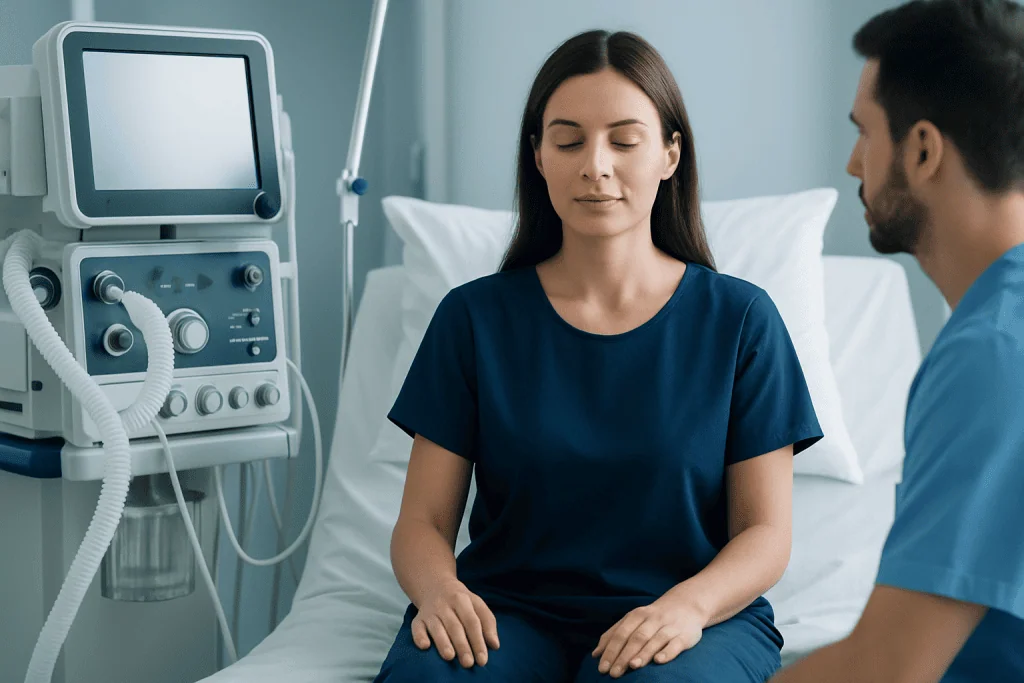
Breathing and the nervous system are closely connected. When breathing becomes rapid, shallow, or irregular, the body may feel more alert or tense. A slower and more deliberate breathing pattern can help shift attention away from racing thoughts and reduce the sense of being overwhelmed. Box breathing is designed to create a steady rhythm that many people find easier to follow than unstructured “take a deep breath” advice.
The usual pattern is simple: breathe in through the nose for a count of four, hold for four, breathe out for four, and pause for four. Some people use a different count, such as three or five, depending on comfort. The goal is not to take the deepest possible breath or hold for as long as possible. Instead, the aim is smooth, comfortable, repeatable breathing without strain.
From a practical perspective, the technique may improve awareness of muscle tension, breathing pace, and posture. It can also interrupt cycles of overbreathing in which a person feels they need to keep taking large breaths. However, if breath-holding causes dizziness, distress, chest discomfort, or a sense of air hunger, the method should be stopped and modified or reviewed with a clinician.
Potential Benefits and Common Uses

People often practice box breathing to feel calmer during stress, before sleep, before public speaking, or when trying to refocus during work or study. Some also use it before medical appointments or during travel. The technique may help by adding structure to a stressful moment and giving the mind a simple task to follow. For some individuals, this reduces the intensity of physical stress responses such as rapid breathing, muscle tightness, or restlessness.
Its potential benefits are best understood as supportive rather than curative. Box breathing may help with emotional regulation, concentration, and the sense of control over breathing. It may be useful as part of broader care for stress-related symptoms, particularly when combined with good sleep habits, regular physical activity, and evidence-based psychological support when needed. In some cases, people who experience persistent anxiety may need evaluation and care such as psychotherapy rather than relying only on breathing exercises.
It is also important to keep expectations realistic. Not everyone finds box breathing comfortable, and it may not bring immediate relief every time. Some people do better with a gentler exhale-focused method or a technique without breath-holding. A clinician or therapist can help tailor breathing practices when symptoms are linked to trauma, panic, chronic pain, or lung disease.
- Everyday stress management
- Preparing for exams, meetings, or performance situations
- Supporting mindfulness or meditation practice
- Calming the body after emotional upset
- Adding structure to a relaxation routine
How to Practice Box Breathing Safely
To begin, a person can sit upright in a comfortable chair or lie down in a quiet place. Relaxing the shoulders and jaw may help. It is often easier to breathe through the nose during the inhale and exhale, though some people prefer to exhale gently through the mouth. A short session of one to five minutes is usually enough when first learning the method.
A practical starting pattern is inhale for four counts, hold for four, exhale for four, and hold for four. The counting should feel calm rather than rushed. If four counts feel too long, a count of three can be used instead. If breath-holding is uncomfortable, the exercise can be adapted by reducing the hold or switching to another paced-breathing style. The breath should stay smooth and quiet, with the belly and lower ribs expanding gently rather than forcing the chest upward.
People should stop the exercise if they feel lightheaded, numbness or tingling, chest pain, worsening shortness of breath, or panic. These symptoms can happen when breathing is forced or when an underlying condition is present. For some patients, especially those with chronic respiratory symptoms, medical teams may evaluate whether pulmonary rehabilitation, breathing retraining, or physical therapy and rehabilitation is more appropriate than self-directed exercises alone.
Who Should Use Caution
Although box breathing is generally low risk for healthy adults, it is not ideal for everyone. Breath-holding can feel uncomfortable for people with asthma, chronic obstructive pulmonary disease, certain heart conditions, pregnancy-related breathlessness, or a history of panic triggered by focusing on breathing. Children and older adults may also need simpler instructions and shorter counts.
People with recurrent dizziness, fainting, unexplained chest symptoms, or severe shortness of breath should not assume that a breathing exercise is the right answer. Those symptoms can have many causes, including anemia, asthma, arrhythmias, heart disease, infection, or significant anxiety. In these situations, diagnosis matters. If a doctor suspects a lung problem, they may assess for asthma or other respiratory conditions before recommending specific breathing techniques.
Mental health context is important as well. While many people feel better when they slow their breathing, some individuals become more aware of bodily sensations and feel more anxious. This does not mean they are doing the exercise incorrectly. It may simply mean that a different approach, such as grounding exercises, cognitive behavioral therapy, or supervised relaxation training, would be a better fit.
When to Seek Medical Care
Medical care is appropriate when breathing symptoms are new, severe, persistent, or linked to warning signs. A person should seek urgent help for chest pain, blue lips, severe shortness of breath, confusion, fainting, weakness on one side, or symptoms that begin suddenly and feel intense. These are not situations to manage with breathing exercises at home.
A routine medical appointment is a good idea if someone often feels unable to catch their breath, wakes at night short of breath, wheezes, has repeated panic-like episodes, or notices that stress symptoms are disrupting work, relationships, or sleep. Doctors may review medications, heart and lung health, sleep quality, and mental health. Depending on symptoms, evaluation could include cardiology or pulmonary assessment, and some patients may benefit from services such as a medical check-up to look for contributing factors.
Near the end of the care pathway, some people need coordinated support rather than a single technique. Acibadem International’s multidisciplinary specialists and JCI-accredited hospitals diagnose and treat conditions that can affect breathing, stress, and overall well-being for international patients.
Box Breathing as Part of a Broader Self-care Plan
Box breathing works best when it is part of a broader approach to health. Regular sleep, hydration, physical activity, reduced caffeine intake when appropriate, and scheduled recovery time can all influence how the body responds to stress. People who only turn to breathing exercises during a crisis may find it harder to use the technique effectively than those who practice briefly at calm times.
Consistency is usually more helpful than intensity. Practicing for a few minutes once or twice daily can build familiarity, making the method easier to use during stressful moments. Some people pair it with stretching, mindfulness, journaling, or quiet walking. Others use it before a blood pressure reading or after screen-heavy work to reset attention. If stress is chronic or linked to trauma, formal mental health care remains important.
In clinical settings, breathing exercises may be one small part of treatment plans for anxiety, chronic pain, rehabilitation, or sleep-related complaints. They can support care, but they do not replace diagnosis or disease-specific treatment. A qualified clinician can help decide whether box breathing is suitable, whether it should be modified, or whether another strategy would be safer and more effective.
Frequently asked questions
What is box breathing?
Box breathing is a paced-breathing technique with four equal steps: inhale, hold, exhale, and hold again. Each step is usually done for the same count, such as four seconds. The goal is gentle, steady breathing rather than very deep breathing.
Does box breathing help with anxiety?
It may help some people reduce the physical feeling of stress and regain focus during anxious moments. However, it does not treat the underlying cause of anxiety on its own. Frequent or severe anxiety should be discussed with a qualified healthcare professional.
How long should a person practice box breathing?
Many people start with one to five minutes and increase only if the exercise remains comfortable. Short, regular practice is often more useful than long sessions. If dizziness or distress develops, the person should stop and return to normal breathing.
Is box breathing safe for everyone?
It is generally safe when done gently, but breath-holding may not be comfortable for everyone. People with asthma, COPD, heart disease, pregnancy-related breathlessness, or panic symptoms triggered by breathing awareness may need modifications. A doctor can advise on the safest option if there is any uncertainty.
Can box breathing lower blood pressure?
Relaxation breathing may temporarily support calmness and may help some people feel less physically tense. But box breathing is not a substitute for diagnosis, lifestyle treatment, or prescribed therapy for high blood pressure. Anyone with ongoing blood pressure concerns should follow medical advice.
What should a person do if box breathing makes them feel worse?
They should stop the exercise and return to a natural breathing pattern. It may help to try a simpler method, such as slow exhaling without breath-holding, or to change posture and relax the shoulders. If symptoms are strong, recurrent, or include chest pain or severe breathlessness, medical care is needed.
This article is for general information only and is not a substitute for professional medical advice. Please consult a qualified doctor about your individual situation.
Explore treatments in Turkey — costs, top hospitals & a free quote
JCI-accredited · board-certified surgeons · reply within 24h
Add us as a Preferred Source to see more of our trusted health content across Google Search, AI Overviews and Discover.

More from the Health Library

Hypotonic: An Evidence-Based Guide for Patients

Oil Hydrogenated: A Complete Medical Overview

Hyssop: An Evidence-Based Guide for Patients

Swerve Brown Sugar: An Evidence-Based Guide for Patients

Face Mask Using Honey: An Evidence-Based Guide for Patients