Brachycephaly: What Patients Need to Know

Brachycephaly usually refers to flattening across the back of a baby's head, creating a wider and shorter head shape. The most common type is positional brachycephaly, which develops when an infant spends a lot of time lying on the back in one position.
Key Takeaways
- Brachycephaly usually refers to flattening across the back of a baby's head, creating a wider and shorter head shape.
- The most common type is positional brachycephaly, which develops when an infant spends a lot of time lying on the back in one position.
- Early assessment helps distinguish positional head-shape changes from craniosynostosis and other less common conditions.
- Treatment may include tummy time, repositioning, physical therapy for neck tightness, and in selected cases helmet therapy.
- Parents should seek medical advice if head flattening is worsening, the baby has limited neck movement, or there are concerns about development.
Brachycephaly is a broad, shortened head shape caused by flattening at the back of a baby's skull, most often from repeated pressure on the same area. In many babies it improves with growth, repositioning, and guided care, but some need further evaluation to rule out other causes and discuss treatment options.
Overview: what brachycephaly means
Brachycephaly is a term used to describe a head shape that appears wider than usual from side to side and shorter from front to back. In babies, this most often happens because the back of the skull becomes evenly flattened after repeated pressure on the same area. Parents may notice that the back of the head looks broad or flat, and the head may look taller when viewed from the side.
In most cases, brachycephaly is positional, meaning it is related to how a baby rests and sleeps rather than a problem inside the brain. A baby’s skull bones are soft and flexible to allow rapid growth, so external pressure can temporarily influence head shape. This is common in early infancy and often improves when recognized early and managed appropriately.
It is important to know that brachycephaly is not the same as every other flat head pattern. Some babies have flattening mostly on one side, often called plagiocephaly, while others have flattening across the whole back of the head. A doctor may compare these patterns and, if needed, assess for less common causes such as craniosynostosis, in which skull sutures close too early.
Signs and symptoms parents may notice
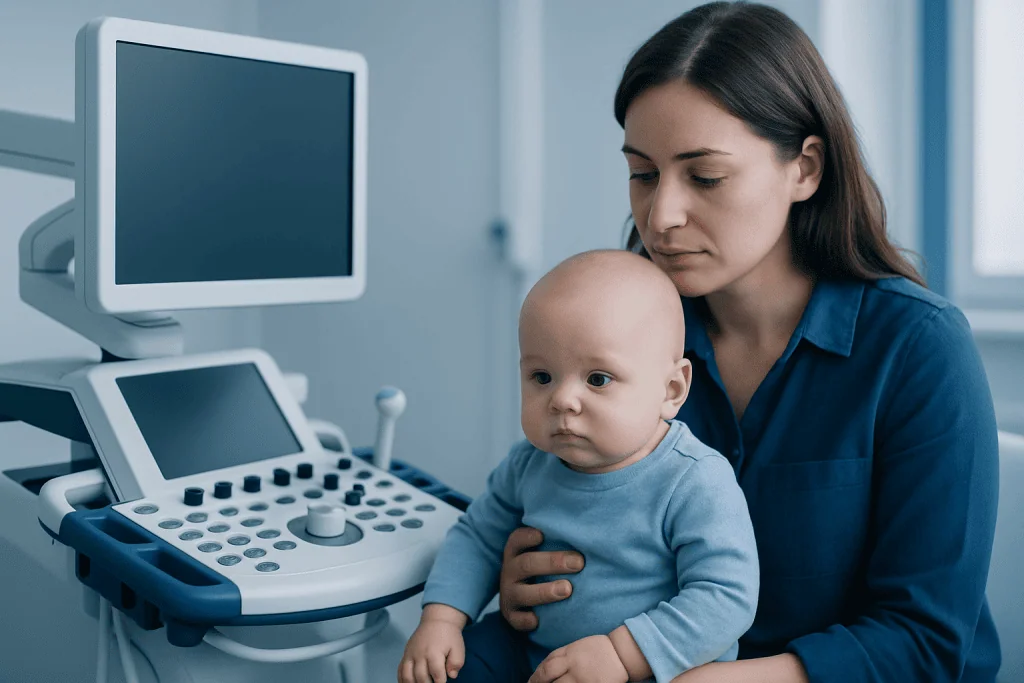
The main sign of brachycephaly is a flattened back of the head. The baby’s head may look broad when viewed from above, and the distance from the forehead to the back of the head may seem shorter than expected. In some infants, the head also appears higher or more prominent upward, which can make the forehead seem more noticeable.
Most babies with positional brachycephaly are otherwise well. They usually feed, sleep, and develop normally, and the condition itself does not mean that the brain is not growing properly. The concern is mainly the head shape and whether there is an underlying issue such as neck tightness or a skull condition that needs treatment.
Other findings can appear alongside brachycephaly, especially if a baby prefers one position. These may include:
- Limited ability to turn the head equally to both sides
- A strong preference for looking in one direction
- Flattening that becomes more noticeable over weeks or months
- Mild facial asymmetry in some babies
- A history of spending long periods in swings, car seats, or reclined carriers while awake
If a parent notices a ridged area along the skull, unusual ear position changes, progressive asymmetry, or delayed improvement despite repositioning, a medical review is sensible. These features do not always mean a serious problem, but they do deserve a closer look.
Causes and risk factors

The most common cause is repeated pressure on the back of the head during the first months of life. Because safe sleep guidance recommends placing babies on their backs to sleep, some infants naturally spend more time with pressure on the same part of the skull. This sleep position remains the safest choice for reducing the risk of sudden infant death, so the goal is not to avoid back sleeping but to balance it with supervised awake-time movement and position changes.
Several factors can increase the likelihood of brachycephaly. Babies who spend long periods lying on a flat surface, or who have limited head movement because of tight neck muscles, are more likely to develop head flattening. Torticollis, a condition where neck muscles are tight on one side, is a common contributor and may need targeted exercises or therapy.
Other risk factors include premature birth, multiple birth pregnancy, and reduced space in the womb late in pregnancy. Premature infants often have softer skull bones and may spend more time in one position because of medical needs or lower activity levels. Some babies also simply have a stronger preference for looking upward or lying in one position during early infancy.
Less commonly, a head shape that resembles brachycephaly can be due to premature fusion of skull sutures. This is why diagnosis matters. Positional flattening is far more common, but a clinician may assess whether imaging or specialist review is needed if the pattern is unusual or the exam suggests a different cause.
How brachycephaly is diagnosed
Diagnosis usually starts with a physical examination and a discussion about the baby’s birth history, sleep habits, feeding positions, tummy time, and ability to turn the head. A doctor will look at the head from different angles, feel the skull, and check the neck range of motion. They may ask when the flattening was first noticed and whether it is improving or becoming more obvious.
In many babies, a careful clinical exam is enough to diagnose positional brachycephaly. The doctor may also measure the head and compare proportions over time to understand how significant the flattening is and whether it is changing as the baby grows. Regular follow-up can be useful because improvement may be gradual.
If the head shape is atypical, there is a palpable ridge, the fontanelle appears abnormal, or the clinician is concerned about a fused suture, additional tests may be recommended. In selected cases, assessment with specialists and MRI or other imaging can help clarify the diagnosis, although imaging is not needed for every child with head flattening.
Because neck tightness often contributes to positional flattening, the evaluation may also include screening for torticollis and motor milestones. This helps build a treatment plan that addresses the cause of the head-shape change rather than just the appearance.
Treatment options and what improvement to expect
Treatment depends on the baby’s age, the severity of the flattening, and whether there is an associated issue such as torticollis. For many infants, the first steps are repositioning strategies and more supervised tummy time while awake. These measures reduce pressure on the flattened area and encourage active head movement.
Parents may be advised to alternate the direction the baby faces in the crib, vary feeding positions, and limit time in carriers or seats when the baby is awake and not traveling. If neck tightness is present, a pediatrician may recommend stretching guidance or referral for physical therapy and rehabilitation. Therapy can help improve neck movement, strengthen muscles, and support more balanced positioning.
For some babies with moderate to severe brachycephaly that does not improve enough with conservative measures, helmet therapy may be discussed. A custom helmet gently guides skull growth over time and is generally most effective during a limited window in infancy when the skull is still rapidly growing. It does not reshape the skull by force; rather, it allows growth in flatter areas while limiting growth in more prominent areas.
If evaluation suggests that the head shape is not positional and may be related to a structural skull condition, treatment focuses on that underlying diagnosis. Some children need specialist management from teams including pediatrics, neurosurgery, rehabilitation, or craniofacial experts. In selected situations, further assessment with neurosurgery specialists may be appropriate. Near the end of the care pathway, families may also seek support from multidisciplinary centers such as Acibadem International, where JCI-accredited hospitals evaluate and treat international patients with coordinated specialist input.
Prevention and self-care at home
Prevention centers on reducing prolonged pressure on one area of the skull while continuing safe sleep practices. Babies should still be placed on their backs for every sleep unless a doctor advises otherwise. During awake time, however, gentle variety in position can make a meaningful difference.
Tummy time is one of the most helpful habits. Starting with short, frequent sessions while the baby is awake and supervised can strengthen neck, shoulder, and trunk muscles and reduce time spent with pressure on the back of the head. Parents can also hold the baby upright more often, use floor play instead of prolonged seat time, and encourage the baby to look in different directions with toys, voices, or light.
If a baby clearly prefers one side, early discussion with a pediatrician is worthwhile. A simple neck issue may be limiting movement and making repositioning harder. Addressing the cause early usually gives the best chance for gradual natural improvement without more intensive treatment later on.
Head shape changes tend to improve as babies gain head control, roll, sit, and spend less time resting on the back of the skull. Even so, progress is usually gradual rather than immediate, so consistent home strategies and follow-up matter.
When to seek medical care
Medical advice should be sought if a baby’s head flattening is worsening, is very noticeable, or is first recognized very early and seems unusual in pattern. Parents should also arrange an evaluation if the baby has trouble turning the head, strongly prefers one side, or seems uncomfortable with repositioning. These signs can suggest torticollis or another issue that benefits from early treatment.
Prompt assessment is also sensible if there is a firm ridge on the skull, the soft spot seems abnormal, the ears appear uneven in a way that is changing, or the head shape does not improve despite consistent home measures. A doctor can determine whether the change is positional or whether another condition should be considered.
Families should mention any developmental concerns, feeding difficulties, or concerns about vision, hearing, or muscle tone during the visit. While brachycephaly itself is commonly a shape issue rather than a brain problem, a full pediatric assessment helps make sure the child is developing well overall.
Frequently asked questions
Is brachycephaly harmful to a baby's brain?
Positional brachycephaly usually affects head shape rather than brain growth. Most babies with this condition develop normally, but a doctor should still confirm the diagnosis and look for related issues such as torticollis.
Can brachycephaly correct itself over time?
Many babies improve as they grow, gain head control, and spend less time lying on the back of the head. Improvement is often better when repositioning and tummy time begin early and are done consistently.
How is brachycephaly different from plagiocephaly?
Brachycephaly usually means flattening across the back of the head, creating a broader and shorter head shape. Plagiocephaly more often describes flattening on one side, which can make the head look asymmetrical.
When is helmet therapy considered?
Helmet therapy may be considered when head flattening is moderate to severe or does not improve enough with repositioning and therapy. The best timing depends on the baby's age, skull growth, and the recommendation of a qualified specialist.
Should babies with brachycephaly still sleep on their backs?
Yes. Back sleeping remains the safest sleep position for infants unless a doctor gives different advice. Parents can support head shape by increasing supervised tummy time and varying positions during awake periods.
Does brachycephaly mean a baby will need surgery?
Most babies with positional brachycephaly do not need surgery. Surgery is only considered if the head shape is due to another condition, such as craniosynostosis, rather than simple positional flattening.
References
- American Academy of Pediatrics
- National Institute of Neurological Disorders and Stroke
- National Health Service
- American Association of Neurological Surgeons
This article is for general information only and is not a substitute for professional medical advice. Please consult a qualified doctor about your individual situation.
Explore treatments in Turkey — costs, top hospitals & a free quote
JCI-accredited · board-certified surgeons · reply within 24h
Add us as a Preferred Source to see more of our trusted health content across Google Search, AI Overviews and Discover.

More from the Health Library

Fluticasone — Explained by Medical Evidence, Not Myths

Cardarine — Explained by Medical Evidence, Not Myths

Standing Ab Exercises: What Patients Need to Know

Glucomannan: An Evidence-Based Guide for Patients

Buspar: An Evidence-Based Guide for Patients