

Brain Aneurysm: Causes, Warning Signs, and When Treatment Is Needed

A brain aneurysm is a balloon-like bulge in a brain artery caused by a weak vessel wall. Many brain aneurysms are found incidentally and may not need immediate treatment.
Key Takeaways
- A brain aneurysm is a balloon-like bulge in a brain artery caused by a weak vessel wall.
- Many brain aneurysms are found incidentally and may not need immediate treatment.
- A sudden, severe headache can be a warning sign of a leaking or ruptured aneurysm and needs emergency attention.
- Diagnosis often involves CT, MRI, or blood vessel imaging such as CT angiography or cerebral angiography.
- Treatment depends on the aneurysm’s size, location, shape, and a person’s overall health and rupture risk.
- Controlling blood pressure, not smoking, and regular follow-up can help reduce risk.
A brain aneurysm is a weakened, bulging area in a blood vessel in the brain. Many aneurysms never cause symptoms, but some may leak or rupture and require urgent medical care.
Overview
A brain aneurysm, also called a cerebral aneurysm, is a weak spot in the wall of an artery in the brain. Over time, blood pressure pushing against this weakened area can cause it to bulge outward, rather like a small balloon. Some aneurysms remain small and stable for years, while others may enlarge, leak, or rupture.
Many people with a brain aneurysm do not know they have one because it often causes no symptoms. In some cases, it is found incidentally during imaging done for another reason. When an aneurysm presses on nearby nerves or brain structures, symptoms may appear. The main concern is rupture, which can lead to bleeding around the brain, called a subarachnoid hemorrhage.
A ruptured brain aneurysm is a medical emergency, but it is also important to remember that not every aneurysm will rupture. Doctors assess each aneurysm individually, looking at its size, location, shape, and the person’s age, health, and family history. This helps guide whether monitoring or treatment is the safest approach.
Symptoms and Warning Signs
Unruptured brain aneurysms often cause no symptoms at all. When symptoms do occur, they may happen because the aneurysm has grown and is pressing on nearby tissue or nerves. Depending on its location, this may lead to pain above or behind one eye, a dilated pupil, changes in vision, double vision, facial numbness, or weakness.
A leaking or ruptured aneurysm usually causes a very sudden, severe headache that people often describe as the worst headache of their life. This headache may be accompanied by nausea, vomiting, neck stiffness, sensitivity to light, blurred vision, confusion, seizures, or loss of consciousness. These symptoms need urgent emergency evaluation.
Sometimes there is a small leak before a full rupture, called a sentinel bleed. This may cause a sudden unusual headache days or weeks before a major bleed. Although not everyone will have warning symptoms, any abrupt severe headache that is different from usual headaches should be taken seriously.
- Possible symptoms of an unruptured aneurysm: eye pain, vision changes, facial numbness, headache, drooping eyelid
- Possible signs of rupture: sudden severe headache, vomiting, stiff neck, confusion, fainting, seizure
- Emergency symptoms should never be watched at home
Causes and Risk Factors

Brain aneurysms develop when part of an artery wall becomes weak. This weakness can be influenced by a combination of inherited factors, aging, and wear on the blood vessels over time. Most aneurysms develop during adult life rather than being present at birth, though some people may have a genetic tendency to form them.
Several factors can increase the risk of developing a brain aneurysm or of having one rupture. Smoking and high blood pressure are among the most important modifiable risks. Other factors include older age, female sex, a family history of brain aneurysm, certain inherited connective tissue or blood vessel disorders, and a history of previous aneurysm. Heavy alcohol use and stimulant drug use can also increase risk.
Risk of rupture is not the same for every aneurysm. Larger aneurysms, aneurysms in certain locations, and aneurysms with an irregular shape may be more likely to bleed. A specialist may also evaluate whether related conditions, such as stroke or other vascular problems, are part of the broader picture when planning care.
How a Brain Aneurysm Is Diagnosed
Diagnosis starts with a careful history and neurological examination. If a person has sudden symptoms suggesting a rupture, urgent imaging is needed right away. A non-contrast CT scan is often the first test because it can quickly detect bleeding around the brain. If CT results are unclear but suspicion remains high, a lumbar puncture may sometimes be considered to look for signs of bleeding in the cerebrospinal fluid.
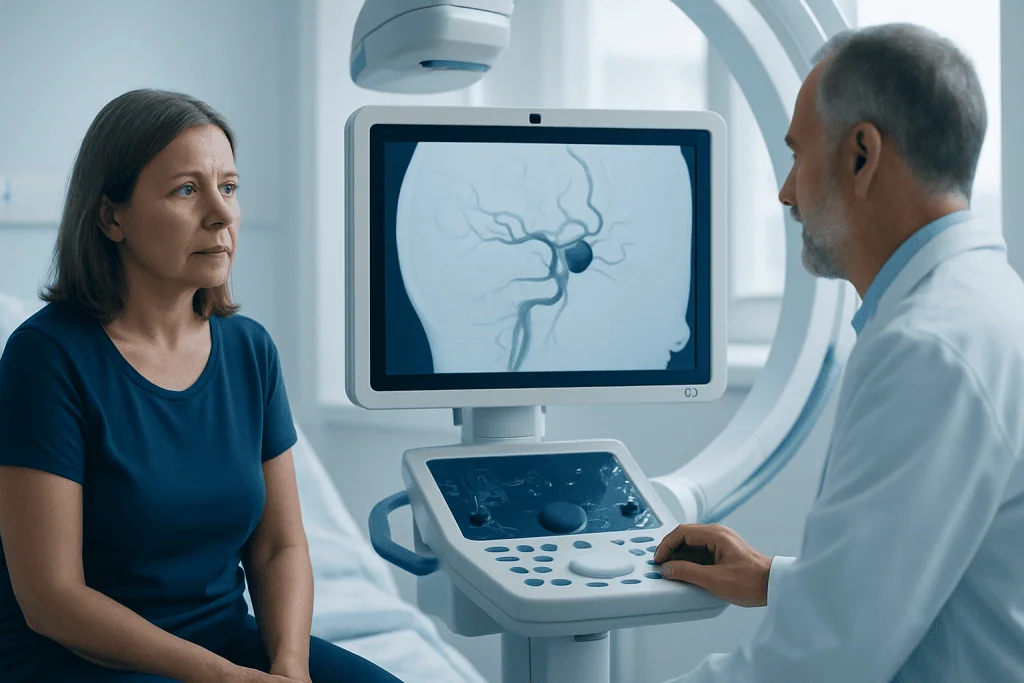
To identify the aneurysm itself, doctors may use CT angiography, MR angiography, or cerebral angiography. Cerebral angiography is an invasive imaging test in which contrast dye is used to show blood vessels in detail, and it may be especially helpful when treatment is being planned. MRI may also help assess nearby structures and identify older bleeding or other brain conditions.
If an aneurysm is found but has not ruptured, the doctor considers several details before recommending treatment or observation. These include the aneurysm’s size, location, shape, growth over time, symptoms, and a person’s overall health. In many cases, care is guided by a multidisciplinary team that may include neurologists, neurosurgeons, and interventional neuroradiology specialists.
Treatment Options
Treatment depends on whether the aneurysm has ruptured, how likely it is to rupture, and the person’s general condition. A ruptured aneurysm usually needs urgent treatment to prevent further bleeding. Supportive hospital care is also essential and may include close monitoring, blood pressure management, pain control, and treatment of complications such as vasospasm or hydrocephalus.
Two main procedures are commonly used to secure an aneurysm. One is microsurgical clipping, in which a neurosurgeon places a tiny clip across the neck of the aneurysm during surgery. The other is endovascular treatment, in which doctors reach the aneurysm from inside the blood vessels using a catheter; this may involve aneurysm treatment with coils, stents, or flow-diverting devices depending on the aneurysm’s anatomy.
For unruptured aneurysms, treatment is not always necessary right away. Some are monitored with periodic imaging if the estimated rupture risk is low and the risks of intervention outweigh the benefits. If treatment is recommended, the plan may involve brain surgery or a minimally invasive vascular approach chosen for the aneurysm’s size and location. In complex cases, interventional radiology plays an important role in both diagnosis and treatment planning.
The best approach is individualized. Doctors discuss the expected benefits, possible complications, recovery time, and need for long-term follow-up. Decisions are often made jointly with the patient and family after carefully reviewing imaging findings and overall health goals.
Prevention and Self-care
It is not always possible to prevent a brain aneurysm, but healthy habits can help lower the risk of aneurysm growth, rupture, and other vascular problems. Stopping smoking is one of the most important steps. Keeping blood pressure within a healthy range is also key, often through a combination of medical care, regular exercise, a balanced diet, and stress management.
People who know they have an unruptured aneurysm should follow their doctor’s advice about imaging follow-up and medicines. It is important not to stop blood pressure medications without medical guidance. Alcohol should be used cautiously, and recreational stimulant drugs should be avoided because they can sharply raise blood pressure and increase bleeding risk.
General self-care also includes getting regular sleep, staying physically active within a doctor’s recommendations, and seeking prompt care for new neurological symptoms. Family history can matter, so some people may benefit from discussing screening with a specialist if close relatives have had aneurysms or unexplained brain bleeding.
- Do not smoke
- Manage high blood pressure
- Attend follow-up imaging appointments
- Discuss family history with a doctor
- Seek urgent help for sudden severe headache or neurological changes
When to See a Doctor
Emergency medical care is needed right away for a sudden, severe headache, especially if it comes with vomiting, confusion, fainting, seizures, weakness, trouble speaking, or neck stiffness. These symptoms can suggest a ruptured aneurysm or another serious neurological event. Immediate evaluation can be lifesaving.
A non-emergency medical appointment is appropriate for ongoing symptoms such as unexplained vision changes, drooping eyelid, eye pain, facial numbness, or persistent unusual headaches. People with a strong family history of aneurysm or certain inherited disorders may also want to ask whether screening is appropriate.
After diagnosis, long-term follow-up is often an important part of care. Monitoring helps doctors see whether an aneurysm is changing and whether treatment is becoming advisable. Near the end of the care pathway, some patients may seek evaluation at specialized centers; Acibadem International’s multidisciplinary specialists in JCI-accredited hospitals diagnose and treat brain aneurysm for international patients.
Frequently asked questions
Can a person have a brain aneurysm without knowing it?
Yes. Many brain aneurysms cause no symptoms and are found incidentally during brain imaging for another reason. Whether they need treatment depends on features such as size, location, shape, and personal risk factors.
What does a brain aneurysm headache feel like?
A ruptured or leaking brain aneurysm often causes a sudden, severe headache that is very different from a usual headache. People may describe it as the worst headache of their life, and it can come with nausea, neck stiffness, or confusion.
Do all brain aneurysms need surgery or a procedure?
No. Some unruptured aneurysms are best monitored with regular imaging rather than treated immediately. The decision depends on rupture risk, treatment risk, symptoms, age, and overall health.
Is a brain aneurysm the same as a stroke?
Not exactly. A ruptured aneurysm can cause a type of hemorrhagic stroke because it leads to bleeding in or around the brain. However, stroke is a broader term that includes both bleeding and blocked blood flow to the brain.
Who is at higher risk for a brain aneurysm?
Risk is higher in people who smoke, have high blood pressure, or have a family history of aneurysms. Certain inherited disorders and increasing age can also raise risk.
Can brain aneurysms be prevented?
Not all aneurysms can be prevented, but some risks can be reduced. Avoiding smoking, controlling blood pressure, limiting heavy alcohol use, and following medical advice for monitoring are important protective steps.
References
- World Health Organization
- National Institute of Neurological Disorders and Stroke
- American Stroke Association
- Brain Aneurysm Foundation
- National Health Service
This article is for general information only and is not a substitute for professional medical advice. Please consult a qualified doctor about your individual situation.
Explore treatments in Turkey — costs, top hospitals & a free quote
JCI-accredited · board-certified surgeons · reply within 24h
Add us as a Preferred Source to see more of our trusted health content across Google Search, AI Overviews and Discover.
Check your numbers in seconds
BMI, calories, due date, blood pressure and 30+ more clinical calculators — free, instant, doctor-reviewed ranges.

More from the Health Library



Related Specialists

Assoc. Prof. Dr. Ahmet Arnaz
Cardiovascular Surgery
Prof. Dr. Siret Ratip
Hematology
Prof. Dr. Hale Göksever Çelik
Gynecology & Obstetrics
Dt. Didem Aktan
Dentistry