Brain Aneurysm Coiling: Who Is a Candidate and What Results Are Realistic?

Brain aneurysm coiling treats some aneurysms from inside the blood vessel, without open brain surgery. Not every aneurysm is suitable for coiling; anatomy, rupture status, age, and general health all matter.
Key Takeaways
- Brain aneurysm coiling treats some aneurysms from inside the blood vessel, without open brain surgery.
- Not every aneurysm is suitable for coiling; anatomy, rupture status, age, and general health all matter.
- The main goal is to prevent or stop bleeding, though some patients may need follow-up procedures over time.
- Recovery is often shorter than with open surgery, but careful imaging follow-up remains important.
- Urgent evaluation is needed for sudden severe headache, new neurological symptoms, or suspected aneurysm rupture.
Brain aneurysm coiling is a minimally invasive procedure used to reduce the risk of bleeding from certain brain aneurysms. The best candidates and realistic outcomes depend on the aneurysm’s size, shape, location, whether it has ruptured, and the person’s overall health.
Overview: What brain aneurysm coiling is
Brain aneurysm coiling, also called endovascular coiling, is a minimally invasive procedure used to treat certain brain aneurysms. A brain aneurysm is a weak, bulging area in the wall of a brain artery. If an aneurysm ruptures, it can cause bleeding around the brain, which is a medical emergency. Coiling aims to seal off the aneurysm from blood flow and lower the chance of bleeding.
During the procedure, a specialist guides a thin tube called a catheter through a blood vessel, usually from the wrist or groin, up to the arteries in the brain. Very small soft metal coils are then placed inside the aneurysm. These coils encourage clotting within the aneurysm sac, helping prevent blood from entering it.
Coiling is different from surgical clipping, which requires open surgery to place a small clip across the base of the aneurysm. In many cases, coiling offers a less invasive option with a shorter hospital stay and recovery period. However, it is not the right choice for every aneurysm, and treatment planning is highly individualized.
Who may be a candidate for brain aneurysm coiling
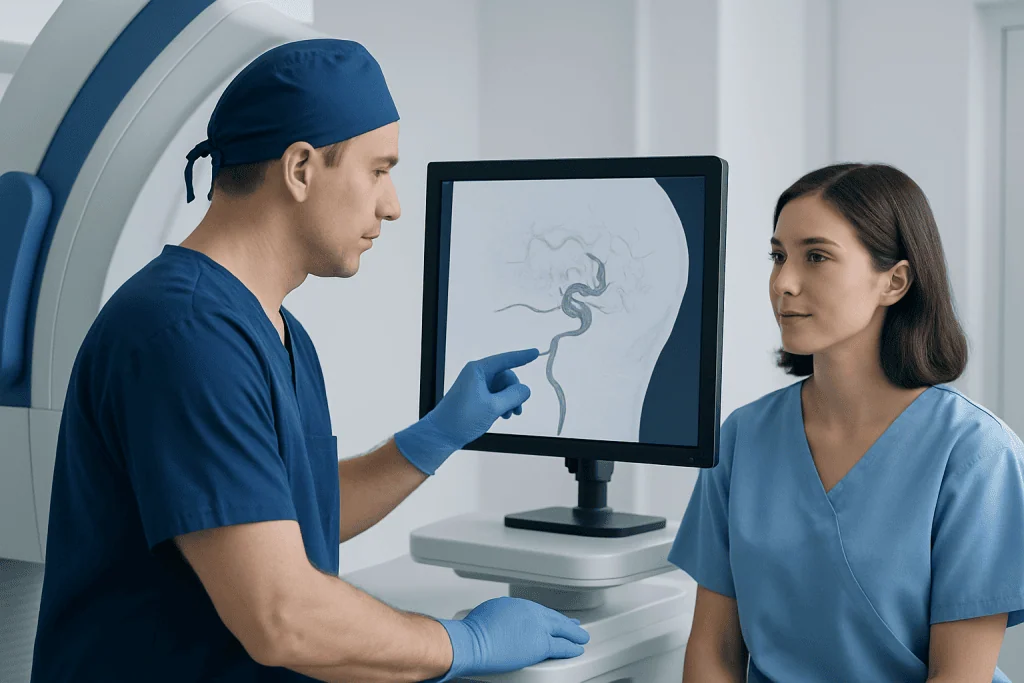
Candidacy for brain aneurysm coiling depends first on the aneurysm itself. Doctors look closely at its size, shape, neck width, and location in the brain. Aneurysms with a shape that can safely hold coils are often better suited to coiling, while some wide-necked or complex aneurysms may require other techniques, such as stent-assisted coiling, flow diversion, or open surgical clipping.
Another major factor is whether the aneurysm has ruptured. In a ruptured aneurysm, treatment is often urgent because the risk of rebleeding can be life-threatening. Coiling is commonly considered in this setting because it can be performed quickly and avoids open skull surgery. In an unruptured aneurysm, the decision is more balanced and includes the estimated future risk of rupture versus the risks of treatment.
The person’s age, overall health, and neurological condition also matter. Coiling may be especially attractive for older adults, people with other medical conditions, or those for whom open surgery may carry higher risk. At the same time, some younger patients with certain aneurysm types may have better long-term durability with clipping, so specialists weigh short-term and long-term considerations carefully.
Modern care often involves a multidisciplinary team, such as interventional neuroradiologists, neurologists, and neurosurgeons. This team reviews brain scans and the patient’s medical history to recommend the safest and most effective option. In some cases, a person may also be evaluated for brain aneurysm surgery if coiling is not the best anatomical fit.
How doctors decide: key tests and evaluation

Diagnosis and treatment planning begin with brain and blood vessel imaging. Tests may include CT, MRI, CT angiography, MR angiography, or catheter angiography. These studies help define the aneurysm’s exact location and structure, which are essential for deciding whether coiling is feasible and safe.
If a ruptured aneurysm is suspected, emergency evaluation usually includes a brain CT scan to look for bleeding. Additional vascular imaging can then identify the aneurysm responsible. In this setting, doctors also assess the amount of bleeding, the person’s level of consciousness, and whether there are complications such as hydrocephalus or vessel spasm.
Before treatment, the medical team reviews medications, allergies, kidney function, and bleeding risk. Some people may need blood-thinning medication before or after advanced endovascular techniques, particularly if a stent is used. The discussion also covers the potential benefits, limits, and follow-up needs of coiling, so patients and families have a realistic understanding of what the procedure can and cannot achieve.
What happens during the coiling procedure
Brain aneurysm coiling is usually performed in a specialized angiography suite under anesthesia. After accessing an artery, the specialist navigates catheters through the blood vessels to the aneurysm. Tiny coils are then released into the aneurysm sac in a controlled way. In some cases, balloons or stents are used to help keep the coils in place and protect the parent artery.
The procedure itself does not remove the aneurysm. Instead, it fills the aneurysm so blood is less likely to circulate within it. Over time, the goal is for the treated aneurysm to become sealed off. This reduces the risk of rupture in an unruptured aneurysm or rebleeding in a ruptured one.
After the procedure, the patient is monitored closely in a recovery area or intensive care unit, especially if the aneurysm had ruptured. The care team watches for blood pressure changes, neurological symptoms, and rare but important complications such as clot formation, vessel narrowing, or recurrence of blood flow into the aneurysm. Some patients leave the hospital within a day or two after treatment of an unruptured aneurysm, while others need longer observation.
Depending on the aneurysm’s features, doctors may also consider other minimally invasive interventional neuroradiology approaches as part of treatment planning. The exact technique is selected based on safety, durability, and the person’s individual anatomy.
Realistic results: what coiling can and cannot do
The main purpose of brain aneurysm coiling is to lower the risk of bleeding. In a ruptured aneurysm, the immediate goal is to prevent another hemorrhage. In an unruptured aneurysm, the goal is to reduce the chance of future rupture when that risk is considered significant enough to justify treatment. For many suitable aneurysms, coiling is effective and can provide good protection.
It is important to understand that coiling does not guarantee a permanent cure in every case. Some aneurysms can reopen over time or may not close completely after the first procedure. This is one reason follow-up imaging is essential. A small number of patients may need additional treatment later, including repeat coiling or another procedure.
Functional recovery depends not only on the procedure but also on the aneurysm’s starting condition. People treated for an unruptured aneurysm often recover well and may return to usual activities relatively quickly. In contrast, people treated after a rupture may face a longer recovery because the bleeding itself can injure the brain. In those cases, outcomes depend on how severe the hemorrhage was, how quickly treatment occurred, and whether complications developed.
Coiling can also help avoid the longer recovery often associated with open surgery, but it still carries risks. These may include stroke, bleeding, recurrence, reaction to contrast dye, or complications related to anesthesia. A careful discussion with the treating team helps set realistic expectations and compare coiling with alternatives such as neurosurgery.
Recovery, follow-up, and self-care after coiling
Recovery after coiling varies by whether the aneurysm was ruptured or unruptured. After treatment of an unruptured aneurysm, many people experience tiredness, mild headache, or bruising at the catheter insertion site for a short time. Most are advised to avoid heavy lifting and strenuous activity until their doctor confirms it is safe to resume normal routines.
Follow-up imaging is an important part of care. Even when the procedure goes well, the aneurysm needs to be checked over time to make sure it remains adequately sealed. The timing and type of imaging vary, but this step is a routine part of long-term management and should not be skipped.
General vascular health also matters. Patients are often encouraged to control blood pressure, avoid smoking, follow guidance on cholesterol and diabetes management, and take medications exactly as prescribed. These steps support overall blood vessel health, although they do not replace procedural treatment when an aneurysm clearly needs intervention.
For people recovering from a ruptured aneurysm, rehabilitation may be needed if there are problems with movement, speech, memory, or daily activities. Specialist follow-up can also help address headaches, fatigue, mood changes, and return-to-work planning. In selected cases, related conditions such as brain aneurysm or recovery after stroke may require coordinated longer-term neurological care.
When to seek medical care
A sudden, severe headache that feels unlike any previous headache needs urgent medical attention, especially if it is accompanied by nausea, vomiting, neck stiffness, fainting, confusion, or seizures. These can be warning signs of a ruptured brain aneurysm. New weakness, trouble speaking, vision changes, or facial drooping also require immediate evaluation.
People who have been told they have an unruptured aneurysm should keep scheduled follow-up appointments even if they feel well. Many aneurysms cause no symptoms until they become dangerous, so decisions about monitoring or treatment should be guided by a specialist rather than symptoms alone.
After coiling, patients should contact their doctor promptly for worsening headache, new neurological symptoms, fever, significant swelling or bleeding at the access site, or any concerns about medications. Timely follow-up helps address complications early and supports the best possible recovery.
At experienced centers, evaluation usually includes input from both endovascular and surgical teams. Acibadem International’s multidisciplinary specialists and JCI-accredited hospitals diagnose and treat brain aneurysms for international patients, helping match each person to the most appropriate treatment plan.
Frequently asked questions
Is brain aneurysm coiling safer than open surgery?
Coiling is less invasive than open surgical clipping, and for many suitable aneurysms it can mean a shorter recovery time. However, it is not automatically safer for every person or every aneurysm. The best approach depends on the aneurysm’s anatomy, whether it has ruptured, and the patient’s overall health.
Can all brain aneurysms be treated with coiling?
No. Some aneurysms are not a good fit for coiling because of their size, neck width, location, or shape. In those situations, doctors may recommend another endovascular technique or open surgical clipping instead.
How long does recovery take after aneurysm coiling?
Recovery can be relatively quick after treatment of an unruptured aneurysm, though fatigue and mild discomfort may last for days to weeks. Recovery is often much longer after a ruptured aneurysm because the bleeding itself can affect the brain. The timeline varies from person to person.
Does coiling cure the aneurysm permanently?
Coiling can effectively seal many aneurysms, but it does not always provide a permanent one-time solution. Some aneurysms can reopen or remain partially filled over time. That is why follow-up imaging is an important part of care.
What are the risks of brain aneurysm coiling?
Possible risks include stroke, bleeding, blood clots, recurrence of the aneurysm, contrast-related problems, and anesthesia complications. These risks vary depending on the aneurysm and the patient’s overall condition. A specialist can explain the balance of benefits and risks in an individual case.
Will I need follow-up scans after coiling?
Yes, follow-up scans are routinely recommended after coiling. They help confirm that the aneurysm remains closed and identify whether any further treatment is needed. The schedule and type of scan are decided by the treating team.
References
- American Heart Association
- National Institute of Neurological Disorders and Stroke
- National Health Service
- Society of NeuroInterventional Surgery
- Brain Aneurysm Foundation
This article is for general information only and is not a substitute for professional medical advice. Please consult a qualified doctor about your individual situation.
Explore treatments in Turkey — costs, top hospitals & a free quote
JCI-accredited · board-certified surgeons · reply within 24h
Add us as a Preferred Source to see more of our trusted health content across Google Search, AI Overviews and Discover.
Check your numbers in seconds
BMI, calories, due date, blood pressure and 30+ more clinical calculators — free, instant, doctor-reviewed ranges.