Brain Aneurysm: Rupture Warning Signs, Screening, and Treatment

Many brain aneurysms are found incidentally and never rupture, but specialist assessment is important to estimate risk. A sudden, severe “worst headache,” especially with vomiting, neck stiffness, fainting, seizures, or neurologic changes, requires emergency medical care.
Key Takeaways
- Many brain aneurysms are found incidentally and never rupture, but specialist assessment is important to estimate risk.
- A sudden, severe “worst headache,” especially with vomiting, neck stiffness, fainting, seizures, or neurologic changes, requires emergency medical care.
- Screening is usually considered for people with strong family history, certain genetic conditions, or selected high-risk medical factors.
- Treatment may involve careful monitoring, endovascular procedures such as coiling or flow diversion, or surgical clipping.
- Controlling blood pressure, avoiding smoking, and following medical advice can help reduce aneurysm-related risks.
A brain aneurysm is a weakened area in a blood vessel wall that can bulge and, in some cases, rupture. Many aneurysms cause no symptoms, but knowing rupture warning signs, screening indications, and treatment options helps patients make timely, informed decisions.
Overview
A brain aneurysm, also called an intracranial or cerebral aneurysm, is a balloon-like bulge that forms in a weakened part of an artery in the brain. Blood pressure pushes against the vessel wall, causing it to widen. Some aneurysms remain small and stable for many years, while others may enlarge or, less commonly, rupture.
The main concern is rupture, which causes bleeding around the brain, often described as a subarachnoid hemorrhage. This is a medical emergency because bleeding can irritate and injure the brain and may affect blood flow. Prompt diagnosis and treatment can be lifesaving and can reduce the risk of further bleeding or complications.
It is important to understand that finding an unruptured brain aneurysm does not automatically mean a person needs immediate surgery. Doctors consider the aneurysm’s size, shape, location, growth, the patient’s age and overall health, family history, and personal preferences before recommending monitoring or treatment.
Rupture Warning Signs and Symptoms
Many unruptured brain aneurysms do not cause symptoms. When symptoms do occur, they may be related to pressure on nearby nerves or brain structures. Possible symptoms include a new or unusual headache, pain behind or above one eye, double vision, drooping eyelid, changes in pupil size, facial numbness, or weakness.
A ruptured brain aneurysm typically causes a sudden, extremely severe headache that reaches peak intensity quickly. Patients often describe it as the worst headache of their life. This headache may occur during physical exertion, emotional stress, sexual activity, or ordinary daily activities, and it should never be ignored.
Other warning signs of rupture can include nausea or vomiting, neck stiffness, sensitivity to light, confusion, drowsiness, fainting, seizure, weakness or numbness on one side of the body, trouble speaking, vision changes, or loss of consciousness. Emergency medical services should be contacted immediately if these symptoms occur.
Sometimes a small “sentinel” or warning leak may cause a sudden severe headache days or weeks before a larger rupture. Even if the pain improves, urgent medical evaluation is needed because early detection may prevent a more serious bleed.
Causes and Risk Factors

Brain aneurysms develop when an artery wall becomes weakened. This weakness may be influenced by inherited factors, changes in the blood vessel wall over time, or conditions that increase stress on arteries. Aneurysms commonly form at branching points where blood flow creates more pressure on the vessel wall.
Risk factors that may increase the likelihood of developing an aneurysm or rupture include high blood pressure, smoking, increasing age, female sex, and a family history of brain aneurysm in close relatives. Certain inherited or medical conditions, such as polycystic kidney disease, some connective tissue disorders, and vascular malformations, can also increase risk.
Some factors are modifiable. Smoking cessation and good blood pressure control are among the most important steps for reducing vascular risk. Heavy alcohol use and stimulant drug use, such as cocaine or amphetamines, can raise blood pressure and may increase the risk of rupture, so patients should seek medical support if they need help reducing these risks.
Not every person with risk factors will develop a brain aneurysm, and not every aneurysm will rupture. A neurologist, neurosurgeon, or interventional neuroradiologist can help estimate individual risk using imaging findings and the patient’s overall medical profile.
Diagnosis and Screening
If a ruptured aneurysm is suspected, emergency evaluation usually begins with a brain CT scan to look for bleeding. In some cases, a lumbar puncture may be considered if imaging is unclear and suspicion remains high. Once bleeding is confirmed or strongly suspected, vascular imaging helps locate the aneurysm.
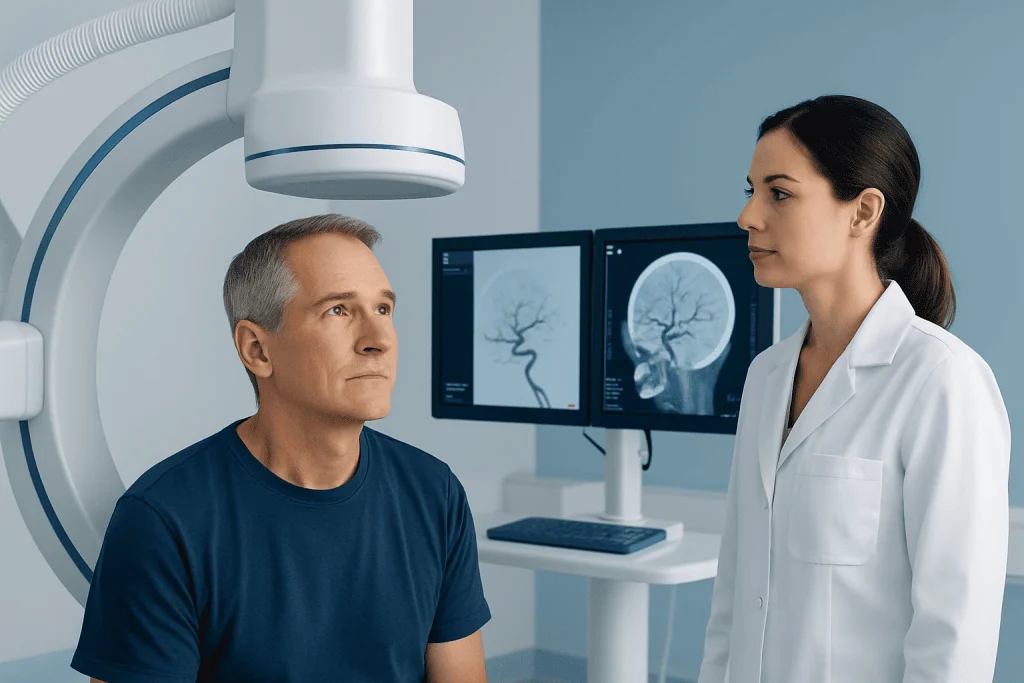
Common imaging tests include CT angiography, MR angiography, and digital subtraction angiography. CT angiography is fast and widely used in urgent settings. MR angiography can be useful for screening and follow-up because it does not always require radiation. Digital subtraction angiography is an invasive test but provides highly detailed images and may be used when treatment planning requires precise information.
Screening is not recommended for everyone. It may be considered for people who have two or more first-degree relatives with brain aneurysm or aneurysmal subarachnoid hemorrhage, and for selected patients with conditions strongly associated with aneurysms. People with one affected first-degree relative should discuss their individual situation with a specialist, especially if they have additional risk factors.
When an unruptured aneurysm is found, follow-up imaging may be recommended to monitor size or shape changes. The timing depends on aneurysm features and the patient’s risk profile. Patients should keep copies of imaging reports and ask their doctor when the next scan is needed.
Treatment Options
Treatment for a brain aneurysm depends on whether it has ruptured, how likely it is to rupture in the future, and how safely it can be treated. A ruptured aneurysm usually requires urgent treatment to secure the aneurysm and prevent rebleeding. Additional care may be needed in an intensive care setting to manage brain swelling, blood vessel spasm, hydrocephalus, seizures, or other complications.
For unruptured aneurysms, options include observation with imaging follow-up, endovascular treatment, or open microsurgery. Observation may be appropriate for small, low-risk aneurysms, especially when treatment risks are higher than rupture risk. During observation, doctors also focus on blood pressure control, smoking cessation, and other vascular health measures.
Endovascular treatment is performed through the blood vessels, often through an artery in the wrist or groin. Techniques may include coil embolization, stent-assisted coiling, or flow-diverting stents. These procedures aim to reduce blood flow into the aneurysm so it clots off and is less likely to rupture.
Surgical clipping involves a neurosurgeon placing a small clip at the base of the aneurysm through an opening in the skull. The clip blocks blood from entering the aneurysm while preserving flow through the normal artery. The best approach varies by aneurysm location, neck shape, size, patient age, medical condition, and local expertise.
Prevention, Self-care, and Living With an Aneurysm
There is no guaranteed way to prevent every brain aneurysm, but reducing stress on blood vessels can lower overall risk. Patients should follow a doctor’s plan for managing high blood pressure, cholesterol, diabetes, and other vascular conditions. Regular checkups are important because high blood pressure often has no symptoms.
Smoking is one of the most important modifiable risk factors for aneurysm growth and rupture. People who smoke should ask a healthcare professional about cessation support, which may include counseling, medications, or structured programs. Avoiding recreational stimulant drugs and limiting heavy alcohol intake are also important safety steps.
Healthy daily habits support blood vessel health. These include regular physical activity approved by a doctor, a balanced diet rich in vegetables, fruits, whole grains, lean proteins, and healthy fats, adequate sleep, and stress management. Patients with known aneurysms should ask their doctor whether they need any activity restrictions, especially for heavy lifting or high-intensity exertion.
Living with an unruptured aneurysm can cause understandable anxiety. Reliable information, a clear follow-up plan, and direct communication with the care team can help patients feel more in control. If worry becomes persistent or interferes with daily life, psychological support may be beneficial.
When to See a Doctor
Emergency care is needed for a sudden, severe headache, especially if it is the worst headache ever experienced or is accompanied by vomiting, neck stiffness, fainting, confusion, seizure, weakness, speech difficulty, or vision changes. It is safer to treat these symptoms as urgent until a serious cause is ruled out.
A non-emergency appointment is appropriate for people with a strong family history of brain aneurysm, known genetic conditions associated with aneurysms, or an incidentally discovered aneurysm on imaging. A specialist can review images, explain rupture risk, and discuss whether screening of relatives is appropriate.
Patients already diagnosed with an aneurysm should seek medical advice if they develop new headaches, new neurologic symptoms, or changes in vision, balance, speech, or strength. They should also attend scheduled imaging follow-ups, even if they feel well.
Acibadem International’s multidisciplinary specialists in neurology, neurosurgery, interventional neuroradiology, and intensive care diagnose and treat brain aneurysms for international patients in JCI-accredited hospitals. Patients should consult a qualified doctor to determine the safest plan for their individual condition.
Frequently asked questions
What is the difference between a brain aneurysm and a stroke?
A brain aneurysm is a bulge in a weakened blood vessel wall. A stroke is brain injury caused by blocked blood flow or bleeding in or around the brain. If an aneurysm ruptures, it can cause a type of hemorrhagic stroke called subarachnoid hemorrhage.
Can a brain aneurysm go away on its own?
Most brain aneurysms do not simply disappear. Some remain stable for years, while others may grow or change shape. Follow-up imaging helps doctors monitor the aneurysm and decide whether treatment is needed.
Who should consider brain aneurysm screening?
Screening may be considered for people with two or more first-degree relatives who had a brain aneurysm or aneurysmal bleeding. It may also be considered in selected patients with certain inherited conditions, such as polycystic kidney disease. A doctor can assess personal risk and choose the most appropriate imaging test.
Is every unruptured brain aneurysm treated with surgery?
No. Many unruptured aneurysms are monitored with periodic imaging, especially if they are small and low risk. Treatment is considered when the estimated risk of rupture is higher than the risks of the procedure or when the aneurysm has concerning features.
What is recovery like after brain aneurysm treatment?
Recovery depends on whether the aneurysm had ruptured, the type of treatment, and the patient’s overall health. Endovascular procedures may involve a shorter hospital stay than open surgery, but follow-up imaging is often needed. After rupture, recovery can take longer and may include rehabilitation.
Can lifestyle changes reduce the risk of rupture?
Lifestyle changes cannot remove an existing aneurysm, but they can support blood vessel health. Controlling blood pressure, stopping smoking, avoiding stimulant drugs, and following medical advice are important. Patients should discuss safe exercise and activity levels with their doctor.
References
- World Health Organization
- American Heart Association and American Stroke Association
- National Institute of Neurological Disorders and Stroke
- Mayo Clinic
- European Stroke Organisation
This article is for general information only and is not a substitute for professional medical advice. Please consult a qualified doctor about your individual situation.
Explore treatments in Turkey — costs, top hospitals & a free quote
JCI-accredited · board-certified surgeons · reply within 24h
Add us as a Preferred Source to see more of our trusted health content across Google Search, AI Overviews and Discover.
Check your numbers in seconds
BMI, calories, due date, blood pressure and 30+ more clinical calculators — free, instant, doctor-reviewed ranges.