Brain Freeze — Explained by Medical Evidence, Not Myths

Brain freeze is a temporary headache triggered by cold foods, drinks, or icy air contacting the mouth or throat. It is thought to involve rapid cooling, blood vessel changes, and stimulation of pain-sensitive nerves linked to the head.
Key Takeaways
- Brain freeze is a temporary headache triggered by cold foods, drinks, or icy air contacting the mouth or throat.
- It is thought to involve rapid cooling, blood vessel changes, and stimulation of pain-sensitive nerves linked to the head.
- Symptoms usually peak quickly and resolve within seconds to a few minutes without treatment.
- People with migraine may be more likely to experience brain freeze.
- Simple measures such as eating slowly and warming the roof of the mouth can help prevent or relieve it.
- A doctor should assess headaches that are severe, unusual, prolonged, or accompanied by neurological symptoms.
Brain freeze is a short-lasting headache that happens when something very cold touches the roof of the mouth or back of the throat. It is usually harmless, fades within minutes, and can often be eased by warming the mouth or slowing down how quickly cold foods or drinks are consumed.
What brain freeze is
Brain freeze is the common name for a very brief headache that can occur after eating or drinking something cold too quickly. It is also called an ice cream headache or, in medical terms, a cold-stimulus headache. The pain often comes on suddenly, feels sharp or stabbing, and is usually felt in the forehead or behind the eyes.
The good news is that brain freeze is usually harmless. In most people, it lasts only a few seconds to a few minutes and goes away on its own once the cold stimulus stops and the tissues in the mouth warm up again.
Medical evidence suggests that brain freeze happens because rapid cooling in the roof of the mouth or back of the throat activates sensitive nerves and may briefly change blood flow in nearby blood vessels. This creates pain that is felt in the head rather than only in the mouth, which is why the sensation can seem surprising or intense despite being short-lived.
How brain freeze feels

Brain freeze usually starts very quickly, often within moments of swallowing a cold drink, eating ice cream, or inhaling very cold air. The pain is commonly centered in the forehead, temples, or behind the eyes, though some people feel it elsewhere in the head.
The sensation is often described as sudden, sharp, stabbing, or aching. It reaches its peak fast and then fades just as quickly. Unlike many other headaches, it does not typically last long enough to interfere with normal activity for more than a brief moment.
Typical features include:
- Head pain triggered by cold food, drink, or air
- Very rapid onset
- Pain in the front of the head most often
- Resolution within seconds to a few minutes
- No ongoing symptoms once the trigger is gone
If a headache continues well beyond a few minutes, happens without a cold trigger, or comes with symptoms such as weakness, confusion, fever, fainting, or vision changes, it is less likely to be simple brain freeze and should be assessed by a clinician.
Why it happens: the science behind the pain
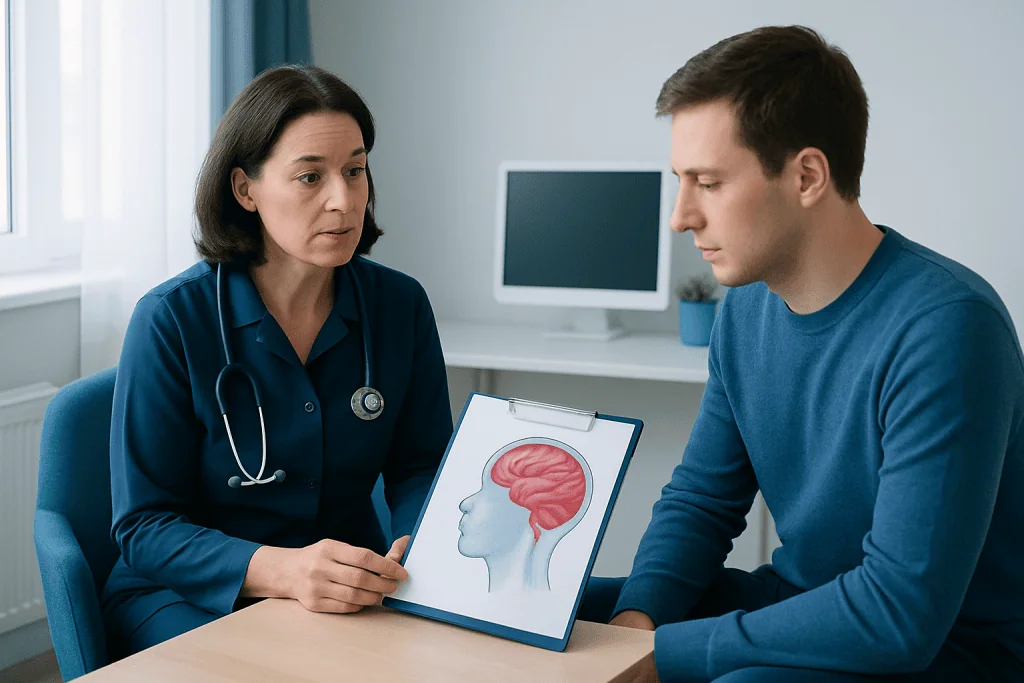
Brain freeze is not a myth, and it is not simply a sign of eating too fast. It is a recognized headache phenomenon linked to cold stimulation. The leading explanation is that when something very cold touches the roof of the mouth or the back of the throat, it causes rapid temperature change in tissues supplied by branches of the trigeminal nerve, the major nerve involved in facial sensation and many headache disorders.
This sudden cooling may trigger a brief chain of events involving constriction and then widening of nearby blood vessels, along with activation of pain pathways. Because the trigeminal nerve also carries pain signals from parts of the face and head, the brain may interpret the signal as pain in the forehead rather than in the mouth. This is called referred pain.
The exact mechanism is still being studied, but specialists generally agree that nerve activation and blood vessel responses both play a role. This helps explain why brain freeze is short-lived, reproducible in some people, and strongly tied to a specific trigger rather than being random.
Some headache disorders involve similar nerve pathways. For example, the trigeminal system is also important in migraine, which may be one reason people with migraine sometimes report brain freeze more often than others.
Who gets brain freeze and common triggers
Brain freeze can happen to children and adults alike. It is especially common when a very cold substance is consumed quickly, but there is no single age group or body type that is uniquely affected. Some people experience it often, while others rarely or never do.
Common triggers include ice cream, frozen desserts, ice-cold drinks, slushies, popsicles, and even very cold water after exercise or on a hot day. In some cases, breathing in cold air during winter sports or exposure to icy wind can trigger similar head pain.
Risk may be higher when:
- Cold food or drink is swallowed quickly
- A large amount of cold substance touches the roof of the mouth at once
- The person is already sensitive to headaches
- There is a personal history of migraine or other primary headache disorders
Brain freeze itself is not considered dangerous, and it does not mean there is damage to the brain. However, recurring headaches of any kind deserve attention if they change in pattern or are difficult to distinguish from other conditions such as headache disorders.
How to stop brain freeze quickly
Because brain freeze is temporary, treatment is usually simple and immediate. The main goal is to warm the tissues in the roof of the mouth and stop the cold trigger. Many people find that relief starts within moments.
Helpful steps include pressing the tongue gently against the roof of the mouth, sipping a lukewarm drink, or pausing before taking another bite or sip. Covering the mouth and breathing slowly through the nose may also help warm the area if cold air is the trigger.
Simple relief strategies include:
- Stop eating or drinking the cold item for a moment
- Press the tongue to the roof of the mouth
- Drink room-temperature or lukewarm water
- Breathe through the nose to help warm the palate
- Wait calmly, since symptoms usually pass quickly
Most people do not need medication for brain freeze. If a person has frequent or complex headaches beyond these brief episodes, evaluation by a specialist may help clarify whether a broader headache condition is present. In selected cases, doctors may assess recurring headache patterns with neurological examination and, when appropriate, imaging such as MRI.
Prevention and self-care
The simplest way to prevent brain freeze is to slow down when eating or drinking cold items. Smaller bites, slower sips, and allowing cold foods to warm slightly in the mouth before swallowing can reduce the sudden temperature change that triggers pain.
It may also help to avoid letting very cold food sit against the roof of the mouth. Using a straw carefully for icy drinks, taking breaks between sips, and limiting rapid intake after exercise can be useful practical measures.
Prevention tips include:
- Eat frozen foods slowly
- Take small sips of cold drinks
- Avoid gulping icy beverages
- Let frozen food soften slightly before eating
- Warm the mouth briefly between bites if needed
People who also live with recurring migraines or chronic headaches may benefit from a broader medical review of triggers and headache patterns. Depending on symptoms, doctors may recommend assessment by neurology specialists to separate harmless cold-stimulus headaches from other causes.
When to seek medical care
Brain freeze usually does not require medical treatment. However, not every sudden head pain is brain freeze, and it is sensible to seek medical advice if the symptoms do not fit the usual pattern. The typical pattern is a clear cold trigger, very short duration, and full recovery within minutes.
Medical evaluation is important if head pain is severe, happens without exposure to something cold, lasts longer than expected, or is associated with other symptoms such as vomiting, weakness, numbness, trouble speaking, fainting, fever, neck stiffness, or visual disturbance. These features can point to causes that need prompt attention.
A doctor may review the person’s headache history, triggers, and neurological symptoms to decide whether further testing is necessary. Depending on the overall picture, this can include a physical and neurological examination, CT scan, or referral to headache specialists.
For international patients who need assessment of recurring or unusual headaches, Acibadem International’s multidisciplinary specialists and JCI-accredited hospitals provide diagnosis and treatment with an evidence-based approach.
Frequently asked questions
Is brain freeze dangerous?
Brain freeze is usually not dangerous. It is a short, harmless headache triggered by cold stimulation in the mouth or throat and typically resolves on its own within minutes.
Why does brain freeze hurt in the forehead instead of the mouth?
The pain is thought to be referred through nerve pathways, especially those linked to the trigeminal nerve. Although the cold stimulus starts in the mouth or throat, the brain may interpret the signal as pain in the front of the head.
How long does brain freeze last?
Most episodes last only a few seconds to a few minutes. If head pain lasts much longer or keeps returning without a cold trigger, it is reasonable to speak with a doctor.
Are some people more likely to get brain freeze?
Yes. People who eat or drink cold items quickly are more likely to experience it, and those with migraine may also be more prone to it. Still, brain freeze can happen to almost anyone.
What is the fastest way to relieve brain freeze?
Stopping the cold food or drink and warming the roof of the mouth often helps quickly. Pressing the tongue to the palate or sipping lukewarm water can shorten the episode.
Can cold air cause brain freeze too?
Yes, in some people very cold air can trigger a similar brief headache, especially when inhaled through the mouth. Covering the mouth and breathing through the nose may help reduce this response.
References
- International Classification of Headache Disorders
- National Institute of Neurological Disorders and Stroke
- Mayo Clinic
- Cleveland Clinic
This article is for general information only and is not a substitute for professional medical advice. Please consult a qualified doctor about your individual situation.
Explore treatments in Turkey — costs, top hospitals & a free quote
JCI-accredited · board-certified surgeons · reply within 24h
Add us as a Preferred Source to see more of our trusted health content across Google Search, AI Overviews and Discover.

More from the Health Library

Little Pimples on Hands: A Complete Medical Overview

Eye infection eye: A Complete Medical Guide for Patients

Iron Deficiency Nails — Explained by Medical Evidence, Not Myths

Early stage blood clot in foot pictures: Symptoms, Causes, and Treatment — Complete Patient Guide

Popcorn Lung: An Evidence-Based Guide for Patients