Brain Tumors: Headaches, MRI Diagnosis, and Treatment Options

Most headaches are not caused by brain tumors, but headaches with new neurological symptoms should be assessed by a doctor. MRI is the main imaging test used to evaluate suspected brain tumors and guide treatment planning.
Key Takeaways
- Most headaches are not caused by brain tumors, but headaches with new neurological symptoms should be assessed by a doctor.
- MRI is the main imaging test used to evaluate suspected brain tumors and guide treatment planning.
- Treatment may include surgery, radiation therapy, chemotherapy, targeted therapy, tumor treating fields, or careful monitoring.
- The best treatment plan depends on tumor type, grade, location, symptoms, overall health, and patient preferences.
- Early medical evaluation is important for seizures, progressive weakness, vision changes, confusion, or worsening headaches.
Brain tumors can be benign or malignant, and their symptoms depend on the tumor’s type, size, and location in the brain. Modern imaging, especially MRI, helps doctors diagnose brain tumors accurately and plan individualized treatment.
Overview
Brain tumors are abnormal growths of cells in or near the brain. They may begin in the brain itself, which is called a primary brain tumor, or they may spread to the brain from another cancer elsewhere in the body, known as a metastatic brain tumor. Brain tumors can be benign, meaning non-cancerous, or malignant, meaning cancerous. Even benign tumors may need treatment if they press on important brain structures or affect brain function.
The brain controls movement, speech, memory, vision, balance, emotions, and many other functions. For this reason, symptoms vary widely depending on where a tumor is located and how quickly it grows. Some tumors are discovered after symptoms such as headaches, seizures, or weakness develop, while others are found during imaging for an unrelated reason.
Diagnosis and treatment have advanced significantly with high-resolution MRI, modern neurosurgery, radiation planning, molecular testing, and specialized cancer therapies. A multidisciplinary team often includes neurosurgeons, neurologists, medical oncologists, radiation oncologists, neuroradiologists, pathologists, rehabilitation specialists, and supportive care professionals.
Headaches and Other Brain Tumor Symptoms
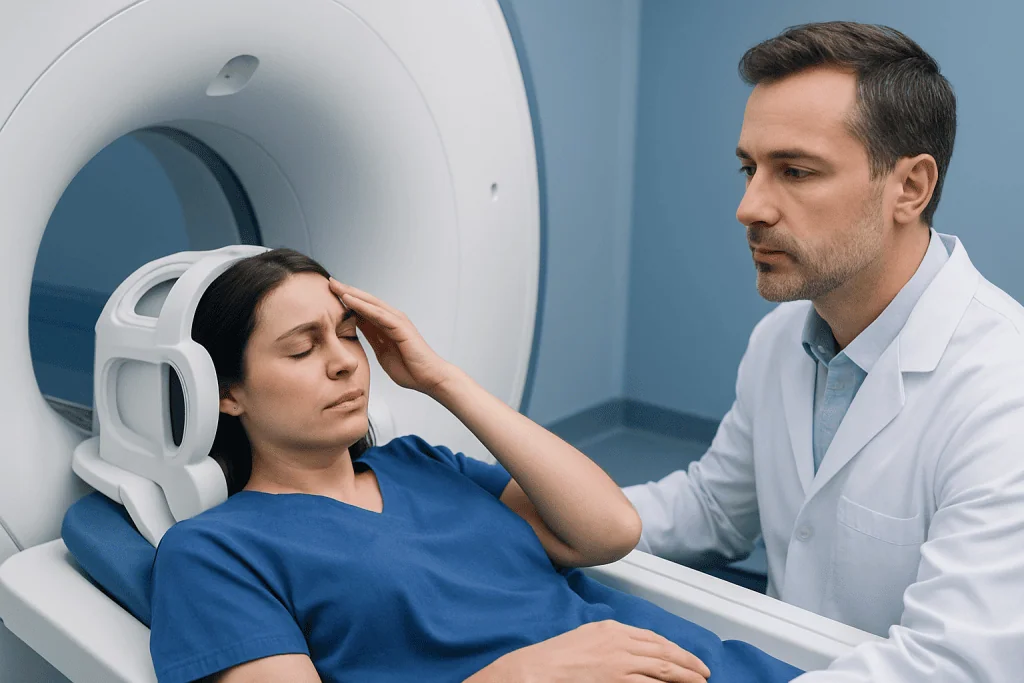
Headache is a common symptom in the general population, and most headaches are not related to brain tumors. Stress, migraine, sinus problems, sleep changes, dehydration, and many other conditions are much more frequent causes. However, a headache pattern that is new, persistent, worsening, or associated with neurological symptoms should be discussed with a qualified doctor.
Brain tumor headaches may be more noticeable in the morning, may worsen over time, or may occur with nausea, vomiting, blurred vision, or changes in alertness. They can also feel different from a person’s usual headaches. Still, headache features alone cannot confirm or exclude a brain tumor; medical evaluation and imaging are needed when symptoms raise concern.
Possible brain tumor symptoms include:
- Seizures, especially a first seizure in adulthood
- Weakness, numbness, or tingling on one side of the body
- Difficulty speaking, understanding words, or finding words
- Vision changes, double vision, or loss of peripheral vision
- Problems with balance, coordination, or walking
- Memory, personality, mood, or behavior changes
- Persistent nausea or vomiting without another clear cause
- Hearing changes or ringing in one ear, depending on tumor location
Causes and Risk Factors
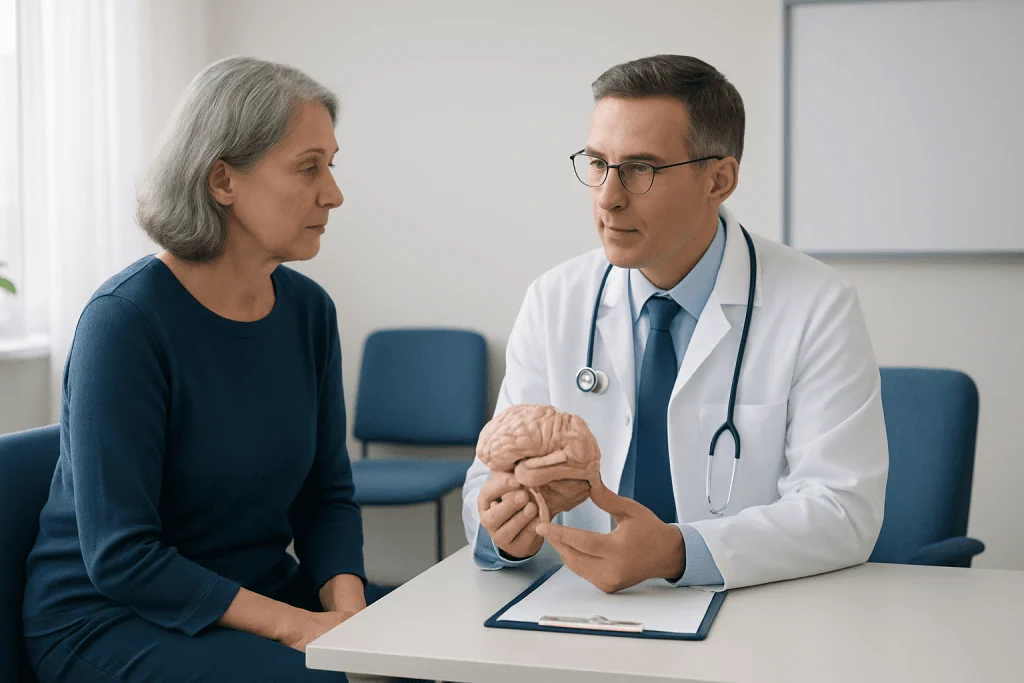
In many people, the exact cause of a primary brain tumor is not known. Brain tumors develop when cells acquire changes that allow them to grow in an uncontrolled way. These changes may occur by chance during cell division, or less commonly, they may be related to inherited genetic conditions or previous exposures.
Known risk factors include prior radiation exposure to the head, especially during childhood, and certain rare inherited syndromes such as neurofibromatosis, Li-Fraumeni syndrome, tuberous sclerosis complex, and von Hippel-Lindau disease. Age can also influence risk, as some brain tumor types are more common in children, while others are more common in adults or older adults.
Metastatic brain tumors are different from primary brain tumors. They occur when cancer cells from another organ travel to the brain, most often from lung cancer, breast cancer, melanoma, kidney cancer, or colorectal cancer. Treatment decisions for brain metastases consider both the brain lesions and the status of cancer in the rest of the body.
Everyday activities such as using mobile phones, eating certain foods, or experiencing stress have not been proven to cause brain tumors. Patients with concerns about personal risk, family history, or previous cancer treatment should discuss them with a doctor who can recommend appropriate evaluation or genetic counseling when needed.
MRI Diagnosis and Other Tests
Magnetic resonance imaging, or MRI, is the preferred imaging test for most suspected brain tumors. MRI uses magnetic fields and radio waves to create detailed images of the brain. Contrast material may be given through a vein to help highlight abnormal tissue, blood vessel patterns, swelling, and the relationship of a tumor to nearby brain structures.
MRI can help doctors estimate the tumor’s location, size, number of lesions, and possible type. Advanced MRI techniques, such as diffusion imaging, perfusion imaging, functional MRI, and MR spectroscopy, may provide additional information for surgical planning or treatment decisions. A CT scan may be used in urgent situations, when MRI is not possible, or to detect bleeding, calcification, or effects on the skull.
Imaging is very important, but a definite diagnosis often requires examination of tumor tissue. This may be obtained during surgery or through a stereotactic biopsy. A pathologist studies the tissue under a microscope and may perform molecular tests to identify tumor markers. These markers can influence prognosis and guide treatment choices, particularly for gliomas and other primary brain tumors.
Additional tests may include a neurological examination, vision or hearing testing, blood tests, imaging of the chest or body if metastasis is suspected, and sometimes spinal fluid testing. The goal is to understand both the tumor and the patient’s overall health before deciding on a treatment plan.
Treatment Options
Brain tumor treatment is highly individualized. Doctors consider the tumor type, grade, location, size, growth rate, symptoms, molecular profile, and whether it is primary or metastatic. They also consider the patient’s age, general health, functional status, and personal goals. In some slow-growing tumors without symptoms, careful monitoring with regular MRI scans may be appropriate.
Surgery is often considered when a tumor can be safely removed or when tissue is needed for diagnosis. The aim may be maximal safe resection, meaning removing as much tumor as possible while protecting important brain functions. Neurosurgeons may use image guidance, microsurgical techniques, awake brain mapping, intraoperative imaging, or monitoring of nerve pathways depending on the tumor’s location.
Radiation therapy may be recommended after surgery, for tumors that cannot be fully removed, or for certain metastases. Techniques such as stereotactic radiosurgery or highly focused radiotherapy can deliver radiation precisely to selected targets. Conventional external beam radiation may be used for larger areas or specific tumor types. The radiation oncology team plans treatment carefully to balance tumor control with protection of healthy tissue.
Medicines may also be part of treatment. Chemotherapy, targeted therapy, immunotherapy in selected cases, corticosteroids to reduce swelling, anti-seizure medicines, and symptom-control treatments may be used. Tumor treating fields may be considered for certain glioblastoma patients. Rehabilitation, psychological support, speech therapy, occupational therapy, and physical therapy are important parts of care when symptoms affect daily life.
Prevention, Self-Care, and Living With a Brain Tumor
There is no proven way to prevent most primary brain tumors. However, general health measures can support the body during diagnosis, treatment, and recovery. These include maintaining a balanced diet, staying as physically active as safely possible, sleeping regularly, avoiding tobacco, limiting alcohol, and keeping chronic conditions such as diabetes or high blood pressure well managed.
Patients should take prescribed medicines exactly as directed, especially anti-seizure medicines or steroids if they are part of the treatment plan. They should not stop these medicines suddenly without medical advice. Driving, swimming alone, climbing, or operating machinery may need to be restricted after a seizure or during certain treatments; the medical team can provide guidance based on local regulations and individual risk.
Keeping a symptom diary can help doctors understand headache patterns, seizure-like episodes, weakness, mood changes, sleep, and medication side effects. Patients may also benefit from bringing a family member or friend to appointments, preparing questions in advance, and asking the care team to explain imaging results and treatment options in clear language.
Emotional support is also important. A brain tumor diagnosis can affect patients and families in practical and psychological ways. Counseling, support groups, rehabilitation services, and palliative care can help manage symptoms, improve quality of life, and support decision-making at any stage of the illness.
When to See a Doctor
A doctor should be consulted if a person develops a new headache pattern that is persistent, progressively worsening, or different from previous headaches, especially if it occurs with vomiting, visual changes, confusion, weakness, numbness, or balance problems. A first seizure at any age should be assessed urgently, even if the person feels well afterward.
Immediate medical attention is needed for sudden severe headache, loss of consciousness, new paralysis, trouble speaking, severe confusion, or repeated seizures. These symptoms can have several causes, including stroke, infection, bleeding, or increased pressure in the head, and prompt evaluation helps doctors identify the safest next steps.
People already diagnosed with a brain tumor should contact their care team if symptoms change, side effects become difficult to manage, or new neurological problems appear. Follow-up imaging and appointments are essential because treatment plans may need to be adjusted over time.
For international patients seeking evaluation or treatment, Acibadem International provides access to multidisciplinary specialists and JCI-accredited hospitals experienced in diagnosing and treating brain tumors. Patients should always review their individual situation with qualified clinicians before making care decisions.
Frequently asked questions
Do brain tumors always cause headaches?
No. Some brain tumors cause headaches, but others cause different symptoms or are found incidentally on imaging. Most headaches are not due to brain tumors, but a new or worsening headache with neurological symptoms should be evaluated by a doctor.
What kind of headache can be a warning sign?
A warning pattern may include a headache that is new, progressively worsening, different from usual headaches, or associated with vomiting, vision changes, weakness, confusion, or seizures. These features do not mean a tumor is definitely present, but they do justify medical assessment.
Is MRI better than CT for diagnosing brain tumors?
MRI usually provides more detailed images of brain tissue and is the preferred test for many suspected brain tumors. CT can still be very useful in emergencies, when MRI is not available or suitable, or when doctors need to assess bleeding or bone involvement.
Can a benign brain tumor still be serious?
Yes. Benign tumors do not invade like cancer, but they can still press on important brain areas, nerves, or fluid pathways. Treatment may be needed if they grow, cause symptoms, or threaten neurological function.
Is surgery always required for a brain tumor?
Not always. Some tumors are monitored with regular MRI scans, while others are treated with surgery, radiation therapy, medicines, or a combination of approaches. The decision depends on the tumor type, location, symptoms, and overall health.
What happens after brain tumor treatment?
Follow-up usually includes regular neurological examinations and imaging, often with MRI. Patients may also need rehabilitation, seizure management, hormone evaluation, or support for memory, speech, mood, or movement depending on the tumor and treatment received.
References
- World Health Organization
- National Cancer Institute
- European Association of Neuro-Oncology
- American Society of Clinical Oncology
- American Association of Neurological Surgeons
This article is for general information only and is not a substitute for professional medical advice. Please consult a qualified doctor about your individual situation.
Brain Tumors in Turkey — costs, top hospitals & a free quote
JCI-accredited · board-certified surgeons · reply within 24h
Add us as a Preferred Source to see more of our trusted health content across Google Search, AI Overviews and Discover.

Medical Oncology Department
Medical treatment of cancer with chemotherapy, immunotherapy and targeted therapies under a multidisciplinary tumor board.
60 specialists in this unit