Brain Vessel Narrowing: When Interventional Neurology May Be Considered

Brain vessel narrowing usually results from atherosclerosis, a buildup of plaque inside arteries. It may cause no symptoms at first, but it can lead to transient ischemic attacks or stroke.
Key Takeaways
- Brain vessel narrowing usually results from atherosclerosis, a buildup of plaque inside arteries.
- It may cause no symptoms at first, but it can lead to transient ischemic attacks or stroke.
- Diagnosis often involves brain imaging and blood vessel imaging such as CT angiography, MR angiography, or catheter angiography.
- Treatment commonly begins with medication and control of blood pressure, cholesterol, diabetes, and smoking.
- Interventional neurology procedures are usually reserved for selected patients after specialist evaluation.
Brain vessel narrowing happens when arteries supplying the brain become tighter, reducing blood flow and increasing the risk of a transient ischemic attack or stroke. Many people are treated with medicines and risk-factor control, while interventional neurology may be considered in carefully selected situations.
Overview
Brain vessel narrowing, also called intracranial stenosis or brain artery narrowing, means that one or more arteries inside the skull have become tighter than normal. These arteries carry oxygen-rich blood to important brain tissue. When the passageway becomes narrow, blood flow may be reduced, especially during times when the brain needs more oxygen.
The most common cause is atherosclerosis, a process in which fatty deposits, cholesterol, and inflammatory material build up in the artery wall. Over time, this can harden and limit circulation. In some people, the narrowed area stays stable for years. In others, it may trigger symptoms or increase the risk of a transient ischemic attack, sometimes called a mini-stroke, or a full stroke.
Not everyone with brain vessel narrowing needs a procedure. In fact, treatment often starts with medicines and close management of vascular risk factors. Interventional neurology may be considered when symptoms continue despite appropriate medical therapy, when the narrowing is severe, or when specialists believe a procedure may reduce risk in a carefully selected patient.
Symptoms
Brain vessel narrowing may not cause noticeable symptoms at first. Some people only learn they have it after imaging performed for another reason. When symptoms do occur, they often happen because part of the brain is temporarily not receiving enough blood flow, or because a small clot forms around the narrowed area and travels farther into the brain.
Symptoms can come on suddenly and should be treated as urgent. They may last only a few minutes, as in a transient ischemic attack, or persist longer if a stroke occurs. Common warning signs include:
- Sudden weakness or numbness in the face, arm, or leg, especially on one side
- Sudden trouble speaking or understanding speech
- Sudden vision loss or blurred vision in one or both eyes
- Sudden dizziness, loss of balance, or difficulty walking
- Sudden severe confusion
- Less commonly, sudden severe headache
The exact symptoms depend on which artery is affected and which brain area loses blood supply. For example, narrowing in the carotid circulation may affect speech or movement, while narrowing in the vertebrobasilar circulation may cause imbalance, double vision, or swallowing difficulty. Any sudden neurological symptom should be assessed immediately, even if it improves quickly.
Causes and Risk Factors

Atherosclerosis is the leading cause of brain vessel narrowing. The same disease process that can affect the heart and neck arteries can also affect arteries within the brain. Plaque buildup narrows the inside of the vessel and may make the surface irregular, increasing the chance that a clot could form.
Several health conditions and lifestyle factors can raise the risk. High blood pressure is especially important because it damages the artery wall over time. High cholesterol, diabetes, smoking, obesity, physical inactivity, and an unhealthy diet also contribute. Age increases risk, and people with a history of heart disease, peripheral artery disease, or stroke are more likely to have intracranial artery disease as well.
Less common causes include inflammatory blood vessel disease, certain genetic or congenital vessel disorders, prior radiation therapy, or artery injury. Because symptoms and imaging findings can sometimes overlap with other neurological conditions, specialists may need to rule out problems such as brain aneurysm or other causes of reduced brain blood flow before deciding on treatment.
How It Is Diagnosed
Diagnosis starts with a careful review of symptoms, medical history, and a neurological examination. A doctor will want to know whether there has been a transient ischemic attack, a previous stroke, or repeated episodes suggesting reduced brain blood flow. Risk factors such as hypertension, diabetes, smoking, and high cholesterol are also important because they help guide both testing and treatment.
Imaging plays a central role. A CT scan or MRI of the brain may show whether a stroke has already occurred. To look at the blood vessels themselves, doctors may use CT angiography, MR angiography, or Doppler-based studies in selected cases. These tests can estimate where the narrowing is located and how severe it may be.
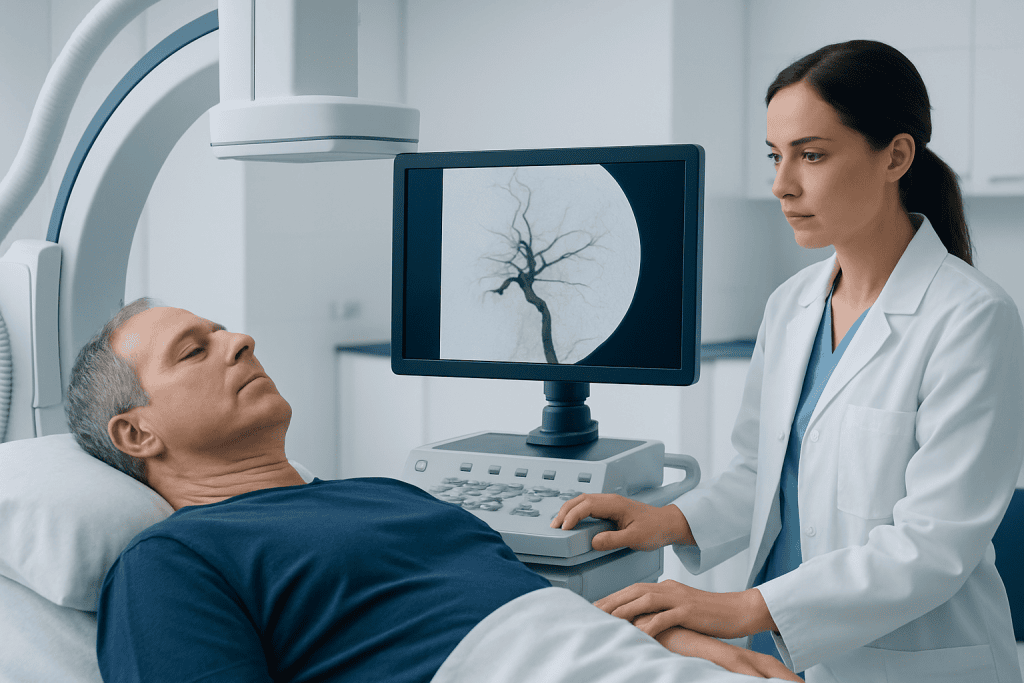
In some situations, catheter angiography is recommended. This test involves guiding a thin tube through the blood vessels and injecting contrast dye to produce very detailed images of the brain arteries. It is often the most precise way to define the anatomy when planning a procedure. Additional evaluation may include blood tests, heart rhythm assessment, and review by a multidisciplinary team to make sure symptoms are truly related to the narrowed vessel rather than another condition such as carotid artery disease.
Treatment Options
Treatment is individualized and depends on the severity of the narrowing, whether symptoms have occurred, and the patient’s overall stroke risk. For many people, the first and most important approach is intensive medical treatment. This usually includes antiplatelet medication, cholesterol-lowering therapy, and careful control of blood pressure, diabetes, and other cardiovascular risks. Smoking cessation, regular exercise, and a heart-healthy eating pattern are also essential parts of care.
Interventional neurology may be considered when narrowing is severe and continues to cause symptoms despite appropriate medical therapy, or when specialists believe the anatomy makes a procedure reasonable. The main minimally invasive options are balloon angioplasty, in which the narrowed segment is widened, and stenting, in which a small mesh tube is placed to help keep the artery open. These procedures are not suitable for everyone because they carry risks, including stroke during or after the intervention.
Careful patient selection is therefore very important. The decision usually follows detailed imaging, review of the patient’s recent symptoms, and discussion among stroke neurologists, interventional neuroradiologists or neurointerventional specialists, and other experts. If a procedure is advised, it may be performed as part of stroke treatment planning or through a dedicated neurovascular approach such as angiography and endovascular therapy. In some cases, additional support from neurology care helps guide long-term prevention and follow-up.
At experienced centers, treatment plans are built around balancing benefit and risk. Near the end of the care pathway, some patients may seek assessment at centers such as Acibadem International, where multidisciplinary specialists and JCI-accredited hospitals evaluate and treat neurovascular conditions for international patients.
Prevention and Self-care
Preventing progression of brain vessel narrowing focuses on protecting the blood vessels over time. Blood pressure control is one of the most powerful steps. Cholesterol management, diabetes care, and not smoking are equally important. These measures can lower the chance of further narrowing and reduce the risk of stroke and heart disease.
Daily habits matter. A balanced eating pattern rich in vegetables, fruits, whole grains, legumes, and healthy fats may support vascular health. Regular physical activity, maintaining a healthy weight, limiting excess alcohol, and taking prescribed medicines consistently can all make a meaningful difference.
Self-care also includes understanding warning signs and keeping follow-up appointments. Some people need repeat imaging to monitor the narrowed artery. Because treatment plans can change over time, it is helpful to stay in close contact with a neurologist or vascular specialist and to ask whether symptoms, medications, or risk factors need to be reviewed.
When to See a Doctor
Any sudden neurological symptom needs urgent medical attention. Weakness on one side, facial drooping, speech difficulty, sudden vision changes, severe imbalance, or abrupt confusion can all be signs of a transient ischemic attack or stroke. Even if symptoms disappear within minutes, immediate evaluation is important because early treatment may help prevent a more serious event.
A person should also make a medical appointment if they have known vascular disease, repeated short episodes of neurological symptoms, or several uncontrolled risk factors such as high blood pressure, diabetes, or smoking. Early assessment may identify brain vessel narrowing before a stroke occurs and can help a doctor create a prevention plan.
If interventional treatment is being considered, a specialist evaluation is the best next step. The goal is not to perform a procedure whenever narrowing is found, but to identify the patients most likely to benefit from one and to ensure all noninvasive options have been carefully addressed.
Frequently asked questions
Is brain vessel narrowing the same as a stroke?
No. Brain vessel narrowing is a condition in which an artery inside the brain becomes tighter, often because of plaque buildup. It can increase the risk of a transient ischemic attack or stroke, but it is not the same thing as a stroke itself.
Can brain vessel narrowing be treated without surgery?
Yes, many people are treated without surgery or a procedure. Medication, blood pressure control, cholesterol management, diabetes care, smoking cessation, and healthy lifestyle changes are often the first and most important treatments.
When is interventional neurology considered?
Interventional neurology is usually considered in selected patients with significant narrowing who continue to have symptoms despite appropriate medical therapy. The decision depends on the severity and location of the narrowing, the person's recent symptoms, and the risks and potential benefits of a procedure.
What tests are used to diagnose brain artery narrowing?
Doctors commonly use brain imaging and blood vessel imaging such as CT, MRI, CT angiography, or MR angiography. In some cases, catheter angiography is needed because it gives very detailed information about the affected artery.
Can lifestyle changes really help?
Yes. Controlling blood pressure, lowering cholesterol, stopping smoking, staying physically active, eating a balanced diet, and managing diabetes can help slow vascular disease and reduce stroke risk. These steps are often a key part of long-term treatment.
Should a person seek care if symptoms go away quickly?
Yes. Temporary symptoms can be a transient ischemic attack, which is an important warning sign. Quick medical evaluation can help identify the cause and lower the risk of a future stroke.
References
- World Health Organization
- American Heart Association
- National Institute of Neurological Disorders and Stroke
- American Stroke Association
- European Stroke Organisation
This article is for general information only and is not a substitute for professional medical advice. Please consult a qualified doctor about your individual situation.
Interventional Neurology in Turkey — costs, top hospitals & a free quote
JCI-accredited · board-certified surgeons · reply within 24h
Add us as a Preferred Source to see more of our trusted health content across Google Search, AI Overviews and Discover.
Check your numbers in seconds
BMI, calories, due date, blood pressure and 30+ more clinical calculators — free, instant, doctor-reviewed ranges.