Breast Biopsy: Types, Procedure Steps, and When Results May Take Longer
A breast biopsy is the most reliable way to find out whether a suspicious breast change is benign or cancerous. Several biopsy methods are used, including fine-needle aspiration, core needle biopsy, vacuum-assisted biopsy, and surgical biopsy.
Key Takeaways
- A breast biopsy is the most reliable way to find out whether a suspicious breast change is benign or cancerous.
- Several biopsy methods are used, including fine-needle aspiration, core needle biopsy, vacuum-assisted biopsy, and surgical biopsy.
- Most breast biopsies are done with local anesthesia and imaging guidance to improve accuracy.
- Results can take longer when the sample needs special stains, additional pathology review, or receptor testing.
- Mild soreness and bruising are common after a biopsy, but severe pain, heavy bleeding, or fever should be reported promptly.
A breast biopsy is a common procedure used to examine a small sample of breast tissue when imaging or an exam finds an area that needs a closer look. Understanding the different biopsy types, the basic steps, and why results sometimes take longer can help patients feel more prepared and informed.
Overview: What a Breast Biopsy Is and Why It Is Done
A breast biopsy is a procedure that removes a small sample of breast tissue so it can be examined under a microscope by a pathologist. It is usually recommended when a mammogram, ultrasound, MRI, or physical examination shows an area that does not look completely typical. A biopsy does not automatically mean cancer; many biopsy results turn out to be benign, such as cysts, fibroadenomas, or other noncancerous breast changes.
The main purpose of a breast biopsy is to provide a clear diagnosis. Imaging tests can show that an area needs more evaluation, but they cannot always confirm exactly what it is. Looking at tissue cells directly helps doctors decide whether the finding is harmless, needs monitoring, or requires treatment.
Biopsy planning depends on where the abnormal area is located, how large it is, and how it was first detected. Some areas can be felt during an exam, while others are only visible on imaging. For that reason, the biopsy may be guided by ultrasound, mammography, or MRI to make sure the correct spot is sampled.
Common Reasons a Breast Biopsy May Be Recommended
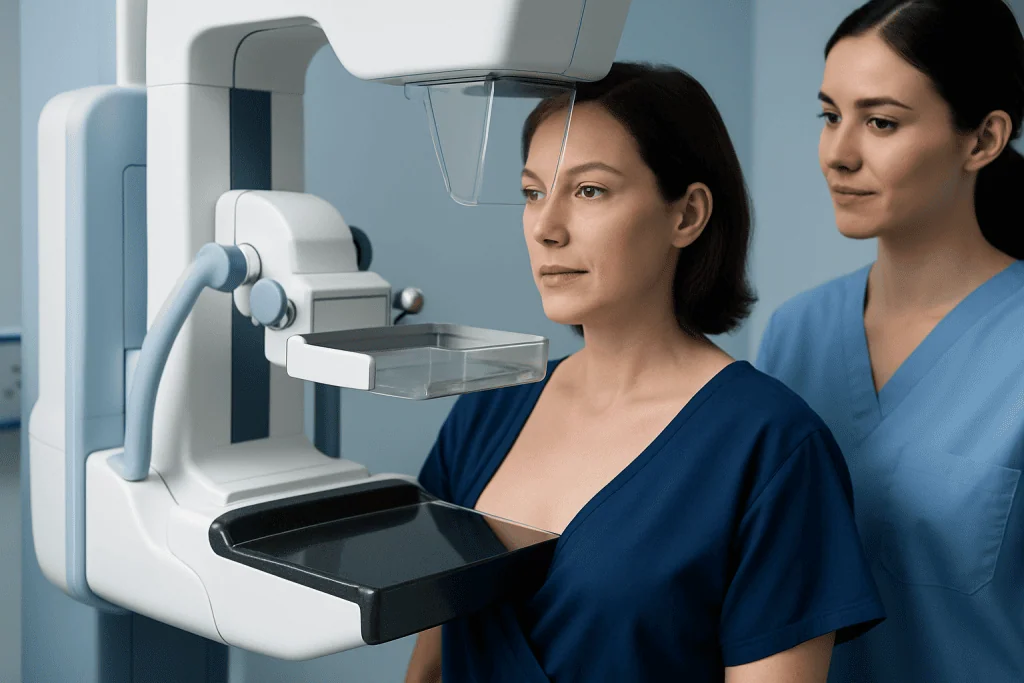
Doctors may suggest a breast biopsy after finding a lump, thickened area, skin change, nipple change, or unusual discharge. It can also be recommended if a screening or diagnostic mammogram shows calcifications, a mass, an area of architectural distortion, or another suspicious feature. In some cases, an MRI may detect an area that needs tissue sampling even though it cannot be felt.
A biopsy may also be advised when imaging findings remain uncertain after additional views or ultrasound. This helps reduce guesswork and allows treatment decisions to be based on confirmed pathology rather than suspicion alone. Some people need a biopsy because they have a personal history of breast disease, dense breast tissue, or a strong family history that calls for a careful evaluation.
Not every breast change needs the same approach. A doctor will consider symptoms, imaging appearance, age, medical history, and risk factors before recommending the most appropriate test. If cancer is found, biopsy information also helps guide next steps in care, including whether further imaging or breast cancer treatment planning is needed.
Types of Breast Biopsy
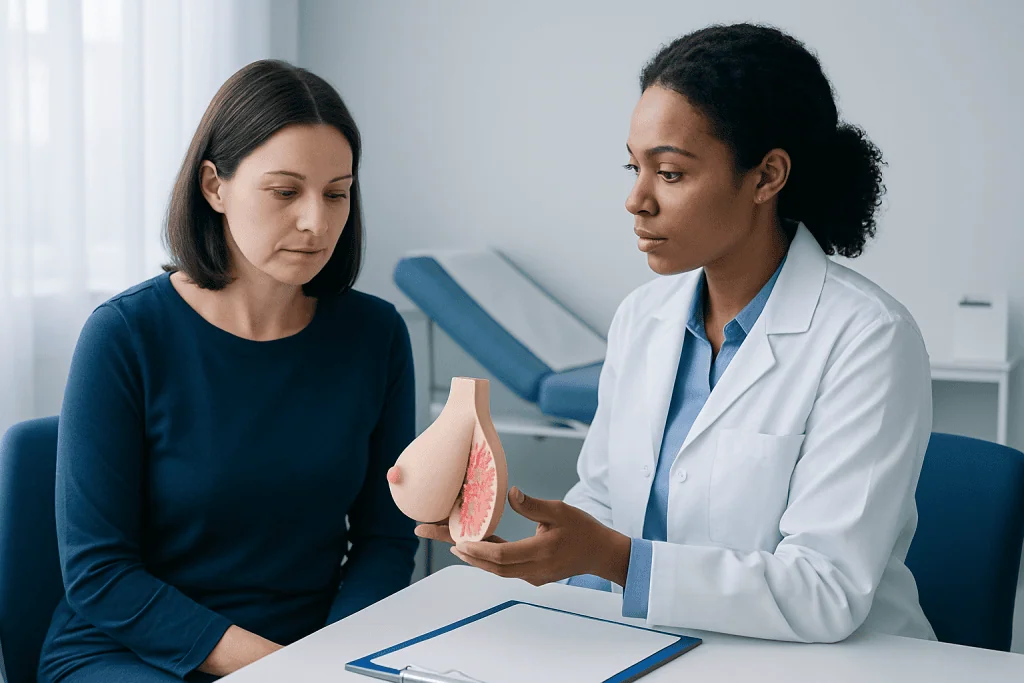
There are several types of breast biopsy, and the best option depends on the situation. Fine-needle aspiration uses a very thin needle to remove fluid or cells. It may be used for simple cysts or certain easily reached findings, but it often provides less tissue than other methods. Core needle biopsy uses a larger hollow needle to remove small cylinders of tissue and is one of the most common approaches because it gives more information to the pathologist.
Vacuum-assisted biopsy is a form of needle biopsy that uses gentle suction to collect multiple tissue samples through a single small opening. It can be helpful for small lesions or calcifications and may reduce the need for repeated needle insertions. These needle-based procedures are often performed with imaging guidance, such as ultrasound, stereotactic mammography, or MRI, to improve precision.
Surgical biopsy removes part or all of the suspicious area through a small operation. An incisional biopsy removes only part of the tissue, while an excisional biopsy removes the whole area of concern. Surgical biopsy is usually considered when needle biopsy is not suitable, when previous results are unclear, or when complete removal is preferred for diagnosis. Some patients may also be evaluated through related breast imaging or breast ultrasound before a biopsy is planned.
- Fine-needle aspiration: removes fluid or loose cells
- Core needle biopsy: removes small tissue cores for detailed analysis
- Vacuum-assisted biopsy: collects several samples through one entry point
- Surgical biopsy: removes part or all of the abnormal area
Procedure Steps: What Happens Before, During, and After
Before the biopsy, the care team reviews the patient’s symptoms, imaging results, allergies, medicines, and any bleeding risks. Patients are often asked about blood thinners, aspirin use, and whether they could be pregnant. The team explains the procedure, answers questions, and obtains consent. Depending on the biopsy type, the patient may change into a gown and be positioned lying down, sitting, or leaning forward over a special table.
During most needle biopsies, the skin is cleaned and numbed with local anesthesia. A small incision may be made so the needle can pass more easily. If imaging guidance is used, the radiologist or surgeon locates the target area and removes one or more tissue samples. Patients may feel pressure, vibration, or brief discomfort, but the area should be numb. In some cases, a tiny marker clip is left in the breast to identify the biopsied site for future imaging. This clip is very small and usually does not cause problems.
After the biopsy, pressure is applied to reduce bleeding, and the site is covered with a dressing or sterile strips. Mild bruising, soreness, and swelling are common for a few days. Patients are usually advised to avoid strenuous activity for a short time and may use a cold pack if recommended. Surgical biopsies may involve stitches and a slightly longer recovery. If the abnormality was first seen on mammography, doctors may also correlate the result with mammography findings afterward to confirm the correct area was sampled.
When Breast Biopsy Results May Take Longer
Many breast biopsy results are available within several working days, but exact timing varies between hospitals and laboratories. A pathologist first examines the tissue under a microscope and compares it with the imaging findings. If the result is straightforward and clearly benign, the report may be completed relatively quickly. However, some results take longer because the sample needs a more detailed review.
Results may be delayed when the tissue changes are subtle, when more than one pathologist needs to review the sample, or when special tests are required. For example, additional stains may help distinguish between different types of cells or clarify whether an abnormality is benign, pre-cancerous, or cancerous. If cancer is identified, the laboratory may need extra time for receptor studies, such as hormone receptor or HER2 testing, because these results help guide treatment.
Another reason for delay is the need to compare pathology with imaging and clinical findings. If the pathology result does not fully match the mammogram, ultrasound, or MRI appearance, the care team may request deeper tissue sections, another pathology opinion, or even a repeat biopsy. Although waiting can feel stressful, extra review is often an important part of making the diagnosis as accurate as possible.
Understanding the Results and Possible Next Steps
Breast biopsy results may be described as benign, high-risk, suspicious, or malignant. Benign means no cancer was found. Some benign findings still need follow-up imaging or occasional removal, depending on the exact diagnosis and whether it matches the imaging appearance. Examples include fibroadenoma, cysts, fat necrosis, and some types of noncancerous tissue changes.
Some biopsy reports identify high-risk or atypical cells. These are not the same as cancer, but they may increase the chance of future cancer or may be close to an area that needs more complete sampling. In these situations, doctors may recommend surgery, short-interval imaging follow-up, or referral to a breast specialist. If cancer is diagnosed, the report may describe the type, grade, and other features that help plan care.
The medical team will also assess whether the pathology is concordant with imaging, meaning the tissue result makes sense for the area that was seen. If not, additional testing may be needed. For patients diagnosed with a breast condition, care may involve further imaging, surgery, or oncology review, depending on whether the finding is benign or related to breast cancer.
Recovery, Self-care, and Possible Risks
Most people recover quickly after a needle breast biopsy. Mild tenderness, bruising, and a small amount of swelling are common and usually improve over a few days. Supportive bras, rest, and cold packs can help with comfort if advised by the doctor. Keeping the site clean and following wound care instructions is important, especially after a surgical biopsy.
Complications are uncommon, but they can happen. These may include bleeding, infection, a collection of blood under the skin called a hematoma, or persistent pain. Rarely, the sample may not be adequate, or the result may not fully explain the imaging finding, which could mean another biopsy is needed. A biopsy itself does not cause breast cancer to spread.
Patients should carefully follow the discharge instructions they receive. These may include when to shower, when to remove the dressing, what activities to avoid, and which symptoms should prompt a call to the care team. For international patients who need coordinated evaluation, Acibadem International’s multidisciplinary specialists in JCI-accredited hospitals diagnose and treat breast conditions with individualized planning.
When to See a Doctor After a Breast Biopsy
It is important to contact a doctor if there is increasing redness, warmth, pus, fever, or worsening swelling around the biopsy site. Heavy bleeding that does not stop with pressure, severe pain, or a rapidly enlarging lump also deserves prompt medical attention. These symptoms do not always mean a serious problem, but they should be assessed without delay.
Patients should also follow up if they have not received biopsy results within the expected time frame given by their doctor or hospital. It is reasonable to ask whether additional pathology tests are being performed and when the final report is likely to be ready. Clear communication can help reduce uncertainty and ensure the next step in care is not delayed.
If the result is unclear or difficult to understand, a follow-up appointment can help explain the diagnosis, whether the imaging and pathology match, and what comes next. Patients often benefit from bringing questions to this visit and asking for a copy of the pathology report for their records.
Frequently asked questions
Is a breast biopsy always done because cancer is suspected?
No. A breast biopsy is done to clarify an abnormal finding, but many biopsy results are benign. It is the best way to confirm exactly what a breast change is so the doctor can recommend the right next step.
Does a breast biopsy hurt?
Most breast biopsies are done with local anesthesia, so the area is numbed before the sample is taken. Patients may still feel pressure, pulling, or brief discomfort, and mild soreness afterward is common for a few days.
How long do breast biopsy results usually take?
Many results are available within a few working days, but timing varies by hospital and the type of testing needed. If the tissue requires special stains, second review, or receptor testing, the final report may take longer.
Why would breast biopsy results be delayed?
Delays can happen when the sample needs more detailed pathology review or when the findings are subtle and require additional tests. Results may also take longer if the pathology report needs to be compared carefully with imaging to make sure they match.
Can a breast biopsy miss cancer?
A breast biopsy is very accurate, especially when imaging guidance is used, but no test is perfect. If the pathology result does not match the imaging appearance or symptoms, the doctor may recommend repeat biopsy, surgical biopsy, or close follow-up.
What should be avoided after a breast biopsy?
Patients are usually advised to avoid heavy lifting, strenuous exercise, or activities that could increase bleeding for a short period. Specific restrictions depend on the type of biopsy, so it is important to follow the instructions given by the care team.
References
- World Health Organization
- American Cancer Society
- National Cancer Institute
- American College of Radiology
- Centers for Disease Control and Prevention
This article is for general information only and is not a substitute for professional medical advice. Please consult a qualified doctor about your individual situation.
Oncology care in Turkey — second opinion and treatment plan
JCI-accredited · board-certified surgeons · reply within 24h
Add us as a Preferred Source to see more of our trusted health content across Google Search, AI Overviews and Discover.