Breast Enlargement Silicone: What Is Normal, What Is Not, and When to Seek Care
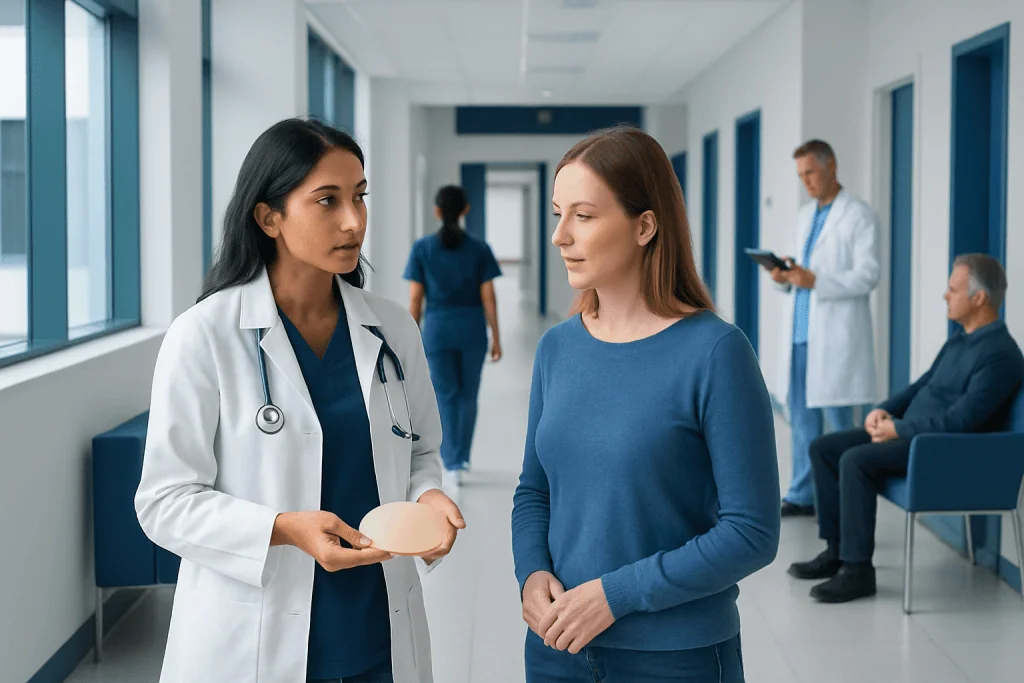
Temporary swelling and a changing breast shape are common after silicone implant surgery, especially in the first weeks to months. One-sided enlargement, new pain, redness, warmth, fever, or a rapidly changing breast should be checked promptly.
Key Takeaways
- Temporary swelling and a changing breast shape are common after silicone implant surgery, especially in the first weeks to months.
- One-sided enlargement, new pain, redness, warmth, fever, or a rapidly changing breast should be checked promptly.
- Late changes such as hardening, rippling, asymmetry, or fluid around an implant can have several causes and need assessment by a qualified clinician.
- Evaluation may include a physical exam, ultrasound, MRI, or other imaging depending on symptoms and timing.
- Regular follow-up and attention to new symptoms can help identify implant-related problems early.
Breast enlargement silicone usually refers to expected fullness after silicone breast implants, but not every change is normal. Mild postoperative swelling and gradual settling can be routine, while sudden enlargement, pain, redness, marked firmness, or changes in shape may need medical evaluation.
Overview: What Is Normal and What Is Not?
Breast enlargement silicone can be normal when it reflects the expected result of silicone implants or the short-term swelling that follows surgery. In the early healing period, breasts commonly look fuller, feel tight, sit high on the chest, and appear somewhat uneven before they gradually soften and settle.
What is not considered normal is a new or unexpected change, especially if it happens suddenly or only on one side. Enlargement that appears weeks, months, or years after surgery may be related to fluid buildup, scar tissue tightening, implant rupture, infection, bleeding, or another implant-related problem.
Many changes are not emergencies, but they should not be ignored. A careful examination can help distinguish normal healing from conditions that need treatment, and it is often the pattern of symptoms over time that matters most.
Typical Changes After Silicone Breast Implants
After silicone implant surgery, some degree of breast swelling is expected. This swelling is part of the body’s normal inflammatory response to surgery. It may be more noticeable in the first days and weeks, and it often improves gradually rather than all at once.
Breasts may also feel firm or look higher than expected at first. This is sometimes described as the implants needing time to “drop and settle.” During this stage, the breasts may look slightly different from each other, and the skin may feel tight. Mild discomfort, bruising, and temporary changes in nipple sensation can also occur.
In general, changes that are more likely to be routine include:
- Symmetrical swelling on both sides soon after surgery
- Mild soreness that slowly improves
- A firm or tight feeling early in recovery
- Gradual softening and settling over weeks to months
- Minor differences between the two breasts during healing
Even when changes are expected, follow-up with the operating surgeon is important. Recovery varies from person to person depending on implant size, placement, surgical technique, and the body’s own healing response. For patients exploring breast augmentation, understanding normal healing can make recovery less stressful and help them recognize when to ask for advice.
Signs That Breast Enlargement May Need Medical Attention

Breast enlargement with silicone implants may need evaluation when the change is sudden, clearly one-sided, painful, or associated with visible skin changes. Redness, warmth, increasing tenderness, drainage from an incision, or fever can suggest infection or another postoperative complication.
Changes that happen long after surgery also deserve attention. A breast that becomes progressively firmer, rounder, higher, or misshapen may be developing a tight scar capsule around the implant. This problem, known as capsular contracture-related breast changes in general discussion of breast conditions, can alter appearance and cause discomfort, although it is not the same as breast cancer.
Other warning signs include a new sloshing sensation, visible asymmetry, persistent swelling, or a breast that suddenly looks larger than before. While many causes are benign, late swelling can sometimes reflect fluid around the implant, implant rupture, or rare implant-associated conditions that require specialist assessment.
A helpful rule is to pay attention to change. If the breast looks, feels, or behaves differently from its usual postoperative pattern, especially after healing was previously stable, it is reasonable to seek medical advice.
Possible Causes of Abnormal Enlargement or Shape Change
Several conditions can cause abnormal breast enlargement after silicone implants. In the early period after surgery, swelling may result from a hematoma, which is a collection of blood, or a seroma, which is a collection of clear fluid. These may cause one breast to enlarge more than the other and can be associated with tightness or discomfort.
Infection is another possible cause. It may produce pain, redness, warmth, fever, and worsening swelling. Although postoperative infections are not common, they need prompt medical assessment because untreated infection can affect both healing and the implant itself.
Later on, the breast may enlarge or change shape because of capsular contracture, implant rupture, or persistent fluid around the implant. Silicone implant rupture does not always cause dramatic symptoms because the silicone gel is often contained within the surrounding scar capsule. However, some people notice firmness, altered contour, lumps, pain, or changes in breast size.
Less commonly, breast enlargement may be related to unrelated breast conditions such as cysts, benign masses, hormonal changes, or, in some patients, breast disease that would need its own evaluation. That is why new enlargement should not automatically be blamed on the implant alone.
How Doctors Evaluate Silicone Breast Enlargement
Assessment usually begins with a detailed history and physical examination. The doctor may ask when the enlargement started, whether it is painful, if only one side is affected, whether there was recent trauma, and how long ago implant surgery took place. Information about prior revisions, implant type, and past imaging can also be helpful.
Imaging is often used when symptoms are unclear or when a complication is suspected. Ultrasound can help identify fluid collections and some structural problems. MRI is particularly useful when a silicone implant rupture is a concern, and mammography may still be used when appropriate for routine breast screening based on age and risk.
In some cases, the doctor may recommend drainage or testing of fluid around the implant, especially when swelling is significant or occurs long after surgery. This helps identify infection and assess for less common implant-associated disorders. If a separate breast lump is found, the evaluation may follow standard breast care pathways, similar to the approach used for breast abnormalities more broadly.
The goal of evaluation is not only to identify a complication, but also to rule out non-implant causes of swelling. A careful and methodical workup can guide the safest next steps.
Treatment Options and Follow-Up
Treatment depends on the cause. If enlargement is part of normal healing, the main approach may be observation, routine follow-up, and adherence to postoperative instructions. Supportive measures can include rest, wearing the recommended bra, and avoiding activities that strain the chest until the surgeon advises otherwise.
If infection, hematoma, or seroma is present, treatment may involve antibiotics, drainage, or a procedure to address the underlying problem. Capsular contracture may be managed differently depending on severity, from monitoring milder cases to surgery for more significant pain or distortion.
When implant rupture or major implant-related changes are confirmed, surgery may be recommended to remove or replace the implant and manage the surrounding capsule. Patients considering revision may discuss options such as breast reconstruction or other corrective procedures if appearance and comfort have been significantly affected.
Long-term follow-up matters because some complications arise years after surgery. A structured plan with a qualified plastic surgeon helps patients understand what symptoms to watch for and when imaging or revision should be considered. In appropriate cases, breast aesthetic procedures may be part of a broader treatment discussion focused on both health and appearance.
Self-Care, Monitoring, and Breast Health After Silicone Implants
Self-care after silicone implants begins with following the surgeon’s recovery guidance closely. This may include wound care, activity restrictions, proper bra support, and attendance at follow-up visits. These steps support healing and make it easier to identify changes early.
Patients can also become familiar with their usual breast appearance and feel once healing is complete. This does not mean constant checking, but rather noticing new asymmetry, unusual firmness, persistent swelling, or a change in contour. Any breast symptom should be interpreted in context, including age, family history, and general breast health.
Routine breast screening should continue according to the advice of a qualified doctor. Having implants does not replace standard breast health care. If imaging is needed, it is important to tell the radiology team about the implants so the most suitable technique can be used.
Near the end of the care pathway, some international patients may seek specialist review at centers experienced in both breast health and implant surgery. Acibadem International’s multidisciplinary specialists and JCI-accredited hospitals evaluate and treat implant-related breast concerns for international patients when further assessment is needed.
When to Seek Medical Care
Medical care should be sought promptly if there is sudden breast enlargement, especially on one side, or if swelling is accompanied by pain, redness, warmth, fever, or drainage. These symptoms can point to bleeding, infection, or significant fluid buildup and should not be managed at home without professional advice.
Care is also important if a previously stable breast becomes firm, distorted, unusually high, or visibly different from the other side. New lumps, ongoing tenderness, or changes that continue to worsen over days or weeks should be assessed even if they seem mild at first.
Urgent evaluation is especially important after recent trauma, after surgery, or when symptoms interfere with breathing, movement, or daily comfort. When in doubt, contacting the surgeon or another qualified doctor is the safest step.
Frequently asked questions
Is breast enlargement normal after silicone implants?
Yes, some enlargement is expected after surgery because of the implant itself and temporary postoperative swelling. Breasts may also look high, firm, or slightly uneven before they gradually settle. If the change is sudden, one-sided, or getting worse instead of better, it should be assessed.
How long does swelling last after silicone breast augmentation?
Early swelling often improves over the first few weeks, but the final shape may continue to settle over several months. Recovery time varies with the surgical technique, implant placement, and individual healing. A surgeon can explain what is typical for a specific case.
Can a silicone implant rupture cause breast enlargement?
It can, but rupture does not always cause obvious enlargement. Some ruptures are silent and are found on imaging, while others lead to firmness, shape change, discomfort, or asymmetry. New symptoms should be evaluated by a qualified clinician.
What does it mean if only one breast gets larger after implants?
One-sided enlargement is more concerning than even swelling on both sides, especially if it develops suddenly or long after surgery. Possible causes include fluid collection, bleeding, infection, scar tissue changes, or implant rupture. Medical review is recommended.
Do silicone implants make breast cancer screening harder?
Implants can affect how some breast tissue is seen on imaging, but screening is still possible and important. The radiology team should always be told about the implants so appropriate imaging techniques can be used. Screening recommendations depend on age, risk factors, and a doctor's advice.
When should someone call a doctor about breast implant swelling?
A doctor should be contacted if there is sudden swelling, redness, warmth, fever, drainage, increasing pain, or a clear change in shape or firmness. Medical advice is also appropriate for any new breast lump or if a previously healed breast starts changing again. Early evaluation can clarify whether the issue is routine or needs treatment.
References
- U.S. Food and Drug Administration
- American Society of Plastic Surgeons
- National Health Service
- American College of Radiology
- Mayo Clinic
This article is for general information only and is not a substitute for professional medical advice. Please consult a qualified doctor about your individual situation.
Explore treatments in Turkey — costs, top hospitals & a free quote
JCI-accredited · board-certified surgeons · reply within 24h

More from the Health Library


Related Specialists

Asst. Prof. Dr. Murat Tuğrul Eren
Urology
Assoc. Prof. Dr. Serap Yücel
Radiation Oncology
Prof. Dr. Aleks Değirmencioğlu
Cardiology
Fzt. Sena Durmaz
Physical Medicine and Rehabilitation