Breathalyzer Test: An Evidence-Based Guide for Patients
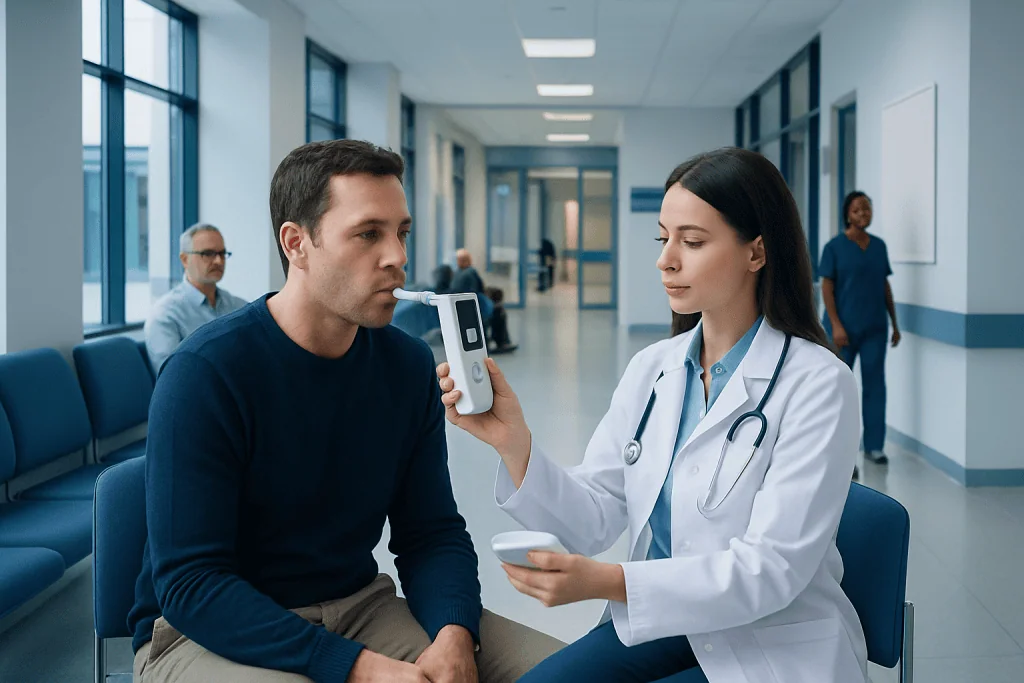
A breathalyzer test estimates blood alcohol concentration using a breath sample rather than a blood draw. Results are most reliable when the person has not recently eaten, drunk, smoked, or used mouthwash.
Key Takeaways
- A breathalyzer test estimates blood alcohol concentration using a breath sample rather than a blood draw.
- Results are most reliable when the person has not recently eaten, drunk, smoked, or used mouthwash.
- Breath tests can be affected by recent alcohol exposure in the mouth, vomiting, reflux, and calibration problems.
- A breathalyzer does not diagnose alcohol use disorder or explain the cause of symptoms on its own.
- Medical care is important if a person has confusion, repeated vomiting, slow breathing, or cannot be awakened.
A breathalyzer test is a quick, noninvasive way to estimate how much alcohol is in the body by measuring alcohol in exhaled breath. It is useful for screening and safety decisions, but results can be influenced by timing, device quality, and certain medical or environmental factors.
What is a breathalyzer test?
A breathalyzer test is a quick test that estimates the amount of alcohol in the body by analyzing a person’s breath. In practical terms, it is used to help answer a simple question: has alcohol recently been consumed, and if so, is the level likely to impair judgment, coordination, or safety? The test does not directly measure alcohol in the blood, but it uses a well-established relationship between alcohol in the lungs and alcohol circulating in the bloodstream.
Alcohol is absorbed from the stomach and small intestine into the blood. As blood passes through the lungs, some alcohol moves into the air inside the air sacs and is then breathed out. A breathalyzer device measures this exhaled alcohol and converts it into an estimated blood alcohol concentration, often called BAC.
Breathalyzer tests are commonly used by law enforcement, emergency teams, workplaces with safety-sensitive roles, and healthcare professionals. In medical care, a breath test may support the assessment of alcohol intoxication, but the full clinical picture still matters. Symptoms, vital signs, medications, underlying illness, and other tests may all be needed to understand what is happening.
How the test works and where it is used
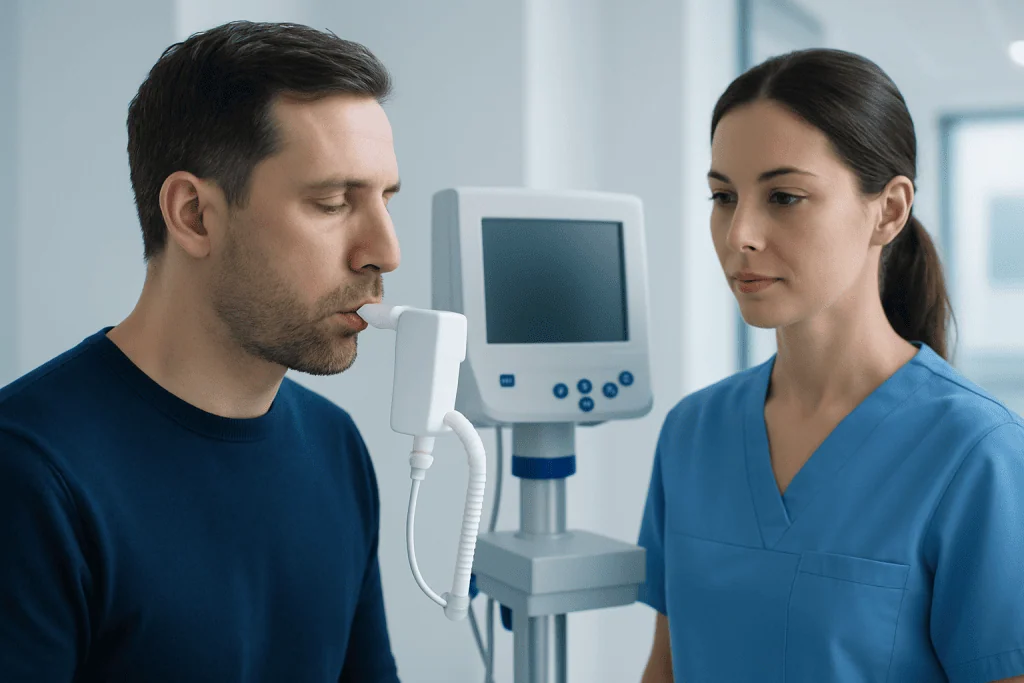
Most modern devices use a chemical sensor, fuel cell, infrared spectroscopy, or a combination of technologies to detect alcohol molecules in the breath. The person usually takes a deep breath and blows steadily into the device for several seconds. A usable sample generally comes from deep lung air rather than the first air released from the mouth, because deep lung air better reflects blood alcohol levels.
Breathalyzer testing is widely used in settings where fast answers are helpful. It may be part of roadside screening, workplace testing, hospital triage, or monitoring after alcohol-related incidents. In healthcare settings, clinicians may use the result alongside a physical examination and other tests if a person seems drowsy, confused, unsteady, or has signs of poisoning.
Although the test is often associated with legal or public safety settings, it also has a role in patient education. Some people use personal devices to understand how alcohol affects them, but home devices vary in quality. A personal reading should never be used to declare that driving or operating machinery is safe.
- Screening for recent alcohol use
- Supportive assessment of intoxication
- Safety checks in high-risk environments
- Monitoring in some treatment or recovery programs
What the results mean

A breathalyzer result gives an estimate, not a perfect direct measurement. The number is intended to reflect the amount of alcohol likely present in the bloodstream at that moment. Interpreting it depends on the person’s symptoms, the time since drinking, the testing method, and the reason the test was ordered.
Even a modest amount of alcohol can reduce reaction time, concentration, and coordination in some people. Tolerance varies, and a person who appears less affected may still have impaired judgment. For that reason, a breathalyzer result should never be the only basis for judging safety. In medicine, clinicians also look for signs such as slurred speech, poor balance, altered alertness, abnormal breathing, dehydration, or head injury.
If a result seems inconsistent with how a person looks or behaves, healthcare professionals may repeat the breath test or confirm the finding with a blood test. This can be especially important when another condition may be causing symptoms, such as low blood sugar, stroke, medication effects, poisoning, or a neurological problem. In some situations, evaluation for conditions such as stroke may be more urgent than the alcohol reading itself.
What can affect breathalyzer accuracy?
Several factors can make a breathalyzer reading higher or lower than expected. One of the most common is timing. If the test is done very soon after drinking, alcohol remaining in the mouth or throat can temporarily increase the reading. This is why proper testing usually includes a waiting period after drinking, eating, smoking, chewing gum, or using mouthwash.
Vomiting, belching, and acid reflux can also bring alcohol from the stomach into the mouth, which may affect the result. Certain products, such as alcohol-containing mouth rinses or sprays, may briefly interfere as well. Device maintenance matters too. Calibration errors, poor technique, or using a low-quality consumer device can reduce accuracy.
Medical factors may also play a role. People with chronic lung disease may have difficulty giving a full breath sample, and severe shortness of breath can limit testing. In patients being assessed for breathing symptoms, doctors may also consider other tests or specialist review if illnesses such as COPD or asthma are part of the picture.
- Recent drinking or alcohol left in the mouth
- Smoking, chewing gum, or mouthwash use shortly before testing
- Vomiting, belching, or gastroesophageal reflux
- Improper device calibration or technique
- Breathing problems that make sample collection difficult
When a breathalyzer is not enough on its own
A breathalyzer test can answer one narrow question: whether alcohol is present in exhaled breath and roughly how much. It cannot identify all causes of confusion, collapse, agitation, or poor coordination. A person with a positive alcohol reading may still have a serious medical problem, and a person with a low or negative reading may still be very unwell.
Healthcare professionals may order other tests when symptoms are severe, unusual, or unexplained. These might include blood alcohol measurement, blood sugar testing, electrolyte tests, toxicology screening, or imaging if there has been trauma or concern about the brain. If nausea, abdominal pain, vomiting, or signs of liver disease are present, doctors may also assess the digestive system and liver.
For people who have repeated health effects from alcohol or struggle to control drinking, the next step is not more home testing but a proper medical assessment. Depending on the person’s needs, this may include counseling, supervised withdrawal care, internal medicine review, or support for related problems such as liver inflammation or pancreatitis. In selected cases, hospital-based care such as check-up and diagnostic services may help clarify the overall picture.
What to do before and after the test
If a breathalyzer test is planned in a healthcare or formal testing setting, the person is usually advised not to eat, drink, smoke, or use oral products for a short period beforehand. Following instructions carefully helps reduce the chance of an inaccurate result. If the test is repeated, the same conditions should ideally be maintained for each attempt.
After the test, what happens next depends on the result and the reason for testing. In a medical setting, staff may monitor breathing, alertness, hydration, blood sugar, and heart rate, especially if the person appears intoxicated or unwell. If there is concern about poisoning, injuries, or severe withdrawal risk, emergency care may be needed.
For people using consumer breathalyzers, the safest approach is to treat the reading as limited information rather than permission to drive. Alcohol affects people differently, and judgment may be impaired before a person recognizes it. If there is any doubt, it is best to avoid driving, swimming alone, or operating machinery.
When to seek medical care
Medical care is important if a person with suspected alcohol intoxication is difficult to wake, faints, has repeated vomiting, has a seizure, or is breathing slowly or irregularly. Blue lips, severe confusion, chest pain, signs of head injury, or concern about a mixed overdose with medications or drugs also require urgent attention. These symptoms may indicate an emergency rather than simple intoxication.
A doctor should also be consulted if breathalyzer results are repeatedly unexpected, if symptoms occur with small amounts of alcohol, or if there are signs of an underlying condition such as reflux, liver disease, diabetes, or lung problems. Ongoing heavy alcohol use can affect many organs and may require structured support. In some cases, specialist evaluation, including neurology review for unexplained confusion or balance problems, may be needed.
Near the end of a patient’s care journey, coordinated follow-up can be as important as the initial test. Acibadem International’s multidisciplinary specialists and JCI-accredited hospitals diagnose and treat alcohol-related and non-alcohol-related causes of similar symptoms for international patients, with further assessment tailored to the individual.
Frequently asked questions
How accurate is a breathalyzer test?
A breathalyzer test can be reasonably accurate when a quality device is used correctly and testing conditions are controlled. However, it is still an estimate of blood alcohol level, not a direct measurement. Recent drinking, mouth alcohol, reflux, and poor calibration can affect the result.
Can mouthwash or gum change a breathalyzer result?
Yes. Alcohol-containing mouthwash, breath sprays, and some oral products can temporarily increase a reading if the test is done soon afterward. This is why a waiting period before testing is important.
Does a breathalyzer test diagnose alcohol use disorder?
No. A breathalyzer only shows whether alcohol is present in the breath at that moment and gives an estimate of level. Alcohol use disorder is a medical diagnosis based on behavior, patterns of use, consequences, and a professional assessment.
What is the difference between a breath test and a blood alcohol test?
A breath test is noninvasive and provides fast results by estimating alcohol from exhaled air. A blood alcohol test directly measures alcohol in the bloodstream and may be used when confirmation is needed. In medical care, the choice depends on the situation and the level of certainty required.
Can someone have dangerous symptoms even with a low breathalyzer reading?
Yes. Symptoms such as confusion, collapse, slow breathing, or severe vomiting can be caused by many conditions besides alcohol, including low blood sugar, head injury, stroke, or drug effects. A low reading should not delay urgent medical evaluation if warning signs are present.
Should a personal breathalyzer be used to decide if it is safe to drive?
No. Consumer devices vary in reliability, and alcohol can impair judgment even when a person feels capable. The safest choice is not to drive after drinking at all.
This article is for general information only and is not a substitute for professional medical advice. Please consult a qualified doctor about your individual situation.
Explore treatments in Turkey — costs, top hospitals & a free quote
JCI-accredited · board-certified surgeons · reply within 24h
Add us as a Preferred Source to see more of our trusted health content across Google Search, AI Overviews and Discover.

More from the Health Library

Calculate Height in Cms — Explained by Medical Evidence, Not Myths
Weelchair: What Patients Need to Know

Fish Oil Benefits — Explained by Medical Evidence, Not Myths

Fitt Principle: A Complete Medical Overview

Compounded Semaglutide — Explained by Medical Evidence, Not Myths