Cafe Au Lait Spots: A Complete Medical Overview

Cafe au lait spots are common pigmented skin patches that may be present at birth or appear in early childhood. A small number of spots is often normal and does not usually need treatment.
Key Takeaways
- Cafe au lait spots are common pigmented skin patches that may be present at birth or appear in early childhood.
- A small number of spots is often normal and does not usually need treatment.
- Multiple or large cafe au lait spots can sometimes be associated with genetic conditions such as neurofibromatosis type 1.
- Doctors diagnose cafe au lait spots mainly by skin examination and by reviewing age, number, size, and any related symptoms.
- Treatment is usually not medically necessary unless evaluation suggests an underlying disorder or a person wants cosmetic advice.
Cafe au lait spots are flat, evenly colored light-to-dark brown patches on the skin. They are often harmless, especially when only one or two are present, but several spots or other symptoms may lead a doctor to check for an underlying genetic condition.
Overview: what cafe au lait spots are
Cafe au lait spots are flat areas of skin that are darker than the surrounding skin and usually range from light tan to medium or dark brown. Their name comes from the French term for “coffee with milk,” which describes their typical color. These patches are usually smooth, not scaly, and not painful or itchy.
Many people have one or two cafe au lait spots, and in most cases they are harmless. They may be present at birth or become more noticeable during infancy or childhood. The spots can occur anywhere on the body and may remain stable over time or enlarge gradually as a child grows.
What matters medically is not only the appearance of the spot, but also the number of spots, their size, the age when they appear, and whether other symptoms are present. When several cafe au lait spots are seen together, a doctor may consider whether they are part of a broader condition rather than an isolated skin finding.
How cafe au lait spots look and where they appear
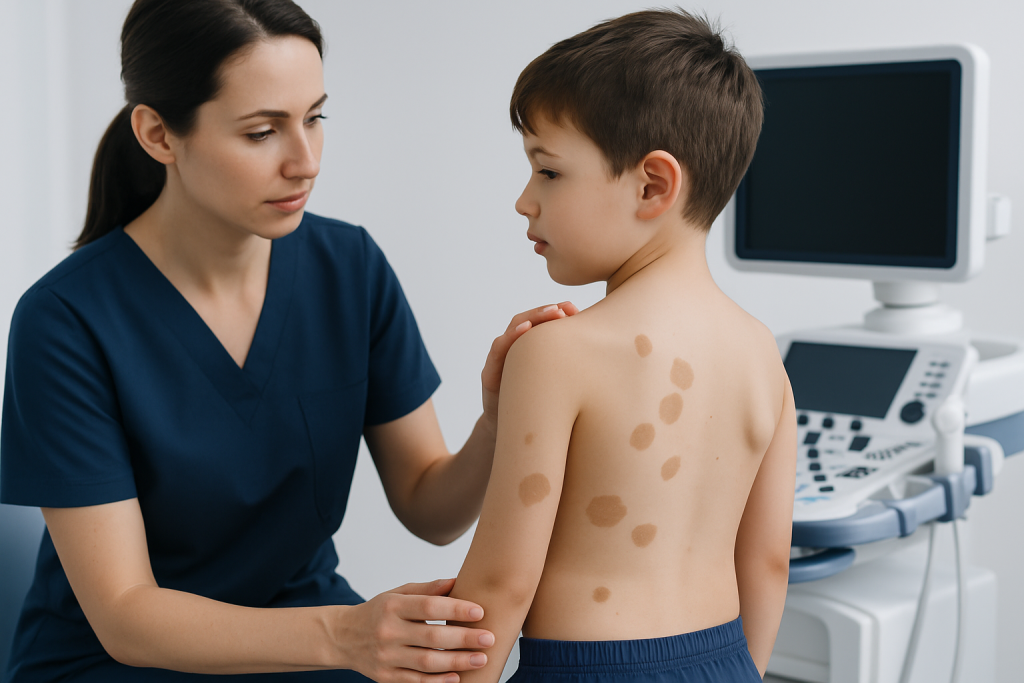
Cafe au lait spots are usually oval or round with a clearly visible border. The color is often uniform across the patch rather than mixed or variegated. They are different from bruises, rashes, or inflamed skin because they do not change quickly, do not feel raised, and do not usually cause discomfort.
These spots can appear on the trunk, arms, legs, or other body areas. In some people they are small, while in others they may be larger. Their visibility can vary depending on natural skin tone, sun exposure, and lighting, but the spots themselves are typically stable in texture.
Doctors sometimes describe the border pattern because it may help with clinical assessment. Still, a visual description alone is not enough to determine a cause. A full skin exam and attention to the person’s medical and family history are more helpful than appearance alone.
- Usually flat and smooth
- Light brown to dark brown in color
- Often evenly pigmented
- May be present at birth or appear in childhood
- Usually not itchy, painful, or scaly
Common causes and why they happen

Cafe au lait spots develop because of increased pigment in certain areas of the skin. The pigment involved is melanin, which gives skin its natural color. In many people, this happens as a normal variation and does not reflect disease.
When only one or a few spots are present, there is often no underlying medical problem. These isolated spots are common in healthy children and adults. They are not contagious and are not caused by poor hygiene, diet, or everyday skin care products.
In some situations, multiple cafe au lait spots can be associated with inherited conditions. The one most often discussed is neurofibromatosis, particularly neurofibromatosis type 1. Other rare genetic syndromes may also include cafe au lait macules as one feature among several. This is why doctors look beyond the spots themselves and ask about growth, development, vision, bones, learning, and family history.
When cafe au lait spots may suggest an underlying condition
A larger number of cafe au lait spots may prompt closer evaluation, especially in children. Doctors often pay attention when there are multiple spots of a certain size, when new spots continue to appear over time, or when there are additional signs such as freckling in the armpits or groin, skin lumps, vision changes, bone problems, or developmental concerns.
Neurofibromatosis type 1 is one of the best-known conditions linked to multiple cafe au lait spots. However, the diagnosis of that condition is not made from one skin finding alone. Doctors use established clinical criteria and may also recommend specialist evaluation. Depending on the situation, related assessments may include eye checks, growth and development review, and sometimes imaging such as MRI if symptoms suggest involvement beyond the skin.
Other uncommon syndromes can also include pigmented skin patches, so the overall pattern matters. A child with several cafe au lait spots may still be completely healthy, but regular follow-up can help determine whether any other features appear with time. Care is therefore based on context rather than on the spots alone.
How doctors diagnose cafe au lait spots
Diagnosis usually begins with a physical examination. A doctor looks at the number, size, shape, color, and distribution of the spots and asks when they first appeared. Family history is also important because some related conditions can run in families.
Most isolated cafe au lait spots do not require invasive testing. If there are several spots or other concerning features, the doctor may refer the person to specialists such as dermatology, pediatrics, genetics, neurology, or ophthalmology. In some cases, genetic testing may be discussed to help clarify whether a hereditary syndrome is present.
Tests are chosen only when clinically appropriate. They may include an eye examination, developmental assessment in children, or imaging if symptoms point to deeper involvement. The main goal is not simply to label the skin finding, but to understand whether it is isolated or part of a larger health picture.
Treatment options and cosmetic concerns
Cafe au lait spots themselves usually do not need medical treatment. If they are isolated and there are no other signs of illness, reassurance and observation may be all that is needed. The priority is identifying any associated condition rather than removing the spots for medical reasons.
When an underlying disorder is found, treatment focuses on that condition rather than on the pigmentation alone. Management may involve regular monitoring and care by different specialists depending on symptoms. For example, a person with confirmed neurofibromatosis may need long-term follow-up tailored to their age and clinical findings.
Some people ask about cosmetic removal or lightening. Options such as laser-based approaches may be discussed by a dermatologist, but results can vary and the spots may recur or darken again over time. Before considering cosmetic treatment, a proper medical evaluation is important so that potentially significant causes are not overlooked.
Self-care, monitoring, and prevention
There is no proven way to prevent cafe au lait spots because they are usually related to natural skin pigmentation or genetics. They are not caused by injury, infection, or routine habits. Everyday skin care cannot remove them, but gentle skin care and sun protection can help maintain overall skin health.
It can be helpful to monitor the spots over time, especially in young children. Parents may choose to take clear photographs every few months in similar lighting to note changes in size or number. This record can make medical visits more useful, particularly if new symptoms arise.
People should avoid trying unproven bleaching products or harsh home treatments, which may irritate the skin without addressing the cause. If appearance is distressing, a dermatologist can discuss safe options and realistic expectations. In complex cases, Acibadem International’s multidisciplinary specialists in JCI-accredited hospitals diagnose and treat patients who need coordinated evaluation for skin findings and related genetic conditions.
When to seek medical care
Medical assessment is a good idea if a child or adult has several cafe au lait spots, if the spots seem to be increasing in number, or if there are other symptoms such as learning difficulties, unusual freckling, vision changes, bone pain, lumps under the skin, or developmental concerns. A doctor can determine whether the spots are isolated or whether further evaluation is needed.
Parents should not panic if they notice these marks, because many children with cafe au lait spots are otherwise healthy. Still, early review is useful when there are multiple spots, because some associated conditions become clearer over time and benefit from structured follow-up.
Urgent care is not usually needed for the spots themselves unless there are unrelated acute symptoms. The main reason to seek medical advice is careful assessment, guidance, and reassurance. If a doctor recommends further tests, these may include specialist consultation, imaging such as MRI, or other evaluations based on the individual situation.
Frequently asked questions
Are cafe au lait spots dangerous?
Most cafe au lait spots are not dangerous and are simply harmless pigmented patches on the skin. Concern usually arises only when there are many spots or when they appear together with other symptoms that suggest an underlying condition.
Can adults have cafe au lait spots, or are they only seen in children?
Adults can have cafe au lait spots as well. Many are first noticed in infancy or childhood, but they can remain visible throughout life and may become more noticeable over time.
How many cafe au lait spots are considered normal?
One or two cafe au lait spots can be a normal finding in healthy people. A larger number, especially in a child, may lead a doctor to look more closely for associated conditions, but the exact interpretation depends on age, size of the spots, and other clinical features.
Do cafe au lait spots mean a person has neurofibromatosis?
No, not by themselves. While multiple cafe au lait spots can be one sign of neurofibromatosis type 1, the diagnosis requires other clinical criteria or further evaluation, so many people with these spots do not have that condition.
Can cafe au lait spots be removed?
They may sometimes be lightened for cosmetic reasons, often after discussion with a dermatologist. However, treatment is not medically necessary in most cases, results can vary, and recurrence is possible.
Should parents have a child evaluated for cafe au lait spots?
If a child has several spots, spots that seem to increase over time, or any other unusual symptoms, a medical evaluation is sensible. A doctor can examine the child, review family history, and decide whether simple observation or further assessment is the best next step.
References
- American Academy of Dermatology
- MedlinePlus
- National Institutes of Health
- Genetics Home Reference
- Mayo Clinic
This article is for general information only and is not a substitute for professional medical advice. Please consult a qualified doctor about your individual situation.
Explore treatments in Turkey — costs, top hospitals & a free quote
JCI-accredited · board-certified surgeons · reply within 24h
Add us as a Preferred Source to see more of our trusted health content across Google Search, AI Overviews and Discover.

More from the Health Library

Open Book Pelvic Fracture: An Evidence-Based Guide for Patients

Dyspraxia — Explained by Medical Evidence, Not Myths

Cyanocobalamin: A Complete Medical Overview

Dilated One Cm: An Evidence-Based Guide for Patients

Trapezius Muscle: An Evidence-Based Guide for Patients