Calcaneus Fracture: A Complete Medical Overview

A calcaneus fracture is a break in the calcaneus, the large bone that forms the heel. Severe heel pain, swelling, bruising, and trouble bearing weight are common signs.
Key Takeaways
- A calcaneus fracture is a break in the calcaneus, the large bone that forms the heel.
- Severe heel pain, swelling, bruising, and trouble bearing weight are common signs.
- X-rays and often CT scans help show whether the fracture extends into the joint and how displaced it is.
- Some fractures heal with immobilization and limited weight bearing, while others need surgery.
- Early medical assessment is important because heel fractures can affect long-term walking and joint function.
A calcaneus fracture is a break in the heel bone, often caused by a hard impact such as a fall from height or a motor vehicle accident. Treatment depends on how the bone is broken and may range from splinting and rest to surgery, with recovery focused on protecting the foot, controlling pain, and restoring function.
What is a calcaneus fracture?
A calcaneus fracture is a break in the calcaneus, the large bone at the back of the foot that forms the heel. This bone helps absorb force with standing and walking and also forms part of the subtalar joint, which is important for walking on uneven ground and changing direction. Because the calcaneus carries body weight and supports joint movement, a fracture can affect comfort, balance, and long-term foot mechanics.
In simple terms, a calcaneus fracture may be a small crack, a break with several fragments, or a fracture that extends into the joint surface. Some injuries are stable and remain well aligned. Others are displaced, meaning the broken pieces have shifted out of position. The pattern matters because it guides treatment and helps doctors estimate recovery time and the risk of later stiffness or arthritis.
This injury is different from common soft tissue heel pain, such as plantar fasciitis, and it is also different from a simple ankle sprain. A heel bone fracture often follows significant force and usually needs formal imaging. In a broader foot and ankle assessment, specialists may also evaluate related problems such as ankle fractures or discuss whether orthopedic rehabilitation will be part of recovery after the bone begins to heal.
Signs and symptoms to recognize
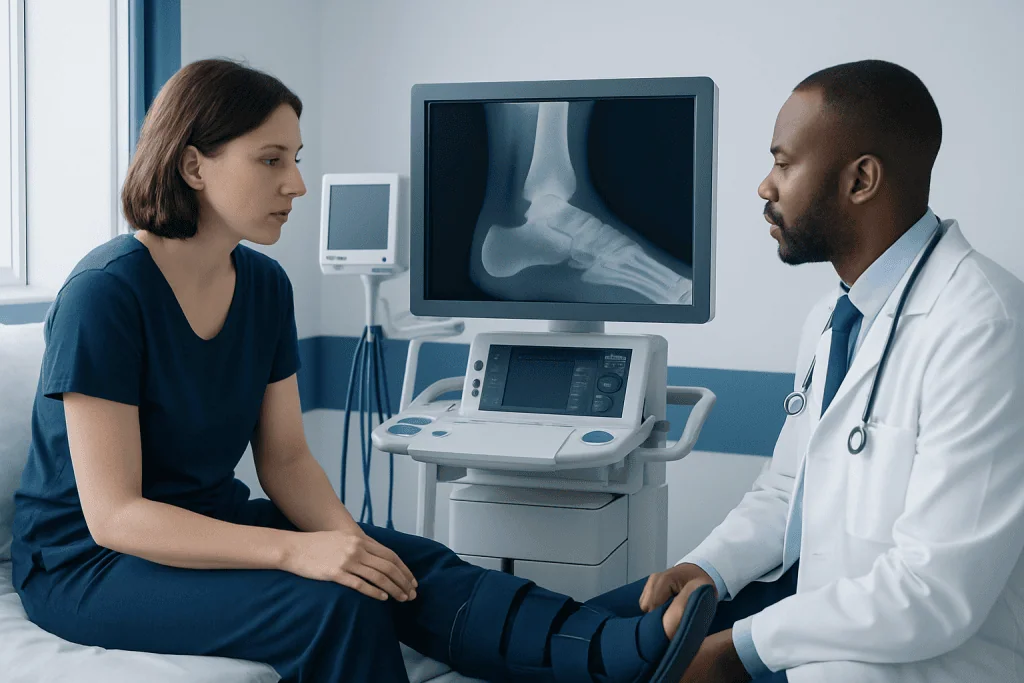
The most common symptoms of a calcaneus fracture are sudden heel pain, swelling, bruising, and difficulty standing or walking. Many people cannot bear weight on the injured foot at all, especially right after the injury. The heel may look wider, flattened, or misshapen if the fracture is displaced.
Some symptoms depend on how severe the break is. A mild stress-related or less displaced fracture may allow limited walking at first, but pain usually worsens with pressure on the heel. More severe trauma may cause marked swelling around the heel and ankle, tenderness on touch, and pain with any attempt to move the foot.
Possible signs include:
- Sharp or throbbing pain in the heel
- Rapid swelling around the heel and ankle
- Bruising on the heel or sole of the foot
- Inability or strong reluctance to bear weight
- Reduced foot motion and stiffness
- Visible deformity in more serious injuries
Because the heel is part of a complex weight-bearing structure, symptoms can sometimes overlap with other traumatic foot injuries. Persistent heel pain after a fall or collision should not be dismissed as a bruise, particularly when weight bearing is difficult.
Causes, injury patterns, and risk factors
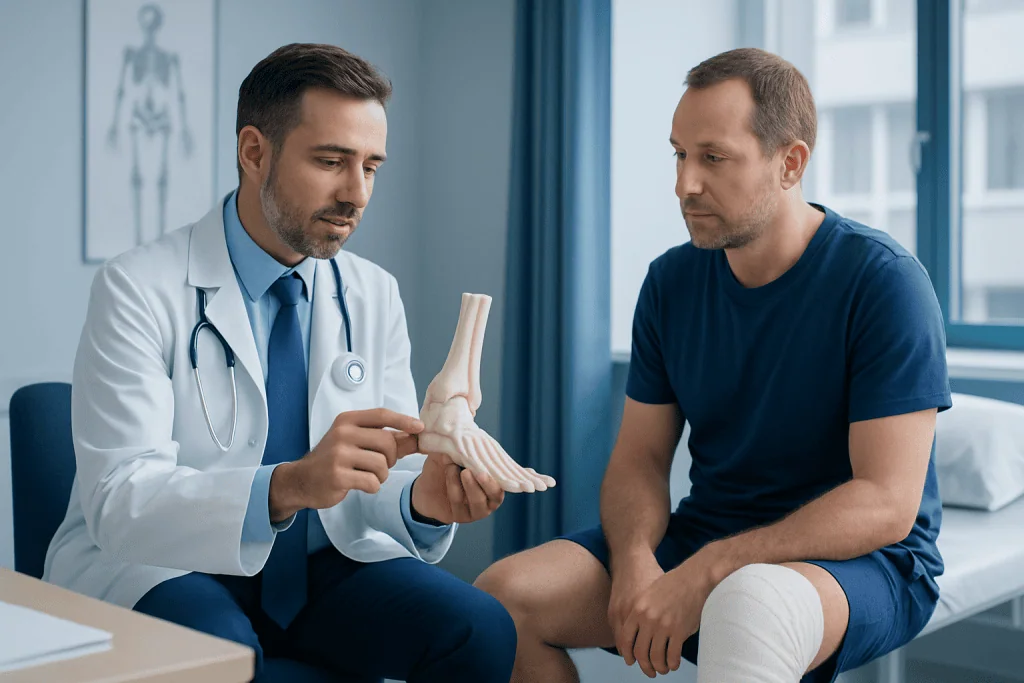
Most calcaneus fractures happen after high-energy trauma. A fall from a ladder, roof, or stairs is a classic cause because the heel absorbs the landing force. Motor vehicle accidents and crushing injuries are also well-known mechanisms. In some people, especially athletes or those with repetitive impact, a stress fracture can develop more gradually from repeated loading rather than one major event.
Doctors often describe calcaneus fractures as intra-articular or extra-articular. Intra-articular fractures extend into the subtalar joint and are more likely to affect long-term movement and increase the chance of post-traumatic arthritis. Extra-articular fractures do not involve the main joint surface in the same way, though they can still be painful and functionally important.
Risk factors include working at heights, high-impact sports, reduced bone strength, and certain situations that increase fall risk. Smoking, diabetes, and poor circulation may not directly cause the fracture, but they can complicate healing and increase the risk of wound problems if surgery is needed. In major trauma, doctors may also look for injuries elsewhere in the body, including the spine or other parts of the lower limb, because heel fractures can occur together with other serious injuries.
How doctors diagnose a heel bone fracture
Diagnosis starts with a careful history and physical examination. The doctor asks how the injury happened, whether the person can bear weight, and whether there is numbness, open skin injury, or pain in other areas. On examination, the foot and ankle are checked for swelling, bruising, tenderness, deformity, circulation, and nerve function.
Imaging is essential. X-rays are often the first step and can show many heel fractures, especially displaced injuries. However, the calcaneus has a complex shape, and plain X-rays do not always fully define the fracture. A CT scan is commonly used to show the exact pattern, how many fragments are present, and whether the subtalar joint surface is involved. This detail is especially important when doctors are deciding whether surgery may help.
In some situations, the doctor may also look for associated injuries in the ankle, foot, or spine. If the heel injury occurred after a strong vertical impact, evaluation can extend beyond the foot itself. Advanced imaging and specialist orthopedic assessment help create a treatment plan tailored to the fracture type and the person’s overall health and activity needs.
Treatment options and what they aim to restore
Treatment for a calcaneus fracture is designed to protect the bone while it heals, reduce pain and swelling, and preserve the shape and function of the heel. The choice between non-surgical and surgical care depends on several factors: whether the fracture is displaced, whether the joint surface is involved, the condition of the skin and soft tissues, and the person’s age, health, and activity level.
Non-surgical treatment may be appropriate for fractures that are stable, well aligned, or less severe, and for some people who are not good surgical candidates. This approach often includes a splint, cast, or boot, elevation, ice, pain control, and avoiding weight bearing for a period recommended by the treating team. Follow-up imaging may be used to make sure the fracture position remains acceptable as healing progresses.
Surgery may be considered when the fracture fragments are displaced, when the heel shape has changed, or when the joint surface needs to be restored as accurately as possible. Procedures can include fixation with plates and screws or other methods chosen by the orthopedic surgeon. In selected cases with severe joint damage, later procedures may be needed if arthritis develops. People being evaluated for surgery may be referred to orthopedic specialists and, when imaging needs to define a complex fracture pattern, radiology services can play an important role in planning treatment.
The timing of surgery is also important. Doctors often wait for swelling to improve before operating, unless there is an urgent reason to act sooner. This helps reduce soft tissue complications. A personalized plan is important because no single treatment fits every calcaneus fracture.
Recovery, rehabilitation, and daily self-care
Recovery from a calcaneus fracture usually takes time because the heel bone carries body weight with every step. Even after the bone begins to heal, stiffness, weakness, swelling, and discomfort can continue for some time. The first phase usually focuses on protecting the foot, keeping weight off it if advised, and controlling swelling with elevation and rest.
As healing progresses, rehabilitation becomes increasingly important. Guided exercises may help improve ankle and subtalar motion, strengthen surrounding muscles, and support a safer return to walking. Physical therapy can also help retrain balance and gait, especially if the person has been using crutches or a walker for several weeks. Many patients benefit from structured physical therapy and rehabilitation during this stage.
Daily self-care can support recovery:
- Follow weight-bearing restrictions exactly as instructed
- Keep the foot elevated above heart level when possible
- Use ice only as advised and protect the skin
- Attend follow-up appointments and imaging checks
- Do prescribed exercises consistently, but avoid pushing through significant pain
- Avoid smoking, which can impair bone and wound healing
Healing times vary. Some people return gradually to routine activities, while others need a longer period before demanding work, sport, or prolonged standing is comfortable. The long-term goal is not only bone union, but also a stable heel, preserved alignment, and the best possible function for everyday life.
Possible complications and long-term outlook
The outlook after a calcaneus fracture depends on the severity of the injury and whether the joint surface was affected. Many people recover well with appropriate treatment, but heel fractures can have lasting effects because they involve a weight-bearing bone with a complex shape. Recovery may be slower than with some other fractures of the foot.
Possible complications include chronic pain, stiffness, widening of the heel, difficulty wearing certain shoes, and reduced tolerance for prolonged standing or walking. If the fracture extends into the subtalar joint, post-traumatic arthritis may develop over time and lead to pain on uneven ground or with side-to-side foot movement. Surgical cases may also carry risks such as wound problems, infection, nerve irritation, or hardware-related symptoms.
These possibilities do not mean a poor outcome is inevitable. Instead, they highlight why careful diagnosis, follow-up, and rehabilitation matter. People who continue to have pain, limited motion, or difficulty with function after healing may need reassessment to look for joint stiffness, tendon irritation, altered alignment, or other treatable issues.
When to seek medical care
Medical care should be sought promptly after a significant fall, collision, or crushing injury that causes heel pain, swelling, or inability to bear weight. It is especially important to get urgent evaluation if the foot looks deformed, the skin is broken, numbness is present, or the pain is severe and sudden. These signs can point to a more serious fracture or damage to the surrounding tissues.
Even if the person can still walk a little, persistent heel pain after trauma deserves medical assessment. Delaying evaluation can make it harder to identify a displaced fracture or associated injuries and may affect treatment planning. People with diabetes, poor circulation, or reduced bone strength should be especially cautious and seek advice early.
Near the end of recovery, medical review is also appropriate if swelling, pain, or stiffness is not improving as expected. Acibadem International’s multidisciplinary specialists at JCI-accredited hospitals evaluate and treat calcaneus fracture and related foot and ankle injuries for international patients when specialist care is needed.
Frequently asked questions
Is a calcaneus fracture the same as a broken heel?
Yes. A calcaneus fracture means the heel bone has broken. The calcaneus is the large bone that forms the heel and helps support standing and walking.
Can a calcaneus fracture heal without surgery?
Some calcaneus fractures can heal without surgery, especially if the bone remains well aligned and the joint surface is not significantly disrupted. A doctor decides this based on imaging, symptoms, and the person's overall health and activity needs.
How long does recovery usually take?
Recovery varies depending on the fracture pattern, whether surgery was needed, and how well rehabilitation progresses. Many people need weeks to months before normal walking improves, and full recovery of strength and comfort can take longer.
Will a person be able to walk after a heel bone fracture?
Most people can walk again after healing, but the timeline differs from one case to another. At first, weight bearing may need to be limited, and later walking is rebuilt gradually with medical guidance and rehabilitation.
What happens if the fracture involves the joint?
When the fracture extends into the subtalar joint, the injury can be more complex. The doctor may pay closer attention to restoring joint alignment because joint involvement raises the risk of stiffness and later arthritis.
Is persistent pain normal after treatment?
Some discomfort, swelling, and stiffness can continue during recovery because the heel is a major weight-bearing area. However, persistent or worsening pain should be reviewed by a doctor to check for delayed healing, joint problems, or other complications.
References
- American Academy of Orthopaedic Surgeons
- American Orthopaedic Foot & Ankle Society
- National Institute for Health and Care Excellence
- MedlinePlus
- Mayo Clinic
This article is for general information only and is not a substitute for professional medical advice. Please consult a qualified doctor about your individual situation.
Joint and spine care in Turkey — expert assessment & treatment
JCI-accredited · board-certified surgeons · reply within 24h
Add us as a Preferred Source to see more of our trusted health content across Google Search, AI Overviews and Discover.

More from the Health Library



Related Specialists

Prof. Dr. Elif Eroğlu Büyüköner
Cardiology
Dyt. Bilgesu Pekcan
Nutrition & Diet
Dr. Halime Bayram
Oral & Dental Health
Dr. Nevin Sarıgüzel
Infectious Diseases & Clinical Microbiology