Calcaneus Pain Explained: Common Triggers and Red Flags

The location and timing of calcaneus pain can help distinguish common causes, such as plantar fasciitis, Achilles tendon problems, and bruising. Pain after a fall, inability to bear weight, marked swelling, or deformity may indicate a fracture and needs prompt medical assessment.
Key Takeaways
- The location and timing of calcaneus pain can help distinguish common causes, such as plantar fasciitis, Achilles tendon problems, and bruising.
- Pain after a fall, inability to bear weight, marked swelling, or deformity may indicate a fracture and needs prompt medical assessment.
- A gradual increase in activity, supportive footwear, and appropriate rest can reduce many overuse-related heel symptoms.
- People with diabetes, poor circulation, reduced sensation, or weakened bones should seek clinical advice early for new heel pain.
- Persistent heel pain should be assessed because treatment depends on the underlying cause rather than pain location alone.
Calcaneus pain refers to pain in or around the calcaneus, the heel bone. It is commonly related to repetitive strain or inflammation of nearby tissues, but a sudden injury, stress fracture, nerve problem, or infection may also be responsible.
Overview: What Does Calcaneus Pain Mean?
Calcaneus pain is pain felt in the heel bone or in the tissues attached around it. The calcaneus is the largest bone in the foot and forms the foundation of the heel. It absorbs considerable force during standing, walking, running, and jumping, so pain in this area is common when loads increase or foot mechanics change.
The precise place where pain occurs offers useful clues. Pain beneath the heel, especially with the first steps after rest, often involves the plantar fascia. Pain at the back of the heel may relate to the Achilles tendon, a bursa, or pressure from footwear. Deep heel pain after an impact or after a sudden rise in exercise may point to a bone bruise or stress injury.
Most cases are not dangerous and improve with a tailored combination of activity adjustment, footwear changes, and rehabilitation. However, calcaneus pain should not be dismissed when it follows a significant injury, becomes progressively worse, occurs at rest, or is accompanied by swelling, redness, fever, numbness, or difficulty bearing weight.
How Heel Pain Patterns Can Guide the Cause
Plantar fasciitis is among the most frequent explanations for pain under the heel. The plantar fascia is a strong band of connective tissue running from the calcaneus toward the toes. Typical symptoms include sharp pain on taking the first steps in the morning or after sitting, followed by partial easing as the foot warms up. Pain may return after prolonged standing or activity.
Back-of-heel pain may arise where the Achilles tendon attaches to the calcaneus. This can develop gradually with running, hill walking, jumping activities, or tight calf muscles. Some people notice tenderness, stiffness after inactivity, or discomfort from shoes rubbing against the back of the heel. A swollen bursa, which is a small fluid-filled cushioning sac, can cause similar symptoms.
A heel pad bruise can cause a deep, bruise-like ache in the center of the heel, often after landing heavily on a hard surface. Nerve irritation can produce burning, tingling, numbness, or pain that spreads into the arch or ankle. In children and adolescents who are growing, activity-related heel pain can sometimes be linked to irritation around the heel growth plate.
- Under the heel: commonly plantar fascia irritation, heel-pad bruising, or nerve irritation.
- At the back of the heel: commonly Achilles insertion problems, bursitis, or shoe pressure.
- Deep within the heel: possible bone bruise, stress fracture, or less commonly another bone condition.
- Sudden severe pain after trauma: possible acute calcaneal fracture or major soft-tissue injury.
Common Triggers and Risk Factors

Many cases of calcaneus pain develop when the tissues of the foot are asked to do more than they are currently prepared for. A quick increase in walking distance, running intensity, jumping, standing at work, or hill training can overload the heel. Starting a new exercise program after a less active period may have the same effect, particularly if recovery time is limited.
Footwear can also influence symptoms. Shoes that are worn out, lack cushioning or arch support, fit poorly around the heel, or are unsuitable for a chosen activity may increase strain. Walking barefoot on hard floors can aggravate some heel conditions, although the best footwear strategy varies between individuals and diagnoses.
Physical factors may contribute as well. Tight calf muscles, limited ankle movement, high or low arches, altered walking patterns, and reduced strength in the foot, ankle, hip, or core can change how force travels through the heel. Higher body weight may increase load on the foot, but heel pain can affect people of any body size and fitness level.
Bone health is important when pain develops gradually without a clear injury. Stress fractures are more likely with repetitive impact activity, low energy availability, certain hormonal changes, smoking, long-term use of some medicines, or conditions that reduce bone strength. People with diabetes or reduced feeling in the feet may not notice minor injuries early and should take new foot pain seriously.
Important Conditions a Clinician May Consider
Not all pain near the calcaneus comes from the bone itself. A clinician may assess for plantar fasciitis, Achilles tendinopathy, bursitis, heel-pad syndrome, arthritis, nerve compression, or pain referred from the lower back. The history of symptoms, the exact tender area, and the findings on movement and walking assessment help separate these possibilities.
A calcaneal stress fracture is a small crack that develops from repeated loading rather than one forceful event. It may begin as a vague deep ache during activity and become more persistent over time. Tenderness when the sides of the heel are gently compressed can raise suspicion, although this sign alone cannot confirm a diagnosis. Continuing high-impact exercise can make a stress injury worse.
An acute calcaneal fracture can occur after a substantial fall, road traffic collision, or another high-energy impact. It may cause intense pain, bruising, swelling, and an inability to walk normally. Fractures can sometimes occur with less trauma in people whose bones are fragile. Prompt assessment is important because the heel bone is central to weight-bearing and foot alignment.
Less common causes include inflammatory arthritis, gout, infection, and bone tumors. These are not the usual explanation for heel pain, but they must be considered when there is unexplained swelling, warmth, fever, night pain, a history of cancer, immune suppression, or symptoms that do not follow a typical mechanical pattern.
Diagnosis and Assessment
A healthcare professional will usually begin by asking when calcaneus pain started, whether there was an injury, what activities worsen it, and whether pain is present at rest or overnight. They may also ask about recent training changes, footwear, work demands, medical conditions, medicines, prior foot problems, and symptoms such as fever, numbness, or skin changes.
The physical examination may include observing how the person stands and walks, checking foot and ankle movement, and gently pressing specific areas around the heel. The clinician may assess calf flexibility, Achilles tendon function, circulation, sensation, and signs of inflammation. Examining both feet can help identify differences in shape, swelling, or movement.
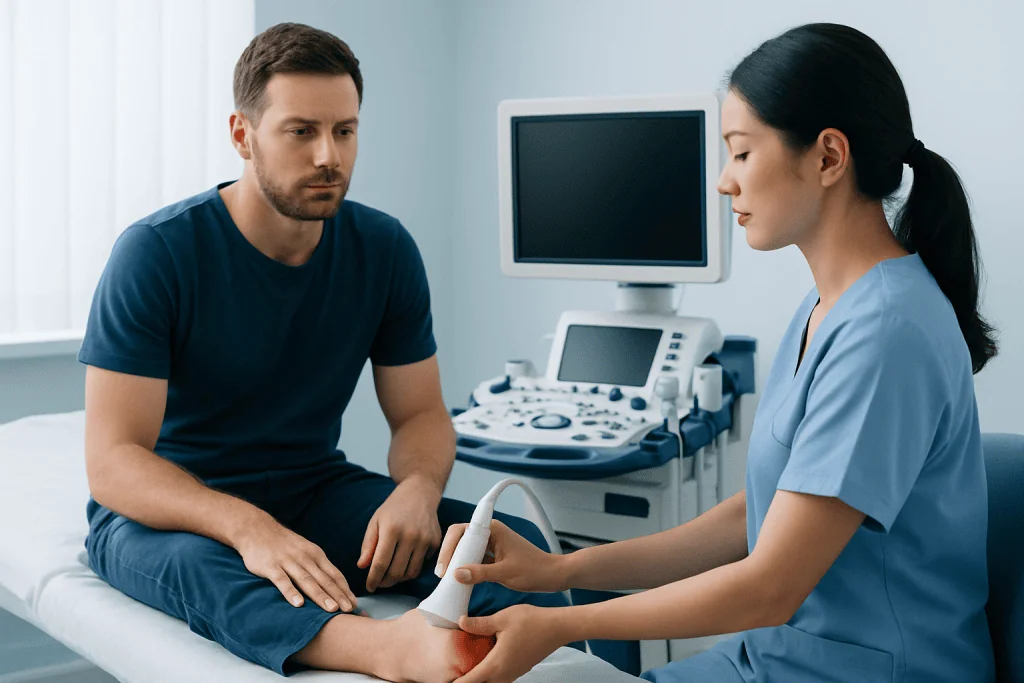
Imaging is not necessary for every case of heel pain. X-rays may be used when a fracture, arthritis, or another bone problem is suspected. Early stress fractures may not be visible on a plain X-ray, so magnetic resonance imaging or another scan may sometimes be considered when symptoms and examination findings indicate a bone stress injury. Ultrasound can be useful for evaluating some tendon and soft-tissue concerns.
A heel spur seen on an X-ray does not automatically explain symptoms. Many people have heel spurs without pain, and many people with plantar fasciitis do not have one. For this reason, healthcare professionals base treatment on the overall clinical picture rather than an imaging finding alone.
Treatment and Everyday Self-Care
Treatment for calcaneus pain depends on the cause. For many overuse-related conditions, a period of relative rest is helpful. This means reducing or modifying activities that clearly worsen symptoms rather than remaining completely inactive. Lower-impact exercise, such as cycling or swimming, may be appropriate for some people while the heel recovers, but the choice should be individualized.
Supportive, well-fitting footwear and temporary cushioning or heel inserts may reduce pressure on the painful area. Gentle calf and plantar fascia stretching, along with gradual strengthening of the foot and ankle, can be useful for common mechanical causes. A physiotherapist can provide a program matched to the diagnosis, activity goals, and any contributing movement patterns.
Cold packs wrapped in a cloth may offer short-term comfort after activity. Some people may be able to use over-the-counter pain relief, but this should be discussed with a pharmacist or doctor when there is kidney disease, stomach ulcer history, heart disease, pregnancy, use of blood-thinning medicines, or other relevant health concerns. Pain medicines can ease symptoms but do not correct the underlying problem.
A suspected stress fracture or acute fracture should not be managed as routine heel pain. It may require protective footwear, immobilization, temporary avoidance of weight-bearing, or specialist care. Surgery is needed only in selected situations, such as certain displaced or complex fractures. Acibadem International’s multidisciplinary specialists and JCI-accredited hospitals assess and treat foot and ankle conditions for international patients.
When to Seek Medical Care
Medical assessment is advisable when heel pain lasts longer than one to two weeks despite sensible activity changes, repeatedly returns, or interferes with daily walking, work, sleep, or exercise. An earlier appointment is appropriate when pain is steadily worsening, is located deep in the heel, or began after a marked increase in impact activity, as these features can occur with a stress injury.
Urgent medical care is needed after a fall from height, collision, or other significant injury if there is severe heel pain, major swelling or bruising, visible deformity, or inability to put weight through the foot. These signs may indicate a fracture or serious soft-tissue injury. It is best to avoid walking on the injured foot until it has been assessed.
Prompt care is also important for redness, warmth, rapidly increasing swelling, an open wound, fever, drainage, or feeling unwell, as these can be signs of infection. People with diabetes, reduced sensation in the feet, circulation problems, or immune suppression should seek advice promptly for any new foot wound, color change, or persistent pain.
Night pain that is unexplained, pain at rest that does not improve, unexpected weight loss, or a personal history of cancer should also be discussed with a doctor. These symptoms do not necessarily indicate a serious condition, but they warrant an evaluation that looks beyond the most common mechanical causes of calcaneus pain.
Frequently asked questions
What is the most common cause of calcaneus pain?
A common cause is plantar fasciitis, which affects the tissue band on the sole of the foot where it attaches near the heel. It often causes pain with the first steps after waking or after rest. However, the exact location and pattern of symptoms are needed to identify the likely cause.
Can calcaneus pain be caused by a stress fracture?
Yes. A calcaneal stress fracture can develop from repeated impact, particularly after a rapid increase in running, jumping, marching, or prolonged walking. Deep heel pain that progresses with activity or persists despite rest should be assessed by a healthcare professional.
Should a person walk on a painful heel?
This depends on the cause and severity of pain. Gentle daily movement may be reasonable for mild, improving overuse symptoms, but activities that clearly increase pain should be reduced. A person should avoid weight-bearing and seek prompt assessment after significant trauma or when a fracture is suspected.
Do heel spurs always cause calcaneus pain?
No. Heel spurs are common imaging findings and may be present without any symptoms. Their presence does not prove that they are the source of pain, so treatment should focus on the clinical diagnosis rather than the X-ray finding alone.
How long does calcaneus pain take to improve?
Recovery varies according to the cause, severity, activity demands, and adherence to the treatment plan. Mild soft-tissue irritation may improve over weeks, while tendon problems and stress injuries can take longer. Persistent or worsening symptoms should be reviewed rather than managed indefinitely at home.
What symptoms suggest heel pain needs urgent attention?
Urgent assessment is appropriate for severe pain after an injury, inability to walk, deformity, substantial swelling, or rapidly spreading bruising. Fever, redness, warmth, drainage, a wound, or a cold or numb foot also need prompt medical evaluation. People with diabetes or poor circulation should seek care early for new foot symptoms.
References
- American Academy of Orthopaedic Surgeons
- American Orthopaedic Foot & Ankle Society
- National Institute of Arthritis and Musculoskeletal and Skin Diseases
- National Health Service
- Mayo Clinic
This article is for general information only and is not a substitute for professional medical advice. Please consult a qualified doctor about your individual situation.
Joint and spine care in Turkey — expert assessment & treatment
JCI-accredited · board-certified surgeons · reply within 24h
Add us as a Preferred Source to see more of our trusted health content across Google Search, AI Overviews and Discover.