Calf Stretch Stretch: What Patients Need to Know

A calf stretch stretch targets the gastrocnemius and soleus muscles in the back of the lower leg. Regular stretching may improve ankle flexibility, walking comfort, and exercise readiness.
Key Takeaways
- A calf stretch stretch targets the gastrocnemius and soleus muscles in the back of the lower leg.
- Regular stretching may improve ankle flexibility, walking comfort, and exercise readiness.
- Stretching should create mild tension, not sharp pain, numbness, or cramping that does not settle.
- Persistent calf pain, swelling, warmth, or one-sided tenderness needs medical assessment.
- People with recent injury, circulation problems, or suspected tendon issues should ask a doctor before starting.
A calf stretch stretch is a gentle exercise used to lengthen the calf muscles, improve ankle movement, and reduce the feeling of tightness behind the lower leg. For many people it is safe and helpful, but it should be done with good form and stopped if it causes sharp pain, swelling, or sudden weakness.
Overview: what a calf stretch stretch does
A calf stretch stretch is a general term patients often use for exercises that lengthen the muscles at the back of the lower leg. These muscles include the gastrocnemius, which is the larger visible calf muscle, and the soleus, which sits deeper and helps with standing, walking, and pushing off during movement. Gentle stretching can improve flexibility around the ankle and may reduce the feeling of stiffness after sitting, exercise, or long periods on the feet.
For many healthy adults, calf stretching is a simple part of warm-up, cool-down, or rehabilitation. It may be recommended for people with reduced ankle range of motion, muscle tightness, or strain from sports and daily activities. It is not a cure for every cause of calf discomfort, however, so the context of symptoms matters.
Patients should think of calf stretching as one tool rather than a complete treatment plan. When tightness is linked to posture, footwear, overuse, or muscle imbalance, stretching often works best alongside strengthening, activity adjustment, and recovery strategies. If symptoms are severe or persistent, a professional assessment may be needed to rule out tendon, nerve, joint, or circulation problems.
Common reasons people need calf stretching
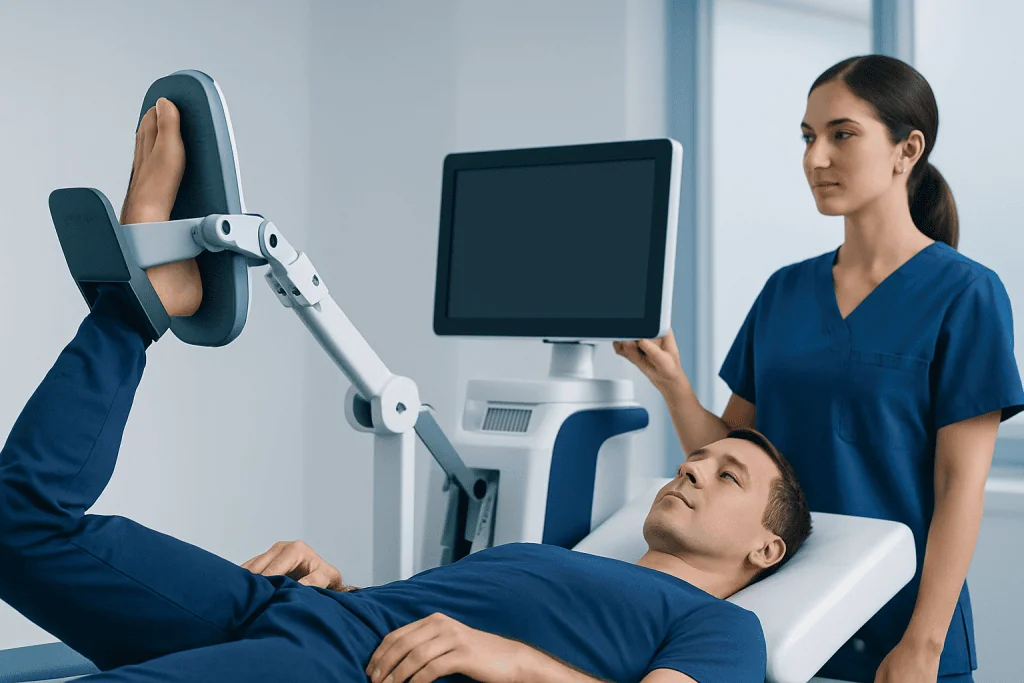
The calf muscles work constantly during standing, walking, stair climbing, and exercise. Because they are used so often, they can become tight from repetitive loading or from staying in one position for long periods. Runners, walkers, dancers, and people who wear supportive shoes with a raised heel may notice reduced calf flexibility over time.
Another common reason for a calf stretch stretch is reduced ankle mobility. When the ankle does not bend upward easily, the body may compensate in ways that affect the feet, knees, hips, or lower back. Some people first notice this as heel lifting during squats, stiffness on stairs, or a pulling sensation in the lower leg when trying to walk faster.
Tight calves can also appear during recovery from injury or inactivity. After a minor strain, a period of rest, or time spent in a cast or boot, the muscles may shorten and feel less elastic. In those situations, a clinician may advise a gradual program of mobility work and, if needed, physical therapy and rehabilitation to help restore comfortable movement.
- Exercise-related muscle tightness
- Reduced ankle flexibility
- Recovery after inactivity or minor injury
- Postural strain from prolonged standing or sitting
- Compensation from foot or gait problems
How to do a calf stretch stretch safely
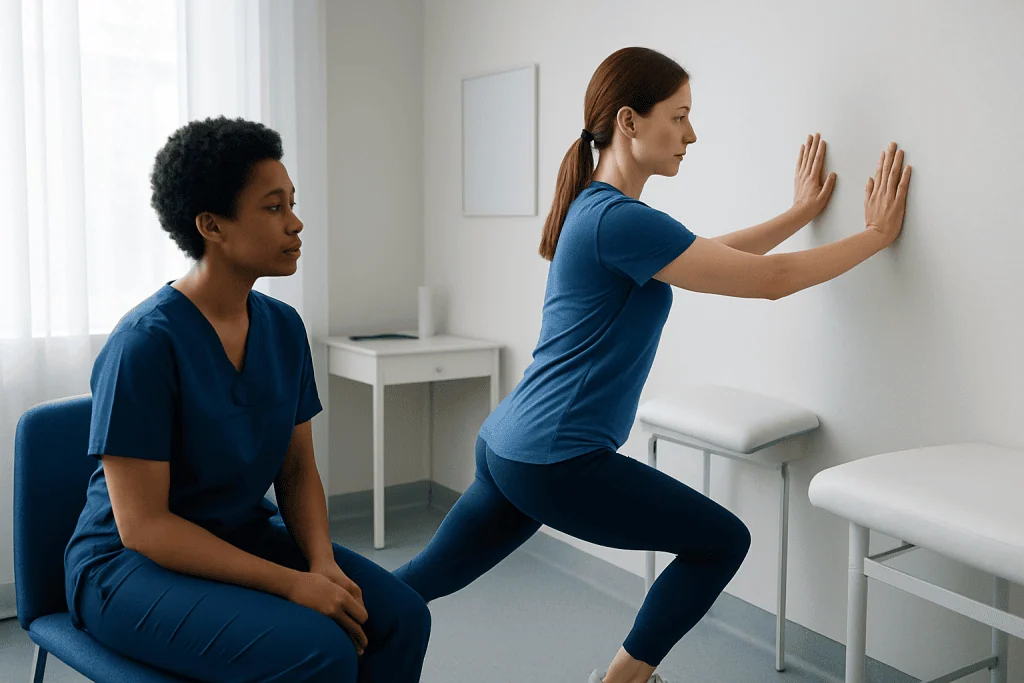
The safest way to perform a calf stretch stretch is slowly and with control. A stretch should feel like steady, tolerable tension in the muscle, not a sudden stab, tearing feeling, or cramp. Breathing normally and avoiding bouncing helps the muscle relax and lengthen more comfortably.
One common method is the wall calf stretch. Standing facing a wall, a person places both hands on the wall, steps one foot back, and keeps the back heel on the floor. With the back knee straight and the front knee bent, leaning forward creates a stretch in the upper calf. To target the deeper soleus, the same position can be repeated with the back knee slightly bent while the heel stays down.
Another option is a towel or strap stretch while sitting with the leg extended. Looping a towel around the front of the foot and gently drawing the toes toward the body can stretch the calf without full weight-bearing. This may be more comfortable early in recovery, although it should still be done carefully if there is recent injury, marked swelling, or pain near the Achilles tendon.
In most cases, a clinician will advise holding a stretch for a short period and repeating it several times rather than forcing a deeper position. Technique matters more than intensity. If stretching is uncomfortable every day or symptoms return quickly, evaluation for an underlying issue such as Achilles tendonitis or a muscle strain may be useful.
When stretching may help less—or make symptoms worse
Not all calf symptoms come from simple tightness. Stretching may be less helpful when pain is caused by a significant muscle tear, tendon injury, nerve irritation, or certain circulation problems. In these cases, aggressive stretching can increase irritation instead of relieving it.
For example, if a person feels a sudden pop in the calf during sport, cannot push off the foot, or develops marked bruising, self-directed stretching is not the best first step. Similarly, pain that is focused at the back of the heel may reflect an Achilles tendon problem rather than muscle tightness alone. Conditions such as Achilles tendon rupture need prompt medical attention.
Calf discomfort can also occur with overtraining, dehydration, medication side effects, or referred pain from the back or knee. If there is numbness, weakness, burning, or pain that radiates, the source may not be the calf muscle itself. This is one reason patient-friendly stretching advice should always include symptom awareness, not just exercise instructions.
Diagnosis: when calf tightness needs evaluation
Occasional tightness after activity usually does not require extensive testing. However, persistent or unexplained calf symptoms may need medical assessment to identify the cause. A doctor or physiotherapist typically begins by asking about onset, sports participation, footwear, walking pattern, previous injury, and whether symptoms are one-sided or affecting both legs.
The physical examination often includes checking calf tenderness, muscle length, ankle range of motion, strength, balance, and the area around the Achilles tendon. Clinicians may also look for swelling, skin color changes, warmth, or signs that pain may be coming from the spine, knee, or foot. In some cases, gait analysis or a rehabilitation assessment helps clarify why tightness keeps returning.
Imaging is not needed for every patient, but it can be useful when there is suspected tearing, tendon injury, or another structural problem. Depending on the symptoms, a doctor may recommend orthopedic imaging or referral to orthopedics and traumatology for further evaluation. The main goal is to match treatment to the real cause rather than assuming all calf discomfort is solved by stretching.
Treatment options beyond stretching
If the problem is simple muscle tightness, treatment may focus on regular stretching, gradual strengthening, warm-up habits, and modifying activities that overload the calf. Strengthening the calf and surrounding muscles is often as important as flexibility, because a weak muscle may tighten protectively when it is asked to work too hard. Footwear changes and temporary reduction in impact activity may also help.
For overuse conditions, tendon-related pain, or recurrent strain, a structured rehabilitation plan is often more effective than random stretching alone. This may include progressive loading exercises, balance work, manual therapy, and guidance on returning to sport. The exact plan depends on whether the main issue is muscular, tendinous, biomechanical, or related to overall conditioning.
Self-care can support recovery. Gentle heat before mobility work, light activity instead of complete rest, and attention to hydration may help some people. Ice may be useful after activity if there is mild soreness or irritation, but it does not replace assessment when pain is significant, worsening, or accompanied by swelling.
Near the end of the care pathway, some patients benefit from a specialist team approach, especially if symptoms are prolonged or linked to sports injury. Acibadem International’s multidisciplinary specialists and JCI-accredited hospitals diagnose and treat musculoskeletal conditions for international patients when more detailed evaluation is needed.
Prevention and self-care for healthier calves
Prevention starts with balancing activity and recovery. Increasing walking, running, or gym intensity too quickly can overload the calves before they have adapted. A gradual training plan, rest days, and a proper warm-up often reduce the chance of persistent tightness.
Daily habits also matter. Long periods of sitting can leave the ankle and calf feeling stiff, so regular movement breaks may help. Supportive footwear that matches the person’s activity and foot mechanics can reduce unnecessary strain, especially during exercise or jobs that involve prolonged standing.
Home stretching is generally most effective when it is consistent and gentle. Pairing calf mobility with simple strengthening, such as controlled heel raises if comfortable, may improve long-term results. Patients should avoid pushing through pain and should stop if the leg becomes more swollen, tender, or unstable afterward.
- Warm up before walking, running, or sport
- Increase exercise intensity gradually
- Use supportive, activity-appropriate footwear
- Take movement breaks during long sitting periods
- Combine flexibility work with strengthening when appropriate
When to seek medical care
Medical care is advisable if calf symptoms do not improve with rest and gentle stretching, or if they repeatedly return and affect walking, exercise, or daily life. Ongoing stiffness with heel pain, weakness, or reduced ankle movement may indicate a tendon or joint issue rather than simple muscle tightness.
Urgent assessment is important if there is sudden severe pain, a popping sensation, inability to push off the foot, major swelling, unusual warmth, redness, or new one-sided calf tenderness. These features may suggest a more serious injury or another condition that should not be managed with home stretching alone.
People who have diabetes, circulation problems, recent surgery, or a history of leg injury should be especially cautious with self-treatment. When in doubt, a qualified doctor or physiotherapist can advise whether stretching is appropriate and what type of evaluation or rehabilitation is safest.
Frequently asked questions
What is the difference between a calf stretch stretch and a regular calf stretch?
There is no formal medical difference. The phrase usually reflects the way people search online for calf stretching exercises. In practice, it refers to stretches that lengthen the muscles at the back of the lower leg.
How long should a calf stretch be held?
The exact timing varies by person and by clinical advice. In general, gentle holds repeated several times are preferred over forcing a deep stretch. A healthcare professional can tailor duration and frequency if there is injury or recurrent pain.
Should a calf stretch hurt?
A calf stretch should create mild pulling or tension, but it should not cause sharp pain, sudden cramping, or burning. Pain that increases during or after the stretch suggests the technique may be too aggressive or the problem may not be simple tightness. Stopping and seeking advice is sensible if symptoms persist.
Can stretching help calf pain after exercise?
It can help when the discomfort is related to mild tightness or post-exercise stiffness. However, calf pain after activity may also come from strain, tendon irritation, or overuse, so stretching is not always the best solution. Rest, recovery, and assessment of the cause are important.
Is it safe to stretch the calf every day?
For many people, gentle daily stretching is safe. The key is to avoid overstretching and to pay attention to pain, swelling, and overall response. People with recent injury, tendon pain, or medical conditions affecting circulation should ask a clinician before starting a daily routine.
Can tight calves affect the feet or knees?
Yes. Limited calf flexibility can reduce ankle movement, which may change walking mechanics and place more stress on the feet, knees, or even the hips. This is one reason clinicians often assess the whole lower limb rather than focusing only on the calf.
References
- American Academy of Orthopaedic Surgeons
- National Health Service
- Mayo Clinic
- American Physical Therapy Association
This article is for general information only and is not a substitute for professional medical advice. Please consult a qualified doctor about your individual situation.
Explore treatments in Turkey — costs, top hospitals & a free quote
JCI-accredited · board-certified surgeons · reply within 24h
Add us as a Preferred Source to see more of our trusted health content across Google Search, AI Overviews and Discover.

More from the Health Library

Virologist — Explained by Medical Evidence, Not Myths

Best Evening Exercises at Home: What Patients Need to Know

High Testosterone in Women: What Patients Need to Know

Bloated Stomach and Feeling Sick and Tired Female: A Complete Medical Overview

Charcot — Explained by Medical Evidence, Not Myths