Can a Man Produce Sperm after Prostate Radiation: How It Works, Results and What to Expect

Sperm production may continue after prostate radiation, but the amount and quality of sperm can decline substantially. Radiation can affect the testes indirectly, the reproductive ducts, ejaculation, and erectile function.
Key Takeaways
- Sperm production may continue after prostate radiation, but the amount and quality of sperm can decline substantially.
- Radiation can affect the testes indirectly, the reproductive ducts, ejaculation, and erectile function.
- Semen should not be assumed to be fertile after treatment, even if ejaculation continues.
- Sperm cryopreservation before radiation is the most reliable fertility-preservation option for many patients.
- Radiation follow-up relies mainly on PSA trends, symptoms, examination, and imaging when needed.
- A rising PSA after radiation does not always mean cancer has returned; clinicians use specific criteria and patterns over time.
A man may still produce sperm after prostate radiation, but radiation can reduce sperm production, damage sperm DNA, and affect ejaculation. Because fertility changes can be long-lasting or permanent, sperm banking should be discussed before treatment when future biological parenthood is important.
Overview: Can a Man Produce Sperm After Prostate Radiation?
Yes, a man may still produce sperm after prostate radiation, but the treatment can lower sperm production and reduce sperm quality. The likelihood of fertility after treatment varies because radiation may affect the testes, the pathways that carry sperm, the prostate and seminal vesicles, and the ability to ejaculate.
Prostate radiation is used to treat localized prostate cancer and, in some situations, cancer that has returned or spread locally. It is designed to target cancer cells while protecting nearby healthy tissues as much as possible. However, the reproductive organs are close to the treatment area, so fertility-related effects are possible even with modern planning techniques.
For people who may want biological children in the future, the most important conversation happens before radiation starts. A urologist, radiation oncologist, fertility specialist, and reproductive laboratory can help explain likely effects and options such as sperm freezing.
How Prostate Radiation Works and Why Fertility Can Change
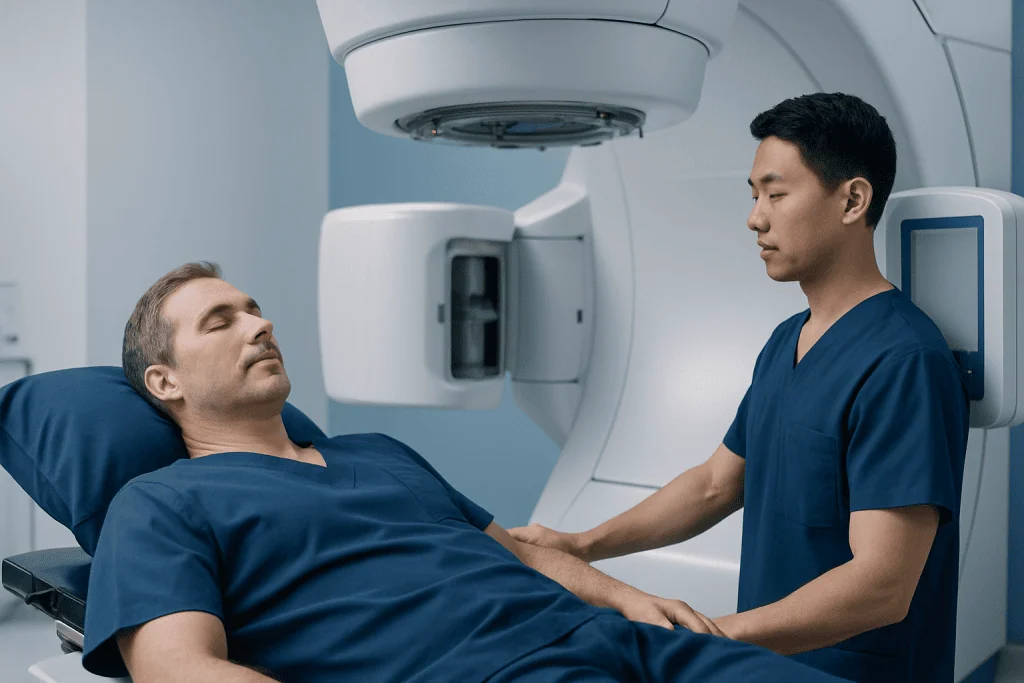
Radiation therapy damages the DNA of cancer cells, preventing them from continuing to divide. External-beam radiation delivers carefully planned beams from outside the body over a series of treatment sessions. Brachytherapy places radioactive sources in or near the prostate, either temporarily or permanently, depending on the treatment plan.
The prostate itself does not make sperm; sperm are produced in the testes. However, the prostate and seminal vesicles contribute much of the fluid in semen, while the ejaculatory ducts carry sperm into the urethra. Radiation can reduce semen volume, alter ejaculation, or scar or affect these nearby structures. Small amounts of scattered radiation may also reach the testes, potentially affecting sperm-producing cells.
Hormone therapy, often called androgen-deprivation therapy, may be given with radiation for some prostate cancers. It can further reduce libido, erections, and sperm production while it is being used. Recovery of testosterone and fertility potential after hormone therapy is variable and may take time.
People considering radiation can discuss the full treatment approach with a multidisciplinary prostate cancer team. Prostate cancer care commonly involves urology, radiation oncology, medical oncology, pathology, imaging specialists, and supportive-care professionals.
Candidacy, Fertility Planning, and Step-by-Step Treatment
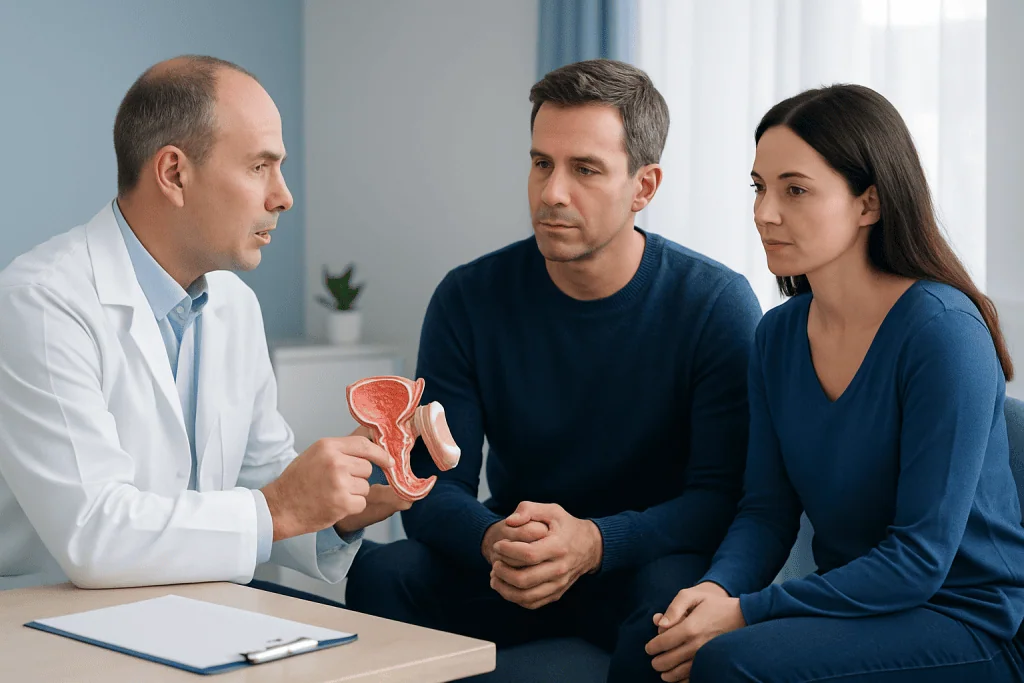
Radiation may be recommended based on the cancer stage, PSA level, biopsy findings, imaging results, overall health, urinary symptoms, previous treatments, and personal preferences. It can be used as a primary treatment for localized disease, after surgery in selected circumstances, or as treatment for recurrence. The radiation oncologist explains which technique and schedule are appropriate.
Before treatment, patients usually have planning scans and may undergo placement of small markers in the prostate or a temporary spacer between the prostate and rectum. These steps help the team target treatment accurately and limit radiation exposure to nearby organs. A planning appointment also reviews expected urinary, bowel, sexual, and fertility effects.
For external-beam radiation, the patient lies in the treatment position while the machine delivers radiation without touching the body. Each daily visit is usually brief, although planning and positioning take additional time. Brachytherapy involves a procedure to place radiation sources under anesthesia or sedation, followed by monitoring and follow-up according to the specific technique.
Before any treatment begins, sperm banking can be arranged through a fertility clinic. Several samples may be collected when possible, and they are frozen for potential future use with assisted reproductive techniques. This is generally the most dependable option because it preserves sperm before radiation-related changes occur.
- Ask whether fertility preservation is appropriate before radiation or hormone therapy starts.
- Discuss whether current semen testing would be useful for baseline fertility information.
- Tell the team about plans for future parenthood, even if those plans are uncertain.
- Ask about contraception and safe timing for trying to conceive after treatment.
Recovery Timeline, Benefits, and Possible Risks
Recovery experiences differ by radiation type, total dose, use of hormone therapy, and a person’s health before treatment. During external-beam radiation, some people develop temporary fatigue, more frequent urination, urgency, mild burning with urination, looser stools, or rectal irritation. These effects often improve in the weeks after treatment, although some urinary or bowel symptoms can persist or develop later.
Sexual effects can occur gradually over months to years. Erections may become less firm or less reliable, especially in people who already have vascular disease, diabetes, or erectile difficulties. Ejaculation may produce less fluid, may feel different, or may not occur. Orgasm can still be possible for many people, but experiences vary.
Fertility may be reduced because sperm production can decline and semen may contain fewer sperm or no sperm. When sperm are present, they may have impaired movement or DNA damage. There is no reliable way to judge fertility by semen appearance or ejaculation alone; a semen analysis performed at an appropriate time is needed if pregnancy is being considered.
The main benefit of prostate radiation is cancer control while avoiding prostate removal. Its risks must be balanced with potential benefits in an individual treatment plan. A team experienced in prostate cancer treatment can discuss radiation alongside surgery, active surveillance, hormone therapy, and other approaches when relevant.
How Often Does Prostate Cancer Come Back After Radiation?
Prostate cancer can return after radiation, but the chance depends on the cancer’s risk group, PSA before treatment, tumor grade, stage, treatment technique, use of hormone therapy, and other individual factors. It is not possible to give one recurrence rate that applies to every person because outcomes differ substantially between low-, intermediate-, and high-risk prostate cancer.
After radiation, the prostate remains in place and continues to produce some PSA. PSA therefore usually falls gradually rather than becoming undetectable as it often does after prostate removal. A temporary small rise in PSA, sometimes called a PSA bounce, can occur and does not necessarily indicate that the cancer has returned.
Clinicians commonly define biochemical recurrence after radiation as a PSA increase of 2 ng/mL or more above the lowest PSA reached after treatment, known as the PSA nadir. A doctor considers the overall PSA pattern, timing, symptoms, examination findings, and imaging before confirming recurrence. Modern imaging, including selected PET scans, may help identify where recurrent cancer is located.
If recurrence is suspected, treatment options depend on whether cancer appears confined to the prostate area or has spread elsewhere. Options may include observation, hormone therapy, focused treatment for limited spread, or carefully selected salvage local treatments. Decisions should be made with a prostate cancer specialist because previous radiation affects which treatments are safest.
Prevention, Self-Care, and Protecting Reproductive Health
There is no guaranteed way to prevent radiation-related fertility changes, but careful planning and fertility preservation can reduce uncertainty. Sperm banking before treatment is usually preferable to waiting until afterward. If sperm banking is not possible, a fertility specialist may discuss whether surgical sperm retrieval or other approaches could be considered in selected cases.
It is important not to attempt conception during radiation treatment. Radiation oncology and fertility teams can provide individualized advice about when it may be appropriate to have semen testing and consider conception afterward. If a partner becomes pregnant or pregnancy is planned, both partners may benefit from counseling with a fertility specialist.
Healthy habits support general recovery and sexual health, although they cannot reverse radiation effects. Regular physical activity as tolerated, a balanced diet, smoking cessation, good sleep, management of diabetes and blood pressure, and limiting alcohol can support overall wellbeing. Pelvic-floor rehabilitation, sexual-health counseling, and treatments for erectile dysfunction may also be helpful for appropriate patients.
Acibadem International’s multidisciplinary specialists and JCI-accredited hospitals support international patients with diagnosis and treatment planning for prostate cancer, including discussions about fertility and quality of life.
When to Seek Medical Care
Patients should contact their treatment team promptly for fever, inability to pass urine, severe pain, heavy rectal bleeding, worsening weakness, or new symptoms that feel urgent. These symptoms are not expected for most people and need timely medical assessment.
A doctor should also be consulted for persistent urinary burning, blood in urine or stool, worsening bowel changes, new pelvic or bone pain, unexplained weight loss, or concerns about erections, ejaculation, or fertility. Most post-treatment symptoms are manageable, and early discussion can help identify suitable care.
Scheduled follow-up appointments are essential even when a person feels well. PSA monitoring after radiation helps clinicians understand the treatment response and recognize patterns that may need further evaluation. Patients should bring questions about fertility, contraception, sexual function, and family planning to these visits.
Frequently asked questions
Can a man produce sperm after prostate radiation?
He may still produce sperm, but sperm count and quality may decline after prostate radiation. Some men have very few or no sperm in semen, while others retain some sperm production. A semen analysis is needed to assess fertility because ejaculation alone does not confirm that sperm are present or healthy.
Can prostate radiation cause infertility?
Yes. Radiation can affect sperm production, sperm DNA, semen volume, and the ducts involved in ejaculation. Fertility may recover in some individuals, but it can also be permanently reduced, particularly when hormone therapy is part of treatment.
Should sperm be frozen before prostate radiation?
Sperm freezing should be discussed before treatment for anyone who may want biological children in the future. It preserves sperm before possible radiation- or hormone-related changes occur. A fertility specialist can explain collection, storage, and possible future use.
How long after prostate radiation should someone wait before trying to conceive?
The appropriate timing varies by treatment plan, use of hormone therapy, semen results, and medical history. A radiation oncologist and fertility specialist should provide individualized guidance before attempting conception. Semen testing may be recommended to evaluate sperm quantity and quality.
Does radiation for prostate cancer stop ejaculation?
Not always. Many men continue to have orgasms and may ejaculate after radiation, but the volume of semen often decreases. Some develop dry ejaculation or changes in orgasm sensation over time.
How often does prostate cancer come back after radiation?
The risk varies widely according to the original cancer’s grade, stage, PSA level, risk group, and treatment approach. Follow-up usually focuses on PSA trends rather than a single test result. A PSA rise of 2 ng/mL or more above the lowest post-radiation PSA is a commonly used definition of biochemical recurrence.
References
- National Cancer Institute
- American Cancer Society
- American Urological Association
- European Association of Urology
- American Society for Radiation Oncology
This article is for general information only and is not a substitute for professional medical advice. Please consult a qualified doctor about your individual situation.
IVF & fertility treatment in Turkey — success rates and costs
JCI-accredited · board-certified surgeons · reply within 24h
Add us as a Preferred Source to see more of our trusted health content across Google Search, AI Overviews and Discover.

More from the Health Library



Related Specialists

Prof. Dr. Namik Demir
Gynecology & Obstetrics
Dr. Adnan Abbasoğlu
Orthopedic Surgery & Traumatology
Dr. Eda Balanlı Güngörmüş
Pediatrics
Dr. Murat İçli
Ear Nose & Throat