Can Humans Get Fleas? Causes, Explanations, and Next Steps

Fleas commonly bite humans, but they usually prefer animal hosts and do not stay on people permanently. Most flea bites cause small, itchy, clustered bumps, often on the ankles, feet, or lower legs.
Key Takeaways
- Fleas commonly bite humans, but they usually prefer animal hosts and do not stay on people permanently.
- Most flea bites cause small, itchy, clustered bumps, often on the ankles, feet, or lower legs.
- The most important step is finding and treating the source, such as pets, bedding, carpets, or upholstered furniture.
- Medical review is important if there is spreading redness, pus, fever, severe swelling, or an uncertain rash.
- Doctors diagnose flea bites mainly by appearance, symptom pattern, and possible exposure to pets or infested environments.
Yes, humans can get flea bites. In most cases, fleas do not live on people long-term, but they can jump onto human skin, feed, and cause itchy bumps that usually improve once the source is treated.
Overview: Can Humans Get Fleas?
Yes, humans can get flea bites. This is often more uncomfortable than dangerous, and in many people the main problem is itching for a few days. Fleas usually prefer animals such as cats and dogs, so they do not typically live on humans in the same way they live in animal fur.
Even so, fleas can jump onto human skin, bite to feed, and then leave. This tends to happen in homes with pets, in places where animals sleep, or after contact with carpets, bedding, or furniture where flea eggs or larvae may be present.
Most cases are harmless and improve with simple skin care and control of the flea source. The situations that deserve more attention are those with signs of skin infection, a strong allergic reaction, fever, or a rash that may have another cause. A doctor can help confirm whether the marks are likely flea bites or another skin condition, such as eczema or another bite-related reaction.
What Flea Bites on Humans Usually Look and Feel Like
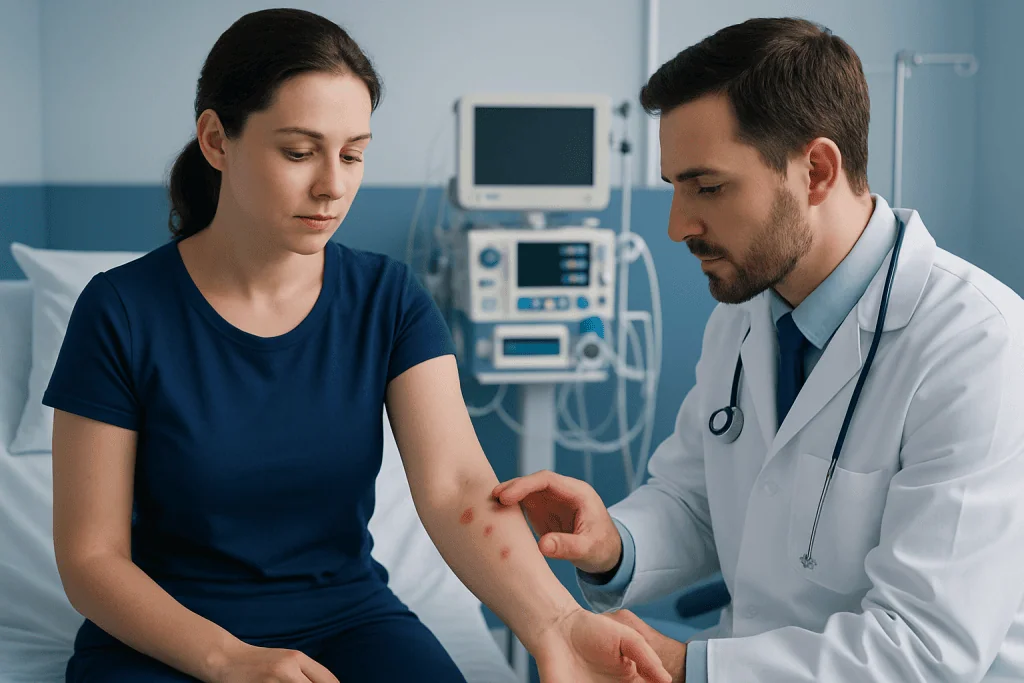
Flea bites on humans often appear as small red bumps with a tiny darker center. They are usually very itchy and may occur in groups or short lines. The ankles, feet, and lower legs are common sites because fleas often jump from floors, rugs, or pet bedding.
Some people notice only a few bites, while others develop a stronger skin response. Scratching can make the bumps more irritated and increase the risk of broken skin. In sensitive individuals, the surrounding area may become more swollen or develop hives-like redness.
Flea bites can resemble other insect bites, rashes, or skin problems. Clues that support flea bites include recent exposure to pets, multiple itchy spots that appeared suddenly, and bites concentrated around areas not fully covered by clothing.
- Small itchy red bumps
- Bites grouped in clusters or lines
- Commonly on ankles, feet, or lower legs
- Worsening irritation with scratching
- Occasional stronger allergic-type skin reaction
Why Fleas Bite Humans and Where They Come From

Fleas are tiny wingless insects that survive by feeding on blood. Although many fleas prefer cats, dogs, or other animals, they may bite humans when pets are infested or when flea populations in the home increase. A person may also be bitten in yards, animal shelters, or buildings where animals have been present.
Fleas do not usually remain on humans because human skin and body hair are not their preferred long-term habitat. Instead, they often live and reproduce in the environment. Eggs can fall into carpets, rugs, cracks in flooring, pet beds, and upholstered furniture, where immature fleas continue their life cycle.
Risk is higher in households with untreated pets, after moving into a home where animals previously lived, or when flea control has lapsed. Warmer conditions and indoor heating can also allow fleas to persist. If a person has repeated bites, the issue is often not the skin itself but an ongoing household source that needs attention.
How Doctors Tell If It Is Flea Bites
Doctors usually diagnose flea bites by looking at the skin and asking about recent exposures. The pattern of the spots, where they appear on the body, whether pets are present, and whether other household members have similar bites can all provide useful clues.
A medical visit is especially helpful when the diagnosis is uncertain. Bedbug bites, mosquito bites, allergic rash, contact dermatitis, scabies, and some infections can look similar. In children or people with ongoing itching, a doctor may also consider hives or other skin hypersensitivity reactions.
Tests are not always needed. If there are signs of infection, severe inflammation, or another possible condition, the doctor may recommend further evaluation. In complicated cases, a skin specialist may be involved, and treatment may include measures used in dermatology care to calm the skin and prevent complications.
Treatment and Symptom Relief
Treatment focuses on two goals: relieving symptoms and removing the flea source. For the skin, gentle cleansing, avoiding scratching, and using doctor- or pharmacist-recommended anti-itch measures are often enough. Cool compresses may reduce irritation, especially when the bites are fresh and intensely itchy.
If scratching has caused broken skin, keeping the area clean is important. A doctor may suggest additional treatment if the reaction is severe, if there is significant swelling, or if there are signs of secondary bacterial infection. Skin care should be guided by a qualified clinician, particularly for infants, older adults, or anyone with widespread rash.
Environmental control is essential because symptoms may continue if fleas remain in the home. This can include treating pets under veterinary guidance, washing pet bedding and linens, vacuuming carpets and upholstery thoroughly, and addressing infested areas in the house. If there is a persistent skin reaction or uncertainty about the rash, consultation through allergy evaluation or specialist skin care may be useful.
Prevention and Next Steps at Home
The best prevention is controlling fleas where they live. Pets should receive regular flea prevention recommended by a veterinarian. Homes benefit from frequent vacuuming, washing fabrics on appropriate settings, and paying attention to pet sleeping areas, rugs, and furniture seams.
If bites are occurring, it helps to inspect pets for scratching, flea dirt, or visible fleas. Because flea eggs and larvae may be hidden in the environment, a home may need repeated cleaning and, in some cases, professional pest control. Personal hygiene alone does not solve the problem when the source is in the surroundings.
People should avoid scratching bites, keep nails short, and watch for increasing redness or drainage. If the skin remains very inflamed or the diagnosis is unclear, a doctor may consider whether another condition such as scabies or contact dermatitis is contributing to symptoms.
When to Seek Medical Care
Medical care is a good idea if the redness is spreading, the skin feels warm or painful, pus develops, or fever occurs. These features can suggest infection from scratching or another problem that needs treatment. Care is also important if swelling is severe, breathing symptoms occur, or the reaction seems out of proportion to a simple bite.
A doctor should also assess any rash that is unusual, widespread, recurring without a clear reason, or not improving after the home and pet source has been addressed. Children, pregnant people, and anyone with a weakened immune system may benefit from earlier review if symptoms are persistent.
At the appointment, the clinician typically asks when the marks appeared, whether pets are present, whether anyone else in the home is affected, and what the environment is like. They then examine the skin, consider other possible causes, and advise on symptom treatment and source control. When needed, Acibadem International’s multidisciplinary specialists and JCI-accredited hospitals support international patients with diagnosis and treatment for skin and allergy-related concerns.
Frequently asked questions
Can fleas live on humans?
Fleas can jump onto humans and bite, but they do not usually live on people long-term. They generally prefer animal hosts such as cats and dogs and tend to stay in the home environment, especially in carpets, bedding, and pet resting areas.
How can someone tell if bites are from fleas?
Flea bites are often small, itchy, red bumps that appear in clusters, commonly around the ankles or lower legs. A likely clue is recent exposure to pets or a home environment where fleas may be present, although a doctor may be needed to rule out other causes.
Are flea bites dangerous for humans?
Most flea bites are mild and mainly cause itching and irritation. They become more concerning if scratching leads to skin infection, if there is a strong allergic reaction, or if a person develops fever or an unusual rash.
What should someone do first after noticing possible flea bites?
The first steps are to clean the skin gently, avoid scratching, and look for a possible source such as pets, bedding, carpets, or upholstered furniture. Treating only the skin without addressing the environment often leads to repeated bites.
Can a home have fleas even if no fleas are seen on a pet?
Yes. Flea eggs, larvae, and pupae can remain in the environment and may be hard to spot, even when adult fleas are not obvious on a pet. A person may notice bites before seeing clear evidence of fleas.
When should someone see a doctor for flea bites?
Medical care is recommended if there is spreading redness, warmth, pain, pus, fever, severe swelling, or any breathing symptoms. A doctor should also assess bites that do not improve, keep returning, or may actually be another skin condition.
References
- Centers for Disease Control and Prevention
- American Academy of Dermatology
- MedlinePlus
- Merck Manual Consumer Version
This article is for general information only and is not a substitute for professional medical advice. Please consult a qualified doctor about your individual situation.
Explore treatments in Turkey — costs, top hospitals & a free quote
JCI-accredited · board-certified surgeons · reply within 24h
Add us as a Preferred Source to see more of our trusted health content across Google Search, AI Overviews and Discover.

More from the Health Library



Related Specialists

Assoc. Prof. Dr. Şevket Tolga Tombul
Urology
Dr. Artunç Kaan Turanoğlu
Otorhinolaryngology
Dr. Hudheifa Yussuf Haji
Inpatient Clinic Physicians Clinical Service
Prof. Dr. Mehmet Ada
Otorhinolaryngology