Can Migraine Cause Vision Loss? Warning Signs That Need Urgent Review

Migraine aura often causes temporary visual symptoms such as flashing lights, zigzags, blind spots, or blurred vision. Vision changes from migraine usually affect both eyes, even if they seem stronger on one side.
Key Takeaways
- Migraine aura often causes temporary visual symptoms such as flashing lights, zigzags, blind spots, or blurred vision.
- Vision changes from migraine usually affect both eyes, even if they seem stronger on one side.
- Sudden vision loss in one eye is not typical of common migraine aura and needs urgent medical attention.
- Stroke, retinal problems, optic nerve disease, and other eye emergencies can mimic migraine-related vision symptoms.
- A doctor may use the pattern, duration, and associated symptoms to tell migraine apart from more serious causes.
Migraine can cause temporary visual disturbances, especially during aura, but it does not explain every type of vision loss. Sudden, severe, or one-eye vision loss should be assessed urgently because other eye, nerve, or blood vessel problems may need prompt treatment.
Overview: Can migraine cause vision loss?
The short answer is yes, migraine can cause temporary visual symptoms and, in some people, temporary areas of vision loss. This most often happens as part of a migraine aura, which may appear before or during a headache, or sometimes without much headache at all. People may describe shimmering lights, zigzag lines, blind spots, blurred vision, or trouble focusing.
However, not all vision loss is caused by migraine. A key point is that many migraine-related visual symptoms come from changes in the brain’s visual processing areas, not from damage to the eye itself. Because of this, symptoms often affect the visual field of both eyes, even if they feel more noticeable on one side.
Sudden loss of vision in one eye, a dark curtain over the sight, new weakness, difficulty speaking, severe eye pain, or symptoms that do not improve quickly are warning signs that need urgent review. These symptoms can be linked to eye disease, reduced blood flow, nerve problems, or stroke-related conditions rather than a typical migraine aura.
What migraine-related vision changes can feel like
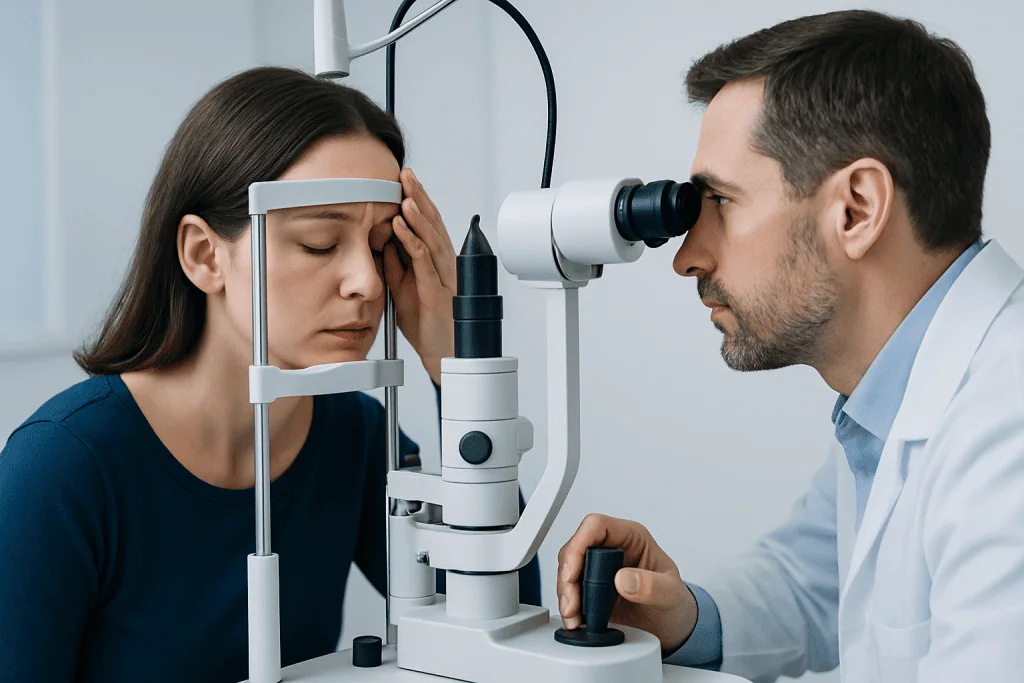
Visual migraine symptoms can be varied, but they often follow a recognizable pattern. Many people notice flashing lights, sparkles, wavy lines, shimmering patches, or a blind spot that gradually expands over several minutes. Others report blurred vision, tunnel vision, or difficulty reading because part of the page seems missing.
These changes usually develop gradually rather than appearing all at once. They often last between a few minutes and about an hour, then improve fully. A headache may follow, but some people have aura without a significant headache. This can make the episode confusing, especially the first time it happens.
Some people hear the term “ocular migraine” and assume it means any visual problem linked to headache. In everyday use, the term is used loosely, but doctors often prefer more specific labels such as migraine with aura or retinal migraine. Knowing the difference matters, because retinal migraine is uncommon and true one-eye visual loss has to be assessed carefully to rule out more serious causes.
- Common migraine aura symptoms: flashing lights, zigzags, shimmering, blind spots, blurred areas
- Typical pattern: gradual onset, short duration, full recovery
- May happen with or without headache
- Usually involves both eyes from the brain’s visual pathways, not just one eye alone
When vision loss may not be from migraine

Although migraine is a common cause of temporary visual symptoms, doctors are careful not to assume that every episode is migraine. Sudden complete or near-complete loss of vision, especially in one eye, is more concerning. People may describe this as a gray shade, blackout, or curtain coming down over the eye. This can be a sign of a retinal blood flow problem or another urgent eye condition.
Other conditions that can mimic migraine include transient ischemic attack, stroke, retinal detachment, optic neuritis, acute glaucoma, and inflammation affecting the eye or blood vessels. If visual symptoms are brand new, much more severe than usual, last longer than expected, or come with neurological symptoms such as facial drooping or trouble speaking, urgent evaluation is important.
Even if a person has had migraines for years, a new pattern should still be reviewed. A doctor may consider conditions such as migraine but also look for emergencies involving the retina, optic nerve, or brain. This is especially important in older adults and in people with vascular risk factors such as high blood pressure, diabetes, smoking, or high cholesterol.
Causes and risk factors behind vision loss symptoms
In migraine aura, visual symptoms are thought to arise from temporary changes in nerve signaling in the brain, particularly in the areas that process vision. These changes do not usually cause permanent injury, which is why the symptoms often resolve completely. Triggers can vary and may include stress, poor sleep, dehydration, missed meals, hormonal changes, bright light, or certain foods in susceptible people.
True one-eye vision loss can have very different causes. Problems affecting the retina or optic nerve may reduce the eye’s ability to send signals to the brain. Reduced blood flow to the eye, retinal tears or detachment, inflammation, or increased eye pressure can all cause urgent symptoms. Vascular and neurological causes may also need investigation, including stroke or mini-stroke type events.
Risk factors that make non-migraine causes more likely include older age, a history of heart or blood vessel disease, atrial fibrillation, smoking, diabetes, high blood pressure, autoimmune disease, and clotting disorders. A personal history of migraine does not remove these risks. That is why doctors assess the whole person, not just the headache history.
How doctors diagnose the cause
Diagnosis starts with the story of the symptoms. A doctor will ask whether the visual change affected one eye or both, how fast it started, how long it lasted, whether positive symptoms like flashing lights were present, and whether there was headache, weakness, numbness, or speech difficulty. This history often gives important clues.
An eye examination may include checking visual acuity, pupils, eye pressure, eye movements, and a close look at the retina and optic nerve. Depending on the symptoms, a person may need urgent assessment by an eye specialist or neurologist. Imaging and other tests may be used if there is concern about the brain, blood vessels, or the eye itself.
Possible tests can include MRI of the brain or orbits, vascular imaging such as MRA, or detailed eye assessment. If the pattern suggests a retinal cause, doctors may involve retinal specialists; if it suggests a brain or nerve cause, a neuro-ophthalmology or neurology review may be appropriate. The aim is to identify whether this is a benign migraine aura or a condition that needs prompt treatment.
Treatment options and what to do during an episode
Treatment depends on the cause. If symptoms are due to migraine aura, management may include avoiding known triggers, using medicines recommended by a doctor for migraine attacks, and considering preventive treatment if episodes are frequent or disruptive. Resting in a dark, quiet place and staying hydrated may help some people during an attack.
If the visual change is not clearly typical for migraine, the priority is not self-treatment but urgent assessment. Eye emergencies and vascular problems can be time-sensitive. Treatments may differ greatly depending on whether the issue involves the retina, optic nerve, blood vessels, or the brain.
For people with repeated migraine-related symptoms, specialists may advise a plan that includes lifestyle measures, headache tracking, and follow-up. In more complex cases, a neurologist may recommend further assessment with tools such as EEG or other investigations if the diagnosis is uncertain. Near the end of the care pathway, patients seeking international evaluation may also be seen at Acibadem International, where multidisciplinary specialists in JCI-accredited hospitals assess neurological and eye-related symptoms.
Prevention, self-care, and when to seek urgent help
People who are prone to migraine can often reduce episodes by keeping a regular routine. Helpful steps include consistent sleep, regular meals, good hydration, limiting excess caffeine, managing stress, and noting possible triggers in a symptom diary. If screens or bright light worsen symptoms, scheduled breaks and lighting adjustments may also help.
Even so, self-care has limits. It is important not to dismiss all visual symptoms as “just migraine,” especially if the pattern changes. New symptoms deserve medical review, particularly in pregnancy, older age, or when there are cardiovascular risk factors.
Urgent medical attention is recommended if there is sudden vision loss in one eye, vision loss that does not quickly improve, a curtain-like shadow, severe eye pain, double vision, weakness, numbness, confusion, trouble speaking, or the worst headache of a person’s life. These warning signs may point to conditions that need immediate care rather than routine migraine management.
Frequently asked questions
Can a migraine make someone go blind?
Migraine can cause temporary visual symptoms, including blind spots or blurred areas, but these episodes usually improve fully. Permanent blindness from typical migraine aura is not expected, so sudden or lasting vision loss should be assessed urgently.
Is migraine aura usually in one eye or both eyes?
Typical migraine aura usually affects the visual field of both eyes because it comes from the brain's visual pathways. It may seem stronger on one side, but true symptoms limited to one eye need careful medical evaluation.
How long does migraine-related vision loss usually last?
Migraine aura often lasts from several minutes up to about an hour. Symptoms that last much longer, do not fully resolve, or are followed by new neurological problems should be reviewed promptly.
What warning signs suggest it is not just migraine?
Concerning signs include sudden complete vision loss, a dark curtain over one eye, severe eye pain, double vision, weakness, numbness, trouble speaking, or confusion. These symptoms can point to an eye emergency, stroke, or another condition needing urgent care.
What is retinal migraine?
Retinal migraine is an uncommon condition involving temporary visual disturbance in one eye. Because one-eye vision loss can also happen with more serious retinal or vascular problems, a doctor should confirm the diagnosis rather than assuming it is migraine.
Should someone go to the emergency department for migraine with vision changes?
If the visual symptoms are new, very different from usual, occur in only one eye, or come with other neurological symptoms, urgent evaluation is sensible. If the pattern is already well diagnosed as typical migraine aura and it resolves as expected, follow-up with a doctor may be enough, but any uncertainty should be checked.
This article is for general information only and is not a substitute for professional medical advice. Please consult a qualified doctor about your individual situation.
Migraine in Turkey — costs, top hospitals & a free quote
JCI-accredited · board-certified surgeons · reply within 24h
Add us as a Preferred Source to see more of our trusted health content across Google Search, AI Overviews and Discover.
Check your numbers in seconds
BMI, calories, due date, blood pressure and 30+ more clinical calculators — free, instant, doctor-reviewed ranges.

More from the Health Library

6 Signs of Heart Attack a Month Before: Common Causes, Related Conditions, and When to See a Doctor

Why Am I Pooping So Much? Causes, Explanations, and Next Steps

Are Teeth Bones? Here Is What the Evidence Says

How Long Does Tramadol Stay in Your System? Here Is What the Evidence Says

Post Viral Cough Explained: Common Triggers and Red Flags