Can Toothache Cause Head Pain? Here Is What the Evidence Says

A toothache can trigger head pain because nerves from the teeth, jaw, face, and head share pain pathways. Common dental causes include tooth decay, gum infection, an abscess, teeth grinding, and temporomandibular joint strain.
Key Takeaways
- A toothache can trigger head pain because nerves from the teeth, jaw, face, and head share pain pathways.
- Common dental causes include tooth decay, gum infection, an abscess, teeth grinding, and temporomandibular joint strain.
- Head pain is more likely to be tooth-related when it occurs with chewing pain, sensitivity, facial tenderness, or visible dental problems.
- Doctors and dentists diagnose the cause through symptom history, oral examination, bite and jaw assessment, and sometimes dental X-rays or imaging.
- Urgent evaluation is important for facial swelling, fever, trouble swallowing, worsening pain, or sudden severe headache with neurological symptoms.
Yes, a toothache can cause head pain, and in many cases the reason is harmless and treatable, such as irritation of nearby nerves or jaw muscle tension. Still, some patterns of pain need medical or dental review, especially if symptoms are severe, persistent, or linked with fever, swelling, or neurological warning signs.
Overview: Can a Toothache Really Cause Head Pain?
Yes. A toothache can cause head pain because the nerves that supply the teeth, gums, jaw, and parts of the head are closely connected. When a tooth is inflamed or infected, the brain may interpret the pain as coming not only from the tooth itself but also from the temple, forehead, ear, or side of the head.
In many people, this is not a sign of a dangerous condition. A cavity, a cracked tooth, gum inflammation, clenching, or strain in the jaw joint can all produce pain that seems to spread beyond the mouth. This pattern is called referred pain, and it is a well-recognized reason why dental problems sometimes feel like headaches.
At the same time, not every headache with tooth pain starts in the teeth. Sinus disease, migraine, temporomandibular disorders, nerve pain, and certain ear or jaw conditions may mimic dental pain. Because several problems can overlap, the most helpful approach is to look at the whole symptom pattern rather than any one symptom alone.
How Tooth Pain Spreads to the Head
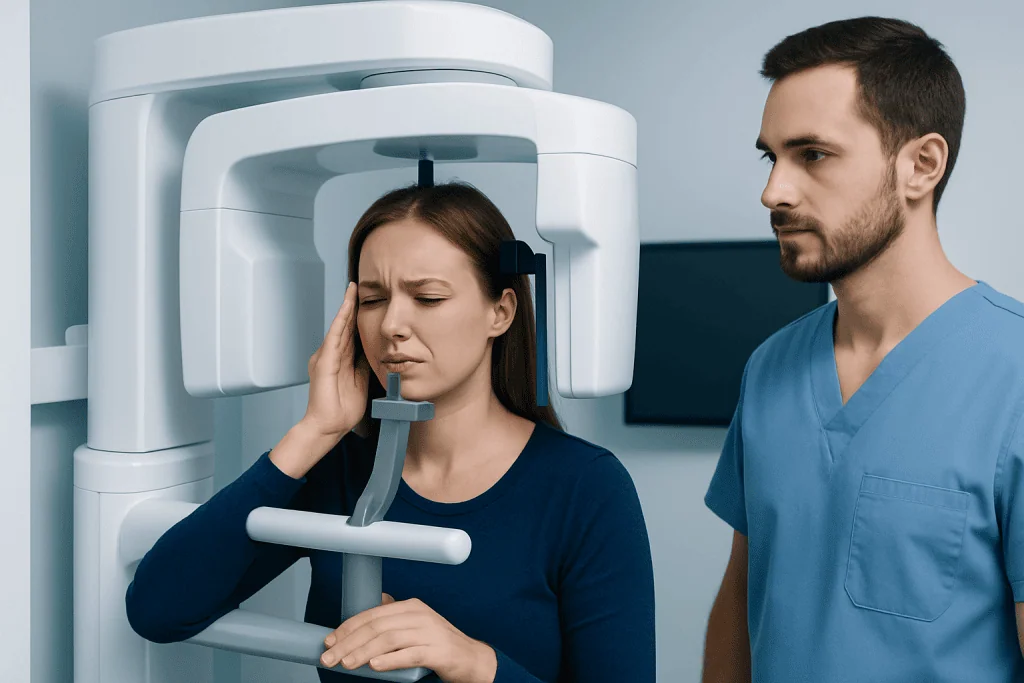
The main reason this happens is shared nerve supply. The trigeminal nerve carries sensation from the teeth, gums, cheeks, jaw, and much of the face and head. If one branch is irritated by infection, inflammation, or pressure, the pain signal may be perceived in nearby areas. This is why pain from a lower molar might be felt in the jaw and temple, or pain from an upper tooth may seem to spread toward the cheek or forehead.
Muscle tension can add to the problem. When a tooth hurts, many people unknowingly clench the jaw or avoid chewing on one side. That extra tension can irritate the jaw muscles and temporomandibular joint, increasing pressure around the temples and causing a dull or tight headache. People who grind their teeth at night are especially prone to this combination of tooth soreness and head pain.
Inflammation can also affect nearby structures. A deep infection in a tooth or gum may lead to throbbing pain that radiates into the face. Upper teeth can feel closely linked to the sinus area, and inflammation in that region may make the pain seem more diffuse. In some cases, what feels like a toothache may actually be sinusitis, which can also produce facial pressure and headache.
Common Causes of Toothache With Head Pain

Several dental conditions can explain both symptoms at the same time. Tooth decay is one of the most common. As a cavity gets deeper, the inner part of the tooth may become inflamed, causing sharp, throbbing, or temperature-sensitive pain that may spread into the jaw or head. A cracked tooth can cause similar symptoms, especially when biting.
Infection is another important cause. An infected tooth or dental abscess may cause constant pain, tenderness, bad taste in the mouth, swelling, or fever. The pain can radiate to the ear, temple, or entire side of the head. Gum disease may also lead to soreness and referred discomfort, particularly if inflammation is advanced.
Jaw-related conditions should also be considered. Teeth grinding, jaw clenching, and TMJ disorder can create a mix of tooth sensitivity, facial pain, clicking of the jaw, and temple headaches. In some people, the primary issue is muscular rather than dental. Less commonly, a person may have another headache disorder, such as migraine, and the face or teeth become unusually sensitive during attacks.
- Tooth decay or deep cavity
- Cracked or broken tooth
- Dental abscess or tooth infection
- Gum inflammation or periodontal disease
- Teeth grinding or clenching
- Temporomandibular joint strain
- Sinus-related pressure affecting upper teeth
Clues That the Head Pain May Be Coming From a Tooth
Certain features make a dental source more likely. Head pain linked to a toothache often appears on one side, especially near the jaw, cheek, temple, or ear. It may worsen when chewing, biting, or drinking something hot or cold. Some people notice a specific tooth feels sore, loose, cracked, or unusually sensitive.
Other helpful clues include swollen gums, bleeding when brushing, a bad taste, visible decay, facial tenderness, or pain that improves temporarily with dental numbing treatment. Nighttime grinding can leave the jaw feeling tired in the morning, and that pattern may point toward bite stress rather than infection alone.
Still, symptoms can overlap. A migraine may cause facial pain and sensitivity to touch. Sinus pressure may feel like upper tooth pain. For that reason, persistent symptoms deserve professional assessment, especially if the pain keeps returning or does not match a clear dental trigger.
How Doctors and Dentists Find the Cause
Diagnosis starts with a careful history. A clinician usually asks where the pain began, how long it lasts, whether it throbs or comes in bursts, and what makes it better or worse. They may ask about chewing, tooth sensitivity, facial swelling, recent dental work, grinding, fever, sinus symptoms, and any history of headaches or neurological conditions.
The examination may include looking for cavities, gum disease, loose or cracked teeth, swelling, tenderness, bite problems, and limited jaw movement. The dentist may gently tap the teeth, check the gums, or test temperature sensitivity. If the jaw joint or muscles are involved, they may assess clicking, stiffness, or pain around the temples and cheeks.
Dental X-rays are often used when decay, infection, or a hidden crack is suspected. In some cases, further imaging may be needed if symptoms suggest sinus disease, widespread infection, or a non-dental cause. Depending on the findings, treatment may involve restorative dental care, management of root canal treatment, care for jaw dysfunction, or referral for other specialist evaluation.
Treatment Options and What Usually Helps
Treatment depends on the cause, not just the symptom. If decay or a crack is responsible, dental repair may relieve both the tooth pain and the headache. If the nerve inside the tooth is inflamed or infected, a dentist may recommend dental fillings for earlier damage or root canal treatment when the inner tooth tissue is affected. A severe infection may require drainage and prompt dental management.
If jaw tension or grinding is part of the problem, treatment may focus on reducing strain. This can include a bite assessment, a custom night guard, jaw relaxation strategies, soft foods for a short period, and addressing daytime clenching habits. When the pain pattern fits the jaw joint, treatment may overlap with approaches used for TMJ disorder.
Short-term self-care may help while waiting for an appointment, but it should not replace proper evaluation if the pain is significant or ongoing. General measures can include avoiding very hot, cold, or hard foods, keeping the mouth clean, and using over-the-counter pain relief only as directed by a doctor or pharmacist. If swelling, fever, or spreading pain develops, professional care should not be delayed.
When to Seek Medical Care
Most cases of tooth-related head pain are treatable and not dangerous, but some warning signs should prompt timely medical or dental review. A person should seek care soon if the pain lasts more than a day or two, keeps returning, interrupts sleep, or is getting worse instead of better. The same is true if there is visible swelling, pus, a bad taste in the mouth, or pain after dental trauma.
Urgent care is especially important for fever, facial swelling, trouble opening the mouth, difficulty swallowing, or breathing problems, because these can suggest a spreading infection. Sudden severe headache, weakness, confusion, fainting, vision changes, or numbness are not typical signs of an ordinary toothache and need prompt medical evaluation.
If symptoms are unclear, a clinician may help sort out whether the source is dental, sinus-related, jaw-related, or neurological. Near the end of the care pathway, some people benefit from coordinated input from dentists, oral surgeons, ENT specialists, or headache experts. Acibadem International’s multidisciplinary specialists and JCI-accredited hospitals diagnose and treat dental, jaw, and related head pain conditions for international patients when further assessment is needed.
Frequently asked questions
Can a bad tooth cause pain in the temple or forehead?
Yes. Pain from a tooth can spread to the temple, forehead, ear, or jaw because these areas share nerve pathways. This is especially common with deep decay, infection, clenching, or jaw joint strain.
How can someone tell if a headache is from a toothache?
A tooth-related headache is more likely if the pain is on one side and worsens with chewing, biting, or hot and cold foods. A sore tooth, gum swelling, facial tenderness, or jaw pain also make a dental cause more likely, but a professional exam is often needed to be sure.
Can tooth grinding cause both tooth pain and head pain?
Yes. Grinding or clenching can put pressure on the teeth, overwork the jaw muscles, and irritate the temporomandibular joint. This often causes morning jaw soreness, tooth sensitivity, and temple headaches.
Is head pain from a toothache an emergency?
Usually not, but it can be urgent if there is fever, facial swelling, pus, trouble swallowing, difficulty breathing, or rapidly worsening pain. A sudden severe headache or neurological symptoms such as weakness, confusion, or vision changes should also be assessed right away.
Will treating the tooth usually stop the headache?
If the tooth is the true source of the pain, treating it often improves the headache as well. Relief may come after the cavity, crack, infection, or jaw strain is addressed, although some people also need treatment for muscle tension or a separate headache disorder.
Should someone see a dentist or a doctor first?
If there is clear tooth pain, chewing pain, sensitivity, gum swelling, or a visible dental problem, a dentist is often the best first step. If the symptoms are mainly a severe headache, include neurological warning signs, or do not seem clearly dental, a medical doctor may be more appropriate.
References
- American Dental Association
- National Institute of Dental and Craniofacial Research
- Mayo Clinic
- National Health Service
- Cleveland Clinic
This article is for general information only and is not a substitute for professional medical advice. Please consult a qualified doctor about your individual situation.
Explore treatments in Turkey — costs, top hospitals & a free quote
JCI-accredited · board-certified surgeons · reply within 24h
Add us as a Preferred Source to see more of our trusted health content across Google Search, AI Overviews and Discover.