Carotid Artery Stenting vs Endarterectomy: How Doctors Decide

Both procedures aim to lower stroke risk in people with significant carotid artery narrowing. Carotid endarterectomy is an operation that removes plaque directly from the artery, while carotid artery stenting opens the artery from inside using a catheter and stent.
Key Takeaways
- Both procedures aim to lower stroke risk in people with significant carotid artery narrowing.
- Carotid endarterectomy is an operation that removes plaque directly from the artery, while carotid artery stenting opens the artery from inside using a catheter and stent.
- The best choice depends on whether the patient has symptoms, how severe the narrowing is, and whether surgery or stenting carries lower risk.
- Imaging tests such as carotid ultrasound, CT angiography, or MR angiography help guide treatment planning.
- Medical therapy remains important before and after either procedure, including control of blood pressure, cholesterol, diabetes, and smoking.
- A multidisciplinary team often makes the decision, especially for complex cases or patients with multiple health conditions.
Carotid artery stenting and carotid endarterectomy are two established treatments for narrowing of the carotid arteries, which can raise the risk of stroke. Doctors decide between them by weighing symptoms, imaging findings, anatomy, age, medical conditions, and the balance of procedure-related risks and benefits.
Overview: Why This Decision Matters
The carotid arteries are major blood vessels in the neck that supply blood to the brain. When fatty deposits called plaque build up inside these arteries, the opening can become narrowed. This is called carotid artery stenosis. If a plaque ruptures or a clot travels to the brain, it can cause a transient ischemic attack (TIA) or a stroke. For some people, reducing this blockage can lower the risk of future stroke.
Doctors usually consider two main procedures when carotid narrowing is significant: carotid endarterectomy and carotid artery stenting. In carotid endarterectomy, a vascular surgeon opens the artery and removes the plaque. In carotid artery stenting, a specialist passes a catheter through a blood vessel, expands the narrowed area, and places a stent to help keep it open. Both approaches can be effective, but they are not interchangeable for every patient.
The decision is individualized. It is based on how severe the narrowing is, whether the patient has had symptoms such as a TIA or minor stroke, what the artery looks like on imaging, and whether the person is a good candidate for surgery, a minimally invasive procedure, or medical treatment alone. The goal is not simply to treat a narrowed artery, but to choose the option most likely to prevent stroke safely.
How Doctors Assess Stroke Risk and Symptoms

One of the first questions is whether the carotid narrowing is symptomatic or asymptomatic. Symptomatic carotid disease means the person has had warning signs related to reduced blood flow or small clots from the narrowed artery, such as sudden weakness, numbness, speech difficulty, temporary vision loss in one eye, or a diagnosed TIA or stroke. In general, symptomatic narrowing is more urgent because the short-term stroke risk is higher.
The degree of narrowing also matters. More severe stenosis tends to carry a greater stroke risk, especially when symptoms are present. However, doctors do not rely on the percentage alone. They also look at plaque features, such as ulceration or instability, and whether the patient has had repeated symptoms despite medical therapy.
In people without symptoms, the decision can be more nuanced. Many patients with asymptomatic carotid stenosis do well with modern medical treatment alone, including cholesterol-lowering therapy, blood pressure control, diabetes management, and antiplatelet medicine when appropriate. A procedure may be considered when the narrowing is substantial and the expected long-term benefit clearly outweighs the immediate procedure risk.
Doctors also consider timing. If a patient recently had a TIA or a minor stroke caused by carotid disease, treatment may be recommended relatively soon once it is safe to proceed. The exact timing depends on brain imaging, neurologic stability, and the risk of another event.
Carotid Endarterectomy vs Stenting: What Is the Difference?
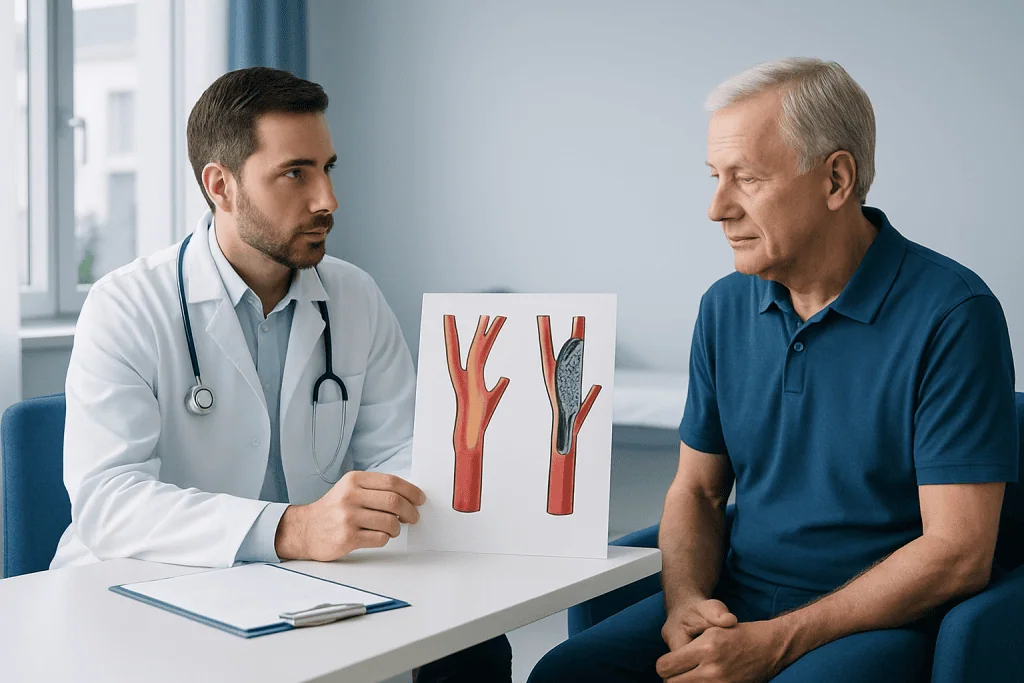
Carotid endarterectomy is a traditional surgical treatment for carotid stenosis. The surgeon makes an incision in the neck, temporarily controls blood flow in the artery, removes the plaque, and repairs the vessel. This operation has been used for many years and is often considered a standard option for suitable patients, particularly those with symptomatic disease and anatomy that is favorable for surgery.
Carotid artery stenting is less invasive. A specialist guides a catheter through the blood vessels, usually from the groin or wrist, to reach the carotid artery. A tiny balloon may be used to widen the narrowed segment, and a stent is placed to support the artery from inside. Protection devices are often used to reduce the chance that small plaque fragments will travel to the brain during the procedure. This approach may be especially useful for patients who have a high risk from open surgery or difficult neck anatomy.
Each procedure has distinct risks. Endarterectomy may carry a higher chance of local surgical complications such as wound issues, nerve irritation in the neck, or heart-related stress in some patients. Stenting may have a higher risk of stroke during or shortly after the procedure in certain groups, especially when the plaque is complex or the artery is very tortuous. The decision is therefore not about which procedure is universally better, but which one is safer and more effective for a particular person.
In practice, doctors often compare these options with carotid endarterectomy and carotid artery stenting pathways in mind, while also recognizing that some patients are best managed with intensive medical therapy alone.
Factors That Help Doctors Choose One Procedure Over the Other
Age can influence the choice. In some patients, especially older adults, carotid endarterectomy may be preferred because stenting can be technically more challenging in arteries that are elongated, calcified, or sharply curved. In younger patients or in those with anatomy well suited to catheter-based treatment, stenting may be an appropriate option when other factors also support it.
Overall health is equally important. Someone with serious heart disease, severe lung disease, prior neck surgery, previous neck radiation, or a carotid lesion located high in the neck may face greater risk from open surgery. In these cases, a less invasive approach may be considered. On the other hand, if the aortic arch or carotid artery anatomy makes catheter access difficult, surgery may be safer than stenting.
The exact pattern of plaque matters too. Heavy calcification, a very long narrowed segment, unstable plaque, near-occlusion, or marked vessel tortuosity can affect the technical success and risk profile of stenting. Doctors use detailed imaging to study these features before recommending a plan. They also consider whether the narrowing is on one side or both, and whether the patient has had prior treatment in the same area.
Finally, the experience of the treating center matters. The best outcomes usually come from teams that regularly evaluate and treat carotid disease, including neurologists, vascular surgeons, interventional neuroradiologists, interventional neurologists, and radiologists. A multidisciplinary discussion is especially helpful when both options seem reasonable.
Tests and Evaluation Before Treatment
Assessment usually begins with a careful medical history and neurological examination. Doctors ask about symptoms such as temporary vision loss, facial drooping, weakness, numbness, speech problems, dizziness, and prior strokes or TIAs. They also review medications, bleeding risk, smoking history, high blood pressure, diabetes, cholesterol levels, and other vascular conditions.
Imaging confirms the diagnosis and helps estimate severity. Carotid duplex ultrasound is often the first test because it is noninvasive and can measure blood flow through the artery. CT angiography and MR angiography provide more detail about the artery’s shape, the plaque, and the surrounding anatomy. In selected cases, catheter angiography may be used when the diagnosis is uncertain or when an endovascular procedure is being planned.
Brain imaging may also be needed, especially if the patient has had recent symptoms. This helps doctors determine whether a stroke has already occurred, how large it is, and whether immediate intervention is safe. Cardiac evaluation can be important as well, since heart disease often coexists with carotid disease and may affect procedural risk.
When stroke specialists evaluate possible stroke risk related to carotid narrowing, they often compare the expected benefit of intervention with the person’s life expectancy, functional status, and the quality of current medical control. This ensures that treatment decisions remain practical as well as evidence-based.
Medical Therapy, Recovery, and Long-Term Care
Whether a patient has surgery, stenting, or no procedure, medical therapy remains essential. Treatment commonly includes antiplatelet medication when appropriate, cholesterol-lowering therapy, blood pressure control, diabetes management, exercise, and smoking cessation. These steps help reduce the risk of stroke and protect the arteries throughout the body, not just the carotids.
Recovery differs between the two procedures. Endarterectomy usually involves a neck incision and short hospital observation, with monitoring for blood pressure changes, neurologic status, and wound healing. Stenting typically involves a shorter recovery from the access site, but it also requires close observation because blood pressure and heart rate can fluctuate, and the early period after treatment is important for stroke prevention.
After either treatment, follow-up imaging is often recommended to check that the artery remains open and to look for recurrent narrowing. Patients should continue regular visits with their doctor and report any new neurologic symptoms promptly. Sudden weakness, speech trouble, facial drooping, or vision loss should always be treated as a medical emergency.
For patients who need specialized care, multidisciplinary teams may also coordinate related services such as stroke rehabilitation after a cerebrovascular event or broader management strategies for carotid artery disease. Near the end of the care pathway, some international patients choose centers such as Acibadem International, where multidisciplinary specialists in JCI-accredited hospitals evaluate and treat carotid conditions.
When to See a Doctor and Questions to Ask
Anyone with symptoms that could suggest a TIA or stroke should seek urgent medical attention. These symptoms include sudden weakness or numbness on one side of the body, trouble speaking, confusion, facial drooping, sudden vision loss, or severe imbalance. Even if the symptoms go away quickly, immediate assessment is important because a TIA can be an early warning sign of stroke.
People may also need evaluation if a carotid bruit is heard during an examination, if imaging done for another reason shows carotid narrowing, or if they have many vascular risk factors. Not every narrowed artery requires a procedure, but the finding should be interpreted by a qualified clinician in context.
Helpful questions to ask include: How severe is the narrowing? Is it causing symptoms? What are the risks of stroke if it is treated or not treated? Why is surgery, stenting, or medical therapy the best fit in this case? What medicines are needed before and after treatment? Clear answers can help patients and families feel more informed and confident in the plan.
If the diagnosis or recommendation is complex, a second opinion can be useful. This is especially true when the patient has several medical conditions, prior neck surgery, unusual artery anatomy, or uncertainty about whether the narrowing is truly responsible for symptoms.
Frequently asked questions
Which is safer, carotid artery stenting or carotid endarterectomy?
Neither procedure is always safer for every patient. The safer choice depends on age, symptoms, artery anatomy, medical conditions, and the experience of the treatment team. Doctors compare the risks of stroke, heart complications, bleeding, and technical difficulty before recommending one option.
Why might a doctor recommend endarterectomy instead of stenting?
A doctor may favor endarterectomy when the artery anatomy is better suited to surgery or when evidence suggests surgery may carry a lower stroke risk for that patient. It is often considered for suitable patients with symptomatic carotid narrowing. The final decision is individualized rather than based on one rule.
Why might a doctor recommend stenting instead of surgery?
Stenting may be preferred when open surgery is considered higher risk, such as in some patients with prior neck surgery, prior radiation, severe heart or lung disease, or a hard-to-reach lesion. It is less invasive and avoids a neck incision. However, it still requires careful patient selection and specialist expertise.
Can carotid stenosis be treated without a procedure?
Yes. Many people, especially some with asymptomatic narrowing, are treated with medical therapy and close follow-up rather than immediate intervention. This usually includes risk-factor control, cholesterol treatment, blood pressure management, smoking cessation, and other stroke-prevention measures.
How do doctors measure the severity of carotid narrowing?
Doctors usually start with carotid ultrasound and may confirm the finding with CT angiography or MR angiography. These tests show how narrow the artery is and help assess plaque characteristics and anatomy. The imaging results are interpreted together with symptoms and overall health.
How urgent is treatment after a TIA or minor stroke?
It can be time-sensitive because the risk of another stroke may be higher soon after symptoms occur. Doctors often evaluate these patients promptly with brain and vessel imaging to decide when treatment is safest and most beneficial. The exact timing depends on the patient’s neurologic condition and imaging findings.
References
- American Heart Association
- American Stroke Association
- National Institute of Neurological Disorders and Stroke
- Society for Vascular Surgery
- European Society for Vascular Surgery
This article is for general information only and is not a substitute for professional medical advice. Please consult a qualified doctor about your individual situation.
Explore treatments in Turkey — costs, top hospitals & a free quote
JCI-accredited · board-certified surgeons · reply within 24h
Add us as a Preferred Source to see more of our trusted health content across Google Search, AI Overviews and Discover.
Check your numbers in seconds
BMI, calories, due date, blood pressure and 30+ more clinical calculators — free, instant, doctor-reviewed ranges.

Neurosurgery
Surgical treatment of the brain, spine and nervous system, including minimally invasive and functional procedures.
70 specialists in this unitMore from the Health Library



Related Specialists

Dr. Metehan Bağış
Emergency Service
Dr. Feyzi Kılıç
Orthopedic Surgery & Traumatology
Dt. Şerife Karaarslan
Oral & Dental Health
Fzt. Dilek Küçükvardar
Physical Medicine & Rehabilitation