Carotid Stenosis and Stroke Risk: When Endovascular Treatment May Help

Carotid stenosis usually develops because of atherosclerosis, or plaque buildup in the carotid arteries. Some people have no symptoms, while others may have warning signs such as a TIA, temporary weakness, trouble speaking, or vision loss.
Key Takeaways
- Carotid stenosis usually develops because of atherosclerosis, or plaque buildup in the carotid arteries.
- Some people have no symptoms, while others may have warning signs such as a TIA, temporary weakness, trouble speaking, or vision loss.
- Treatment depends on symptoms, the degree of narrowing, overall health, and whether the person is a good candidate for a procedure.
- Endovascular treatment, usually carotid artery stenting, may help selected patients when anatomy or medical factors make it a suitable option.
- Managing blood pressure, cholesterol, diabetes, smoking, and lifestyle habits is important whether or not a procedure is needed.
Carotid stenosis is a narrowing of the carotid arteries, the major blood vessels that carry blood to the brain. It can increase the risk of transient ischemic attack (TIA) and stroke, but timely diagnosis and the right treatment plan can help lower that risk.
Overview
Carotid stenosis means narrowing of one or both carotid arteries, which run along each side of the neck and supply oxygen-rich blood to the brain. In most cases, the narrowing is caused by atherosclerosis, a process in which fatty deposits, cholesterol, calcium, and inflammatory material build up in the artery wall and form plaque. Over time, this can reduce blood flow or create an unstable surface where a clot can form.
The main concern with carotid stenosis is stroke risk. A stroke can happen if a blood clot blocks blood flow to part of the brain, or if a piece of plaque or clot breaks off and travels upward into smaller brain arteries. Some people first learn they have carotid stenosis after a transient ischemic attack, often called a mini-stroke, while others are diagnosed after a doctor hears a bruit, or abnormal sound, in the neck or after imaging for another reason.
Not every narrowing needs a procedure. Many people are treated effectively with careful control of risk factors and medication. When the narrowing is more severe, especially if symptoms have already occurred, doctors may consider a procedure to restore blood flow and reduce future stroke risk. Depending on the person and the artery anatomy, options may include surgery or an endovascular approach such as carotid artery stenting.
Symptoms and Warning Signs
Carotid stenosis often causes no symptoms until blood flow is affected or an embolus travels to the brain or eye. Because of this, it is sometimes called a silent condition. Even without symptoms, significant narrowing can still matter, especially when combined with other vascular risk factors.
When symptoms do occur, they are usually signs of a TIA or stroke and should be treated as urgent. A TIA causes temporary neurological symptoms that resolve, but it is an important warning sign that the risk of a more serious stroke may be higher in the near future.
- Sudden weakness or numbness of the face, arm, or leg, especially on one side
- Sudden trouble speaking or understanding speech
- Sudden vision loss in one eye or blurred vision
- Sudden dizziness, imbalance, or difficulty walking
- Sudden severe confusion or trouble coordinating movements
Symptoms can last only a few minutes or longer. Even if they fully improve, medical assessment should not be delayed. A prompt evaluation can help identify carotid stenosis or another cause and may prevent future brain injury.
Causes and Risk Factors

The most common cause of carotid stenosis is atherosclerosis. This process is similar to what can happen in the coronary arteries of the heart or the arteries of the legs. The artery lining becomes damaged over time, allowing plaque to build up and gradually narrow the vessel. Some plaques remain stable, while others are more likely to rupture or shed material into the bloodstream.
Several factors raise the likelihood of developing carotid artery disease. Age is an important factor, but lifestyle and medical conditions also play a major role. The same steps that protect heart health often help protect the carotid arteries and the brain as well.
- High blood pressure
- High cholesterol
- Smoking or tobacco exposure
- Diabetes
- Obesity and low physical activity
- Family history of atherosclerotic disease
- Heart disease, peripheral artery disease, or prior stroke/TIA
Inflammation, poor diet quality, and long-term vascular stress may also contribute. In a smaller number of cases, carotid narrowing can be related to prior radiation to the neck, arterial injury, or less common vascular conditions. Doctors also consider whether the narrowing is similar to other forms of stroke-related vascular disease elsewhere in the body.
How Carotid Stenosis Is Diagnosed
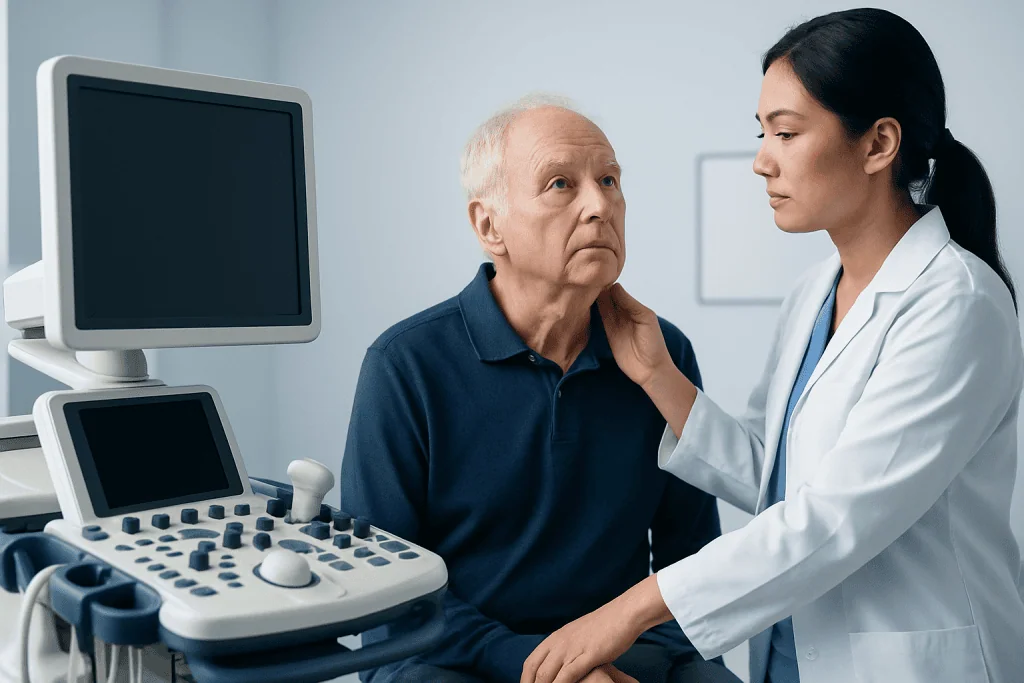
Diagnosis begins with a medical history and physical examination. A doctor asks about any TIA or stroke-like symptoms, cardiovascular risk factors, and past medical conditions. During the exam, the doctor may listen over the carotid arteries for a bruit, although a bruit does not always mean there is severe narrowing, and significant stenosis can also be present without one.
The most common first test is a carotid duplex ultrasound. This noninvasive test uses sound waves to show blood flow and estimate how much narrowing is present. It is widely used because it is safe, quick, and does not require radiation or contrast dye. If more detail is needed, doctors may order CT angiography or MR angiography to better define the anatomy.
In selected cases, catheter angiography may be used, especially when planning an endovascular procedure. This test can provide a very detailed view of the artery and its branches. The care team looks at several factors, including how severe the stenosis is, whether symptoms have occurred, the shape and location of the plaque, and whether there are other possible causes of neurological symptoms such as heart rhythm problems or disease in smaller brain vessels.
Because treatment decisions can be complex, carotid stenosis is often assessed in a multidisciplinary setting. Neurologists, interventional specialists, vascular surgeons, and radiologists may all help determine whether the safest approach is medication alone, surgery, or an endovascular procedure.
Treatment Options and When Endovascular Treatment May Help
Treatment aims to lower stroke risk and support healthy blood flow to the brain. For many people, the foundation of care is best medical therapy. This may include antiplatelet medication, cholesterol-lowering treatment, blood pressure control, diabetes management, and smoking cessation. Doctors also address diet, exercise, and other cardiovascular risk factors. Mild or moderate narrowing without symptoms is often managed this way, with regular monitoring.
When carotid stenosis is more severe, or when it has already caused a TIA or stroke, a procedure may be recommended. One traditional option is carotid endarterectomy, a surgical operation in which plaque is removed from the artery. Another option is an endovascular approach called carotid artery stenting. In this procedure, a specialist reaches the artery through a catheter, usually inserted through an artery in the wrist or groin, and places a stent to help keep the narrowed segment open. Patients who need a minimally invasive evaluation or therapy may also be assessed through angiography as part of planning.
Endovascular treatment may help selected patients, especially when surgery carries higher risk or when the artery anatomy is favorable for stenting. This may include people with prior neck surgery or radiation, certain high surgical risk conditions, or narrowing in a location that is technically difficult to reach with open surgery. The decision is individualized, and the team considers age, symptoms, plaque features, other medical conditions, and procedural risk.
Some patients may need additional brain and vessel assessment to understand the full stroke picture, including advanced imaging or evaluation related to interventional neuroradiology. In people who have already had warning symptoms, urgent evaluation is especially important because stroke risk can be highest soon after a TIA or minor stroke. If a procedure is recommended, the doctor explains the expected benefits, possible complications, and the follow-up needed after treatment.
Prevention, Self-care, and Recovery After Treatment
Whether carotid stenosis is treated with medication alone or with a procedure, long-term prevention remains essential. Plaque can progress over time, and vascular disease often affects more than one part of the body. A person who has carotid stenosis benefits from the same protective habits recommended for heart and brain health overall.
- Take prescribed medicines exactly as directed
- Stop smoking and avoid secondhand smoke
- Follow a heart-healthy eating pattern rich in vegetables, fruits, whole grains, and healthy fats
- Stay physically active as advised by a doctor
- Maintain healthy blood pressure, cholesterol, and blood sugar levels
- Keep follow-up appointments and repeat imaging when recommended
After carotid stenting or surgery, the care team usually recommends a period of close follow-up. This may include ultrasound monitoring of the treated artery, review of medications, and checking for any new neurological symptoms. Recovery plans vary, but many people are encouraged to return gradually to normal activities while avoiding tobacco and continuing risk-factor control.
For patients receiving specialist care abroad, coordination and continuity are important. Near the end of treatment planning, some families may choose centers with coordinated vascular and neurological services; Acibadem International’s multidisciplinary specialists and JCI-accredited hospitals diagnose and treat carotid stenosis for international patients. If stroke recovery or deficits are present, the broader care pathway may also involve stroke rehabilitation to support function and independence.
When to See a Doctor
Immediate medical care is needed for any possible TIA or stroke symptoms, even if they last only a few minutes and then improve. Fast action can reduce the risk of permanent brain injury and may open the door to time-sensitive treatment. People should seek emergency help for sudden weakness, numbness, speech difficulty, facial drooping, or sudden vision loss.
A routine medical appointment is also important for people with cardiovascular risk factors, known atherosclerosis, or a family history of stroke. Screening is not needed for everyone, but a doctor may recommend evaluation if there are symptoms, a bruit, or evidence of vascular disease elsewhere. People who have already been diagnosed with carotid stenosis should keep all follow-up visits, even if they feel well.
Ongoing care helps ensure that treatment is adjusted if the narrowing progresses or symptoms change. It also gives patients an opportunity to ask whether they may benefit from specialist review by neurology, vascular surgery, or endovascular experts. Early discussion and shared decision-making can help match the treatment approach to the person’s individual stroke risk and overall health goals.
Frequently asked questions
What is carotid stenosis?
Carotid stenosis is narrowing of the carotid arteries in the neck, usually caused by plaque buildup. These arteries supply blood to the brain, so significant narrowing can increase the risk of TIA or stroke.
Can carotid stenosis exist without symptoms?
Yes. Many people have no symptoms and learn about it during an exam or imaging test done for another reason. Even without symptoms, treatment may still be important depending on how severe the narrowing is and what other risk factors are present.
When is carotid artery stenting considered?
Carotid artery stenting may be considered when a procedure is needed to reduce stroke risk and an endovascular approach is a good fit. Doctors may favor it in selected patients with high surgical risk, prior neck radiation or surgery, or anatomy that makes surgery less suitable.
Is carotid stenosis always treated with surgery or stenting?
No. Many cases are managed with medication and risk-factor control alone, especially if the narrowing is less severe or has not caused symptoms. The decision depends on the degree of stenosis, the presence of TIA or stroke symptoms, and the person's overall health.
What tests are used to diagnose carotid stenosis?
Doctors commonly start with carotid duplex ultrasound, which estimates blood flow and the amount of narrowing. CT angiography, MR angiography, or catheter angiography may be used when more detail is needed or when planning a procedure.
Can lifestyle changes really help lower stroke risk?
Yes. Stopping smoking, controlling blood pressure and cholesterol, managing diabetes, eating a heart-healthy diet, and staying active can all help lower the risk of stroke. These steps are important both before and after any procedure.
References
- World Health Organization
- American Heart Association
- National Institute of Neurological Disorders and Stroke
- Society for Vascular Surgery
- European Stroke Organisation
This article is for general information only and is not a substitute for professional medical advice. Please consult a qualified doctor about your individual situation.
Explore treatments in Turkey — costs, top hospitals & a free quote
JCI-accredited · board-certified surgeons · reply within 24h
Add us as a Preferred Source to see more of our trusted health content across Google Search, AI Overviews and Discover.
Check your numbers in seconds
BMI, calories, due date, blood pressure and 30+ more clinical calculators — free, instant, doctor-reviewed ranges.