

Cataplexy: A Complete Medical Overview

Cataplexy causes brief muscle weakness without loss of consciousness. Episodes are commonly triggered by strong emotions, especially laughter.
Key Takeaways
- Cataplexy causes brief muscle weakness without loss of consciousness.
- Episodes are commonly triggered by strong emotions, especially laughter.
- Cataplexy is strongly associated with narcolepsy, particularly narcolepsy type 1.
- Diagnosis usually involves sleep history, neurological evaluation, and sleep testing.
- Treatment may include lifestyle adjustments and medicines prescribed by a sleep or neurology specialist.
- Medical review is important if sudden weakness, daytime sleepiness, or unexplained collapses occur.
Cataplexy is a sudden, short-lived episode of muscle weakness or loss of muscle tone, usually triggered by strong emotions such as laughter, surprise, or anger. It most often occurs as part of narcolepsy and can range from subtle facial drooping to full-body collapse while a person remains conscious.
What cataplexy is and why it happens
Cataplexy is a symptom in which a person suddenly loses some or all muscle control for a short time, often after a strong emotion such as laughter, excitement, embarrassment, or anger. The episode may affect only the face, jaw, neck, or knees, or it may involve the whole body. A key feature is that the person usually stays awake and aware during the event, even if they cannot speak or move normally for a few seconds to a few minutes.
Although cataplexy can feel frightening, it is different from fainting, a seizure, or a stroke. In fainting, consciousness is usually lost because of reduced blood flow to the brain. In cataplexy, awareness is typically preserved. This difference is important because it helps guide the right evaluation and treatment.
Cataplexy is most closely linked to narcolepsy, especially narcolepsy type 1. In this condition, the brain has difficulty regulating the boundaries between wakefulness and rapid eye movement (REM) sleep. Cataplexy is thought to happen when REM sleep-related muscle relaxation appears briefly during wakefulness, usually in response to an emotional trigger.
For many people, understanding cataplexy begins with understanding narcolepsy itself. Recognizing the pattern of emotion-triggered weakness can help patients and families seek the right specialist care and avoid unnecessary worry about other causes of collapse.
How cataplexy can feel from one person to another
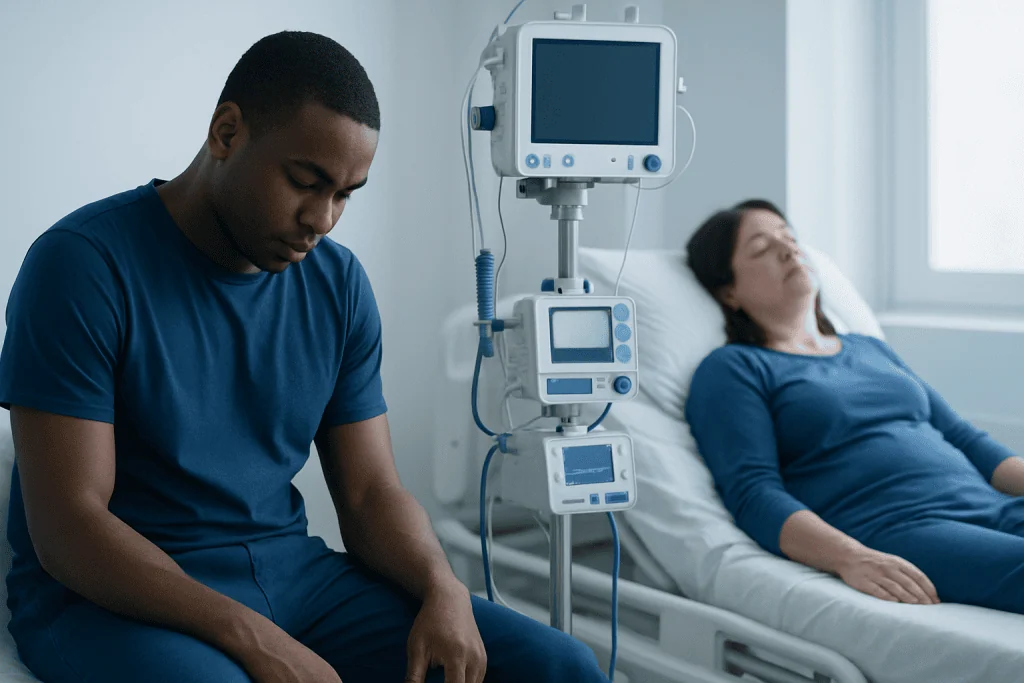
Cataplexy does not look the same in every person. Some people have very mild episodes, such as drooping eyelids, slackening of the jaw, head nodding, slurred speech, or brief weakness in the knees. Others may have more dramatic attacks with full-body collapse. Episodes usually begin suddenly and end on their own.
Common triggers include laughter, joking, pleasant surprise, frustration, anger, and emotional stress. Not every strong feeling will cause an episode, and triggers may vary over time. Some people learn to notice a warning sensation, while others experience attacks with little or no warning.
During an episode, the person is generally conscious and can often hear what is happening around them. This preserved awareness is one of the clues that distinguishes cataplexy from some other neurological events. However, because a person may be unable to respond normally, bystanders may mistakenly think they have lost consciousness.
- Mild cataplexy: facial weakness, jaw dropping, eyelid drooping, voice changes
- Moderate cataplexy: buckling knees, trouble holding objects, brief inability to speak clearly
- Severe cataplexy: collapse to the ground with temporary inability to move
- Typical duration: seconds to a few minutes, followed by recovery
Symptoms that often occur alongside cataplexy

Cataplexy is often only one part of a broader sleep-wake disorder. Many people who have cataplexy also experience excessive daytime sleepiness, meaning they feel unusually sleepy during the day or may doze off unintentionally. This symptom may appear before cataplexy develops and is often a major reason people seek medical advice.
Other symptoms linked to narcolepsy can include sleep paralysis and vivid dream-like experiences as a person is falling asleep or waking up. Sleep paralysis is a brief inability to move when transitioning into or out of sleep. These symptoms can be distressing, but they do not mean a person is losing touch with reality.
Nighttime sleep may also be disrupted, even though narcolepsy is known for daytime sleepiness. People may wake often, have fragmented sleep, or feel that sleep is not refreshing. Because of this combination of symptoms, a careful sleep history is an important part of assessment.
When cataplexy occurs with sudden sleep attacks or other sleep-related symptoms, doctors may recommend assessment by a specialist in sleep disorders treatment or neurology. Identifying the full symptom pattern helps build an accurate diagnosis and a treatment plan that addresses both safety and quality of life.
Causes and risk factors
The most common cause of cataplexy is narcolepsy type 1, a neurological sleep disorder. Researchers believe this usually involves a loss of brain cells that produce hypocretin, also called orexin. This chemical helps regulate wakefulness and muscle tone. When hypocretin levels are very low, REM sleep features can intrude into wakefulness and lead to cataplexy.
The exact reason these cells are lost is not fully understood. Current evidence suggests that, in many cases, the immune system may play a role in targeting these cells in genetically susceptible people. This does not mean cataplexy is contagious or caused by stress alone, although stress and strong emotion can trigger episodes once the condition is present.
Cataplexy can begin in childhood, adolescence, or adulthood. In some people, symptoms are subtle at first and become more obvious over time. A family history of narcolepsy is uncommon but may increase the likelihood slightly. Because the condition can be mistaken for clumsiness, seizures, fainting, or anxiety, diagnosis is sometimes delayed.
Less commonly, symptoms resembling cataplexy may occur with other neurological conditions or after brain injury affecting areas involved in sleep regulation. For this reason, persistent or unusual episodes should be evaluated carefully rather than assumed to be simple fatigue or emotional reactions.
How doctors diagnose cataplexy
Diagnosis starts with a detailed medical history. A doctor will ask what the episodes look like, how long they last, whether consciousness is preserved, what emotions trigger them, and whether daytime sleepiness or other sleep symptoms are present. Family members or videos of episodes, when available, can be helpful because cataplexy may not happen during the appointment.
Sleep testing is often used to confirm narcolepsy. This may include an overnight sleep study, called polysomnography, followed by a multiple sleep latency test the next day. These tests assess sleep patterns, how quickly a person falls asleep, and whether REM sleep occurs unusually early. In selected cases, additional testing such as hypocretin measurement or other neurological evaluation may be considered.
Doctors also work to rule out conditions that can look similar. Depending on the symptoms, they may consider fainting, seizures, transient weakness disorders, panic attacks, medication effects, or functional neurological symptoms. A careful evaluation helps prevent misdiagnosis and ensures that treatment is appropriate.
Patients may be referred for neurology consultation when episodes are unclear or when other neurological causes need to be excluded. In some cases, sleep study testing provides the evidence needed to confirm the diagnosis and guide long-term management.
Treatment options and daily management
Treatment for cataplexy focuses on reducing episode frequency, improving daytime alertness, and helping a person stay safe in daily life. The choice of treatment depends on the overall symptom pattern, age, medical history, and whether narcolepsy is also present. Management is usually individualized and may involve both medication and non-drug strategies.
Doctors may prescribe medicines that reduce cataplexy or improve excessive daytime sleepiness. The exact treatment plan should be decided by a qualified clinician, as medicines differ in how they work, their side effects, and whether they are appropriate for a particular patient. Regular follow-up is important because symptoms and treatment needs may change over time.
Daily habits can also make a meaningful difference. Keeping a regular sleep schedule, planning short naps when recommended, avoiding sleep deprivation, and recognizing emotional triggers may help some people reduce attacks or cope more confidently. Patients should also review driving, operating machinery, working at heights, and swimming alone with their doctor if episodes or severe sleepiness are not fully controlled.
Near the end of the care journey, some patients benefit from coordinated follow-up across sleep medicine, neurology, and mental health support, especially if symptoms affect school, work, or confidence. Acibadem International’s multidisciplinary specialists and JCI-accredited hospitals diagnose and treat sleep-related neurological conditions for international patients when advanced evaluation is needed.
Prevention, self-care, and living well with cataplexy
There is no guaranteed way to prevent cataplexy from developing, because it is usually tied to the underlying biology of narcolepsy. However, people who already have cataplexy can often lower the impact of symptoms by building routines that support stable sleep and daily safety. Small adjustments may reduce disruption and make episodes easier to manage.
Helpful self-care often includes a consistent bedtime and wake time, enough total sleep, and avoiding alcohol or sedating substances if these worsen symptoms. Some people find it useful to identify common triggers, such as laughing intensely in a crowded place or becoming overtired during long workdays. The goal is not to avoid emotions, but to understand patterns and plan around them.
Practical safety steps matter. Sitting down when an attack seems likely, protecting against falls, informing trusted friends or coworkers, and carrying a brief explanation of the condition can help in public settings. For children and teenagers, support at school may be important, especially if symptoms affect concentration, confidence, or participation in activities.
- Keep regular sleep routines and avoid sleep loss
- Take prescribed medicines exactly as directed
- Discuss driving and workplace safety with a clinician
- Tell close contacts what an episode looks like and how to help
- Seek support if symptoms affect mood, social life, or school/work performance
When to seek medical care
A person should seek medical care if they have sudden episodes of muscle weakness, unexplained collapses, frequent daytime sleepiness, or vivid sleep-related symptoms such as sleep paralysis or dream-like experiences at sleep onset or awakening. Even if episodes are brief, proper assessment is important because cataplexy can be mistaken for other conditions that need different treatment.
Urgent assessment is especially important if there is loss of consciousness, prolonged confusion, chest pain, injury during a collapse, new one-sided weakness, difficulty speaking that does not quickly resolve, or any symptom suggesting stroke, seizure, or heart-related fainting. These features are not typical of cataplexy and should not be ignored.
Medical review is also advisable when symptoms begin to interfere with driving, work, school, or emotional well-being. Early diagnosis may reduce uncertainty and help people access effective treatment and practical support. Keeping a symptom diary, including triggers and duration, can make the appointment more productive.
If a diagnosis has already been made, follow-up is still important when episodes become more frequent, medicines seem less effective, side effects appear, or new symptoms develop. Ongoing communication with a qualified doctor helps ensure care remains safe, current, and tailored to the person’s needs.
Frequently asked questions
Is cataplexy the same as narcolepsy?
No. Cataplexy is a symptom, while narcolepsy is the broader sleep disorder. Cataplexy is most strongly associated with narcolepsy type 1, but not everyone with excessive daytime sleepiness has cataplexy.
Does a person lose consciousness during cataplexy?
Usually, no. Most people remain awake and aware of what is happening around them during an episode. This preserved awareness is one reason cataplexy is different from fainting.
What emotions can trigger cataplexy?
Laughter is a very common trigger, but surprise, excitement, embarrassment, anger, and emotional stress can also bring on attacks. Triggers vary from person to person, and not every emotional moment causes an episode.
How long does cataplexy last?
Episodes usually last from a few seconds to a few minutes. Recovery is generally quick, though a person may feel unsettled or tired afterward, especially if episodes happen often.
Can cataplexy be cured?
There is no simple cure for cataplexy, but symptoms can often be managed effectively. Treatment may reduce the number and severity of episodes and improve daily functioning.
How is cataplexy diagnosed?
Doctors diagnose cataplexy by reviewing the symptom pattern, emotional triggers, and associated sleep problems. Many patients also need sleep testing, such as an overnight sleep study and daytime nap testing, to confirm narcolepsy.
When should someone worry that it may not be cataplexy?
Medical assessment is especially important if there is true loss of consciousness, prolonged confusion, chest pain, or weakness on one side of the body. These are not typical features of cataplexy and may point to another condition that needs urgent care.
References
- National Institute of Neurological Disorders and Stroke
- American Academy of Sleep Medicine
- National Health Service
- Mayo Clinic
- National Organization for Rare Disorders
This article is for general information only and is not a substitute for professional medical advice. Please consult a qualified doctor about your individual situation.
Joint and spine care in Turkey — expert assessment & treatment
JCI-accredited · board-certified surgeons · reply within 24h
Add us as a Preferred Source to see more of our trusted health content across Google Search, AI Overviews and Discover.

More from the Health Library

Brachiocephalic Artery: An Evidence-Based Guide for Patients

E Coli: An Evidence-Based Guide for Patients

Oxygen Concentrator: A Complete Medical Overview

Belching: A Complete Medical Overview

Pancreatic Elastase Fecal: What Patients Need to Know

Baby Hives — Explained by Medical Evidence, Not Myths
Related Specialists

Prof. Dr. Ercan Karaarslan
Radiology
Fzt. Sabit Kılıç
Physical Medicine & Rehabilitation
Assoc. Prof. Dr. Emine Karabük
Gynecology & Obstetrics
Dr. Mehrıban Allahverdıyeva
Inpatient Clinic Physicians