Cavity vs. Stain: How to Tell the Difference
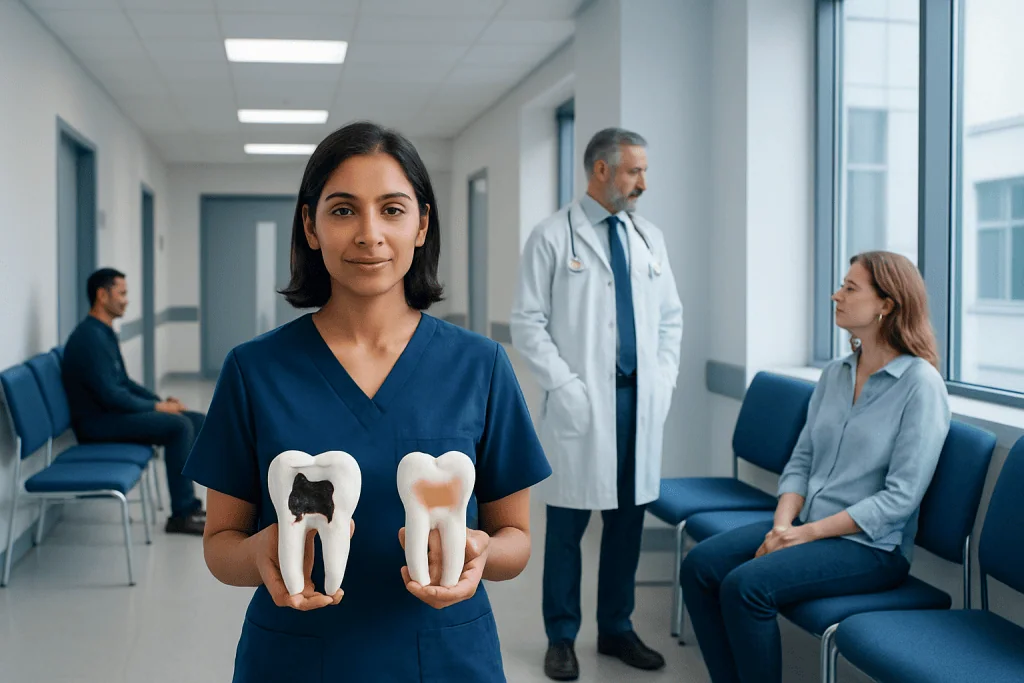
Stains affect tooth color; cavities are areas of decay that damage tooth structure. A dark spot does not always mean a cavity, and early cavities may not be visibly dark.
Key Takeaways
- Stains affect tooth color; cavities are areas of decay that damage tooth structure.
- A dark spot does not always mean a cavity, and early cavities may not be visibly dark.
- Dentists use visual examination, gentle instruments and, when appropriate, dental X-rays to assess suspected decay.
- Stains may be managed with professional cleaning or cosmetic options, while cavities require prevention-focused care or restorative treatment.
- Tooth pain, sensitivity, a visible hole, swelling or a persistent dark spot should be assessed by a dentist.
A stain is discoloration on or within a tooth, while a cavity is tooth decay that weakens and can create a hole in the enamel. They may look similar at first, especially when a dark spot appears in a tooth groove, so a dental examination is the reliable way to tell them apart.
Cavity vs Stain: A Side-by-Side Comparison
It is understandable to wonder whether a brown, black, white, or yellow mark is a cavity or simply a stain. In general, a stain is a color change caused by substances on the tooth surface or changes within the tooth. A cavity, also called dental caries or tooth decay, is damage caused when bacteria in dental plaque produce acids that gradually dissolve tooth minerals.
| Feature | Tooth stain | Cavity |
|---|---|---|
| What it is | A change in tooth color on the surface or within the tooth. | Loss of mineral and breakdown of tooth structure due to decay. |
| Appearance | Often yellow, brown, gray, or black; may be smooth and flat. | May begin as a chalky white area, then become brown or black; can form a rough spot, pit, or hole. |
| Symptoms | Usually painless and without sensitivity. | May cause sensitivity to sweet, hot, or cold foods, pain, or food trapping, though early decay may have no symptoms. |
| Can brushing remove it? | Some surface staining may lessen with professional cleaning, but deeper stains may remain. | No. Brushing supports prevention but cannot rebuild a formed cavity. |
| Typical care | Cleaning, reducing staining exposures, or selected cosmetic treatment. | Fluoride-based preventive care in early cases or a restoration if the tooth has broken down. |
Color alone is not a dependable diagnosis. For example, a dark line in a molar groove can be harmless staining, while decay can be hidden between teeth and may not be obvious in a mirror. A dentist evaluates the area in context, including its texture, location, risk factors, and any findings on imaging.
Why Teeth Develop Stains or Cavities
External, or extrinsic, stains develop on the outer enamel surface. Coffee, tea, red wine, tobacco, richly colored foods, and some mouth rinses can contribute. Plaque and tartar can also collect pigments, making teeth look yellow or brown. Thorough home care and professional cleaning may improve many surface stains.
Internal, or intrinsic, discoloration comes from within the tooth. It can occur after trauma, certain developmental changes, aging-related thinning of enamel, or changes in the inner tooth tissue. Intrinsic discoloration is not necessarily decay, but it should be checked if it affects one tooth, appears suddenly, or follows an injury.
Cavities develop when plaque bacteria use sugars and fermentable carbohydrates from food and drinks. The resulting acids repeatedly lower the pH around the tooth, causing minerals to leave enamel. Saliva and fluoride help repair very early mineral loss, but frequent acid exposure, inadequate plaque removal, dry mouth, deep tooth grooves, and limited fluoride exposure can make decay more likely.
Decay can occur on chewing surfaces, near the gumline, around old fillings, and between teeth. It is part of the broader process described in dental caries, which may progress deeper into the tooth without timely assessment and care.
How a Clinician Tells Them Apart

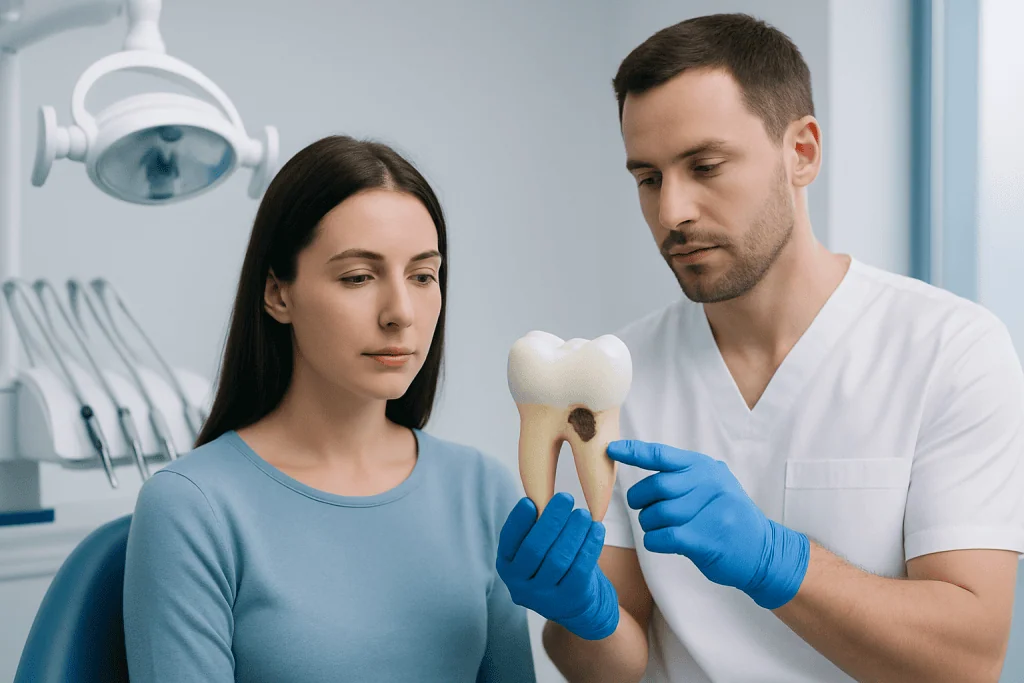
A dentist begins by asking about symptoms, oral hygiene habits, diet, fluoride use, dry mouth, previous dental work, and changes noticed over time. They inspect clean, dry teeth under good lighting. Stains are often smooth and limited to the surface, whereas active decay may look chalky, dull, softened, or irregular. However, dentists do not diagnose a cavity based on color alone.
The clinician may gently assess the tooth surface and examine areas where plaque tends to collect, including between teeth and around restorations. A sharp instrument should not be forcefully pressed into grooves, because this can damage weakened enamel. Instead, the overall clinical appearance and surface integrity guide the assessment.
Dental X-rays are often useful when decay may be present between teeth or beneath a surface that looks intact. They can also help determine how far decay has progressed. Not every stained tooth needs an X-ray, and the choice depends on a person’s age, cavity risk, symptoms, and recent imaging history.
Other findings may change the assessment. Sensitivity, a rough or sticky-feeling area, a visible opening, food repeatedly catching in the same spot, or a change seen over time may suggest decay. Conversely, a stable, smooth mark without structural loss may be a stain. Regular dental visits allow dentists to monitor uncertain areas safely.
What to Do if It Is a Stain
If a dentist confirms that discoloration is a stain rather than decay, the approach depends on its cause and the person’s preferences. A professional cleaning can remove plaque, tartar, and many external stains. Consistent brushing twice daily with fluoride toothpaste and cleaning between the teeth can help reduce new staining and protect against cavities at the same time.
Limiting frequent exposure to staining drinks and foods may help. Rinsing with water after coffee, tea, or colored beverages can be useful, and avoiding tobacco is important for oral and general health. Highly abrasive whitening products or frequent aggressive brushing are not recommended, as they may wear enamel or irritate gums.
Some stains are deeper and will not respond fully to cleaning. A dentist may discuss tooth whitening or other cosmetic options when appropriate for the individual’s teeth and gums. Whitening should be approached cautiously if there is untreated sensitivity, suspected decay, gum disease, crowns, fillings, or a single dark tooth that needs diagnosis first.
A darkened tooth after an injury deserves professional evaluation, even if it is not painful. Trauma can affect the nerve and blood supply inside the tooth, and discoloration may develop later. Early assessment helps determine whether observation or further treatment is needed.
What to Do if It Is a Cavity
Very early decay may appear as a white, matte area before a hole develops. At this stage, a dentist may recommend strengthened prevention, such as fluoride treatments, improved plaque control, dietary adjustments, and monitoring. Early mineral loss can sometimes be arrested or remineralized when the enamel surface is still intact.
Once decay has created a cavity or significantly weakened the tooth, the damaged area usually needs restorative treatment. The dentist removes decay as needed and restores the tooth with a suitable material. This helps restore function, reduce places where plaque can accumulate, and protect the remaining tooth structure. Learn more about dental fillings as a common option for treating a cavity.
If decay reaches the inner pulp, it can lead to inflammation, infection, or significant pain. Depending on the tooth and the extent of damage, treatment may involve root canal treatment followed by restoration. The appropriate plan is based on examination and imaging rather than symptoms alone.
Home remedies, whitening strips, or brushing harder cannot remove decay. Pain medicines may temporarily reduce discomfort for some people, but they do not treat the cause. Prompt dental care is the safest way to preserve as much healthy tooth structure as possible.
Prevention and Everyday Self-Care
Prevention addresses both staining and tooth decay. Teeth should be brushed twice a day using fluoride toothpaste, with attention to the gumline and chewing surfaces. Cleaning between teeth once a day with floss, interdental brushes, or another dentist-recommended method removes plaque from areas a toothbrush may not reach.
Frequent sipping of sweetened drinks, juice, sports drinks, or acidic beverages can raise cavity risk because teeth experience repeated acid exposure. Choosing water more often, keeping sugary foods and drinks mainly to mealtimes, and avoiding prolonged sipping can help. A balanced diet that supports overall nutrition also benefits oral health.
People with dry mouth may be at higher risk for cavities because saliva helps wash away food and buffer acids. Dry mouth can be related to medicines, medical conditions, dehydration, or mouth breathing. A dentist or doctor can help identify possible causes and recommend appropriate protective measures.
Regular dental examinations and professional cleanings support early identification of stains, early decay, gum concerns, and problems around existing restorations. The recommended visit schedule varies according to individual risk. Acibadem International’s multidisciplinary specialists and JCI-accredited hospitals diagnose and treat dental concerns for international patients.
When to Seek Medical Care
A dentist should assess a new or persistent dark, brown, black, or white spot, especially if it is rough, enlarging, or located in a deep groove or between teeth. An appointment is also appropriate for recurring sensitivity to hot, cold, sweet, or acidic foods; pain when biting; food trapping; bad taste; or a visible pit or hole.
Urgent dental advice is important for severe toothache, facial or gum swelling, fever, pus, trouble opening the mouth, or difficulty swallowing or breathing. Swelling with breathing or swallowing difficulty requires emergency medical care. These symptoms can indicate an infection that needs prompt evaluation.
Even without discomfort, routine examinations remain important because early cavities are often painless. A clinician can distinguish a harmless stain from an area that needs prevention, monitoring, or treatment and can explain the choices in a clear, individualized way.
Frequently asked questions
Can a black spot on a tooth be a stain instead of a cavity?
Yes. Dark spots can result from surface staining, especially in the natural grooves of back teeth. However, a cavity can also look dark, and decay may be present beneath an apparently stained surface, so a dentist should assess a persistent spot.
Does a cavity always hurt?
No. Early cavities commonly cause no pain or sensitivity. Symptoms may develop as decay progresses toward deeper layers of the tooth, which is why regular checkups are useful.
Can brushing remove a cavity?
Brushing with fluoride toothpaste helps prevent new decay and may support remineralization of very early enamel changes. It cannot remove decay once a hole has formed or replace lost tooth structure. A dentist can determine whether the area needs preventive care or restoration.
How can a dentist tell whether a dark groove is decay?
The dentist examines the tooth after it is cleaned and dried, assesses the surface and surrounding areas, and considers the person’s cavity risk. Dental X-rays may be used when needed, particularly to check for decay between teeth or beneath a surface that appears intact.
Can teeth whitening treat a cavity?
No. Whitening changes tooth color but does not treat decay or repair damaged enamel. A suspected cavity should be diagnosed and treated before cosmetic whitening is considered.
What should be done about a white spot on a tooth?
A white spot may be an early sign of mineral loss, but it can also have other causes. A dentist can assess whether it is active decay and may recommend fluoride, improved plaque control, dietary changes, or monitoring depending on the finding.
This article is for general information only and is not a substitute for professional medical advice. Please consult a qualified doctor about your individual situation.
Explore treatments in Turkey — costs, top hospitals & a free quote
JCI-accredited · board-certified surgeons · reply within 24h
Add us as a Preferred Source to see more of our trusted health content across Google Search, AI Overviews and Discover.

More from the Health Library

Antisocial Personality Disorder Symptoms: Possible Causes and When to Seek Care

Is Dementia Hereditary? Causes, Explanations, and Next Steps

Nexium vs Prilosec: Key Differences and How Doctors Tell Them Apart

Psoriasis vs Eczema Pictures: Key Differences and How Doctors Tell Them Apart

Is Caviar Healthy? A Doctor-Reviewed Answer