Cellulite Reduction: Procedure, Recovery and Results

Cellulite reduction can smooth dimpling temporarily or longer term with targeted procedures, healthy habits and realistic expectations.
Key Takeaways
- Cellulite is common, harmless and not a sign of poor health or excess body weight.
- Procedures can improve visible dimpling by targeting fibrous bands, fat tissue or skin texture.
- Some treatments offer short-term smoothing, while subcision-based procedures may provide longer-lasting improvement for selected dimples.
- Recovery varies from little downtime after non-invasive care to bruising and soreness after minimally invasive procedures.
- A qualified clinician can help distinguish cellulite from a new, painful or swollen skin change that needs medical assessment.
Cellulite reduction refers to treatments that aim to lessen the dimpled appearance of skin, most often on the thighs and buttocks. Results depend on the type and severity of cellulite, the procedure used and individual skin characteristics; no approach removes cellulite permanently for everyone.
Cellulite Reduction: What It Can and Cannot Do
Cellulite reduction is a group of cosmetic approaches designed to make dimpled skin look smoother. It may involve non-invasive energy-based treatments, massage-like techniques, injectable treatments or minimally invasive procedures that release the tight fibrous bands pulling the skin downward. The most common areas are the buttocks, hips and thighs.
Cellulite develops when fibrous connective tissue beneath the skin tethers the skin surface while underlying fat pushes upward around those tethered points. Hormones, genetics, skin structure, age and body-fat distribution all influence its appearance. It is extremely common, particularly in women, and can occur in people of all body sizes and fitness levels.
Cellulite reduction treatment is intended to improve appearance rather than treat a disease. It cannot reliably change body weight, replace healthy lifestyle habits or guarantee perfectly smooth skin. A useful consultation focuses on the type of dimpling present, the expected degree of improvement, likely duration of results and recovery needs.
How Cellulite Reduction Procedures Work
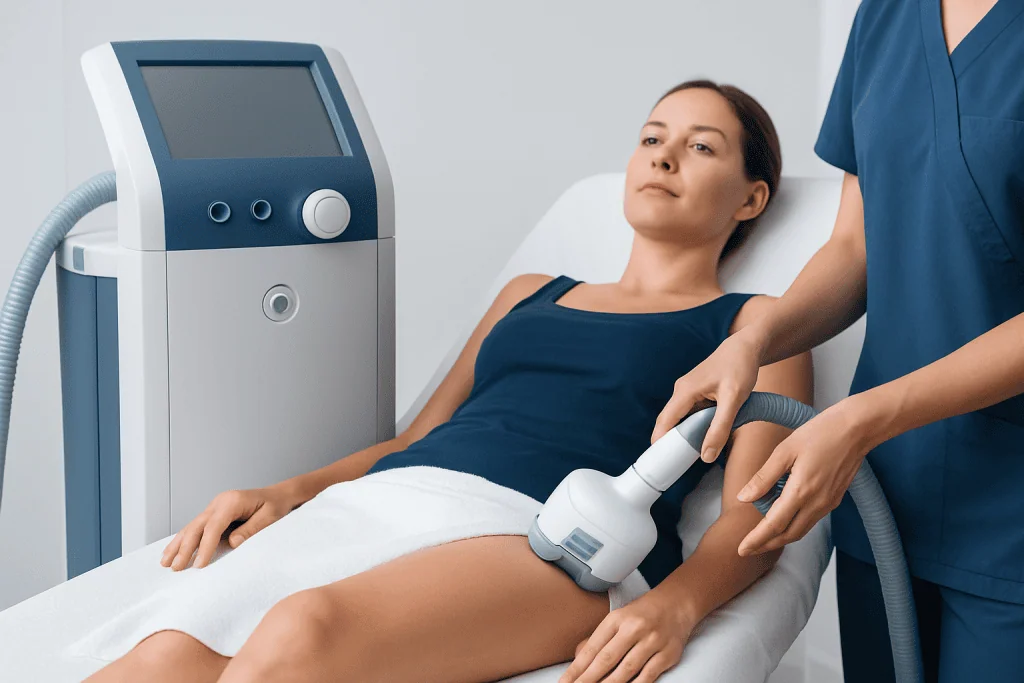
Different cellulite reduction procedures address different parts of the skin structure. Subcision is a minimally invasive technique in which a clinician uses a small instrument beneath the skin to release selected fibrous bands. Releasing these bands can reduce the depth of particular, clearly defined dimples. Some procedures use vacuum-assisted devices to help guide the treatment area.
Energy-based options, such as radiofrequency or certain laser-based treatments, aim to warm deeper tissue. Depending on the device, this may support collagen remodeling, temporarily improve skin firmness or affect small amounts of superficial fat. Acoustic-wave treatments and mechanical massage techniques may also improve circulation and skin texture for some people, though repeat sessions are commonly needed.
Injectable treatments may be considered in limited settings for selected cellulite dimples, depending on local approvals and clinical assessment. Creams, dry brushing and home massage may temporarily improve the skin’s appearance through hydration or short-lived fluid shifts, but they do not release the structural bands responsible for established cellulite.
Aesthetic specialists can discuss appropriate options as part of cellulite treatment planning. The most suitable method depends on whether the main concern is isolated dimples, broader waviness, skin laxity, fat distribution or a combination of these factors.
Who May Be a Candidate for Treatment?

Good candidates are adults in generally stable health who have realistic expectations and are bothered by visible cellulite despite maintaining a stable weight and regular activity. Procedures tend to be easier to plan when body weight has been relatively stable, as substantial weight changes can affect skin texture and the appearance of treated areas.
A clinician will assess the location, depth and pattern of dimples, skin thickness and elasticity, as well as any looseness of skin. Deep, discrete dimples may respond differently from widespread fine texture changes. People seeking a major reduction in body fat or treatment for significant loose skin may need a different discussion than someone whose primary concern is tethered cellulite.
Treatment may need to be postponed or avoided during pregnancy, with an active skin infection, open wounds, uncontrolled medical conditions, certain bleeding disorders or use of medicines that increase bleeding risk. People with a history of poor wound healing, scarring concerns, implanted devices or previous procedures in the area should share this information during consultation.
A pre-procedure review should include medical history, allergies, medications and supplements. The clinician may advise pausing selected medicines or supplements only when medically appropriate and in coordination with the prescribing healthcare professional.
What Happens During a Cellulite Reduction Procedure?
The exact steps vary by technique. At an assessment appointment, the clinician may examine the skin while standing and mark the dimples or treatment zones. Standardized photographs can be useful for comparing cellulite reduction treatment before and after, although lighting, posture and muscle tension can noticeably change how cellulite appears in photographs.
For a minimally invasive subcision procedure, the area is cleaned and numbed with local anesthetic. A small entry point is made, then a fine device is passed under the skin to divide targeted fibrous bands. The clinician may treat several dimples in one session. A dressing or compression garment may be recommended afterward, depending on the method used.
For non-invasive treatments, gel, suction, massage rollers or an energy-delivery handpiece may be applied to the skin. Sessions usually do not require incisions or anesthesia, although warmth, pulling, vibration or temporary sensitivity may be felt. A course of several appointments is often planned because changes tend to develop gradually.
Before proceeding, patients should understand the expected treatment course, possible alternatives, downtime, costs, follow-up needs and signs that require medical contact. Informed decision-making is especially important because cellulite procedures are elective and outcomes vary.
Cellulite Recovery, Benefits and Possible Risks
Cellulite recovery is usually straightforward, but it depends on the procedure. Non-invasive treatments commonly allow a return to usual activities the same day. Mild redness, warmth, tenderness or temporary swelling can occur. A clinician may recommend hydration, gentle movement and avoiding activities that aggravate soreness for a short period.
After minimally invasive treatment, bruising, swelling, firmness, tenderness and small areas of numbness can last days to weeks. Some people may be asked to wear compression and to avoid strenuous exercise, swimming or soaking the treated area until the entry sites have healed. Instructions should always come from the treating clinician because aftercare varies by technique.
The main potential benefit is smoother-looking skin and less noticeable dimpling. With techniques that release fibrous bands, improvement in selected dimples may be longer lasting than with approaches that only temporarily alter fluid balance or skin texture. However, new dimpling or changes in neighboring areas can still develop over time.
Possible risks include pain, bruising, swelling, bleeding, infection, prolonged numbness, pigment changes, uneven contour, scarring and unsatisfactory results. Energy-based devices may rarely cause burns or changes in fat texture. Choosing a trained, licensed clinician and following aftercare instructions can help reduce avoidable risks, but cannot eliminate them.
How Long Does It Take to Reduce Cellulite?
The time needed to see cellulite reduction results depends on the treatment type. Some non-invasive approaches can create a subtle short-term smoothing effect soon after a session, but collagen-related changes usually take several weeks to develop and may require a series of treatments. Results can be gradual rather than immediate.
Following subcision-based treatment, bruising and swelling may temporarily make the area look uneven before it improves. Early healing commonly takes a few weeks, while the visible effect may continue to settle over several months as tissue recovers. The treating clinician can provide a more individualized timeline based on the area treated and the technique used.
Before-and-after comparisons are most meaningful when taken after swelling has resolved, using similar lighting, distance, posture and clothing. A consultation should include discussion of what degree of change is realistic rather than promising a particular appearance.
What Does Stage 4 Cellulite Look Like?
“Stage 4 cellulite” is a popular, non-standard term rather than a universally accepted medical diagnosis. Some grading systems describe more advanced cellulite as deep, visible depressions and pronounced unevenness that can be seen while standing and lying down, sometimes with skin that feels firmer or less elastic.
Severity labels are not always consistent between clinics, devices or online sources. A clinician is more likely to describe the pattern of dimpling, skin laxity and tissue quality, then explain which treatments are likely to help. More marked cellulite may require a combination approach and may not become completely smooth.
Cellulite itself is not dangerous. However, a new one-sided lump, persistent pain, redness, warmth, rapid swelling or an area that changes suddenly should not be assumed to be cellulite. These symptoms warrant medical assessment.
Does Cellulite Reduction Really Work?
Cellulite reduction can work in the sense that selected treatments can make dimpling less visible. The strength and duration of improvement differ substantially by procedure and person. Techniques designed to release fibrous bands may help particular tethered depressions, while non-invasive methods may offer more modest or temporary changes in texture and firmness.
No cellulite treatment works equally well for every pattern of dimpling, and no treatment can promise permanent removal. Photos shared online may not reflect typical results because posture, lighting, editing, weight changes and other procedures can affect appearance. A balanced discussion should include the possibility that improvement may be subtle or uneven.
Healthy habits can support skin and overall health but do not cause or cure cellulite. Stable weight, regular resistance and aerobic exercise, adequate nutrition, not smoking and sun protection may support skin quality. These measures are best viewed as supportive rather than as a replacement for a procedure when structural dimpling is the main concern.
Acibadem International’s multidisciplinary specialists and JCI-accredited hospitals assess and treat aesthetic concerns for international patients, with care plans based on individual anatomy, health and goals.
What Does Kim Kardashian Use for Cellulite?
There is no reliable medical basis for recommending a cellulite treatment based on a celebrity’s reported routine. Public statements, media articles and social media posts may be incomplete, promotional or change over time, and they do not establish that a method is safe, effective or appropriate for another person.
People considering treatment are better served by discussing their own skin pattern, medical history, downtime preferences and goals with a qualified clinician. A personalized assessment is more useful than copying a celebrity routine, particularly when procedures involve injections, energy devices or work beneath the skin.
When to Seek Medical Care
Cellulite does not usually need medical treatment. A person may seek a cosmetic consultation if the appearance causes distress or if they would like clear information about procedure options, recovery and realistic outcomes. They should choose a qualified clinician experienced with the proposed technique.
Prompt medical assessment is important for skin changes that are painful, red, hot, rapidly worsening or associated with fever, drainage, a new lump or significant one-sided swelling. These features may indicate a condition other than cellulite, including cellulitis, which is a bacterial skin infection and requires medical care.
Anyone who has had a cosmetic procedure should contact their treating team if they develop increasing pain, spreading redness, fever, pus-like drainage, significant bleeding, blistering or a sudden change in skin color. Early advice can help ensure appropriate care.
Frequently asked questions
Is cellulite the same as cellulitis?
No. Cellulite is harmless dimpling caused by the structure of fat and connective tissue beneath the skin. Cellulitis is a bacterial skin infection that can cause redness, warmth, pain and swelling and needs prompt medical assessment.
How long do cellulite reduction results last?
Duration depends on the treatment and the person’s skin and tissue characteristics. Some non-invasive effects may be temporary and require maintenance, while improvement after treatment that releases fibrous bands can last longer for treated dimples. Results can still change with aging, weight changes and natural skin changes.
Is cellulite reduction painful?
Comfort levels vary by procedure. Non-invasive treatments may cause warmth, pulling, pressure or tenderness, while minimally invasive procedures are usually performed with local anesthetic and can cause soreness and bruising afterward. The clinician can explain pain-control options and expected recovery.
Can exercise get rid of cellulite?
Exercise supports overall health, muscle tone and weight stability, and it may make cellulite less noticeable for some people. However, it does not reliably remove the fibrous bands that create established dimples. Cellulite can remain present in very active people.
Are cellulite creams effective?
Moisturizers can temporarily improve the look and feel of skin, and some ingredients may produce short-lived changes in texture. However, creams generally cannot permanently reduce structural cellulite. Caution is sensible with products that promise dramatic or permanent results.
Can cellulite return after a procedure?
Treated dimples may remain improved, particularly after procedures that release tethering bands, but no treatment prevents future skin and tissue changes. New dimples or changes in untreated areas can occur over time. Follow-up advice depends on the method used and individual goals.
This article is for general information only and is not a substitute for professional medical advice. Please consult a qualified doctor about your individual situation.
Explore treatments in Turkey — costs, top hospitals & a free quote
JCI-accredited · board-certified surgeons · reply within 24h
Add us as a Preferred Source to see more of our trusted health content across Google Search, AI Overviews and Discover.
Check your numbers in seconds
BMI, calories, due date, blood pressure and 30+ more clinical calculators — free, instant, doctor-reviewed ranges.

More from the Health Library

Castleman Disease: Diagnosis, Outlook, and Modern Treatment Approaches
Understanding Plantar Fibroma: A Complete Patient Guide

Understanding Polymyositis: A Complete Patient Guide

Cesarean Cut Infection: Symptoms, Causes, and Treatment Options

Outpatient Spine Surgery: Procedure, Recovery and Results